
Does Tax-Loss Harvesting Apply to Me and When Should I Do It?
This content has been reviewed and edited by an Investment Advisor Representative working for Global Predictions, an SEC-registered Investment Advisor.
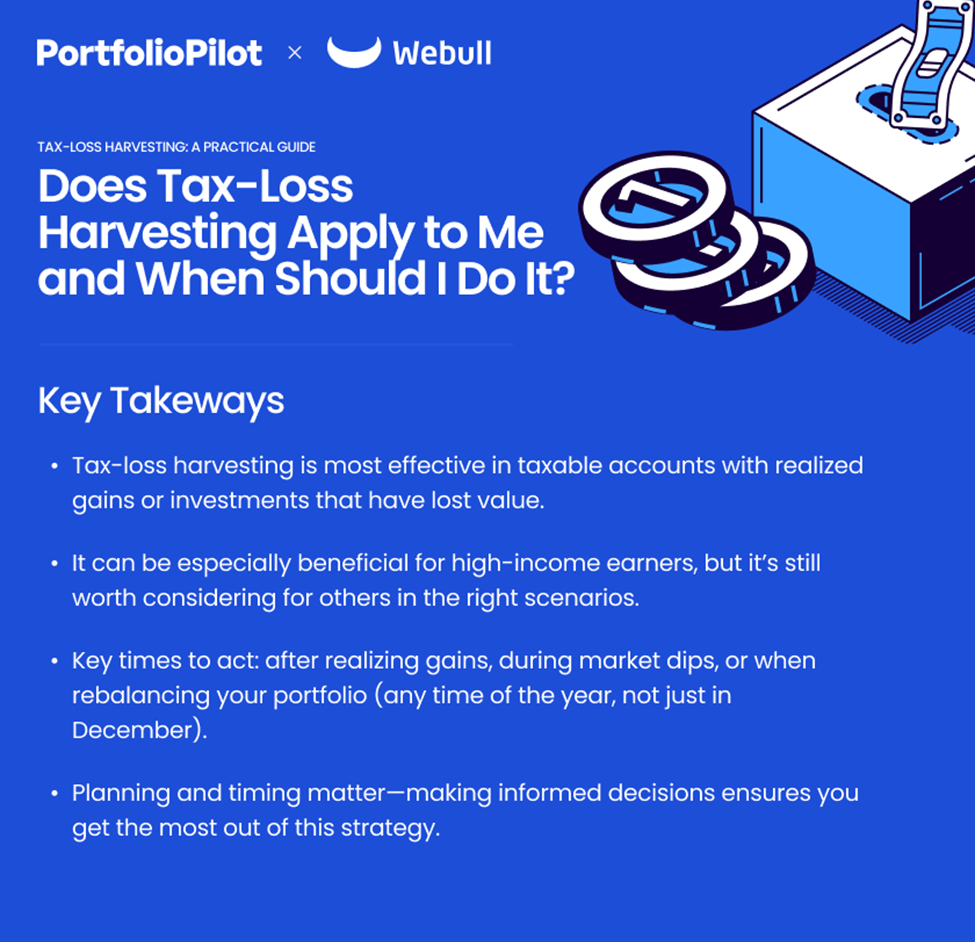
Let’s Answer the Big Question: “Does Tax-Loss Harvesting Apply to Me?”
Here’s a straightforward way to determine if tax-loss harvesting is a good fit for your situation. Just two questions:
- Do You Have a Taxable Investment Account?
Tax-loss harvesting only works in taxable accounts. If all your investments are in IRAs or 401(k)s, this strategy won’t apply because those accounts are tax-deferred. - Do You Have Underperforming Investments?
If you hold securities that are “underwater” from when you originally bought them, you could sell them at a loss. Holding onto investments that have lost value can drag your portfolio down. Selling them strategically lets you claim the loss for tax purposes and reinvest in something with better potential.
It’s even more useful if you:
- Have Realized Gains This Year
If you’ve sold investments for a profit, tax-loss harvesting can help offset those gains, reducing how much tax you owe. Though, even if you don’t have any realized gains this year, the first $3,000 in losses can be used to offset income, and losses can be carried forward to future years indefinitely. - Are in a High Tax Bracket
Higher income often means higher capital gains tax rates, so the potential savings from tax-loss harvesting are bigger. That said, even in lower brackets, this strategy can still add value.
Quick Tip: Personalization matters. Studies, like this from Financial Analysts Journal, show that tax-loss harvesting outcomes are highly individual - so it’s essential to align the strategy with your financial situation.
2nd Quick Tip: Don’t wait for the end of the year to take advantage of tax-loss harvesting. Because of natural market volatility, tax-loss harvesting opportunities often emerge throughout the year - many of which will be gone if you only look for them once at the end of the year.
Timing Is Everything: When Should You Do Tax-Loss Harvesting?
The timing of tax-loss harvesting is important. Here are some situations where it can make the biggest impact:
● After Realizing Gains: If you’ve sold a winning investment, using losses to offset those gains is a smart way to lower your tax bill.
● During Market Volatility: Downturns can be tough, but they also present opportunities to sell underperforming investments and reinvest at lower prices
● When Rebalancing Your Portfolio: If you’re adjusting your portfolio to maintain your target allocation, pairing it with tax-loss harvesting can make the process even more effective.
● Before Tax Deadlines: While tax-loss harvesting is a year-round strategy, December is often the last chance to act before filing taxes.
Practical (Hypothetical) Example
Let’s look at Carlos, an investor managing his portfolio. Earlier this year, Carlos sold shares of Stock A for a $15,000 profit. At the same time, he holds Stock B, now worth $9,000, which he originally bought for $14,000. That’s a $5,000 unrealized loss.
Since Carlos has a taxable account and is in a high tax bracket, he decides to sell Stock B to realize the $5,000 loss. This reduces his taxable gain from $15,000 to $10,000, saving him $1,000 in taxes at a 20% capital gains tax rate. He reinvests the proceeds from Stock B into a similar ETF, maintaining his portfolio’s exposure to growth potential.
Why It Works:
Carlos’s decision to harvest losses applies because:
● He has realized gains that can be offset.
● He holds an underperforming investment with a significant unrealized loss.
● His high tax bracket makes the savings more impactful.
● Reinvesting strategically ensures his portfolio remains balanced and growth-focused.
Avoid These Common Pitfalls
Even a strong strategy like tax-loss harvesting has its challenges. Be sure to watch out for:
- Breaking the Wash Sale Rule: If you buy back the same or a “substantially identical” investment within 30 days before or after the sale, the IRS disqualifies your loss. Plan trades carefully. (Read more about it in this article)
- Focusing Only on Taxes: While tax savings are great, your overall investment strategy should take priority.
- Underestimating Transaction Costs: Frequent trading can add up. Make sure the tax savings are worth it.
How to Get Started
Here’s a simple plan to start:
- Review Your Portfolio:
Look for investments with unrealized losses and realized gains in taxable accounts. - Estimate Your Savings:
Use calculators or tools like PortfolioPilot.com to figure out how much you can save. - Plan Strategic Trades:
Identify which investments to sell and find suitable replacements to keep your portfolio balanced. - Stay Proactive:
Regularly review your portfolio to catch opportunities as they arise.
Practical Tip: Technology can make this easier. Platforms like PortfolioPilot.com can automatically identify opportunities and help you trade efficiently, often in less than 10 minutes.
Tax-loss harvesting is all about making smart decisions with your investments. By understanding when and how to use it, you can reduce your taxes, optimize your portfolio, and set yourself up for long-term success.
Copyright © 2024 PortfolioPilot.com, Your Personal AI Financial Advisor.
Summary: Explore whether tax-loss harvesting fits your situation—it may help reduce taxes, rebalance your portfolio, and support long-term growth.