
Ethereum ETFs

Breaking It Down
Before diving in, let’s break down all parts of an Ethereum ETF in simple terms.
What is an Exchange-Traded Fund (ETF)?
An exchange-traded fund (ETF) is an investment vehicle traded on stock exchanges, holding assets like stocks or bonds. ETFs aim to maintain a trading price close to the net asset value of their underlying assets throughout the day. Investors tend to find ETFs appealing due to their low costs, tax efficiency, and stock-like features.
Read More: What is an ETF?
What is Ethereum?
Ethereum is a decentralized blockchain platform designed for creating and running smart contracts. These self-executing programs automatically enforce agreements based on predefined conditions—think of it as a digital "If I do this, you do that" promise. What sets smart contracts apart is their automatic execution and consistency, running on the Ethereum network to ensure the same outcome every time.
Ether (ETH), Ethereum’s native cryptocurrency, is the second largest by market capitalization, just behind Bitcoin. Being open-source, Ethereum allows developers to build and launch decentralized applications (dApps) on its platform. Since its initial release in 2015, Ethereum has extended the possibilities of blockchain technology beyond just digital currency.
What is an Ethereum ETF?
Now that we’ve covered the basics, understanding an Ethereum ETF should be simple. An Ethereum ETF is a financial product that allows investors to gain exposure to Ethereum without the hassle of buying, storing, or managing the cryptocurrency themselves. The ETF holds Ether as its primary asset, and its value mirrors the price of Ether, similar to the Spot Bitcoin ETF.
The Ethereum ETF simplifies the investment process by handling the technical details of cryptocurrency ownership. This makes it more accessible for traditional investors, helping them diversify their portfolios and potentially benefit from Ethereum’s growth.
On May 23rd, 2024, the U.S. Securities and Exchange Commission approved Ethereum ETFs for trading. This milestone enables eight issuers, including prominent names like VanEck and Fidelity, to introduce their Ethereum ETFs to institutional and retail investors, bringing the world’s second-largest cryptocurrency into mainstream finance.
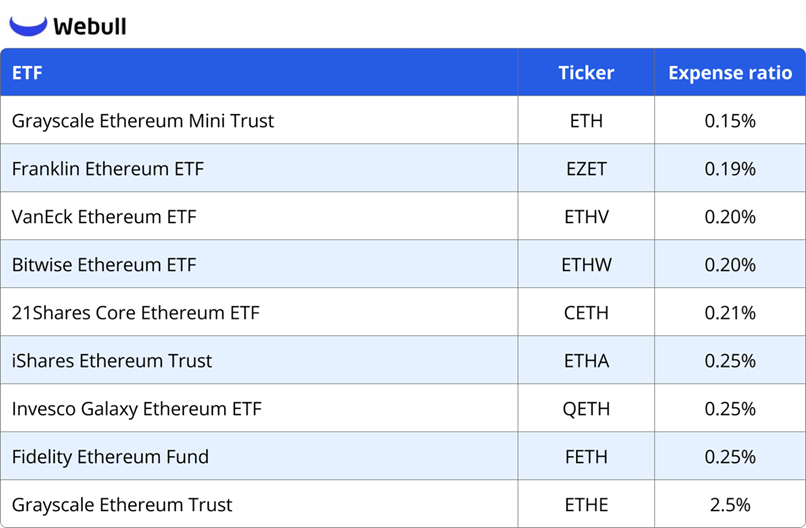
How does an Ethereum ETF work?
An Ethereum ETF is managed by investment firms that take care of buying, storing, and securing the Ether using protected storage solutions, such as cold wallets, to protect against theft and hacking.
Ethereum ETFs are traded on major stock exchanges like your regular old stock. This means that investors can buy and sell shares in the ETF through their brokerage accounts during normal trading hours. The ETF’s price closely tracks the price of Ether, providing a convenient and regulated way for investors to gain exposure to Ethereum without the complexities of direct ownership.
Benefits of investing in an Ethereum ETF
Investing in the newly released Ethereum ETF offers several advantages. Here are some key benefits:
Regulatory Oversight:
· Added security and reliability compared to unregulated alternatives.
· Safer investment option due to regulatory oversight.
Portfolio Diversification:
· Exposure to Ethereum without committing a large portion of investments to digital assets.
· Helps manage cryptocurrency volatility through diversified investment.
High Liquidity:
· Easy buying and selling of shares during market hours.
· Simplifies the process compared to direct cryptocurrency trading.
Cost-Effectiveness:
· Lower transaction costs and management fees compared to direct cryptocurrency management.
· A more cost-effective way to gain cryptocurrency exposure.
Integration into Traditional Strategies:
· Incorporates cryptocurrency exposure into traditional investment strategies.
· Clear, transparent pricing enhances understanding and planning.
Risks of investing in an Ethereum ETF
Investing in an Ethereum ETF offers easier access to the cryptocurrency market. It is still important to understand the associated risks to make informed decisions. Here are some key risks to consider:
Market Volatility:
· Ethereum’s price swings can lead to significant gains or losses.
· The inherent volatility in the cryptocurrency market affects ETF performance.
Liquidity Concerns:
· Liquidity can vary based on market demand.
· During volatile periods, it may be harder to buy or sell shares at favorable prices.
Tracking Errors:
· ETFs may not perfectly mirror Ether’s price due to management fees and operational costs.
· These discrepancies can have an impact on the expected returns.
Management Fees:
· While generally lower than direct cryptocurrency handling, management fees still impact returns.
· If the ETF underperforms, the impact of these fees becomes more significant.
Technological Risks:
· Ethereum’s network is subject to technological risks such as glitches or problematic updates.
· Such issues could negatively affect the ETF’s performance.
Indirect Ownership:
· Purchasing an Ethereum ETF involves investing in the cryptocurrency's performance without owning any Ethereum.
· Some control is relinquished to the ETF management, who will make strategic decisions on behalf of investors.
The Bottom Line
When looking at your investment options, remember that Ethereum ETFs can offer higher yield potential but have higher risk due to increased volatility. Take the time to evaluate your risk tolerance carefully. For further education and to increase your understanding of various investments, including Stocks, ETFs, and Options, visit the Webull Learning page. Grow your knowledge to help you make informed decisions with your future investments at Webull.