
Why is the Balance Sheet Key to Understanding a Company?
The Role of the Balance Sheet
Public companies issue financial statements quarterly to provide transparency for investors and other stakeholders. Among these, the balance sheet, also known as the statement of financial position or statement of financial condition, is key because it encapsulates the company’s resources, obligations, and the residual interest of its shareholders.
The balance sheet is structured around a fundamental equation:
Assets = Liabilities + Equity
This equation ensures that the balance sheet always "balances," highlighting the relationship between the company's resources and how they are financed.
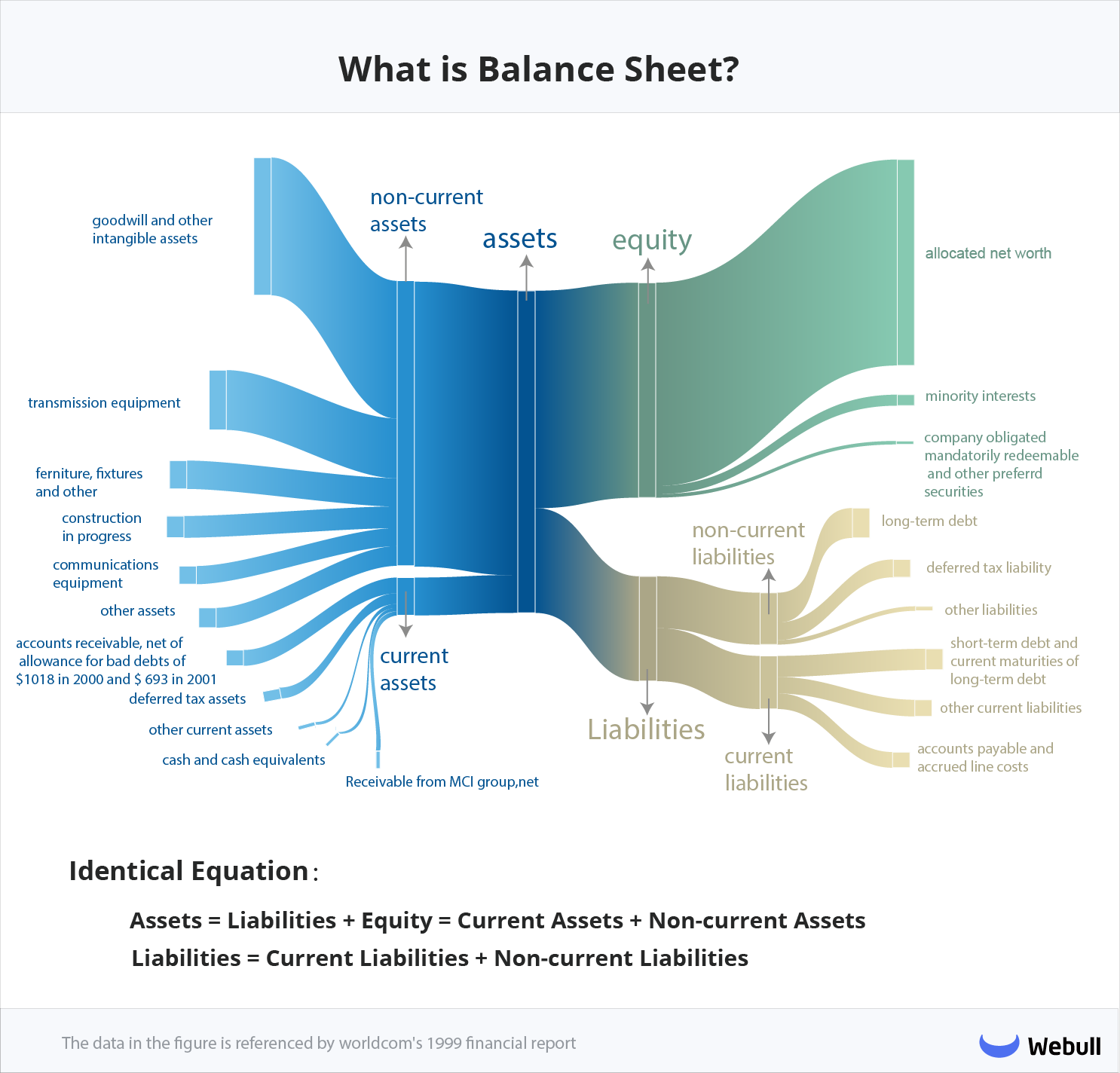
Components of the Balance Sheet
Assets: What the Company Owns
Assets are resources the company controls and expects to generate future economic benefits. These can take the form of cash, equipment, patents, or other valuable items. Assets are categorized as:
Current Assets: Resources expected to be converted into cash or used within one year (e.g., cash, accounts receivable, inventory).
Non-Current Assets: Long-term resources used over multiple years (e.g., property, equipment, intangible assets like patents).
Liabilities: What the Company Owes
Liabilities represent obligations the company must fulfill, typically involving the transfer of economic benefits. Like assets, liabilities are classified into:
Current Liabilities: Short-term obligations due within 12 months (e.g., accounts payable, short-term debt).
Non-Current Liabilities: Long-term obligations not due within the next year (e.g., long-term loans, bonds payable).
Separating liabilities into current and non-current categories helps assess a company’s liquidity, or its ability to meet short-term obligations.
Equity: The Shareholders' Stake
Equity represents the owners' residual interest in the company after all liabilities are paid. Commonly called shareholders' equity or owners' equity, it is calculated as:
Equity = Assets – Liabilities
Head to Webull Learn to improve your financial knowledge on Stocks, ETFs, Options, Bonds, and more! Webull is dedicated to helping you improve your education to make the most informed financial decisions.