'%3e %3cpath d='M41.7832962%2c0 C41.9459106%2c0 42.0882746%2c0.0866854658 42.1666825%2c0.216359069 C43.8289923%2c2.66540836 44.7676281%2c5.46271319 44.7676281%2c8.43208061 C44.7676281%2c18.1345746 34.7460532%2c26 22.383814%2c26 C10.0215749%2c26 0%2c18.1345746 0%2c8.43208061 C0%2c5.46716016 0.935826425%2c2.67378733 2.58829888%2c0.223985685 C2.67109477%2c0.0916264068 2.81687473%2c0 2.9840593%2c0 C3.23130408%2c0 3.43173558%2c0.200393004 3.43173558%2c0.447590303 C3.43173558%2c0.475056669 3.42926112%2c0.501945205 3.42452292%2c0.528045226 L3.41810883%2c0.550292077 C3.37800671%2c0.861741908 3.3575721%2c1.17661276 3.3575721%2c1.49443092 C3.3575721%2c7.98336 11.2132389%2c12.5742305 22.383814%2c12.5742305 C33.5543891%2c12.5742305 41.410056%2c7.98336 41.410056%2c1.49443092 C41.410056%2c1.17865223 41.3898828%2c0.865783153 41.3502888%2c0.556288325 C41.3402868%2c0.521941442 41.3356199%2c0.48531078 41.3356199%2c0.447590303 C41.3356199%2c0.200393004 41.5360514%2c0 41.7832962%2c0 Z' id='logo%e5%a4%87%e4%bb%bd-6' fill='white'%3e%3c/path%3e %3cpath d='M74.6899231%2c3.74404927 C75.2411227%2c3.74404927 75.7734299%2c3.66184338 76.2756219%2c3.50883715 L73.8159676%2c20.8666902 C73.5770593%2c22.5662954 72.8072434%2c23.0518969 71.4268838%2c23.0518969 L69.9934336%2c23.0518969 C68.7988917%2c23.0518969 68.1618027%2c22.458384 67.7901674%2c20.893668 L65.6930827%2c11.9909739 C65.639992%2c11.7481731 65.639992%2c11.6942174 65.5338105%2c11.6942174 C65.427629%2c11.6942174 65.4010836%2c11.7481731 65.3479929%2c11.9909739 L63.2509082%2c20.893668 C62.8792729%2c22.458384 62.2421839%2c23.0518969 61.047642%2c23.0518969 L59.6141918%2c23.0518969 C58.2338322%2c23.0518969 57.4640163%2c22.5662954 57.225108%2c20.8666902 L54.7463723%2c3.37406084 C55.3593498%2c3.61307396 56.0249975%2c3.74404927 56.7207458%2c3.74404927 C57.3314263%2c3.74404927 57.918917%2c3.64314414 58.4679557%2c3.4568446 L60.3574623%2c19.3829078 C60.3840076%2c19.6257086 60.3840076%2c19.7875757 60.4901891%2c19.7875757 C60.5963706%2c19.7875757 60.5963706%2c19.6257086 60.6494614%2c19.3829078 L62.9323637%2c9.91367858 C63.0916359%2c9.26620991 63.4632712%2c8.69967483 64.6047223%2c8.69967483 L66.4363532%2c8.69967483 C67.5778044%2c8.69967483 67.9494397%2c9.26620991 68.1087119%2c9.91367858 L70.3916142%2c19.3829078 C70.4447049%2c19.6257086 70.4447049%2c19.7875757 70.5508864%2c19.7875757 C70.6570679%2c19.7875757 70.6570679%2c19.6257086 70.6836133%2c19.3829078 L72.5891207%2c3.32292288 C73.2365902%2c3.59432921 73.9460524%2c3.74404927 74.6899231%2c3.74404927 Z' id='Combined-Shape' fill='white'%3e%3c/path%3e %3cpath d='M84.5933901%2c7.43171536 C88.6813779%2c7.43171536 90.9111894%2c10.2643908 90.9111894%2c14.2840921 L90.9111894%2c15.7948523 C90.9111894%2c16.2264981 90.7519172%2c16.4692988 90.3802819%2c16.4692988 L81.7264895%2c16.4692988 L81.7264895%2c16.5502324 C81.7264895%2c18.1149484 82.3635785%2c19.9764208 84.9119346%2c19.9764208 C86.849747%2c19.9764208 88.6813779%2c19.8145536 89.7962837%2c19.7066422 L89.8759198%2c19.7066422 C90.1413735%2c19.7066422 90.3537366%2c19.8415315 90.3537366%2c20.1113101 L90.3537366%2c21.8918489 C90.3537366%2c22.3234947 90.2741004%2c22.5123397 89.7962837%2c22.5932733 C88.0708343%2c22.9170076 87.0355646%2c23.0518969 84.6464808%2c23.0518969 C81.9919433%2c23.0518969 78.2225%2c21.5950924 78.2225%2c16.2804538 L78.2225%2c14.2840921 C78.2225%2c10.0755457 80.5319476%2c7.43171536 84.5933901%2c7.43171536 Z M84.5933901%2c10.5071915 C82.9475768%2c10.5071915 81.7530349%2c11.6942174 81.7530349%2c13.8254684 L81.7530349%2c13.9333799 L87.3806545%2c13.9333799 L87.3806545%2c13.8254684 C87.3806545%2c11.7211953 86.2392034%2c10.5071915 84.5933901%2c10.5071915 Z' id='Combined-Shape' fill='white'%3e%3c/path%3e %3cpath d='M97.4154906%2c2.98826245 L97.4148064%2c7.62056039 C98.3969853%2c7.48567108 99.3260735%2c7.43171536 99.9631625%2c7.43171536 C104.236968%2c7.43171536 106.307507%2c9.99461216 106.307507%2c14.2031585 L106.307507%2c16.2804538 C106.307507%2c20.4890001 104.236968%2c23.0518969 99.9631625%2c23.0518969 C98.2642584%2c23.0518969 96.2733553%2c22.7821183 94.627542%2c22.3504725 C94.0169984%2c22.1886054 93.9108169%2c22.0267382 93.9108169%2c21.6220703 L93.9098179%2c3.08694115 C94.4185466%2c3.24434375 94.9584615%2c3.32900525 95.5178331%2c3.32900525 C96.184659%2c3.32900525 96.8238351%2c3.20869291 97.4154906%2c2.98826245 Z M99.9631625%2c10.3453244 C99.3260735%2c10.3453244 98.1580769%2c10.4262579 97.4148064%2c10.5341694 L97.4148064%2c19.9494429 C97.9191686%2c20.0573544 99.007529%2c20.1382879 99.9631625%2c20.1382879 C102.246065%2c20.1382879 102.803518%2c18.4926384 102.803518%2c16.2804538 L102.803518%2c14.2031585 C102.803518%2c11.9909739 102.246065%2c10.3453244 99.9631625%2c10.3453244 Z' id='Combined-Shape' fill='white'%3e%3c/path%3e %3cpath d='M111.036668%2c8.72457747 C111.579488%2c8.72457747 112.103987%2c8.64485191 112.599444%2c8.49629404 L112.598761%2c16.5232546 C112.598761%2c19.3289521 113.607485%2c19.9764208 115.147117%2c19.9764208 L115.306389%2c19.9764208 C116.846021%2c19.9764208 117.854746%2c19.3289521 117.854746%2c16.5232546 L117.854207%2c8.4334735 C118.406525%2c8.62226395 118.997939%2c8.72457747 119.612866%2c8.72457747 C120.223332%2c8.72457747 120.810625%2c8.62374317 121.359498%2c8.43756894 L121.358735%2c16.5232546 C121.358735%2c22.4044283 116.872567%2c23.0518969 115.306389%2c23.0518969 L115.060464%2c23.0512514 C113.42215%2c23.0271041 109.094772%2c22.2994073 109.094772%2c16.5232546 L109.094446%2c8.36700801 C109.698522%2c8.59813531 110.353066%2c8.72457747 111.036668%2c8.72457747 Z' id='Combined-Shape' fill='white'%3e%3c/path%3e %3cpath d='M128.314162%2c3.03790128 L128.313623%2c22.269539 C128.313623%2c22.5662954 128.10126%2c22.836074 127.809261%2c22.836074 L125.340541%2c22.836074 C125.048542%2c22.836074 124.809634%2c22.5662954 124.809634%2c22.269539 L124.809455%2c3.04219481 C125.358161%2c3.22824247 125.945253%2c3.32900525 126.555503%2c3.32900525 C127.17043%2c3.32900525 127.761844%2c3.22669173 128.314162%2c3.03790128 Z' id='Combined-Shape' fill='white'%3e%3c/path%3e %3cpath d='M133.90653%2c3.32900525 C134.473329%2c3.32900525 135.02015%2c3.24208064 135.534793%2c3.08063296 L135.533966%2c22.269539 C135.533966%2c22.5662954 135.321603%2c22.836074 135.029603%2c22.836074 L132.560884%2c22.836074 C132.268884%2c22.836074 132.029976%2c22.5662954 132.029976%2c22.269539 L132.029909%2c2.99605058 C132.615669%2c3.21152525 133.2476%2c3.32900525 133.90653%2c3.32900525 Z' id='Combined-Shape' fill='white'%3e%3c/path%3e %3c/g%3e %3c/g%3e %3c/g%3e%3c/svg%3e)



Millions of Americans are exploring AI trading tools, but the question "is AI trading safe?" deserves a careful, honest answer. AI can support smarter research and help reduce emotional decision-making — yet it carries real risks that beginners and experienced investors alike should understand before relying on it. This guide breaks down how AI trading works, where it genuinely helps, and how to use AI trading tools for beginners safely in today's US market.
Key Takeaways
AI trading tools range from research assistants to fully automated bots — each carries different risk levels.
AI cannot predict future prices, remove market uncertainty, or provide personalized investment advice.
A 2025 Forbes-cited study found that nearly half of 3,000 AI responses contained at least one significant issue.
US investors should look for regulated, SIPC-member platforms with transparent fee structures.
Tools like Webull's Trading Assistant can help monitor real-time P&L and set alerts — keeping you in control.
Part 1. What Is AI Trading? A Clear-Eyed Definition for US Investors
Before evaluating whether AI trading is safe, it's important to understand what "AI trading" actually means — because the term covers a wide spectrum of very different tools.
AI-assisted analysis sits at the most accessible end: tools that explain charts, summarize earnings calls, or answer questions about concepts. These are learning aids that keep the human investor firmly in the decision seat.
AI trading signals flag potential buy or sell opportunities based on pattern recognition in market data. These are suggestions to evaluate — not orders to follow.
Automated trading bots execute trades on your behalf using predefined rules or machine-learning models, removing you from the immediate decision loop.
Algorithmic and machine-learning trading systems run systematic, data-driven strategies. At the institutional level, firms apply these to tasks like dynamic portfolio allocation, execution optimization, and sentiment analysis of earnings transcripts.
The global AI trading market was valued at approximately USD 18.2 billion in 2023 and is projected to nearly triple by 2033, reflecting rapid adoption across both institutional and retail segments.
QuantInsti — https://www.quantinsti.com/articles/ai-for-trading/
Major institutions illustrate the range of applications. Renaissance Technologies applies advanced statistical and machine-learning-driven portfolio construction. JPMorgan's LOXM system was designed to execute client orders at optimal speed and price. BlackRock has used AI to uncover investment insights from textual data.
For retail traders, AI has primarily arrived through trading platforms, AI-powered research tools, and no-code automation interfaces. Understanding which category a tool falls into is the first step toward using it safely.
Part 2. Is AI Trading Safe? Key Risks Every US Investor Should Understand
The straightforward answer: AI trading carries meaningful risks, and those risks vary significantly depending on how the tool is used. Here is a structured breakdown of what US investors should weigh.
Overfitting and Backtesting Illusions
A model that appears to perform brilliantly on historical data can fail in live markets. This is called overfitting — the AI has essentially memorized past patterns that do not repeat. A clean backtest result does not guarantee forward performance. Past performance is not indicative of future results.
Data Quality Problems
AI output is only as reliable as the data it trains on. Poor, incomplete, or delayed data leads to misleading signals — and a system can deliver those signals with apparent confidence.
Market Regime Shifts
AI models trained on historical data may struggle when market conditions shift dramatically due to economic shocks, geopolitical events, or sudden volatility spikes. Yesterday's patterns can become today's false signals.
Black-Box Logic
Many AI trading systems do not clearly explain why they made a particular decision. If you cannot inspect the reasoning, you cannot effectively evaluate the output or know when the system is operating outside its intended parameters.
Cybersecurity Vulnerabilities
Platforms that handle trading automation are potential targets for hacking, data breaches, and manipulation. Weak platforms may expose sensitive financial and personal information.
Regulatory Gaps and Compliance
AI trading occupies a rapidly evolving regulatory space. Regulators in the US, including the SEC and FINRA, are implementing stricter oversight of AI-driven financial tools, but the framework continues to develop. Traders should verify that any platform they use operates under applicable US regulatory standards.
Concentration Risk from AI-Generated Portfolios
A National Bureau of Economic Research working paper found that large language models asked to build investment portfolios tended to concentrate heavily in large-cap tech and semiconductor stocks — with semiconductors averaging 41% of AI-generated portfolios, roughly double their 21% share of the S&P 500. The researchers also found that AI recommendations were driven more by media coverage volume than company fundamentals, and the resulting portfolios exhibited higher volatility with a market beta averaging 1.6.
Investopedia — https://www.investopedia.com/new-research-reveals-risks-of-using-ai-for-stock-investment-advice-experts-caution-11971335
Risk Factor | What It Means | Why It Affects Beginners Most |
|---|---|---|
Overfitting | Model excels in backtests, fails live | Beginners often trust backtest results uncritically |
Bad data | Flawed inputs produce misleading outputs | Harder to spot without market experience |
Market regime shifts | Old patterns break during novel events | Less context to recognize when something is wrong |
Black-box logic | Cannot see why a recommendation was made | Difficult to challenge output you don't understand |
Cybersecurity exposure | Sensitive data and funds at risk | Beginners may skip platform vetting |
Concentration risk | AI may build undiversified portfolios | Could amplify losses if a single sector turns |
Part 3. What AI Trading Can — and Cannot — Do
Understanding the genuine capabilities and hard limitations of AI is central to using it responsibly.
What AI trading tools may help with:
Chart explanation and pattern recognition: AI can translate technical indicators and candlestick patterns into plain language, making charts more accessible.
Market news summarization and sentiment analysis: AI can process earnings calls, news headlines, and social media data to surface context faster than manual review.
Scenario analysis: AI can explore "what generally tends to follow this type of event" — framing possibilities, not certainties.
Backtesting support: AI can help test a strategy against historical data to evaluate how it might have behaved under past conditions.
Reducing emotional bias: By following predefined rules, AI-driven tools may help traders avoid impulsive decisions driven by fear or overconfidence.
What AI trading tools cannot do:
Predict future prices. No AI model can reliably forecast what a stock will do next. A confident-sounding AI forecast is still a probability-based output — not a fact. Markets routinely defy even sophisticated models.
Remove risk. Better information can support more informed decisions; it cannot make markets certain. Uncertainty is a permanent feature of investing.
Provide personalized investment advice. A general-purpose AI does not know your financial situation, goals, time horizon, or risk tolerance. Its output should be treated as information to weigh — not instructions tailored to you.
Be accountable for losses. If a tool's output leads to a poor outcome, the financial consequence belongs to the investor, not the model.
A 2025 report cited by Forbes found that almost half of 3,000 AI responses evaluated by The European Broadcasting Union contained at least one significant issue. Meanwhile, a Pearl study found that more than one in four Americans (27%) believed AI could provide "all the financial advice they will ever need" — a level of confidence that experts caution against.
Forbes — https://www.forbes.com/advisor/investing/ai-investing-mistakes-significant-issues-study-lmandp5/
As Derek Brainard, a certified financial planner and director of financial education at AccessLex Institute, noted: "AI can be a helpful co-pilot for investment research and ideation, but you should remain the captain of your portfolio overall."
The distinction between analysis and automation matters most for beginners: AI market analysis explains and organizes information for you to act on. Automated trading acts on its own, with none of the human judgment to pause when conditions change.
Part 4. How to Use AI Trading Tools Responsibly — Including Webull's Trading Assistant
For US investors who want to incorporate AI-assisted tools into their workflow, a structured, disciplined approach can help manage the risks outlined above. Webull offers a Trading Assistant feature that illustrates how platform-level tools can support — rather than replace — informed decision-making.
What Webull's Trading Assistant Offers
Webull's Trading Assistant allows users to view trading and profit & loss (P&L) data in real time. Investors can set alerts to track open P&L and manage their orders directly within the tool. The total win rate displayed is calculated by comparing the number of profitable closed positions to the total number of stock and options trades made in a day. When a P&L alert is triggered, users receive a push notification; order alerts deliver a popup notification. This gives active traders a live overview of their activity without removing them from the decision-making process.
Explore the Trading Assistant and other platform tools at www.webull.com.
A Safer Workflow for Using AI Trading Tools
Step 1 — Learn before automating. Use AI tools to understand concepts, chart patterns, and market terminology. Treat AI as a patient tutor, not a signal service.
Step 2 — Simulate with virtual funds. Practice strategies in a paper trading or simulation environment before risking real capital. This allows you to observe how an approach behaves without financial exposure.
Step 3 — Set clear risk parameters. Before placing any live trade informed by AI analysis, define your acceptable loss level, use stop-loss orders, and determine position sizing independently.
Step 4 — Monitor and review. Use tools like Webull's Trading Assistant to track open P&L in real time and review your win rate. Regular review of your own trading patterns — not just AI outputs — supports more disciplined decision-making.
Step 5 — Maintain human oversight. Read AI output as a draft to question, not a verdict. Keep yourself as the final decision-maker, especially during periods of market volatility.
Regulatory Protections US Investors Should Know
Webull Financial LLC is a member of FINRA and SIPC. SIPC protects securities customers of its members up to $500,000 (including $250,000 for claims for cash) in the event of a brokerage firm failure. SIPC protection does not cover investment losses from market fluctuations.
FINRA Rule 2210 requires that communications with the public be fair, balanced, and not misleading — a standard that applies to how AI-related claims are presented on regulated platforms.
Learn more at www.webull.com about account protections and regulatory disclosures.
Part 5. Choosing a Safe AI-Capable Trading Platform in the US
Not all platforms offering AI features are equal in their safety standards, transparency, or regulatory standing. Here is what US investors should look for when evaluating a platform.
Key Criteria for Platform Safety
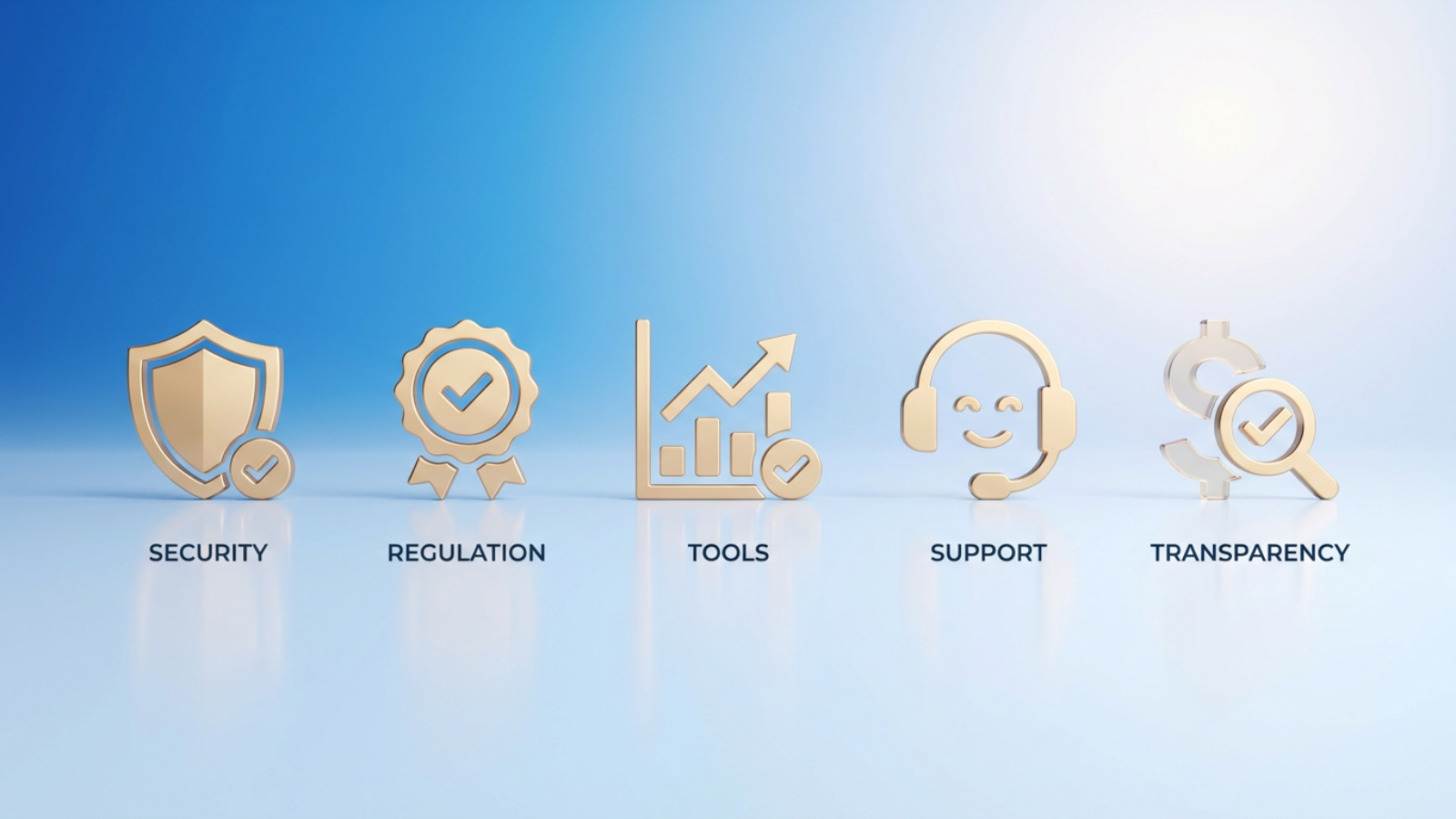
Regulatory standing: Confirm the platform is registered with the SEC and/or FINRA and is a SIPC member. This provides baseline investor protections in the event of firm failure.
Two-factor authentication and data encryption: These are baseline security expectations for any platform handling financial accounts.
Transparent fee disclosure: Look for clear disclosure of all applicable costs — including spreads, regulatory fees, margin interest rates, and any fees associated with AI or premium tools. Rates vary by service provider; please refer to the latest pricing.
Real-time data access: AI tools are only as good as the data they operate on. Platforms with real-time or near-real-time market data feeds reduce the risk of acting on outdated information.
Educational resources and human support: Platforms that invest in investor education and offer access to human support channels provide a meaningful safety net alongside their automated tools.
Backtesting and paper trading capabilities: The ability to test strategies on historical data and simulate trades without real money is a critical feature for responsible AI tool usage.
Platform Feature Comparison
Feature | Webull | General Industry Standard |
|---|---|---|
FINRA / SIPC membership | Yes | Varies by platform |
Real-time P&L monitoring | Yes (Trading Assistant) | Varies |
P&L and order alerts | Yes (push + popup) | Varies |
Win rate tracking | Yes (daily, by position) | Varies |
Paper trading / simulation | Available | Varies |
Educational resources | Available | Varies |
$0 commission on stocks/ETFs | Yes* | Varies |
*Other fees may apply, including regulatory transaction fees. Rates vary by service provider; please refer to the latest pricing at www.webull.com.
Webull Platform Overview
Webull stands out for its combination of real-time data tools, active trader features, and accessibility for both new and experienced investors. The platform's Trading Assistant is designed to support informed, active decision-making by providing live P&L tracking and customizable alerts — tools that keep the investor engaged with their positions rather than passively relying on automation.
Webull's mobile and desktop interfaces offer access to advanced charting, technical indicators, and market news — features that support the kind of informed analysis that responsible AI-assisted trading requires. The platform is regulated, SIPC-insured, and transparent about its fee structure.
For investors looking to explore AI-assisted trading tools within a regulated US brokerage environment, Webull's feature set provides a structured starting point. Visit www.webull.com to review current account options and tools.
Pros and Cons of AI-Assisted Trading Platforms
Pros:
May reduce emotional, impulsive decision-making
Enables faster processing of large data sets and market news
Real-time monitoring tools support active oversight
Backtesting capabilities allow strategy evaluation before live deployment
Accessible to retail investors without institutional-level resources
Cons:
AI cannot predict future prices or guarantee outcomes
Automated systems may follow flawed logic as faithfully as sound logic
Concentration risk and lack of diversification in AI-generated suggestions
Black-box models may limit your ability to understand or challenge outputs
Over-reliance on AI may prevent development of foundational trading knowledge

FAQs: Is AI Trading Safe for US Investors?
Q1. Is AI trading legal in the United States?
Yes, AI-assisted and algorithmic trading are legal in the US. However, platforms offering these services must comply with applicable SEC and FINRA regulations. Investors should verify that any platform they use is properly registered and regulated before depositing funds.
Q2. Can AI trading bots guarantee profits?
No. No AI trading system can guarantee investment profits or the safety of principal. Markets involve inherent uncertainty that no model can eliminate. Any platform or service claiming "guaranteed returns" from AI should be treated with significant skepticism — such claims are inconsistent with the realities of market risk and with US securities regulations.
Q3. What are the biggest risks of using AI for stock trading?
Key risks include overfitting (models that perform well on historical data but fail live), data quality issues, market regime shifts that invalidate past patterns, concentration risk in AI-generated portfolios, cybersecurity vulnerabilities, and the absence of personalized context. A National Bureau of Economic Research working paper found that AI-generated portfolios tended to be heavily concentrated in large-cap tech stocks, carrying higher volatility than the broader market.
Q4. How is Webull's Trading Assistant different from an automated trading bot?
Webull's Trading Assistant is a monitoring and alert tool — it surfaces real-time P&L data and allows users to set alerts for open positions and orders. It does not autonomously place trades on your behalf. The investor remains in control of all trading decisions, which is a meaningful distinction from fully automated systems that act without human review.
Q5. Should beginners use AI trading tools?
AI tools can be useful for beginners when used as learning and monitoring aids — for understanding charts, reviewing practice trades, and tracking live positions. The risk arises when beginners treat AI outputs as authoritative signals to follow without independent evaluation. Experts recommend maintaining human oversight, starting with paper trading or simulation tools, and building foundational trading knowledge before relying on any automated system.
The Bottom Line
AI trading tools offer real utility — from real-time P&L monitoring to pattern analysis — but they do not eliminate market risk or replace informed judgment. For US investors, the safest approach is to use AI as a research and monitoring aid, not as an autopilot. Regulated platforms like Webull, which provide transparent tools and investor protections, offer a structured environment to engage with AI-assisted features responsibly. Past performance is not indicative of future results.
Disclosure
Vega AI is an artificial intelligence tool provided for informational and educational purposes only, it does not provide investment advice, recommendations, or endorsements, and outputs may contain errors for which we make no guarantees of accuracy, completeness, or reliability. Vega Analyst requires subscription, fees may apply. Credit usage varies per report and cannot be guaranteed.
Webull Financial LLC (member SIPC, FINRA) offers self-directed securities trading. All investments involve risk. More info: https://www.webull.com/policy
The information provided does not constitute investment advice and it should not be relied on as such. It should not be considered a solicitation to buy or an offer to sell a security. It does not take into account any investor's particular investment objectives, strategies, tax status or investment horizon. Investing involves risk, including the risk of loss of principal.
