'%3e %3cpath d='M41.7832962%2c0 C41.9459106%2c0 42.0882746%2c0.0866854658 42.1666825%2c0.216359069 C43.8289923%2c2.66540836 44.7676281%2c5.46271319 44.7676281%2c8.43208061 C44.7676281%2c18.1345746 34.7460532%2c26 22.383814%2c26 C10.0215749%2c26 0%2c18.1345746 0%2c8.43208061 C0%2c5.46716016 0.935826425%2c2.67378733 2.58829888%2c0.223985685 C2.67109477%2c0.0916264068 2.81687473%2c0 2.9840593%2c0 C3.23130408%2c0 3.43173558%2c0.200393004 3.43173558%2c0.447590303 C3.43173558%2c0.475056669 3.42926112%2c0.501945205 3.42452292%2c0.528045226 L3.41810883%2c0.550292077 C3.37800671%2c0.861741908 3.3575721%2c1.17661276 3.3575721%2c1.49443092 C3.3575721%2c7.98336 11.2132389%2c12.5742305 22.383814%2c12.5742305 C33.5543891%2c12.5742305 41.410056%2c7.98336 41.410056%2c1.49443092 C41.410056%2c1.17865223 41.3898828%2c0.865783153 41.3502888%2c0.556288325 C41.3402868%2c0.521941442 41.3356199%2c0.48531078 41.3356199%2c0.447590303 C41.3356199%2c0.200393004 41.5360514%2c0 41.7832962%2c0 Z' id='logo%e5%a4%87%e4%bb%bd-6' fill='white'%3e%3c/path%3e %3cpath d='M74.6899231%2c3.74404927 C75.2411227%2c3.74404927 75.7734299%2c3.66184338 76.2756219%2c3.50883715 L73.8159676%2c20.8666902 C73.5770593%2c22.5662954 72.8072434%2c23.0518969 71.4268838%2c23.0518969 L69.9934336%2c23.0518969 C68.7988917%2c23.0518969 68.1618027%2c22.458384 67.7901674%2c20.893668 L65.6930827%2c11.9909739 C65.639992%2c11.7481731 65.639992%2c11.6942174 65.5338105%2c11.6942174 C65.427629%2c11.6942174 65.4010836%2c11.7481731 65.3479929%2c11.9909739 L63.2509082%2c20.893668 C62.8792729%2c22.458384 62.2421839%2c23.0518969 61.047642%2c23.0518969 L59.6141918%2c23.0518969 C58.2338322%2c23.0518969 57.4640163%2c22.5662954 57.225108%2c20.8666902 L54.7463723%2c3.37406084 C55.3593498%2c3.61307396 56.0249975%2c3.74404927 56.7207458%2c3.74404927 C57.3314263%2c3.74404927 57.918917%2c3.64314414 58.4679557%2c3.4568446 L60.3574623%2c19.3829078 C60.3840076%2c19.6257086 60.3840076%2c19.7875757 60.4901891%2c19.7875757 C60.5963706%2c19.7875757 60.5963706%2c19.6257086 60.6494614%2c19.3829078 L62.9323637%2c9.91367858 C63.0916359%2c9.26620991 63.4632712%2c8.69967483 64.6047223%2c8.69967483 L66.4363532%2c8.69967483 C67.5778044%2c8.69967483 67.9494397%2c9.26620991 68.1087119%2c9.91367858 L70.3916142%2c19.3829078 C70.4447049%2c19.6257086 70.4447049%2c19.7875757 70.5508864%2c19.7875757 C70.6570679%2c19.7875757 70.6570679%2c19.6257086 70.6836133%2c19.3829078 L72.5891207%2c3.32292288 C73.2365902%2c3.59432921 73.9460524%2c3.74404927 74.6899231%2c3.74404927 Z' id='Combined-Shape' fill='white'%3e%3c/path%3e %3cpath d='M84.5933901%2c7.43171536 C88.6813779%2c7.43171536 90.9111894%2c10.2643908 90.9111894%2c14.2840921 L90.9111894%2c15.7948523 C90.9111894%2c16.2264981 90.7519172%2c16.4692988 90.3802819%2c16.4692988 L81.7264895%2c16.4692988 L81.7264895%2c16.5502324 C81.7264895%2c18.1149484 82.3635785%2c19.9764208 84.9119346%2c19.9764208 C86.849747%2c19.9764208 88.6813779%2c19.8145536 89.7962837%2c19.7066422 L89.8759198%2c19.7066422 C90.1413735%2c19.7066422 90.3537366%2c19.8415315 90.3537366%2c20.1113101 L90.3537366%2c21.8918489 C90.3537366%2c22.3234947 90.2741004%2c22.5123397 89.7962837%2c22.5932733 C88.0708343%2c22.9170076 87.0355646%2c23.0518969 84.6464808%2c23.0518969 C81.9919433%2c23.0518969 78.2225%2c21.5950924 78.2225%2c16.2804538 L78.2225%2c14.2840921 C78.2225%2c10.0755457 80.5319476%2c7.43171536 84.5933901%2c7.43171536 Z M84.5933901%2c10.5071915 C82.9475768%2c10.5071915 81.7530349%2c11.6942174 81.7530349%2c13.8254684 L81.7530349%2c13.9333799 L87.3806545%2c13.9333799 L87.3806545%2c13.8254684 C87.3806545%2c11.7211953 86.2392034%2c10.5071915 84.5933901%2c10.5071915 Z' id='Combined-Shape' fill='white'%3e%3c/path%3e %3cpath d='M97.4154906%2c2.98826245 L97.4148064%2c7.62056039 C98.3969853%2c7.48567108 99.3260735%2c7.43171536 99.9631625%2c7.43171536 C104.236968%2c7.43171536 106.307507%2c9.99461216 106.307507%2c14.2031585 L106.307507%2c16.2804538 C106.307507%2c20.4890001 104.236968%2c23.0518969 99.9631625%2c23.0518969 C98.2642584%2c23.0518969 96.2733553%2c22.7821183 94.627542%2c22.3504725 C94.0169984%2c22.1886054 93.9108169%2c22.0267382 93.9108169%2c21.6220703 L93.9098179%2c3.08694115 C94.4185466%2c3.24434375 94.9584615%2c3.32900525 95.5178331%2c3.32900525 C96.184659%2c3.32900525 96.8238351%2c3.20869291 97.4154906%2c2.98826245 Z M99.9631625%2c10.3453244 C99.3260735%2c10.3453244 98.1580769%2c10.4262579 97.4148064%2c10.5341694 L97.4148064%2c19.9494429 C97.9191686%2c20.0573544 99.007529%2c20.1382879 99.9631625%2c20.1382879 C102.246065%2c20.1382879 102.803518%2c18.4926384 102.803518%2c16.2804538 L102.803518%2c14.2031585 C102.803518%2c11.9909739 102.246065%2c10.3453244 99.9631625%2c10.3453244 Z' id='Combined-Shape' fill='white'%3e%3c/path%3e %3cpath d='M111.036668%2c8.72457747 C111.579488%2c8.72457747 112.103987%2c8.64485191 112.599444%2c8.49629404 L112.598761%2c16.5232546 C112.598761%2c19.3289521 113.607485%2c19.9764208 115.147117%2c19.9764208 L115.306389%2c19.9764208 C116.846021%2c19.9764208 117.854746%2c19.3289521 117.854746%2c16.5232546 L117.854207%2c8.4334735 C118.406525%2c8.62226395 118.997939%2c8.72457747 119.612866%2c8.72457747 C120.223332%2c8.72457747 120.810625%2c8.62374317 121.359498%2c8.43756894 L121.358735%2c16.5232546 C121.358735%2c22.4044283 116.872567%2c23.0518969 115.306389%2c23.0518969 L115.060464%2c23.0512514 C113.42215%2c23.0271041 109.094772%2c22.2994073 109.094772%2c16.5232546 L109.094446%2c8.36700801 C109.698522%2c8.59813531 110.353066%2c8.72457747 111.036668%2c8.72457747 Z' id='Combined-Shape' fill='white'%3e%3c/path%3e %3cpath d='M128.314162%2c3.03790128 L128.313623%2c22.269539 C128.313623%2c22.5662954 128.10126%2c22.836074 127.809261%2c22.836074 L125.340541%2c22.836074 C125.048542%2c22.836074 124.809634%2c22.5662954 124.809634%2c22.269539 L124.809455%2c3.04219481 C125.358161%2c3.22824247 125.945253%2c3.32900525 126.555503%2c3.32900525 C127.17043%2c3.32900525 127.761844%2c3.22669173 128.314162%2c3.03790128 Z' id='Combined-Shape' fill='white'%3e%3c/path%3e %3cpath d='M133.90653%2c3.32900525 C134.473329%2c3.32900525 135.02015%2c3.24208064 135.534793%2c3.08063296 L135.533966%2c22.269539 C135.533966%2c22.5662954 135.321603%2c22.836074 135.029603%2c22.836074 L132.560884%2c22.836074 C132.268884%2c22.836074 132.029976%2c22.5662954 132.029976%2c22.269539 L132.029909%2c2.99605058 C132.615669%2c3.21152525 133.2476%2c3.32900525 133.90653%2c3.32900525 Z' id='Combined-Shape' fill='white'%3e%3c/path%3e %3c/g%3e %3c/g%3e %3c/g%3e%3c/svg%3e)



AI trading signals have moved from institutional trading desks to the smartphones of everyday US retail investors. Whether you're exploring machine learning buy sell signals for the first time or looking to sharpen an existing strategy, understanding what these signals are — and how to use them responsibly — is essential before committing capital.
Key Takeaways
A complete AI trading signal includes four elements: direction, entry price, stop-loss, and profit target. Anything missing a stop is a tip, not a signal.
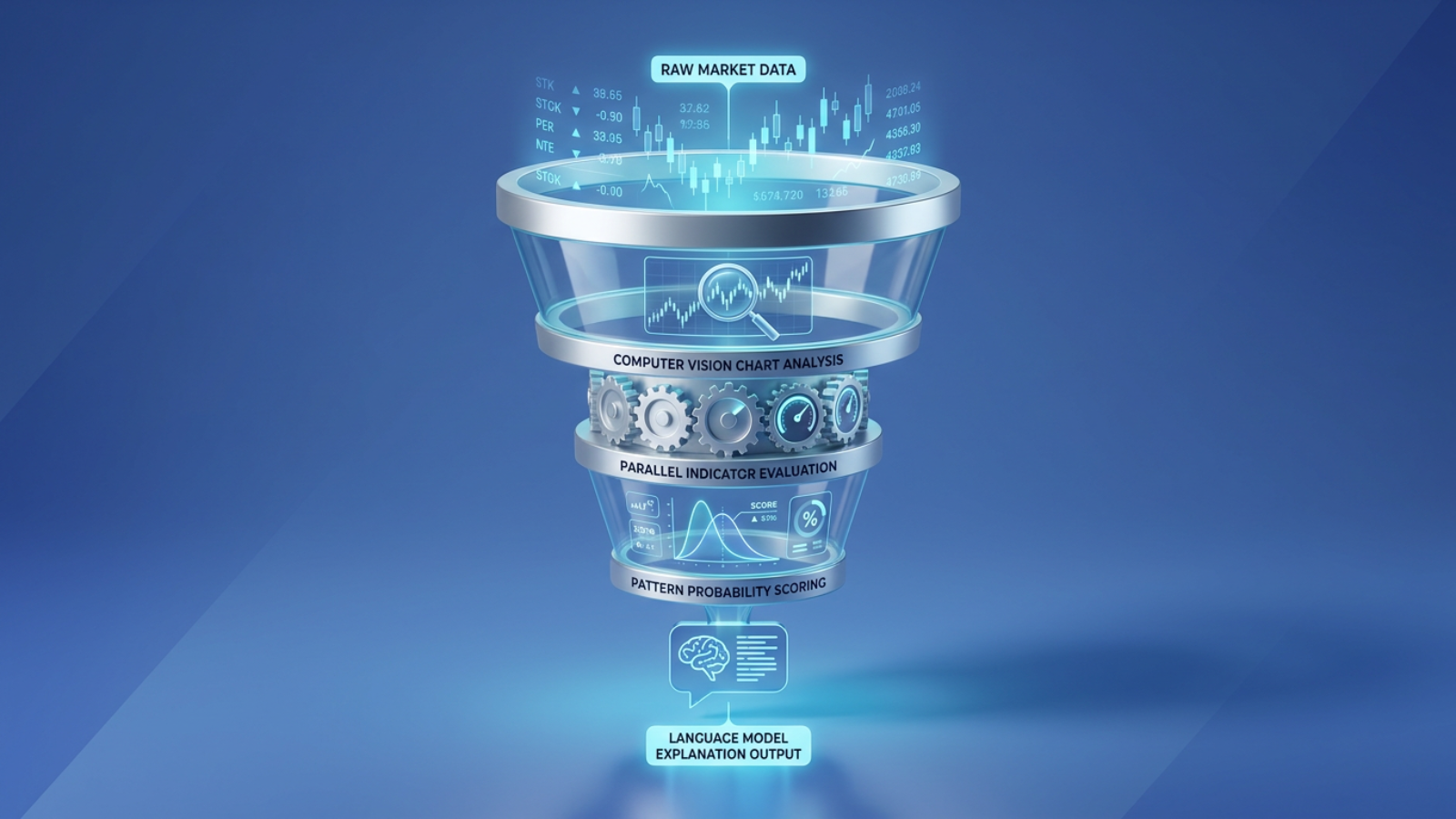
AI systems generate signals by layering computer vision, multi-indicator analysis, pattern recognition, and natural language processing.
Webull's Trading Assistant lets traders monitor real-time P&L, set custom alerts, and track daily win rates directly from the app.
Backtested accuracy figures can be misleading; always request out-of-sample results, include fees and slippage, and paper-trade before risking real capital.
Past performance is not indicative of future results. AI-generated insights may contain errors, and probabilistic models involve inherent uncertainty.
Part 1. What Are AI Trading Signals?
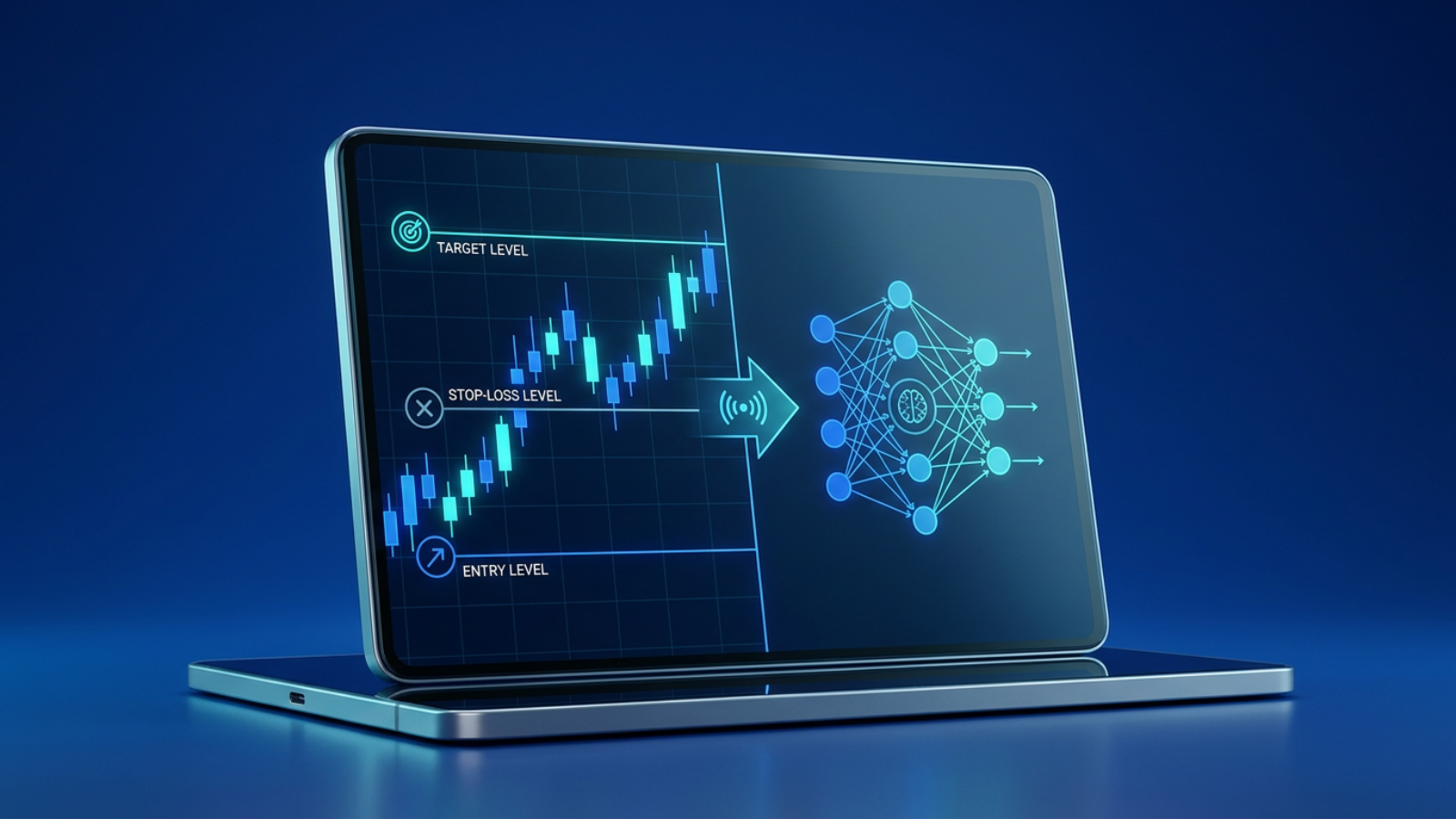
A trading signal is a specific instruction to buy or sell a financial instrument at a defined price and time. An AI trading signal is that same instruction generated by a statistical or machine learning model rather than a human analyst. The model ingests historical and live market data, identifies patterns it has learned to associate with future price moves, and outputs a directional call — often accompanied by a confidence score.
The word "AI" in this context covers a broad range of technologies: classical machine learning models such as random forests or gradient boosting, deep learning neural networks that process sequential price data, large language models that read news and social sentiment, and reinforcement learning agents trained to maximize risk-adjusted returns across simulated market episodes.
None of these technologies produce certainty. They produce a probability estimate that a pattern observed in historical data will repeat under similar market conditions. A signal marketed as "92% accurate" is describing past fit on training data — not a forecast of future outcomes. The market does not owe any model the same conditions it was trained on.
Past performance is not indicative of future results.
1.1 The Four Components of a Complete Signal
A reliable AI trading signal should always contain all four of the following elements:
Direction — whether the setup calls for a long (buy) or short (sell) position
Entry price — the specific level at which to enter the trade
Stop-loss — the price level at which the trade thesis is invalidated and the position should be closed to limit losses
Profit target — one or more price levels where gains are intended to be captured
A signal without a stop-loss is not a complete signal. The stop is what transforms a directional opinion into a position that can be properly sized. Without it, risk cannot be quantified, and position sizing becomes guesswork.
A risk-reward ratio compares the potential reward of a trade with its potential risk. For example, a 2:1 ratio means the potential reward is twice the potential risk. The ratio is one factor traders may consider when evaluating a trading setup.
Risk-Reward Ratio | Minimum Win Rate to Break Even |
|---|---|
1:1 | 50% |
1.5:1 | 40% |
2:1 | 33.3% |
3:1 | 25% |
Note: These figures exclude transaction costs, spreads, and slippage. Actual break-even thresholds will be higher in live trading.
1.2 Four Types of AI Trading Signals
Not all signals call for the same response. Understanding the type of signal you are receiving changes how you should act on it:
Entry signals indicate that a new position setup has formed with a definable stop. The appropriate response is to size the position according to your risk rules and take it — or skip it if it falls outside your plan.
Exit signals indicate that a profit target has been reached or that the original trade thesis has broken down. The appropriate response is to close the position or tighten the stop to lock in gains.
Warning signals flag weakening momentum, approaching resistance, or deteriorating conditions. These rarely call for immediate action but suggest reducing size or moving stops up.
Confirmation signals provide additional evidence supporting an already open trade. The appropriate response is generally to hold and consider trailing the stop higher.
Warning and confirmation signals are often treated as noise by newer traders — which is how otherwise sound positions get given back to the market.
Part 2. How AI Generates Trading Signals: The Technology Explained
2.1 Data Collection and Feature Engineering
Every AI signal pipeline begins with data. Models typically pull from multiple sources:
Price and volume data — returns, volatility, momentum across multiple timeframes
Order book data — depth, imbalance, and large-order detection
Derivatives data — funding rates, open interest, and options flow where relevant
Alternative data — news sentiment, social media activity, and economic releases
Raw data is then transformed into features the model can learn from: returns over various windows, volatility measures, momentum indicators, and correlations between related assets. Data quality sets the ceiling for everything that follows — models trained on incomplete or delayed feeds will produce signals that look cleaner in backtests than they perform in live markets.
2.2 Machine Learning Models Behind Signal Generation
Once features are engineered, the model is trained to map those inputs to a future outcome — typically whether price will be higher or lower after a defined time horizon. The main model architectures used in signal generation include:
Classical ML (random forests, gradient boosting): trained on engineered features like moving average crossovers, volatility regimes, and volume profiles
Deep learning (LSTM, Transformer networks): learn patterns directly from sequences of price and order book data without manual feature engineering
Large language models: parse news and earnings transcripts to generate a directional sentiment bias
Reinforcement learning: agents optimized to maximize a reward such as risk-adjusted return across thousands of simulated market episodes
The critical distinction between a legitimate signal system and a misleading one often comes down to how the model was validated. A model tested only on its training data — a practice called in-sample testing — will show impressive results that collapse in live trading. Robust validation requires out-of-sample data the model has never seen, walk-forward testing across different market regimes, and realistic transaction cost assumptions including spread, slippage, and brokerage fees.
Other common sources of inflated accuracy figures include survivorship bias (only highlighting strategies that worked, while quietly discarding failures) and look-ahead bias (accidentally feeding the model information that would not have been available at the moment of the trade).
2.3 Pattern Recognition and Technical Indicator Analysis
AI systems excel at identifying chart patterns and technical indicator conditions that would take a human analyst significant time to review across thousands of securities simultaneously. Common technical inputs include:
MACD (Moving Average Convergence Divergence) — crossover signals and histogram direction
RSI (Relative Strength Index) — overbought/oversold conditions, interpreted in the context of the prevailing trend
Moving averages — short-term and long-term crossovers
Bollinger Bands — volatility expansion and contraction signals
Chart formations — head and shoulders, flags, triangles, cup and handle, double bottoms
A key advantage of AI pattern recognition is contextual interpretation: an RSI reading of 30 has different implications in a confirmed uptrend versus a developing bear market. AI models can evaluate which indicators are most predictive for a specific instrument under specific market conditions, rather than applying static rules uniformly.
Win rates for well-identified chart patterns can vary widely. Investors should note that published pattern win rate figures typically reflect idealized backtested conditions and may differ substantially from live trading results after costs and execution delays are accounted for.
Part 3. How to Use AI Trading Signals on Webull
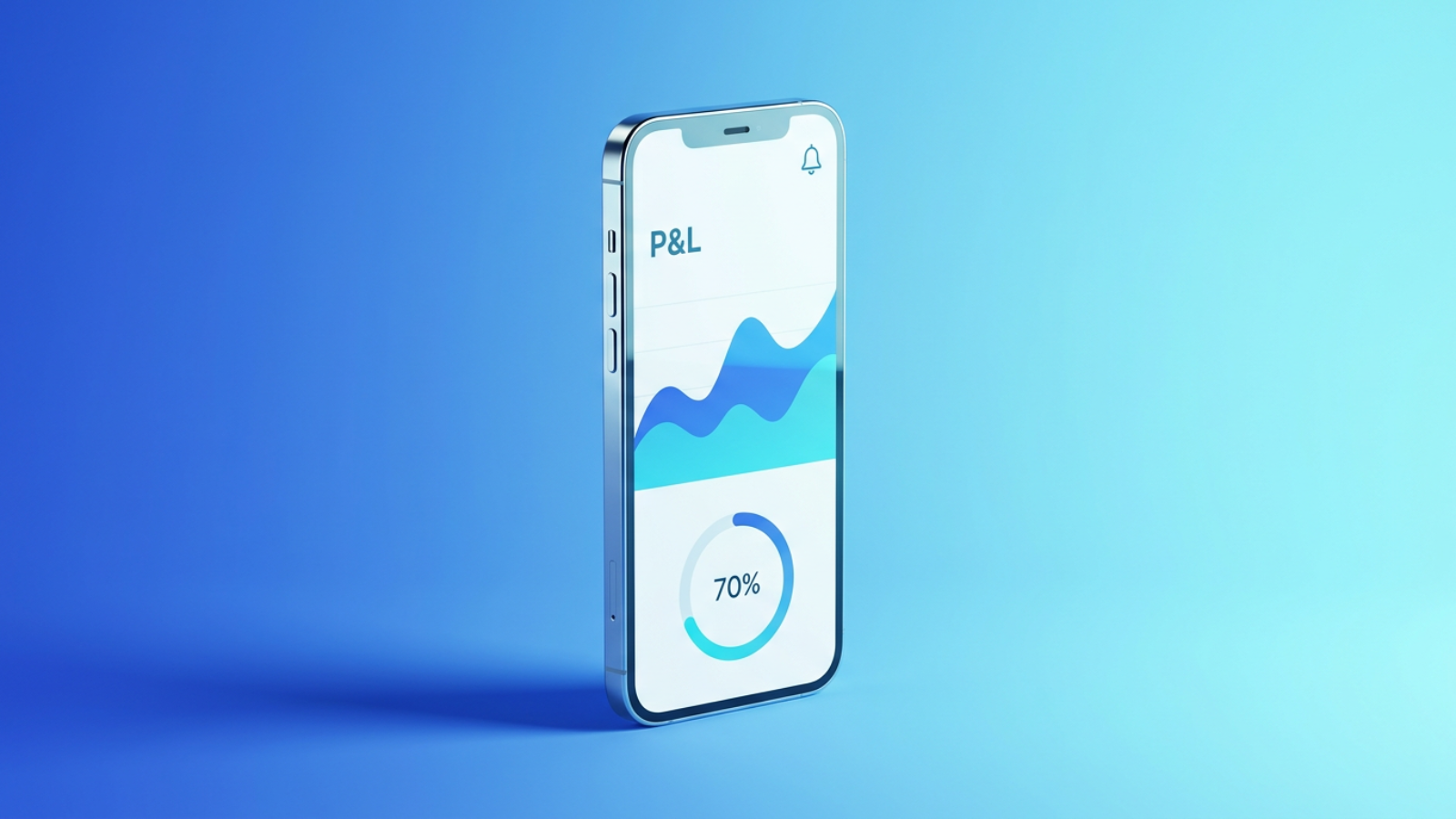
Webull offers US traders a suite of tools for monitoring trading activity in real time and acting on signals with speed and precision. The platform's Trading Assistant is designed specifically to bring signal-relevant data — profit and loss tracking, order management, and alert customization — into a single, accessible interface.
You can explore Webull's full platform capabilities at www.webull.com.
3.1 Webull Trading Assistant: Real-Time P&L and Alert Tools
The Trading Assistant on Webull allows traders to:
View trading and profit & loss (P&L) data in real time
Set custom alerts to track open P&L positions
Manage open and pending orders directly within the tool
Monitor a daily win rate — calculated as the number of profitably closed positions divided by the total number of stock and options trades made in a day
This makes the Trading Assistant particularly useful for traders who use AI signals as entry and exit triggers: you can see at a glance whether your positions are tracking toward signal targets, and receive push notifications the moment a defined P&L threshold is crossed.
To access the Trading Assistant on the Webull mobile app: Menu → More (below Shortcuts) → Trading Assistant.
3.2 Setting P&L Alerts on Webull
P&L alerts on Webull are configured to send a push notification when a defined profit or loss level is reached on an open position. Key details traders should know:
You will receive one alert per day for each P&L alert you have set
All triggered P&L alert notifications can be reviewed in the Messages section of the app
Order alerts (separate from P&L alerts) trigger a popup notification when an order condition is met
This alert structure maps directly onto a signal-based trading workflow: set your stop-loss and profit target levels as P&L alerts, and Webull notifies you when either threshold is approached — helping you stay disciplined without watching screens continuously.
For detailed guidance on Webull's full range of tools, visit www.webull.com.
3.3 Win Rate Tracking on Webull
Webull's Trading Assistant calculates a total win rate for each trading day. The metric is straightforward: the number of trades closed at a profit divided by the total number of stock and options trades executed that day.
Tracking win rate alongside average gain and average loss per trade gives traders a clearer picture of whether their signal-based strategy is generating a positive expected value over time. A high win rate paired with small average gains and large average losses can still produce a net-negative outcome — which is why monitoring the full distribution of outcomes matters, not just the hit rate.
Webull is registered with the SEC and is a member of FINRA and SIPC. Securities in Webull accounts are protected by SIPC up to $500,000 (including $250,000 for cash claims). For full details on account protection and fee schedules, visit www.webull.com.
Part 4. Evaluating AI Trading Signal Providers in the US

The US market includes a wide range of platforms that offer AI-generated trading signals, from broker-integrated tools to standalone third-party services. Evaluating them rigorously is essential — the quality gap between providers is significant, and some services in this space carry material risks for retail investors.
4.1 Platform Comparison Overview
When Webull is listed alongside other platforms, it stands out for its integration of real-time P&L tracking and alert tools directly within a regulated US brokerage environment — providing signal-adjacent functionality without requiring traders to rely on unverified third-party signal subscriptions.
Platform Type | Signal Transparency | Key Consideration |
|---|---|---|
Webull (Trading Assistant) | High — real-time P&L and win rate data within a regulated US brokerage | Integrated alert tools; FINRA/SIPC member; no unverified third-party signals |
Standalone AI signal services | Variable — often low | Verify out-of-sample track records; many publish only favorable results |
Exchange-integrated AI features | Variable | Convenience does not equal audited performance |
Self-built ML models | Full — trader owns the logic | Requires technical expertise; overfitting risk if not properly validated |
Free public signal channels | Very low | Recycled or randomly generated calls; no accountability |
Rates vary by service provider; please refer to the latest pricing.
4.2 Red Flags to Avoid
When evaluating any AI trading signal service — whether free or paid — watch for these warning signs:
"Guaranteed" or "risk-free" return language. No legitimate trading system uses this wording. Under FINRA Rule 2210(d), such claims are prohibited in financial communications.
Screenshots of wins with no record of losses. Cherry-picked performance data without full loss history is a common pattern in signal scams.
In-sample accuracy figures presented as live performance. A model that looks "90% accurate" on its own training data is not validated.
High-pressure urgency tactics. Phrases like "act now" or "limited spots" are pressure tactics inconsistent with legitimate financial services.
Generic signals sent to thousands of subscribers regardless of account size. A profitable signal degrades in effectiveness as more capital chases the same setup.
A self-built or independently audited model is the only option where you can fully inspect the methodology and verify it on out-of-sample data. If evaluating a paid service, paper-trade the signals across at least several weeks and different market conditions before risking real capital.
4.3 Risk Management Framework for Signal-Based Trading
A signal alone is not a strategy. To use AI trading signals responsibly, wrap them in a systematic risk framework:
Step 1 — Define position sizing rules. Decide in advance what percentage of your account you will risk on each signal, typically a small fixed percentage. This prevents any single trade from doing serious damage to the portfolio.
Step 2 — Consider Stop-Loss Orders and Invalidation Levels. A stop-loss order can be used to define a potential exit level for a trade. An invalidation level identifies a price point or condition that may indicate that the original trading thesis is no longer valid.
Step 3 — Apply a signal filter. Only act on signals that align with your higher-level directional bias or a defined market condition. Acting on every signal the model emits increases trade frequency without improving edge.
Step 4 — Keep a trading journal. Record every signal acted on, entry and exit prices, signal type, and outcome. After 30 or more trades, patterns in what works for your style typically become apparent.
Step 5 — Review performance across market regimes. A strategy that worked during a low-volatility bull market may perform differently during periods of elevated volatility or drawdown. Assess results across different conditions, not just recent history.
Tax treatment of trading gains and losses varies by individual circumstances. Nothing in this article constitutes tax advice. Actual results may vary by individual. Consult a qualified tax professional for guidance specific to your situation.
Part 5. Regulatory and Safety Considerations for US Traders

US retail traders using AI trading signals operate within a well-defined regulatory framework. Understanding the key bodies and protections helps you make informed decisions about where to trade and which signal services to consider.
FINRA (Financial Industry Regulatory Authority) oversees broker-dealers in the US. FINRA Rule 2210 requires that all communications with the public — including marketing claims about AI tools and signals — be fair, balanced, and not misleading. Exaggerated or unwarranted performance claims from signal providers may violate these standards.
FINRA — https://www.finra.org/
SEC (Securities and Exchange Commission) regulates securities markets and enforces anti-fraud rules including Exchange Act Rule 10b-5, which prohibits material misstatements in connection with the purchase or sale of securities. The SEC's Marketing Rule (Rule 206(4)-1) also governs how registered investment advisers may present performance data and use testimonials.
SEC — https://www.sec.gov/
SIPC (Securities Investor Protection Corporation) protects the securities and cash in customer accounts of member broker-dealers up to $500,000 (including up to $250,000 for cash) in the event of a brokerage firm failure. SIPC protection does not cover investment losses from market fluctuations or bad trading decisions.
SIPC — https://www.sipc.org/
When selecting a platform for signal-based trading, verify that the broker is a FINRA member and SIPC participant. Webull is a FINRA member and SIPC participant. For full details on regulatory status, fee schedules, and account protections, visit www.webull.com.
The Bottom Line
AI trading signals can support a more disciplined, data-driven approach to US markets — but only when used inside a systematic strategy with clear risk rules. Tools like Webull's Trading Assistant provide real-time P&L tracking, customizable alerts, and win rate monitoring within a regulated, SIPC-protected environment. Evaluate every signal source critically, manage risk consistently, and remember: past performance is not indicative of future results. Explore Webull's full platform at Webull.
Disclosure
Vega AI is an artificial intelligence tool provided for informational and educational purposes only, it does not provide investment advice, recommendations, or endorsements, and outputs may contain errors for which we make no guarantees of accuracy, completeness, or reliability. Vega Analyst requires subscription, fees may apply. Credit usage varies per report and cannot be guaranteed.
Webull Financial LLC (member SIPC, FINRA) offers self-directed securities trading. All investments involve risk. More info: https://www.webull.com/policy
The information provided does not constitute investment advice and it should not be relied on as such. It should not be considered a solicitation to buy or an offer to sell a security. It does not take into account any investor's particular investment objectives, strategies, tax status or investment horizon. Investing involves risk, including the risk of loss of principal.
