'%3e %3cpath d='M41.7832962%2c0 C41.9459106%2c0 42.0882746%2c0.0866854658 42.1666825%2c0.216359069 C43.8289923%2c2.66540836 44.7676281%2c5.46271319 44.7676281%2c8.43208061 C44.7676281%2c18.1345746 34.7460532%2c26 22.383814%2c26 C10.0215749%2c26 0%2c18.1345746 0%2c8.43208061 C0%2c5.46716016 0.935826425%2c2.67378733 2.58829888%2c0.223985685 C2.67109477%2c0.0916264068 2.81687473%2c0 2.9840593%2c0 C3.23130408%2c0 3.43173558%2c0.200393004 3.43173558%2c0.447590303 C3.43173558%2c0.475056669 3.42926112%2c0.501945205 3.42452292%2c0.528045226 L3.41810883%2c0.550292077 C3.37800671%2c0.861741908 3.3575721%2c1.17661276 3.3575721%2c1.49443092 C3.3575721%2c7.98336 11.2132389%2c12.5742305 22.383814%2c12.5742305 C33.5543891%2c12.5742305 41.410056%2c7.98336 41.410056%2c1.49443092 C41.410056%2c1.17865223 41.3898828%2c0.865783153 41.3502888%2c0.556288325 C41.3402868%2c0.521941442 41.3356199%2c0.48531078 41.3356199%2c0.447590303 C41.3356199%2c0.200393004 41.5360514%2c0 41.7832962%2c0 Z' id='logo%e5%a4%87%e4%bb%bd-6' fill='white'%3e%3c/path%3e %3cpath d='M74.6899231%2c3.74404927 C75.2411227%2c3.74404927 75.7734299%2c3.66184338 76.2756219%2c3.50883715 L73.8159676%2c20.8666902 C73.5770593%2c22.5662954 72.8072434%2c23.0518969 71.4268838%2c23.0518969 L69.9934336%2c23.0518969 C68.7988917%2c23.0518969 68.1618027%2c22.458384 67.7901674%2c20.893668 L65.6930827%2c11.9909739 C65.639992%2c11.7481731 65.639992%2c11.6942174 65.5338105%2c11.6942174 C65.427629%2c11.6942174 65.4010836%2c11.7481731 65.3479929%2c11.9909739 L63.2509082%2c20.893668 C62.8792729%2c22.458384 62.2421839%2c23.0518969 61.047642%2c23.0518969 L59.6141918%2c23.0518969 C58.2338322%2c23.0518969 57.4640163%2c22.5662954 57.225108%2c20.8666902 L54.7463723%2c3.37406084 C55.3593498%2c3.61307396 56.0249975%2c3.74404927 56.7207458%2c3.74404927 C57.3314263%2c3.74404927 57.918917%2c3.64314414 58.4679557%2c3.4568446 L60.3574623%2c19.3829078 C60.3840076%2c19.6257086 60.3840076%2c19.7875757 60.4901891%2c19.7875757 C60.5963706%2c19.7875757 60.5963706%2c19.6257086 60.6494614%2c19.3829078 L62.9323637%2c9.91367858 C63.0916359%2c9.26620991 63.4632712%2c8.69967483 64.6047223%2c8.69967483 L66.4363532%2c8.69967483 C67.5778044%2c8.69967483 67.9494397%2c9.26620991 68.1087119%2c9.91367858 L70.3916142%2c19.3829078 C70.4447049%2c19.6257086 70.4447049%2c19.7875757 70.5508864%2c19.7875757 C70.6570679%2c19.7875757 70.6570679%2c19.6257086 70.6836133%2c19.3829078 L72.5891207%2c3.32292288 C73.2365902%2c3.59432921 73.9460524%2c3.74404927 74.6899231%2c3.74404927 Z' id='Combined-Shape' fill='white'%3e%3c/path%3e %3cpath d='M84.5933901%2c7.43171536 C88.6813779%2c7.43171536 90.9111894%2c10.2643908 90.9111894%2c14.2840921 L90.9111894%2c15.7948523 C90.9111894%2c16.2264981 90.7519172%2c16.4692988 90.3802819%2c16.4692988 L81.7264895%2c16.4692988 L81.7264895%2c16.5502324 C81.7264895%2c18.1149484 82.3635785%2c19.9764208 84.9119346%2c19.9764208 C86.849747%2c19.9764208 88.6813779%2c19.8145536 89.7962837%2c19.7066422 L89.8759198%2c19.7066422 C90.1413735%2c19.7066422 90.3537366%2c19.8415315 90.3537366%2c20.1113101 L90.3537366%2c21.8918489 C90.3537366%2c22.3234947 90.2741004%2c22.5123397 89.7962837%2c22.5932733 C88.0708343%2c22.9170076 87.0355646%2c23.0518969 84.6464808%2c23.0518969 C81.9919433%2c23.0518969 78.2225%2c21.5950924 78.2225%2c16.2804538 L78.2225%2c14.2840921 C78.2225%2c10.0755457 80.5319476%2c7.43171536 84.5933901%2c7.43171536 Z M84.5933901%2c10.5071915 C82.9475768%2c10.5071915 81.7530349%2c11.6942174 81.7530349%2c13.8254684 L81.7530349%2c13.9333799 L87.3806545%2c13.9333799 L87.3806545%2c13.8254684 C87.3806545%2c11.7211953 86.2392034%2c10.5071915 84.5933901%2c10.5071915 Z' id='Combined-Shape' fill='white'%3e%3c/path%3e %3cpath d='M97.4154906%2c2.98826245 L97.4148064%2c7.62056039 C98.3969853%2c7.48567108 99.3260735%2c7.43171536 99.9631625%2c7.43171536 C104.236968%2c7.43171536 106.307507%2c9.99461216 106.307507%2c14.2031585 L106.307507%2c16.2804538 C106.307507%2c20.4890001 104.236968%2c23.0518969 99.9631625%2c23.0518969 C98.2642584%2c23.0518969 96.2733553%2c22.7821183 94.627542%2c22.3504725 C94.0169984%2c22.1886054 93.9108169%2c22.0267382 93.9108169%2c21.6220703 L93.9098179%2c3.08694115 C94.4185466%2c3.24434375 94.9584615%2c3.32900525 95.5178331%2c3.32900525 C96.184659%2c3.32900525 96.8238351%2c3.20869291 97.4154906%2c2.98826245 Z M99.9631625%2c10.3453244 C99.3260735%2c10.3453244 98.1580769%2c10.4262579 97.4148064%2c10.5341694 L97.4148064%2c19.9494429 C97.9191686%2c20.0573544 99.007529%2c20.1382879 99.9631625%2c20.1382879 C102.246065%2c20.1382879 102.803518%2c18.4926384 102.803518%2c16.2804538 L102.803518%2c14.2031585 C102.803518%2c11.9909739 102.246065%2c10.3453244 99.9631625%2c10.3453244 Z' id='Combined-Shape' fill='white'%3e%3c/path%3e %3cpath d='M111.036668%2c8.72457747 C111.579488%2c8.72457747 112.103987%2c8.64485191 112.599444%2c8.49629404 L112.598761%2c16.5232546 C112.598761%2c19.3289521 113.607485%2c19.9764208 115.147117%2c19.9764208 L115.306389%2c19.9764208 C116.846021%2c19.9764208 117.854746%2c19.3289521 117.854746%2c16.5232546 L117.854207%2c8.4334735 C118.406525%2c8.62226395 118.997939%2c8.72457747 119.612866%2c8.72457747 C120.223332%2c8.72457747 120.810625%2c8.62374317 121.359498%2c8.43756894 L121.358735%2c16.5232546 C121.358735%2c22.4044283 116.872567%2c23.0518969 115.306389%2c23.0518969 L115.060464%2c23.0512514 C113.42215%2c23.0271041 109.094772%2c22.2994073 109.094772%2c16.5232546 L109.094446%2c8.36700801 C109.698522%2c8.59813531 110.353066%2c8.72457747 111.036668%2c8.72457747 Z' id='Combined-Shape' fill='white'%3e%3c/path%3e %3cpath d='M128.314162%2c3.03790128 L128.313623%2c22.269539 C128.313623%2c22.5662954 128.10126%2c22.836074 127.809261%2c22.836074 L125.340541%2c22.836074 C125.048542%2c22.836074 124.809634%2c22.5662954 124.809634%2c22.269539 L124.809455%2c3.04219481 C125.358161%2c3.22824247 125.945253%2c3.32900525 126.555503%2c3.32900525 C127.17043%2c3.32900525 127.761844%2c3.22669173 128.314162%2c3.03790128 Z' id='Combined-Shape' fill='white'%3e%3c/path%3e %3cpath d='M133.90653%2c3.32900525 C134.473329%2c3.32900525 135.02015%2c3.24208064 135.534793%2c3.08063296 L135.533966%2c22.269539 C135.533966%2c22.5662954 135.321603%2c22.836074 135.029603%2c22.836074 L132.560884%2c22.836074 C132.268884%2c22.836074 132.029976%2c22.5662954 132.029976%2c22.269539 L132.029909%2c2.99605058 C132.615669%2c3.21152525 133.2476%2c3.32900525 133.90653%2c3.32900525 Z' id='Combined-Shape' fill='white'%3e%3c/path%3e %3c/g%3e %3c/g%3e %3c/g%3e%3c/svg%3e)



Artificial intelligence has moved from Wall Street back-offices to retail trading desks, giving everyday US investors access to tools once reserved for institutional quants. Whether you're exploring AI trading strategies for the first time or looking to sharpen an existing systematic approach, understanding how these technologies work — and where they fall short — is essential before committing real capital. This guide breaks down the core concepts, leading platforms, and workflow best practices, so you can make informed decisions. Past performance is not indicative of future results.
Key Takeaways
The global AI trading market was valued at $11.2 billion in 2024 and is projected to reach $33.45 billion by 2030, reflecting rapid mainstream adoption.
AI trading strategies rely on machine learning, sentiment analysis, and algorithmic models to analyze data and surface potential trade ideas — they do not guarantee profitable outcomes.
US investors can access AI tools across a spectrum: from scanning and signal generation to automated execution via broker API.
Webull offers a built-in Trading Assistant that tracks real-time P&L, calculates daily win rates, and delivers configurable order and P&L alerts — useful for active traders managing multiple positions.
FINRA, the SEC, and SIPC oversight applies to the platforms and brokerages you use; understanding regulatory protections is as important as understanding the technology.
All AI tools should be treated as decision-support aids, not substitutes for personal judgment or professional financial advice.
Part 1. What Are AI Trading Strategies? Core Concepts Every US Investor Should Know
AI trading strategies refer broadly to the use of artificial intelligence — including machine learning models, natural language processing, and algorithmic prediction engines — to analyze market data, generate trade ideas, manage risk, and, in some cases, execute trades automatically. The global AI trading platform market was valued at $11.2 billion in 2024 and is projected to nearly triple to $33.45 billion by 2030, underscoring how quickly these capabilities are reaching retail investors.
BuiltIn — https://builtin.com/artificial-intelligence/ai-trading-stock-market-tech
Unlike traditional rule-based systems that follow fixed instructions, modern AI trading strategies adapt as they process more data. That adaptability is both their primary strength and one of their core risks: a model trained on a specific market regime may underperform when conditions change.
1.1 How Machine Learning Drives AI Trading
Machine learning is the engine at the center of most modern AI trading systems. Rather than following a static playbook, these models analyze patterns in historical price data, trading volume, financial reports, and even news sentiment to anticipate market behavior. By processing large volumes of real-time and historical data, machine learning aims to reduce human bias and accelerate decision-making.
Two core approaches dominate:
Adaptive trading uses reinforcement learning to continuously adjust strategy based on evolving market conditions, often through AI agents that function as algorithmic portfolio managers.
Algorithmic trading (algo-trading) applies pre-defined rule sets informed by machine learning and deep learning to analyze trends and execute trades systematically.
Neither approach eliminates uncertainty. Markets are influenced by geopolitical events, sudden sentiment shifts, and structural changes that historical data may not capture. Investors using these tools should account for the possibility that AI-identified patterns may not hold in future environments.
1.2 Types of AI Trading Strategies
US investors encounter several categories of AI-driven strategies:
Quantitative trading: Uses mathematical models to analyze stock price and volume, often deployed in large-scale institutional transactions.
High-frequency trading (HFT): Executes large numbers of orders in milliseconds using powerful computing infrastructure. Primarily accessible to institutional players, not typical retail investors.
Automated/algorithmic trading: Executes trades based on pre-programmed criteria, removing discretionary judgment from individual trade decisions.
Arbitrage trading: Exploits price discrepancies across markets by buying an asset in one venue and selling it at a higher price in another. AI tools help identify these fleeting inefficiencies across thousands of instruments simultaneously.
Swing trading with AI signals: Holds positions for two to twenty trading days, leveraging AI to detect multi-day patterns such as institutional accumulation and technical breakouts.
Each strategy type carries distinct risk profiles, and no single approach is appropriate for all investors. Transaction costs, slippage, and changing market regimes can significantly affect real-world results compared to backtested projections.
Part 2. Key AI Trading Use Cases: How the Technology Actually Works
Understanding what AI does at each stage of the trading process helps you evaluate platforms more critically and set realistic expectations.
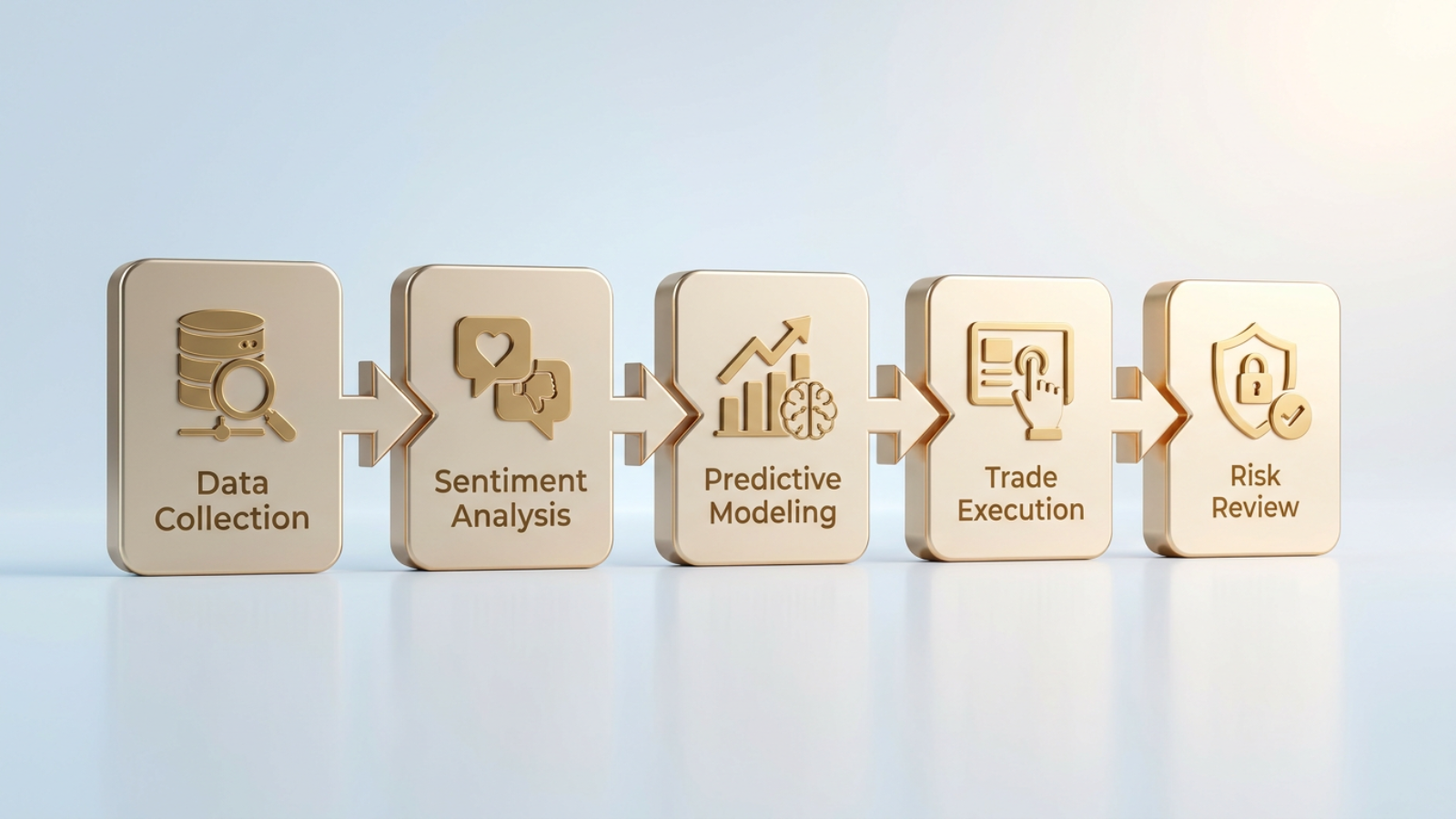
2.1 Data Mining and Sentiment Analysis
Data mining involves compiling and analyzing large volumes of historical market data to identify trends and behavioral patterns. AI tools can surface insights from years of price history far faster than manual analysis, helping investors contextualize current conditions against precedent.
Sentiment analysis extends beyond price charts to monitor financial discussions across news platforms, social media, and community forums. Using natural language processing, AI systems identify shifts in market psychology that might precede price movements. This provides an additional signal layer alongside technical and fundamental analysis — though sentiment shifts can reverse quickly, and signals derived from social data carry significant noise.
2.2 Predictive Modeling and Backtesting
Predictive modeling applies historical data to anticipate possible future price behavior. It is important to note that this is probabilistic, not deterministic: models identify conditions that have historically correlated with certain outcomes, not what will necessarily happen.
Backtesting allows investors to simulate how a strategy would have performed on historical data before deploying it with real capital. Most serious AI trading platforms — including TrendSpider, Trade Ideas, and StockHero — offer backtesting capabilities. However, a strategy that performs well in a backtest does not guarantee equivalent live performance. Overfitting (building a strategy that matches historical data too precisely) and survivorship bias are common pitfalls.
Savvy investors run walk-forward testing — validating a strategy on out-of-sample data periods — before treating any backtest as meaningful evidence of edge.
2.3 Risk Modeling and Stress Testing
AI tools can generate risk models that weigh the probability of various adverse outcomes using historical data, helping investors assess how exposed their portfolio might be to common investment pitfalls. Stress testing takes this further by simulating how a strategy holds up under specific adverse historical scenarios — such as periods of sharp volatility or market dislocation.
These capabilities help investors take a more proactive approach to risk management. Still, even sophisticated risk models cannot fully anticipate genuinely novel market conditions, such as unprecedented geopolitical events or structural market shifts.
Part 3. Top Platforms Supporting AI Trading Strategies for US Investors
The following platforms are among those most frequently referenced by US retail investors exploring AI-assisted trading. Rates, features, and subscription tiers are subject to change; please refer to each provider's current pricing for the most accurate information. Rates vary by service provider; please refer to the latest pricings.
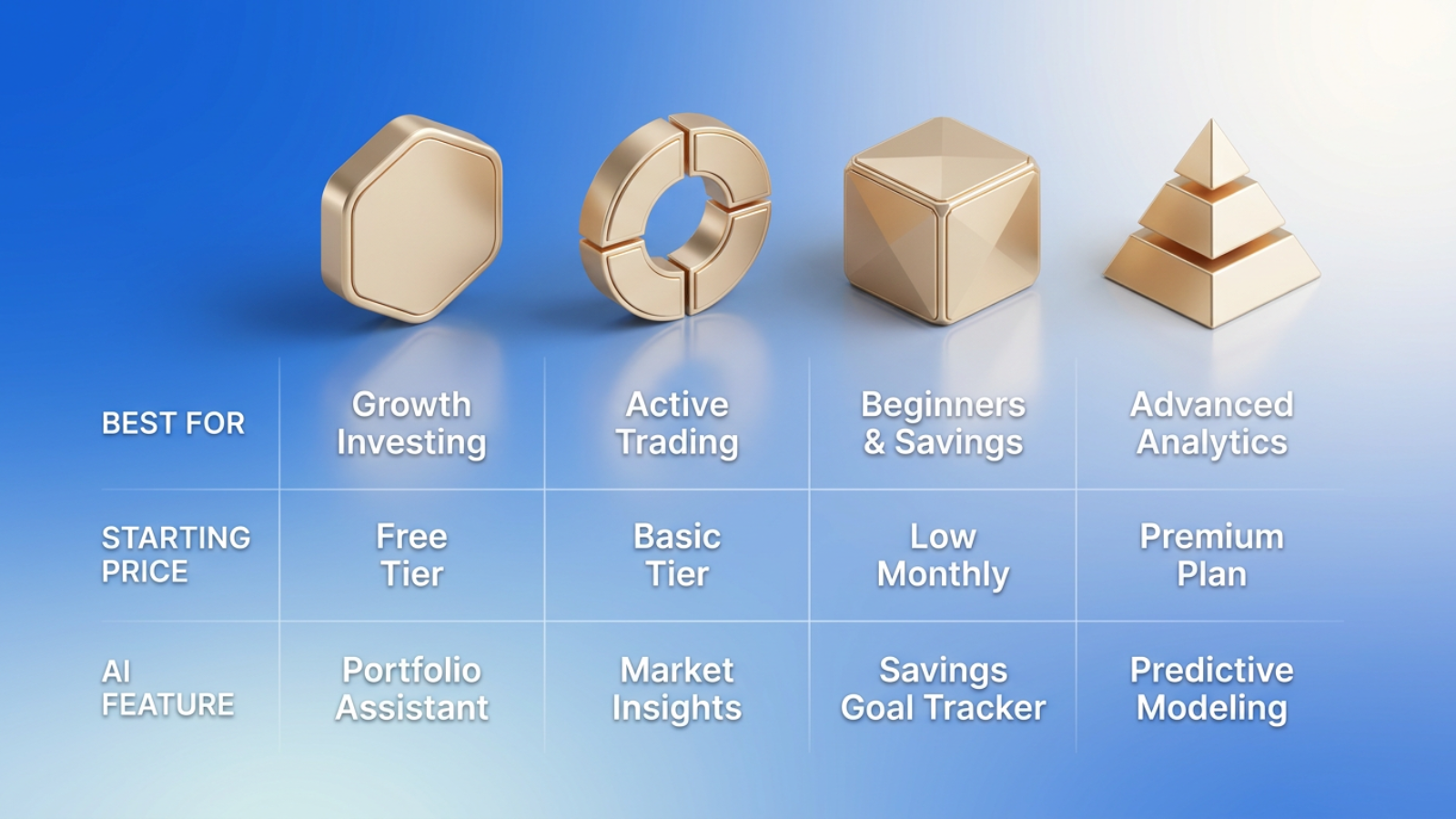
3.1 Webull — AI-Assisted Tools for Active US Traders
Webull stands out among US brokerages for integrating real-time AI-assisted trading tools directly within the platform experience — without requiring a separate third-party subscription. Webull is registered with the SEC, a member of FINRA, and accounts are protected by SIPC up to applicable coverage limits.
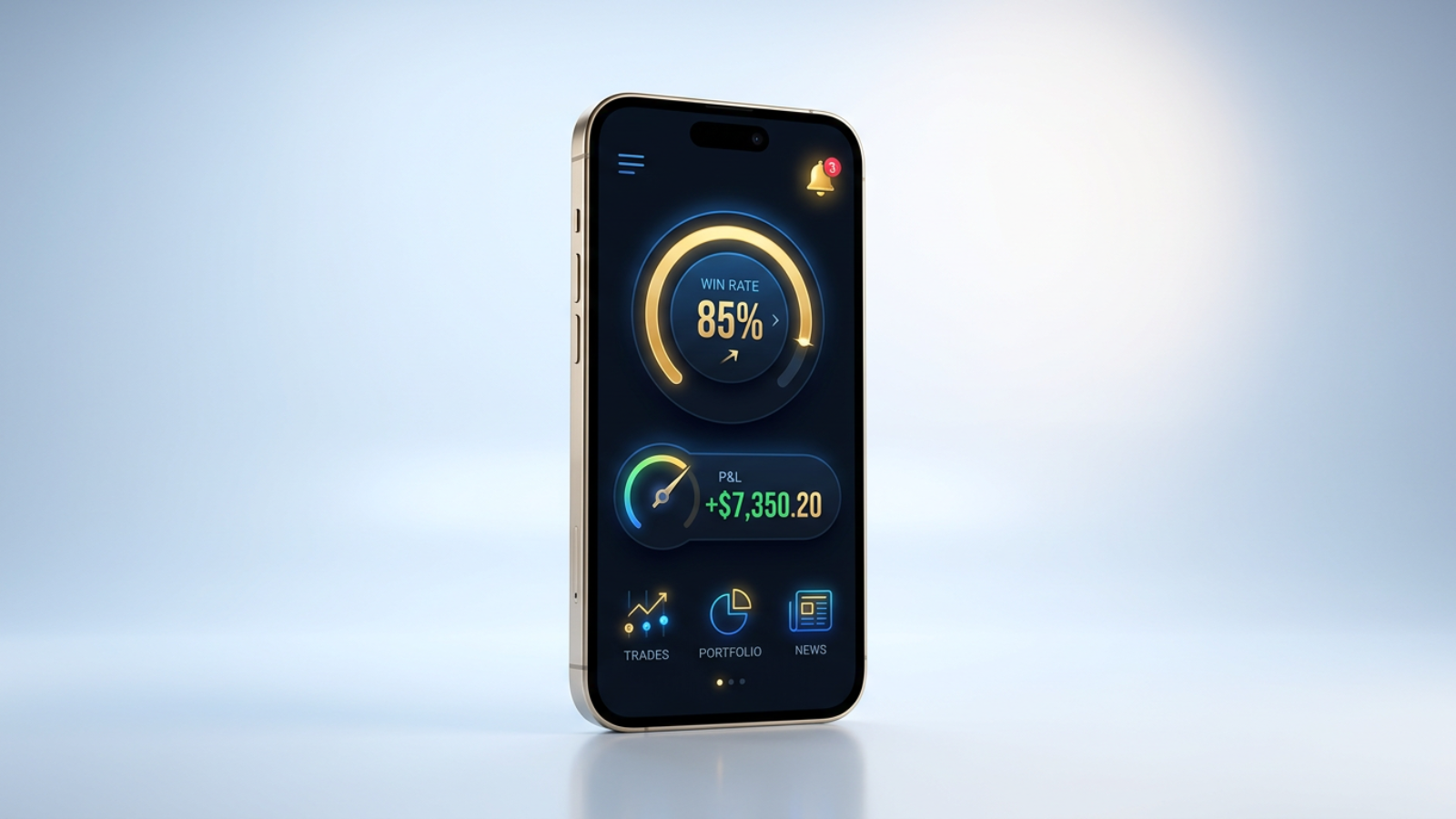
Trading Assistant: Real-Time P&L and Performance Tracking
Webull's Trading Assistant is designed for active traders who need to monitor open positions and performance in real time. Key capabilities include:
Real-time P&L visibility: View your trading and profit & loss data as positions evolve throughout the session, giving you up-to-date context on open exposure.
Win rate calculation: The Trading Assistant calculates your total win rate by measuring the number of times you successfully closed a profitable position against the total number of stock and options trades made in a day — providing a data-driven performance metric beyond raw dollar P&L.
Configurable alerts: Set P&L alerts to receive push notifications when a threshold is reached, or order alerts that trigger a popup notification when specific order conditions are met.
Alert management: You will receive one P&L alert per day per alert setting, with all P&L alert notifications accessible in the Messages section for review.
Accessing the Trading Assistant on Webull
The Trading Assistant is available through the Webull mobile app:
Open the app and navigate to Menu
Below Shortcuts, select More
Select Trading Assistant
This keeps real-time performance data within the same interface used for order execution — reducing the need to switch between multiple applications during an active trading session.
Why Webull Is Worth Considering for AI-Assisted Trading
Beyond the Trading Assistant, Webull www.webull.com provides a broad set of features relevant to active US traders:
Commission-free trading on US-listed stocks, ETFs, and options (other fees, such as regulatory fees, may apply — see Webull's full fee schedule)
Extended hours trading capabilities
Advanced charting tools with technical indicators
Paper trading (simulated trading) for strategy testing without risk to real capital
Integration compatibility: StockHero, a platform for automated bot trading, lists Webull among its supported broker API connections
For traders who want AI-powered P&L monitoring and alert functionality within a regulated US brokerage environment — without paying an additional third-party subscription fee — Webull's built-in Trading Assistant is a practical starting point. Users exploring automated strategy layers can also investigate StockHero's API integration with Webull for bot-based approaches, subject to their own understanding of the associated risks and costs.
Webull Pros and Cons
✅ Built-in Trading Assistant with real-time P&L tracking and win rate metrics
✅ Configurable P&L and order alerts via push notification
✅ Commission-free trading (regulatory fees may apply)
✅ Paper trading available for risk-free strategy testing
✅ SEC-registered, FINRA member, SIPC-protected
⚠️ Trading Assistant provides performance data and alerts — it does not provide personalized investment recommendations
⚠️ As with all active trading, results are not guaranteed and losses are possible
Visit www.webull.com to explore current account types and features.
3.2 Trade Ideas — AI Stock Scanner for US Equities Day Traders
Trade Ideas is a long-established market analysis platform focused exclusively on US equities and ETFs. Its flagship AI component is Holly, a system that backtests dozens of algorithms overnight against recent market data and surfaces high-probability setups for the session ahead. The platform offers approximately 50 prebuilt strategies for active traders.
Pricing: A free "Par Plan" provides delayed data and basic tools. The premium "Eagle Elite" tier, which unlocks Holly AI and full backtesting, runs $254/month or approximately $178/month billed annually. Rates vary by service provider; please refer to the latest pricings.
Best for: Active US equities day traders who want AI-optimized intraday signals and real-time scanning across the full US stock universe.
Key consideration: Holly's simulations are based on recent historical data. Performance in live markets depends on prevailing conditions, slippage, and execution quality. Past performance of Holly's signals does not guarantee future results.
stockbrokers.com — https://www.stockbrokers.com/guides/ai-stock-trading-bots
3.3 TrendSpider — Automated Chart Pattern Recognition
TrendSpider automates trendline detection, multi-timeframe confluence analysis, and pattern recognition across equities, ETFs, forex, crypto, and futures. Its Strategy Tester allows investors to write rules in plain English and backtest them without coding knowledge.
Pricing: Plans start at approximately $39–$82/month depending on tier and billing period. Rates vary by service provider; please refer to the latest pricings.
Best for: Technical traders who spend significant time manually drawing chart structures and want to automate the pattern-identification process across a broad watchlist.
Key consideration: Automated pattern recognition still requires human judgment for context. A pattern flagged by an AI tool should be evaluated against broader market conditions before acting.
fortraders.com — https://fortraders.com/blog/ai-trading-tools-work
3.4 StockHero — Bot Trading with Broker API Integration
StockHero enables traders to create automated bots connected to a brokerage account via API, supporting US and international equities, ETFs, futures, forex, CFDs, and cryptocurrencies. A marketplace allows users to browse and rent existing strategies from other traders. StockHero's supported broker list includes Webull, TradeStation, and others in beta integration.
Pricing: Paid plans range from $49.99/month (Lite) to $159.99/month (Professional). Annual pricing is also available. Rates vary by service provider; please refer to the latest pricings.
Best for: Traders who want to automate strategy execution without advanced coding skills, or who want to explore a strategy marketplace.
Key consideration: Using AI to build or rent a bot strategy does not guarantee profitability. Performance depends on market conditions, strategy quality, and the individual trader's risk management decisions. Always test with paper trading before committing real capital.
stockbrokers.com — https://www.stockbrokers.com/guides/ai-stock-trading-bots
Part 4. How to Build an AI-Assisted Trading Workflow: Step-by-Step
A practical AI trading workflow doesn't require subscribing to every available tool. Start lean, measure impact, and expand only when a layer is demonstrably adding value to your decision-making.
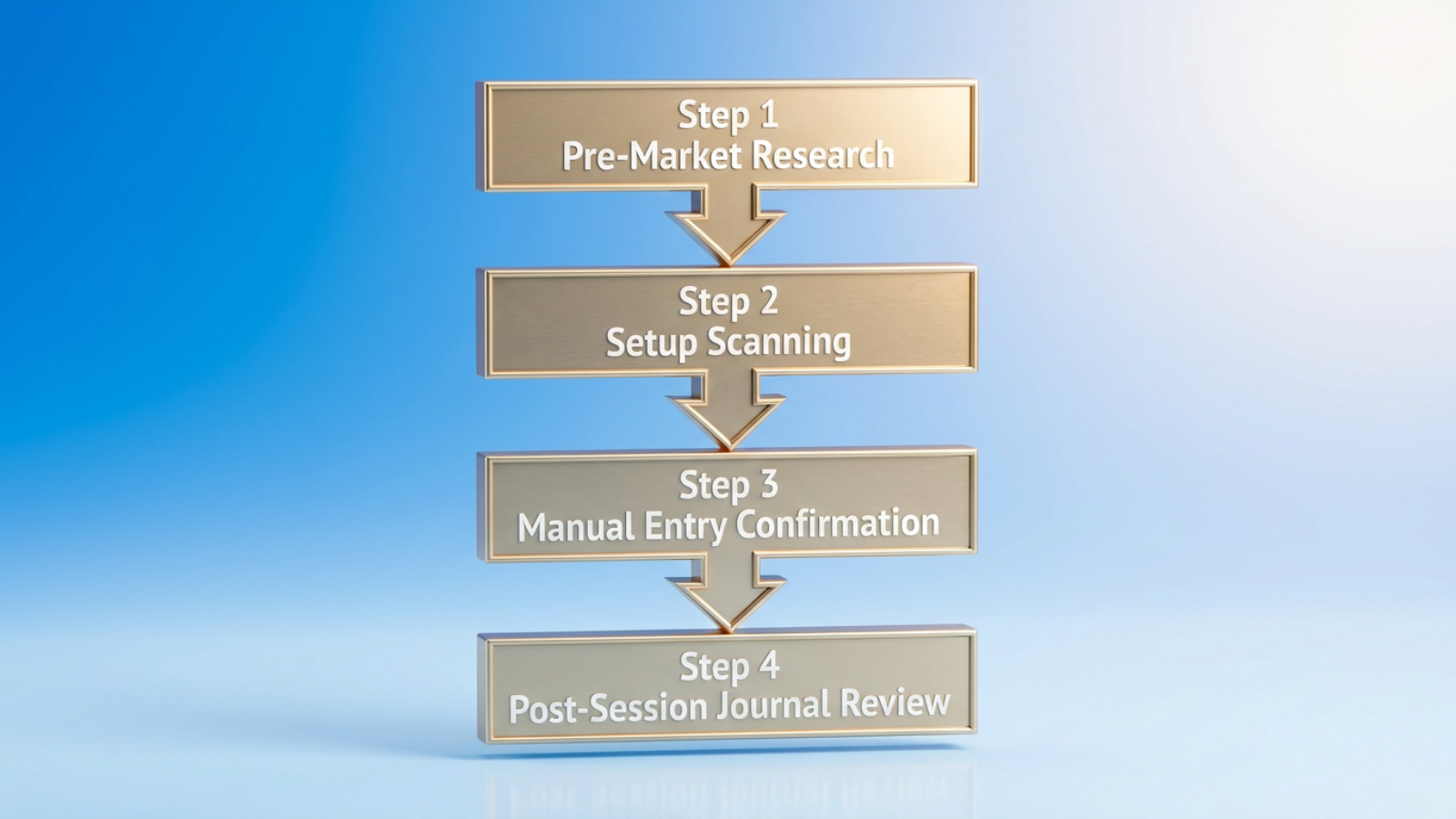
Step 1 — Pre-Market Research
Use an AI research assistant or news aggregator to summarize overnight macro developments relevant to your watchlist. The goal is context, not a specific entry signal. Keep this session to 15–20 minutes.
Step 2 — Setup Scanning
Run a scanner (TrendSpider, Trade Ideas, or a screener within your brokerage platform) against your pre-defined written criteria. If nothing cleanly qualifies, that is a valid outcome. Avoid forcing trades to justify the tool's subscription cost.
Step 3 — Manual Entry Confirmation
Regardless of the AI signal strength, review the setup manually on a chart. Confirm the invalidation level, the R:R ratio relative to your risk tolerance, and whether the broader market context supports the trade. You place the order — not the algorithm.
Step 4 — Post-Session Journal Review
Log every AI-assisted decision: what the tool flagged, what you did, and what happened. Periodically review this data to identify whether specific AI signals are adding measurable value over your baseline. This iterative review is how workflow quality compounds over time.
A note on automation: Traders considering fully automated AI execution (bots placing orders without human confirmation) should carefully review platform terms, especially if using a prop trading structure or managing accounts under specific regulatory conditions. Many challenge-based trading programs restrict or prohibit fully autonomous execution.
Part 5. Risks, Regulation, and What US Investors Should Know
Understanding the regulatory and risk landscape is as important as understanding the technology itself.
Regulatory oversight
AI trading tools do not operate in a regulatory vacuum. Platforms used for executing US securities trades must be registered with the SEC and are subject to FINRA oversight. Webull, for example, is an SEC-registered broker-dealer and FINRA member. SIPC protection covers customer accounts in the event of broker-dealer failure (not investment losses). Verify the registration status of any platform you use via FINRA BrokerCheck before depositing funds.
The overfitting problem
AI strategies optimized on historical data can appear highly effective in backtests while delivering significantly weaker results in live markets. One study of algorithmic trading found productivity gains of around 10% for traders using algorithmic strategies — but this average masks wide variation in outcomes. There is no AI system capable of consistently predicting market behavior with certainty.
BuiltIn — https://builtin.com/artificial-intelligence/ai-trading-stock-market-tech
Cybersecurity risks
AI trading platforms can be targets for cyberattacks. Data breaches may affect both account security and trading strategy confidentiality. Before using any platform, review its security practices, including two-factor authentication availability and account protection policies.
The transparency challenge
AI models can execute thousands of complex calculations in seconds in ways that are difficult for humans to audit. This raises questions about accountability: when an AI-driven decision produces a large loss, understanding precisely why the system acted as it did can be challenging. Investors should seek platforms that provide explainable signal generation rather than fully opaque black-box outputs.
Costs beyond commissions
Commission-free platforms still involve other costs: regulatory fees, options contract fees, spreads on certain instruments, margin interest rates if trading on borrowed funds, and potential payment for order flow arrangements. Always review the full fee schedule of any brokerage or AI tool before use.
Tax strategies referenced in any AI-generated content do not constitute tax advice. Actual tax results may vary by individual. Consult a qualified tax professional for personalized guidance.
FAQs: AI Trading Strategies — People Also Ask
Q1. Are AI trading strategies legal in the US?
Yes. Using AI tools and algorithmic strategies to trade US securities is legal. However, all market participants must comply with applicable regulations, including FINRA rules and SEC requirements. Institutional users face additional compliance obligations around algorithmic trading oversight. Retail investors should ensure any platform they use is properly registered and that their trading activity complies with applicable market rules and account requirements.
Q2. Can AI trading tools predict stock prices accurately?
AI tools can identify statistical patterns in historical data and generate probabilistic signals — but no AI system predicts stock prices with certainty. Published live win rates for AI trading platforms typically range from 52–68%, which is meaningfully above random but well below the "80%+" figures sometimes seen in marketing materials. A realistic expectation is marginal improvement in decision quality, not a guaranteed edge. Past performance is not indicative of future results.
Q3. What is the difference between an AI trading app and an AI trading bot?
An AI trading app helps traders analyze markets, screen for opportunities, and generate signals — but a human still makes and executes the trade. An AI trading bot connects directly to a brokerage account via API and places trades automatically based on pre-coded rules, without human input at the moment of execution. Both approaches have trade-offs: apps preserve human judgment; bots can execute faster but are vulnerable to overfitting and unexpected market conditions. Many traders use both in combination.
Q4. What should US investors look for in an AI trading platform?
Key factors include: SEC/FINRA registration of the underlying brokerage; transparency about how AI signals are generated; availability of paper trading to test strategies risk-free; clear fee disclosure beyond headline commission rates; quality of backtesting tools; and customer support responsiveness. Platforms that publish live signal performance data (not just backtested results) and maintain auditable track records offer greater transparency than black-box alternatives.
Q5. How much capital do I need to start using AI trading strategies?
There is no universal minimum amount required to use AI trading tools. Capital requirements for live trading vary based on the strategy, account type, and applicable margin requirements.
The Bottom Line
AI trading strategies offer US investors meaningful tools for faster research, systematic pattern recognition, and disciplined risk monitoring — but they do not eliminate market risk or guarantee profitable outcomes. Webull's built-in Trading Assistant provides real-time P&L tracking, win rate metrics, and configurable alerts within a regulated, commission-free environment — a practical entry point for active traders. Evaluate any AI tool against your own risk tolerance, verify platform registration, and always test strategies with paper trading first.
Disclosure
Day trading involves unique risks. Please consider Webull's Day Trading Risk Disclosure.
Webull Financial LLC (member SIPC, FINRA) offers self-directed securities trading. All investments involve risk. More info.
The information provided does not constitute investment advice and it should not be relied on as such. It should not be considered a solicitation to buy or an offer to sell a security. It does not take into account any investor's particular investment objectives, strategies, tax status or investment horizon. Investing involves risk, including the risk of loss of principal.
