'%3e %3cpath d='M41.7832962%2c0 C41.9459106%2c0 42.0882746%2c0.0866854658 42.1666825%2c0.216359069 C43.8289923%2c2.66540836 44.7676281%2c5.46271319 44.7676281%2c8.43208061 C44.7676281%2c18.1345746 34.7460532%2c26 22.383814%2c26 C10.0215749%2c26 0%2c18.1345746 0%2c8.43208061 C0%2c5.46716016 0.935826425%2c2.67378733 2.58829888%2c0.223985685 C2.67109477%2c0.0916264068 2.81687473%2c0 2.9840593%2c0 C3.23130408%2c0 3.43173558%2c0.200393004 3.43173558%2c0.447590303 C3.43173558%2c0.475056669 3.42926112%2c0.501945205 3.42452292%2c0.528045226 L3.41810883%2c0.550292077 C3.37800671%2c0.861741908 3.3575721%2c1.17661276 3.3575721%2c1.49443092 C3.3575721%2c7.98336 11.2132389%2c12.5742305 22.383814%2c12.5742305 C33.5543891%2c12.5742305 41.410056%2c7.98336 41.410056%2c1.49443092 C41.410056%2c1.17865223 41.3898828%2c0.865783153 41.3502888%2c0.556288325 C41.3402868%2c0.521941442 41.3356199%2c0.48531078 41.3356199%2c0.447590303 C41.3356199%2c0.200393004 41.5360514%2c0 41.7832962%2c0 Z' id='logo%e5%a4%87%e4%bb%bd-6' fill='white'%3e%3c/path%3e %3cpath d='M74.6899231%2c3.74404927 C75.2411227%2c3.74404927 75.7734299%2c3.66184338 76.2756219%2c3.50883715 L73.8159676%2c20.8666902 C73.5770593%2c22.5662954 72.8072434%2c23.0518969 71.4268838%2c23.0518969 L69.9934336%2c23.0518969 C68.7988917%2c23.0518969 68.1618027%2c22.458384 67.7901674%2c20.893668 L65.6930827%2c11.9909739 C65.639992%2c11.7481731 65.639992%2c11.6942174 65.5338105%2c11.6942174 C65.427629%2c11.6942174 65.4010836%2c11.7481731 65.3479929%2c11.9909739 L63.2509082%2c20.893668 C62.8792729%2c22.458384 62.2421839%2c23.0518969 61.047642%2c23.0518969 L59.6141918%2c23.0518969 C58.2338322%2c23.0518969 57.4640163%2c22.5662954 57.225108%2c20.8666902 L54.7463723%2c3.37406084 C55.3593498%2c3.61307396 56.0249975%2c3.74404927 56.7207458%2c3.74404927 C57.3314263%2c3.74404927 57.918917%2c3.64314414 58.4679557%2c3.4568446 L60.3574623%2c19.3829078 C60.3840076%2c19.6257086 60.3840076%2c19.7875757 60.4901891%2c19.7875757 C60.5963706%2c19.7875757 60.5963706%2c19.6257086 60.6494614%2c19.3829078 L62.9323637%2c9.91367858 C63.0916359%2c9.26620991 63.4632712%2c8.69967483 64.6047223%2c8.69967483 L66.4363532%2c8.69967483 C67.5778044%2c8.69967483 67.9494397%2c9.26620991 68.1087119%2c9.91367858 L70.3916142%2c19.3829078 C70.4447049%2c19.6257086 70.4447049%2c19.7875757 70.5508864%2c19.7875757 C70.6570679%2c19.7875757 70.6570679%2c19.6257086 70.6836133%2c19.3829078 L72.5891207%2c3.32292288 C73.2365902%2c3.59432921 73.9460524%2c3.74404927 74.6899231%2c3.74404927 Z' id='Combined-Shape' fill='white'%3e%3c/path%3e %3cpath d='M84.5933901%2c7.43171536 C88.6813779%2c7.43171536 90.9111894%2c10.2643908 90.9111894%2c14.2840921 L90.9111894%2c15.7948523 C90.9111894%2c16.2264981 90.7519172%2c16.4692988 90.3802819%2c16.4692988 L81.7264895%2c16.4692988 L81.7264895%2c16.5502324 C81.7264895%2c18.1149484 82.3635785%2c19.9764208 84.9119346%2c19.9764208 C86.849747%2c19.9764208 88.6813779%2c19.8145536 89.7962837%2c19.7066422 L89.8759198%2c19.7066422 C90.1413735%2c19.7066422 90.3537366%2c19.8415315 90.3537366%2c20.1113101 L90.3537366%2c21.8918489 C90.3537366%2c22.3234947 90.2741004%2c22.5123397 89.7962837%2c22.5932733 C88.0708343%2c22.9170076 87.0355646%2c23.0518969 84.6464808%2c23.0518969 C81.9919433%2c23.0518969 78.2225%2c21.5950924 78.2225%2c16.2804538 L78.2225%2c14.2840921 C78.2225%2c10.0755457 80.5319476%2c7.43171536 84.5933901%2c7.43171536 Z M84.5933901%2c10.5071915 C82.9475768%2c10.5071915 81.7530349%2c11.6942174 81.7530349%2c13.8254684 L81.7530349%2c13.9333799 L87.3806545%2c13.9333799 L87.3806545%2c13.8254684 C87.3806545%2c11.7211953 86.2392034%2c10.5071915 84.5933901%2c10.5071915 Z' id='Combined-Shape' fill='white'%3e%3c/path%3e %3cpath d='M97.4154906%2c2.98826245 L97.4148064%2c7.62056039 C98.3969853%2c7.48567108 99.3260735%2c7.43171536 99.9631625%2c7.43171536 C104.236968%2c7.43171536 106.307507%2c9.99461216 106.307507%2c14.2031585 L106.307507%2c16.2804538 C106.307507%2c20.4890001 104.236968%2c23.0518969 99.9631625%2c23.0518969 C98.2642584%2c23.0518969 96.2733553%2c22.7821183 94.627542%2c22.3504725 C94.0169984%2c22.1886054 93.9108169%2c22.0267382 93.9108169%2c21.6220703 L93.9098179%2c3.08694115 C94.4185466%2c3.24434375 94.9584615%2c3.32900525 95.5178331%2c3.32900525 C96.184659%2c3.32900525 96.8238351%2c3.20869291 97.4154906%2c2.98826245 Z M99.9631625%2c10.3453244 C99.3260735%2c10.3453244 98.1580769%2c10.4262579 97.4148064%2c10.5341694 L97.4148064%2c19.9494429 C97.9191686%2c20.0573544 99.007529%2c20.1382879 99.9631625%2c20.1382879 C102.246065%2c20.1382879 102.803518%2c18.4926384 102.803518%2c16.2804538 L102.803518%2c14.2031585 C102.803518%2c11.9909739 102.246065%2c10.3453244 99.9631625%2c10.3453244 Z' id='Combined-Shape' fill='white'%3e%3c/path%3e %3cpath d='M111.036668%2c8.72457747 C111.579488%2c8.72457747 112.103987%2c8.64485191 112.599444%2c8.49629404 L112.598761%2c16.5232546 C112.598761%2c19.3289521 113.607485%2c19.9764208 115.147117%2c19.9764208 L115.306389%2c19.9764208 C116.846021%2c19.9764208 117.854746%2c19.3289521 117.854746%2c16.5232546 L117.854207%2c8.4334735 C118.406525%2c8.62226395 118.997939%2c8.72457747 119.612866%2c8.72457747 C120.223332%2c8.72457747 120.810625%2c8.62374317 121.359498%2c8.43756894 L121.358735%2c16.5232546 C121.358735%2c22.4044283 116.872567%2c23.0518969 115.306389%2c23.0518969 L115.060464%2c23.0512514 C113.42215%2c23.0271041 109.094772%2c22.2994073 109.094772%2c16.5232546 L109.094446%2c8.36700801 C109.698522%2c8.59813531 110.353066%2c8.72457747 111.036668%2c8.72457747 Z' id='Combined-Shape' fill='white'%3e%3c/path%3e %3cpath d='M128.314162%2c3.03790128 L128.313623%2c22.269539 C128.313623%2c22.5662954 128.10126%2c22.836074 127.809261%2c22.836074 L125.340541%2c22.836074 C125.048542%2c22.836074 124.809634%2c22.5662954 124.809634%2c22.269539 L124.809455%2c3.04219481 C125.358161%2c3.22824247 125.945253%2c3.32900525 126.555503%2c3.32900525 C127.17043%2c3.32900525 127.761844%2c3.22669173 128.314162%2c3.03790128 Z' id='Combined-Shape' fill='white'%3e%3c/path%3e %3cpath d='M133.90653%2c3.32900525 C134.473329%2c3.32900525 135.02015%2c3.24208064 135.534793%2c3.08063296 L135.533966%2c22.269539 C135.533966%2c22.5662954 135.321603%2c22.836074 135.029603%2c22.836074 L132.560884%2c22.836074 C132.268884%2c22.836074 132.029976%2c22.5662954 132.029976%2c22.269539 L132.029909%2c2.99605058 C132.615669%2c3.21152525 133.2476%2c3.32900525 133.90653%2c3.32900525 Z' id='Combined-Shape' fill='white'%3e%3c/path%3e %3c/g%3e %3c/g%3e %3c/g%3e%3c/svg%3e)



The debate between utilizing an AI trading bot versus acting as a traditional human trader continues to shape modern financial markets. As technology evolves, investors are exploring how algorithmic trading platforms compare to human investor strategies in terms of speed, data processing, and risk management. This article examines the core differences, the distinct strengths of both approaches, and how tools like the Webull Trading Assistant can aid in tracking market activities.
Key Takeaways
An AI trading bot utilizes advanced algorithms and machine learning to analyze vast datasets and execute trades without emotional interference.
Human traders bring essential contextual understanding, adaptability, and experience that automated systems cannot fully replicate.
Algorithmic systems are vulnerable to technical glitches, market instability, and sudden, unprecedented events, highlighting the importance of risk management.
The Webull Trading Assistant offers robust features for monitoring real-time profit and loss (P&L) data and setting critical order alerts.
A hybrid model combining automated data analysis with human strategic oversight is widely considered an effective approach to navigating complex markets.
Part 1. The Rise of the AI Trading Bot in Financial Markets
The landscape of equity trading has transformed significantly with the introduction of algorithmic systems and machine learning. As market participants seek efficiency, the reliance on automated solutions has grown. According to a 2023 Builtin report, the global AI trading market was valued at $18.2 billion in 2023, and it is projected to experience substantial growth in the coming decade.
Builtin — https://builtin.com/artificial-intelligence/ai-trading-stock-market-tech
1.1 Understanding Algorithmic and AI Trading
An AI trading bot or algorithmic trading system uses advanced technologies, such as machine learning (ML) and predictive analytics, to execute share trading strategies. By analyzing massive datasets, including historical prices, market trends, and news sentiment, these algorithms seek to identify patterns and act on them swiftly. This automation aims to empower traders to take advantage of market opportunities continuously. In the United States, AI systems and algorithmic trading now account for a significant portion of daily equity trading volume.
1.2 Data Processing and Execution Speed
One of the primary differences between an AI trading bot and a human trader lies in speed and execution capabilities. AI systems can process and analyze vast quantities of data—sometimes exceeding one million data points per second—to uncover correlations that might elude traditional analysis. In terms of execution, AI bots can operate with latency as low as 0.01 seconds, whereas human traders generally require 0.1 to 0.3 seconds to react. It is important to note that while speed can be advantageous, past performance is not indicative of future results, and rapid execution does not eliminate market risk. Rates vary by service provider; please refer to the latest pricings.
Part 2. Exploring the Strengths of Human Traders
Despite the increasing prevalence of automated systems, human traders remain essential to the financial ecosystem. Human reasoning, intuition, and the ability to adapt to complex, ever-changing market conditions are qualities that artificial intelligence cannot yet fully replace.
2.1 Contextual Understanding and Adaptability
In unpredictable market conditions, floor traders and individual investors make decisions based on experience, especially when historical data is limited or irrelevant. Human traders excel at analyzing broader market sentiments, geopolitical events, or sudden corporate leadership changes. This nuanced understanding of sentiment analysis is challenging for AI algorithms to replicate. Furthermore, in unprecedented situations, human traders can make quick calls and adapt new strategies based on intuition rather than rigid pre-programmed rules.
2.2 Navigating Unprecedented Market Events
Algorithms rely heavily on historical data for backtesting and strategy refinement. When a "black swan" event occurs—a situation with no historical precedent—AI models may struggle to respond appropriately. Human oversight is necessary to interpret the broader economic impact and adjust portfolios accordingly. While an AI trading bot can follow a strict risk management protocol, the human ability to pause operations, reassess the macroeconomic environment, and pivot strategically remains a vital component of long-term investment planning.
Part 3. Comparing AI Trading Bot vs Human Trader Performance
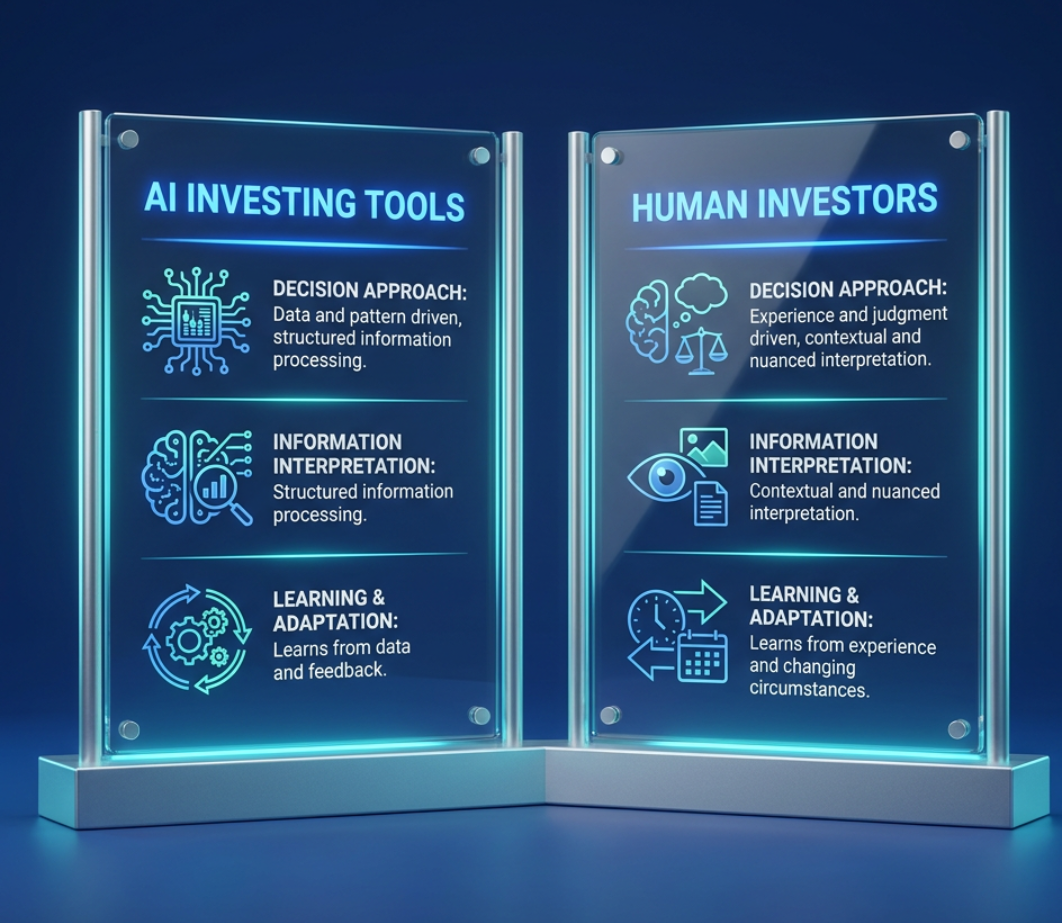
Understanding the fundamental contrasts between automated bots and human decision-making helps investors determine the most suitable tools for their objectives. Both approaches carry distinct advantages and inherent risks.
3.1 Emotion-Free Trading and Scalability
A significant attribute of an AI trading bot is its immunity to human emotions such as fear, greed, or the fear of missing out (FOMO). By adhering strictly to pre-set parameters, these bots avoid impulsive decisions, such as panic selling during a sudden market downturn. Additionally, AI systems offer continuous operation, monitoring thousands of assets 24/7 without fatigue. This scalability allows for broad market coverage that is physically impossible for a single human investor.
3.2 Technical Risks and Algorithmic Limitations
While automated trading offers efficiency, it introduces specific technical risks. System glitches, connectivity delays, infrastructure failures, or coding errors can trigger faulty trades and lead to unexpected losses. Historic market events, such as the 2012 Knight Capital incident, underscore the vulnerabilities of over-reliance on interconnected systems. Knight Capital lost $440 million in 45 minutes due to a malfunctioning trading algorithm that executed erroneous trades.
Knight Capital Group — https://en.wikipedia.org/wiki/Knight_Capital_Group
There are also concerns regarding market manipulation, algorithmic bias, and "herding behavior," where multiple systems make identical moves, potentially amplifying market volatility. Proper governance, circuit breakers, and continuous monitoring are critical to mitigating these technical risks.
Part 4. Webull Platform Review: The Trading Assistant
For users managing their portfolios, accessing reliable real-time data is critical. Webull (www.webull.com) provides a comprehensive feature known as the Trading Assistant, designed to help users track their activities, manage orders, and evaluate their performance efficiently.
4.1 Comprehensive Overview of the Trading Assistant
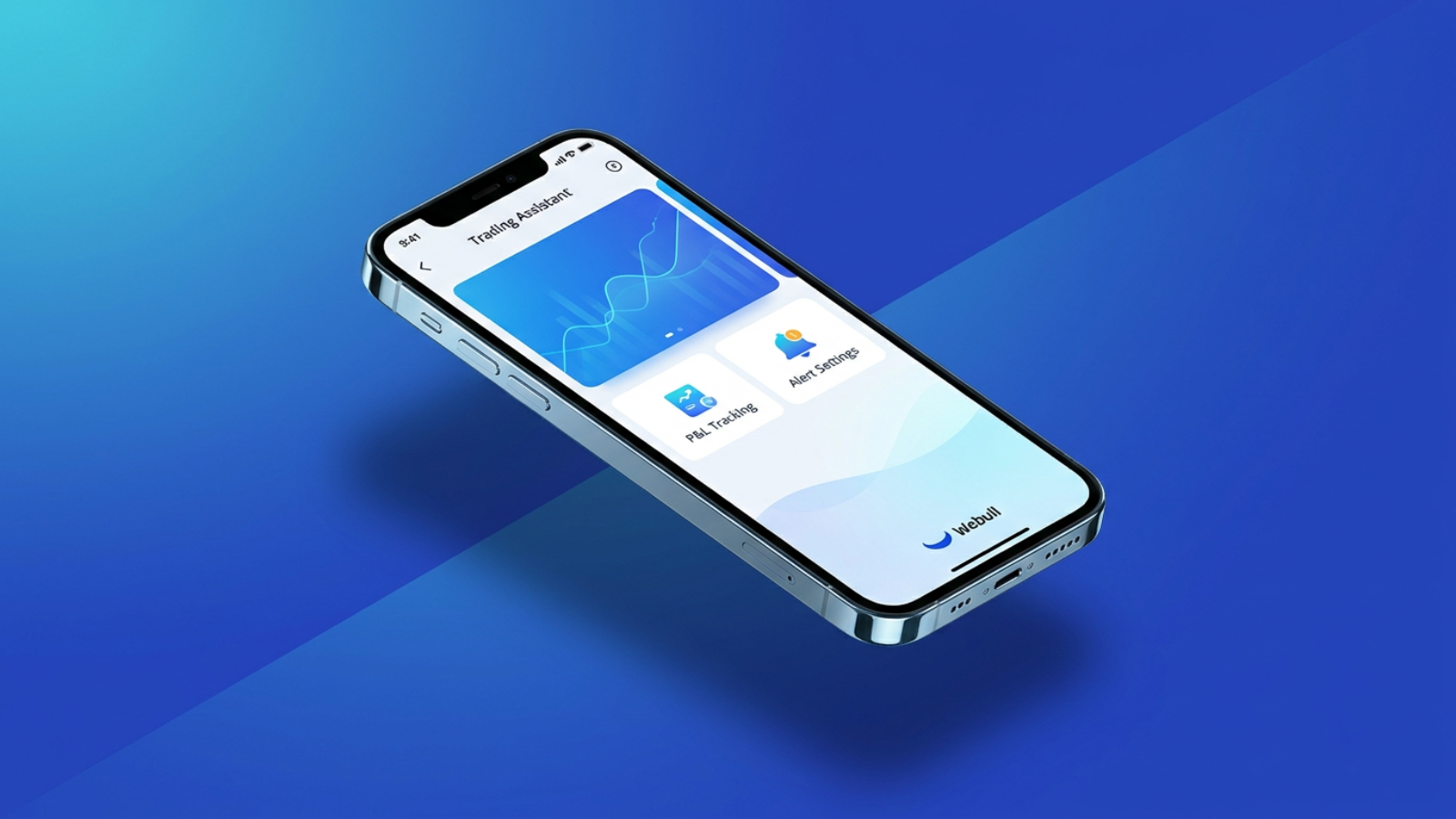
The Trading Assistant on Webull (www.webull.com) allows users to view their trading and profit & loss (P&L) data in real time. This centralized tool is designed to enhance platform usability by providing immediate insights into account performance. Users can locate the Trading Assistant in the Webull App by navigating to the Menu, finding the Shortcuts section, selecting More, and choosing Trading Assistant.
4.2 Tracking Profit and Loss (P&L) Data
Monitoring P&L is a fundamental aspect of managing a portfolio. The Trading Assistant enables users to set specific P&L alerts to track their open positions. When a user sets a P&L alert on Webull (www.webull.com), they will receive a push notification once the alert is triggered. To prevent notification fatigue, the system is designed to send only one alert per day for each P&L alert configured. All historical P&L alert notifications can be reviewed in the Messages section of the app.
4.3 Managing Order Alerts and Win Rates
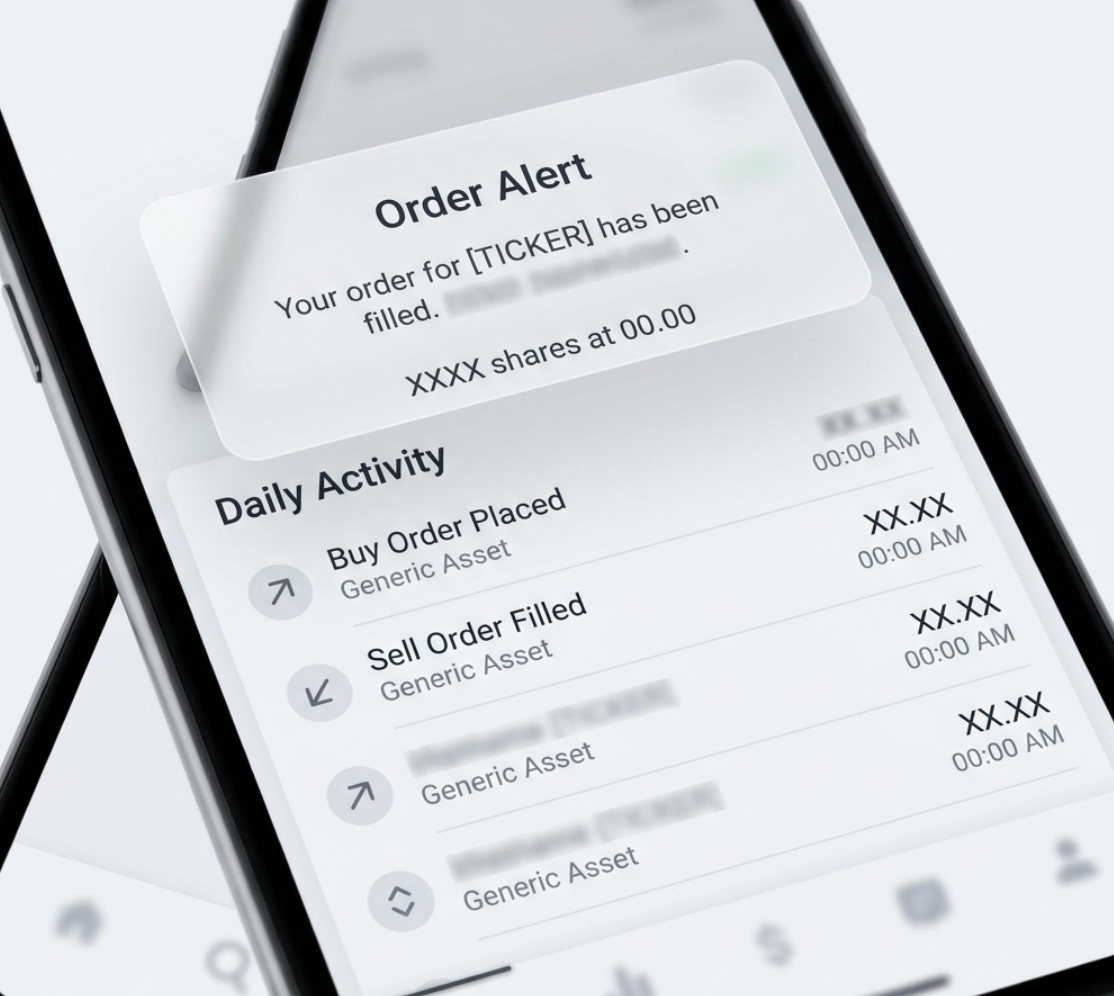
In addition to P&L tracking, the Trading Assistant allows users to set order alerts, which deliver popup notifications upon triggering. The tool also provides insights into a user's total win rate. The total win rate is calculated by determining the number of times a user successfully closed a profitable position compared to the total number of stock and options trades made in a single day. This feature offers a factual, data-driven snapshot of daily trading activities. Tax strategies do not constitute tax advice and actual results may vary by individual. Past performance is not indicative of future results.
Part 5. The Future: A Hybrid Approach for US Investors
The evolution of financial markets suggests that the future may not be a strict choice between an AI trading bot and a human trader, but rather a hybrid model that integrates the strengths of both.
5.1 Combining AI Precision with Human Strategy
A hybrid approach involves utilizing an AI trading bot to handle heavy data processing, pattern recognition, and rapid trade execution, while human traders provide strategic direction, contextual analysis, and risk oversight. This collaboration ensures that algorithmic efficiency is guided by human judgment, particularly during periods of high volatility or unprecedented market events. By leveraging AI to automate routine tasks, investors can dedicate more time to higher-level planning.
5.2 Regulatory Considerations and Market Safety
As algorithmic trading continues to expand, regulatory frameworks are evolving to address accountability, transparency, and market integrity. It is vital for investors to utilize trusted platforms, understand the algorithms they employ, and implement solid risk management practices. Ultimately, technology serves as an advanced tool to assist human decision-making, reinforcing the principle that active supervision is necessary for long-term financial planning. Rates vary by service provider; please refer to the latest pricings.
FAQs
Q1: What is an AI trading bot?
An AI trading bot is an automated algorithmic system that uses machine learning and predictive analytics to process market data and execute trades based on predefined parameters without human emotional interference.
Q2: Can an AI trading bot replace a human trader entirely?
No, while AI offers significant advantages in speed and data processing, it cannot replace human intuition, adaptability, and contextual understanding, especially during unprecedented macroeconomic events.
Q3: What are the main risks of using algorithmic trading platforms?
Key risks include technical failures, coding errors, latency issues, and the potential for algorithms to act unpredictably or amplify market volatility during sudden news-driven shifts.
Q4: How do I find the Trading Assistant on the Webull app?
To find the Trading Assistant, open the app, go to the Menu, look below Shortcuts, select More, and then tap on Trading Assistant to view your real-time P&L data and manage alerts.
Q5: Are AI trading bot returns guaranteed?
No. All investments carry risk, and past performance is not indicative of future results. Algorithmic trading strategies do not guarantee profits or protect against losses in declining markets.
The Bottom Line
Evaluating an AI trading bot versus a human trader reveals that both have distinct roles in modern finance. AI provides unmatched data processing and emotion-free execution, while human traders offer essential intuition and contextual analysis. By combining algorithmic tools with careful human oversight and using features like the Webull Trading Assistant, investors can pursue a balanced, informed approach to market participation.
Disclosure
Webull Financial LLC (member SIPC, FINRA) offers self-directed securities trading. All investments involve risk. More info: https://www.webull.com/policy
The information provided does not constitute investment advice and it should not be relied on as such. It should not be considered a solicitation to buy or an offer to sell a security. It does not take into account any investor's particular investment objectives, strategies, tax status or investment horizon. Investing involves risk, including the risk of loss of principal.
