'%3e %3cpath d='M41.7832962%2c0 C41.9459106%2c0 42.0882746%2c0.0866854658 42.1666825%2c0.216359069 C43.8289923%2c2.66540836 44.7676281%2c5.46271319 44.7676281%2c8.43208061 C44.7676281%2c18.1345746 34.7460532%2c26 22.383814%2c26 C10.0215749%2c26 0%2c18.1345746 0%2c8.43208061 C0%2c5.46716016 0.935826425%2c2.67378733 2.58829888%2c0.223985685 C2.67109477%2c0.0916264068 2.81687473%2c0 2.9840593%2c0 C3.23130408%2c0 3.43173558%2c0.200393004 3.43173558%2c0.447590303 C3.43173558%2c0.475056669 3.42926112%2c0.501945205 3.42452292%2c0.528045226 L3.41810883%2c0.550292077 C3.37800671%2c0.861741908 3.3575721%2c1.17661276 3.3575721%2c1.49443092 C3.3575721%2c7.98336 11.2132389%2c12.5742305 22.383814%2c12.5742305 C33.5543891%2c12.5742305 41.410056%2c7.98336 41.410056%2c1.49443092 C41.410056%2c1.17865223 41.3898828%2c0.865783153 41.3502888%2c0.556288325 C41.3402868%2c0.521941442 41.3356199%2c0.48531078 41.3356199%2c0.447590303 C41.3356199%2c0.200393004 41.5360514%2c0 41.7832962%2c0 Z' id='logo%e5%a4%87%e4%bb%bd-6' fill='white'%3e%3c/path%3e %3cpath d='M74.6899231%2c3.74404927 C75.2411227%2c3.74404927 75.7734299%2c3.66184338 76.2756219%2c3.50883715 L73.8159676%2c20.8666902 C73.5770593%2c22.5662954 72.8072434%2c23.0518969 71.4268838%2c23.0518969 L69.9934336%2c23.0518969 C68.7988917%2c23.0518969 68.1618027%2c22.458384 67.7901674%2c20.893668 L65.6930827%2c11.9909739 C65.639992%2c11.7481731 65.639992%2c11.6942174 65.5338105%2c11.6942174 C65.427629%2c11.6942174 65.4010836%2c11.7481731 65.3479929%2c11.9909739 L63.2509082%2c20.893668 C62.8792729%2c22.458384 62.2421839%2c23.0518969 61.047642%2c23.0518969 L59.6141918%2c23.0518969 C58.2338322%2c23.0518969 57.4640163%2c22.5662954 57.225108%2c20.8666902 L54.7463723%2c3.37406084 C55.3593498%2c3.61307396 56.0249975%2c3.74404927 56.7207458%2c3.74404927 C57.3314263%2c3.74404927 57.918917%2c3.64314414 58.4679557%2c3.4568446 L60.3574623%2c19.3829078 C60.3840076%2c19.6257086 60.3840076%2c19.7875757 60.4901891%2c19.7875757 C60.5963706%2c19.7875757 60.5963706%2c19.6257086 60.6494614%2c19.3829078 L62.9323637%2c9.91367858 C63.0916359%2c9.26620991 63.4632712%2c8.69967483 64.6047223%2c8.69967483 L66.4363532%2c8.69967483 C67.5778044%2c8.69967483 67.9494397%2c9.26620991 68.1087119%2c9.91367858 L70.3916142%2c19.3829078 C70.4447049%2c19.6257086 70.4447049%2c19.7875757 70.5508864%2c19.7875757 C70.6570679%2c19.7875757 70.6570679%2c19.6257086 70.6836133%2c19.3829078 L72.5891207%2c3.32292288 C73.2365902%2c3.59432921 73.9460524%2c3.74404927 74.6899231%2c3.74404927 Z' id='Combined-Shape' fill='white'%3e%3c/path%3e %3cpath d='M84.5933901%2c7.43171536 C88.6813779%2c7.43171536 90.9111894%2c10.2643908 90.9111894%2c14.2840921 L90.9111894%2c15.7948523 C90.9111894%2c16.2264981 90.7519172%2c16.4692988 90.3802819%2c16.4692988 L81.7264895%2c16.4692988 L81.7264895%2c16.5502324 C81.7264895%2c18.1149484 82.3635785%2c19.9764208 84.9119346%2c19.9764208 C86.849747%2c19.9764208 88.6813779%2c19.8145536 89.7962837%2c19.7066422 L89.8759198%2c19.7066422 C90.1413735%2c19.7066422 90.3537366%2c19.8415315 90.3537366%2c20.1113101 L90.3537366%2c21.8918489 C90.3537366%2c22.3234947 90.2741004%2c22.5123397 89.7962837%2c22.5932733 C88.0708343%2c22.9170076 87.0355646%2c23.0518969 84.6464808%2c23.0518969 C81.9919433%2c23.0518969 78.2225%2c21.5950924 78.2225%2c16.2804538 L78.2225%2c14.2840921 C78.2225%2c10.0755457 80.5319476%2c7.43171536 84.5933901%2c7.43171536 Z M84.5933901%2c10.5071915 C82.9475768%2c10.5071915 81.7530349%2c11.6942174 81.7530349%2c13.8254684 L81.7530349%2c13.9333799 L87.3806545%2c13.9333799 L87.3806545%2c13.8254684 C87.3806545%2c11.7211953 86.2392034%2c10.5071915 84.5933901%2c10.5071915 Z' id='Combined-Shape' fill='white'%3e%3c/path%3e %3cpath d='M97.4154906%2c2.98826245 L97.4148064%2c7.62056039 C98.3969853%2c7.48567108 99.3260735%2c7.43171536 99.9631625%2c7.43171536 C104.236968%2c7.43171536 106.307507%2c9.99461216 106.307507%2c14.2031585 L106.307507%2c16.2804538 C106.307507%2c20.4890001 104.236968%2c23.0518969 99.9631625%2c23.0518969 C98.2642584%2c23.0518969 96.2733553%2c22.7821183 94.627542%2c22.3504725 C94.0169984%2c22.1886054 93.9108169%2c22.0267382 93.9108169%2c21.6220703 L93.9098179%2c3.08694115 C94.4185466%2c3.24434375 94.9584615%2c3.32900525 95.5178331%2c3.32900525 C96.184659%2c3.32900525 96.8238351%2c3.20869291 97.4154906%2c2.98826245 Z M99.9631625%2c10.3453244 C99.3260735%2c10.3453244 98.1580769%2c10.4262579 97.4148064%2c10.5341694 L97.4148064%2c19.9494429 C97.9191686%2c20.0573544 99.007529%2c20.1382879 99.9631625%2c20.1382879 C102.246065%2c20.1382879 102.803518%2c18.4926384 102.803518%2c16.2804538 L102.803518%2c14.2031585 C102.803518%2c11.9909739 102.246065%2c10.3453244 99.9631625%2c10.3453244 Z' id='Combined-Shape' fill='white'%3e%3c/path%3e %3cpath d='M111.036668%2c8.72457747 C111.579488%2c8.72457747 112.103987%2c8.64485191 112.599444%2c8.49629404 L112.598761%2c16.5232546 C112.598761%2c19.3289521 113.607485%2c19.9764208 115.147117%2c19.9764208 L115.306389%2c19.9764208 C116.846021%2c19.9764208 117.854746%2c19.3289521 117.854746%2c16.5232546 L117.854207%2c8.4334735 C118.406525%2c8.62226395 118.997939%2c8.72457747 119.612866%2c8.72457747 C120.223332%2c8.72457747 120.810625%2c8.62374317 121.359498%2c8.43756894 L121.358735%2c16.5232546 C121.358735%2c22.4044283 116.872567%2c23.0518969 115.306389%2c23.0518969 L115.060464%2c23.0512514 C113.42215%2c23.0271041 109.094772%2c22.2994073 109.094772%2c16.5232546 L109.094446%2c8.36700801 C109.698522%2c8.59813531 110.353066%2c8.72457747 111.036668%2c8.72457747 Z' id='Combined-Shape' fill='white'%3e%3c/path%3e %3cpath d='M128.314162%2c3.03790128 L128.313623%2c22.269539 C128.313623%2c22.5662954 128.10126%2c22.836074 127.809261%2c22.836074 L125.340541%2c22.836074 C125.048542%2c22.836074 124.809634%2c22.5662954 124.809634%2c22.269539 L124.809455%2c3.04219481 C125.358161%2c3.22824247 125.945253%2c3.32900525 126.555503%2c3.32900525 C127.17043%2c3.32900525 127.761844%2c3.22669173 128.314162%2c3.03790128 Z' id='Combined-Shape' fill='white'%3e%3c/path%3e %3cpath d='M133.90653%2c3.32900525 C134.473329%2c3.32900525 135.02015%2c3.24208064 135.534793%2c3.08063296 L135.533966%2c22.269539 C135.533966%2c22.5662954 135.321603%2c22.836074 135.029603%2c22.836074 L132.560884%2c22.836074 C132.268884%2c22.836074 132.029976%2c22.5662954 132.029976%2c22.269539 L132.029909%2c2.99605058 C132.615669%2c3.21152525 133.2476%2c3.32900525 133.90653%2c3.32900525 Z' id='Combined-Shape' fill='white'%3e%3c/path%3e %3c/g%3e %3c/g%3e %3c/g%3e%3c/svg%3e)



Understanding over-the-counter (OTC) stocks is essential for investors looking beyond major exchanges. While they offer unique opportunities, navigating OTC markets requires recognizing the associated risks.
Key Takeaways
OTC stocks trade directly between parties via broker-dealer networks, not on centralized exchanges like the NYSE or NASDAQ.
These securities often include small companies, foreign entities, and complex instruments.
Trading OTC stocks involves higher risks due to lighter regulations, limited transparency, and potential illiquidity.
Webull offers access to over 500 OTC securities with no commissions, though regulatory fees apply.
Part 1. What Are Over-The-Counter (OTC) Stocks?
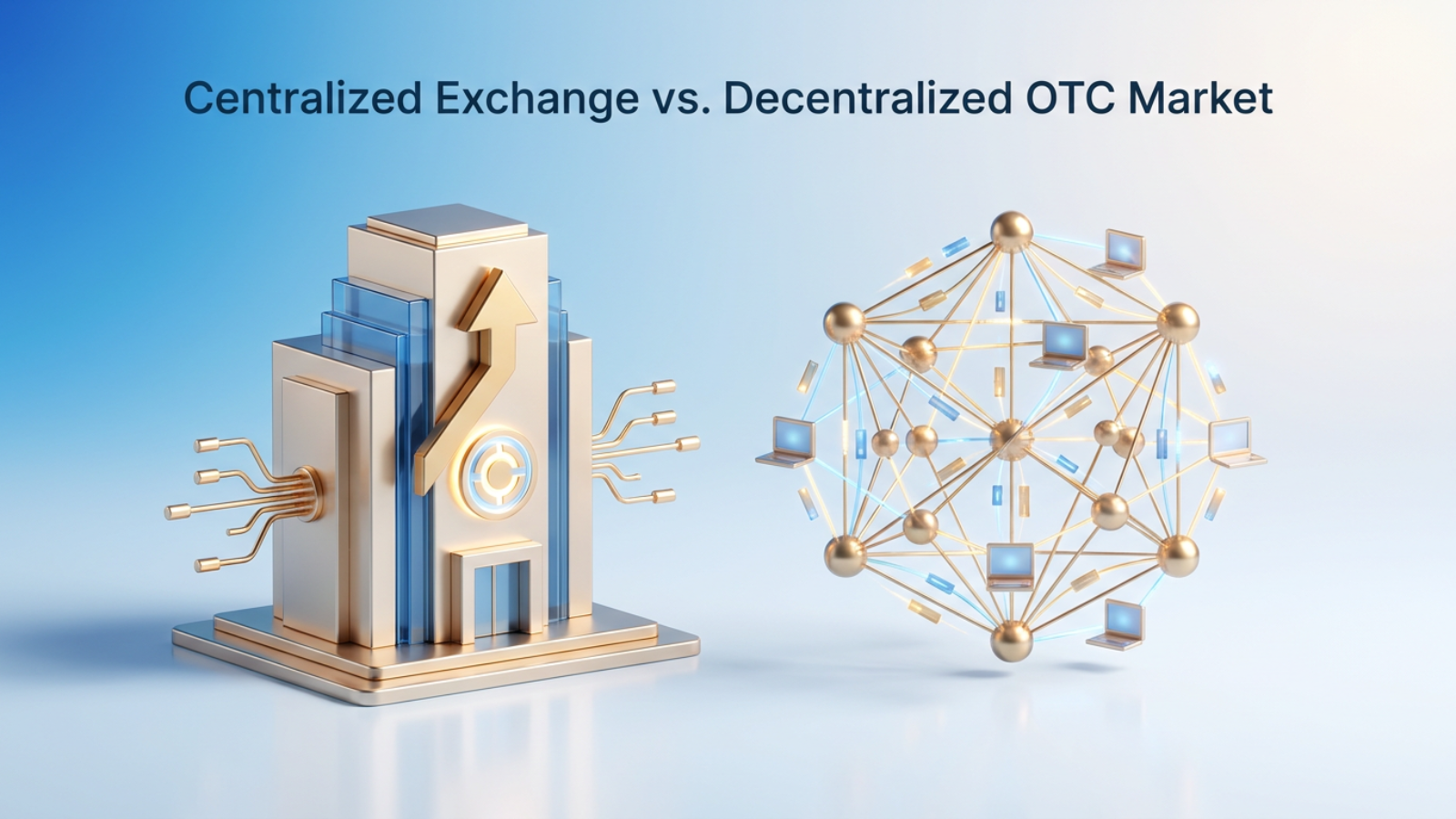
Over-the-counter (OTC) stocks are financial securities traded directly between two parties, typically facilitated by a decentralized network of broker-dealers, rather than being listed on a formal, centralized exchange such as the New York Stock Exchange (NYSE) or NASDAQ.
Companies may choose or be forced to trade over the counter for various reasons. Often, they are small or micro-cap companies that cannot meet the stringent financial, reporting, or listing requirements of major exchanges. In other cases, companies might be delisted from a major exchange if their share price falls below a certain threshold (e.g., $1 per share) but remain solvent and need a venue for their shares to be traded. Additionally, some foreign companies, including large-cap American Depositary Receipts (ADRs) and "foreign ordinary" shares, trade in the U.S. via OTC markets.
1.1 How OTC Markets Work
Unlike traditional exchanges that use centralized order books and matching engines to pair buyers and sellers transparently, OTC markets are decentralized. There is no physical trading floor. Instead, trading occurs electronically or over the phone through a network of market makers and broker-dealers.
When an investor wants to buy or sell an OTC stock, their broker contacts a market maker who holds an inventory of that specific security. The market maker quotes a "bid" price (what they are willing to pay) and an "ask" price (what they are willing to sell for). The transaction is executed directly between the broker and the market maker.
1.2 The Role of OTC Markets Group and FINRA
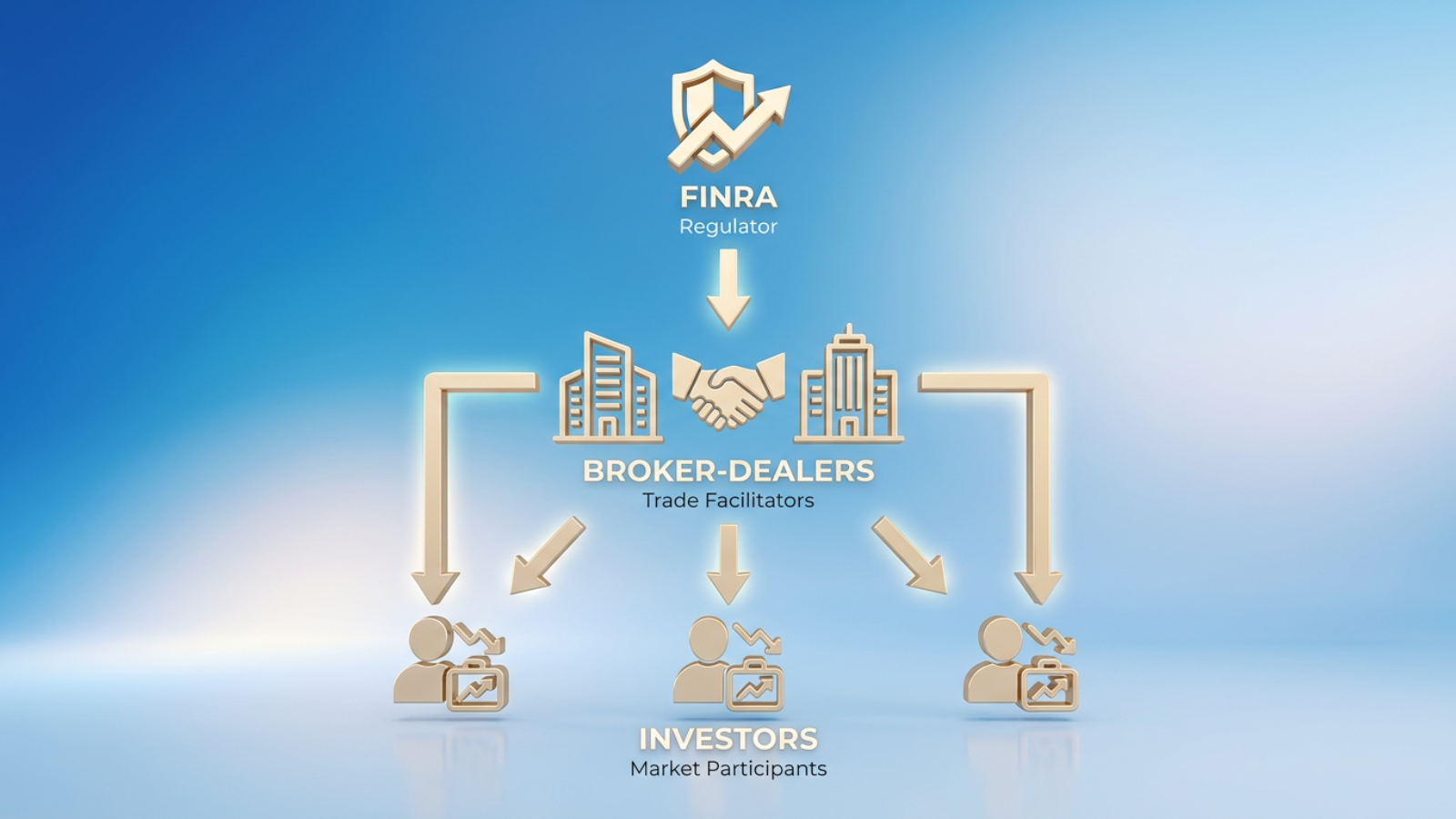
While decentralized, the OTC market in the U.S. is not without structure. The OTC Markets Group is a prominent private electronic quotation system that connects broker-dealers and provides pricing data for thousands of OTC securities.
Furthermore, the Financial Industry Regulatory Authority (FINRA) plays a crucial role in overseeing OTC broker-dealers. FINRA regulates trading activities, monitors for market manipulation, and requires that all OTC equity transactions be reported to them. While the companies issuing OTC stocks face fewer disclosure rules, the broker-dealers facilitating the trades are subject to FINRA regulations.
Part 2. Market Tiers for OTC Stocks
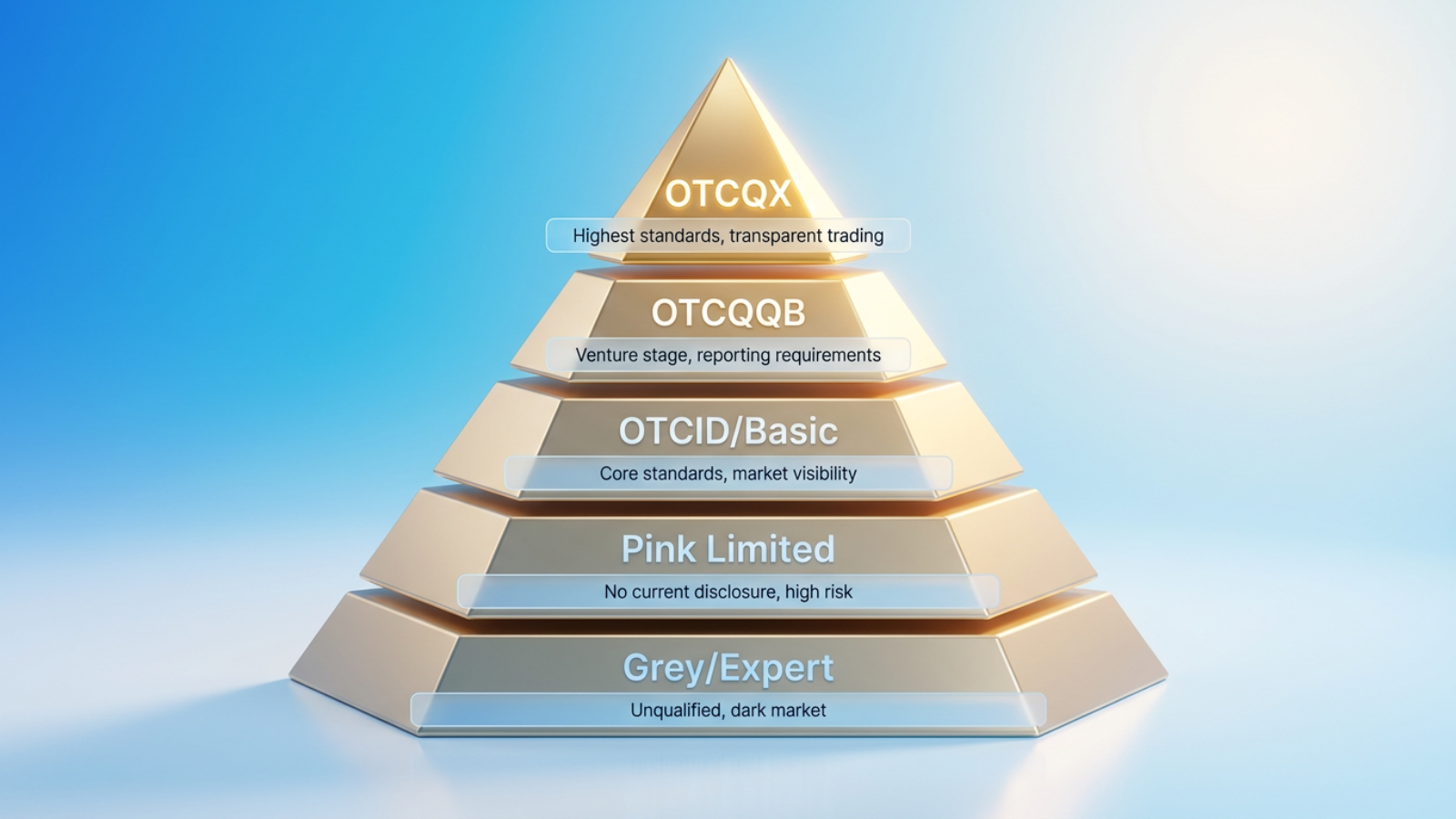
To help investors understand the level of information available for different OTC stocks, the OTC Markets Group categorizes securities into several tiers based on the frequency and quality of their financial disclosures. It is critical to note that these tiers reflect disclosure standards, not the investment quality or financial health of the companies.
2.1 OTCQX: A Leading OTC Market
OTCQX is a leading OTC market tier for established companies. Companies listed here must meet high financial standards, adhere to best-practice corporate governance, demonstrate compliance with U.S. securities laws, and remain current in their disclosures. They must also maintain audited financials and cannot be penny stocks, shell corporations, or in bankruptcy. This tier often includes blue-chip stocks from international markets (e.g., Europe, Canada, Brazil) seeking access to U.S. investors without the burden of a full SEC listing.
2.2 OTCQB: The Venture Market
The OTCQB, or venture market, is designed for early-stage and developing U.S. and international companies. To be eligible, companies must be current in their regulatory reporting, undergo an annual verification and management certification process, maintain a minimum bid price of $0.01, and have audited annual financials in accordance with U.S. Generally Accepted Accounting Principles (GAAP). Like OTCQX, companies in this tier cannot be in bankruptcy.
2.3 OTCID (Basic Market) and Pink Limited
The OTCID, also known as the Basic Market, includes companies that publish ongoing financial reporting and baseline information to the public, distinguishing them from entities that provide little to no information.
Below that is the Pink Limited tier. Securities in this category are often marked with a yield sign to caution investors. These companies provide less frequent updates and limited financial reporting, satisfying only the minimum disclosure requirements to prevent quotation restrictions. This tier carries significantly more information and liquidity risk.
2.4 The Expert and Grey Markets
Securities that fail to meet the minimum transparency standards for the OTCID or Pink Limited tiers fall into the Expert or Grey Markets. These stocks are typically not quoted by broker-dealers due to a lack of regulatory compliance, insufficient financial information, or minimal investor interest. Trading in these tiers is highly speculative and opaque.
Part 3. Trading OTC Stocks on Webull
Investors looking to access the OTC market can do so through various brokerages, including Webull. Webull offers a streamlined platform for trading a specific selection of over-the-counter securities.
3.1 Webull's OTC Offerings and Data
Webull currently supports trading for over 500 OTC securities. The platform provides access to OTC Markets Level 1 data, sourced from the OTC Markets Group. Subscribers to this data feed can access tick-by-tick transactions and real-time best bid and offer pricing for securities listed on the OTCQX, OTCQB, and Pink tiers.
3.2 Trading Requirements and Supported Order Types
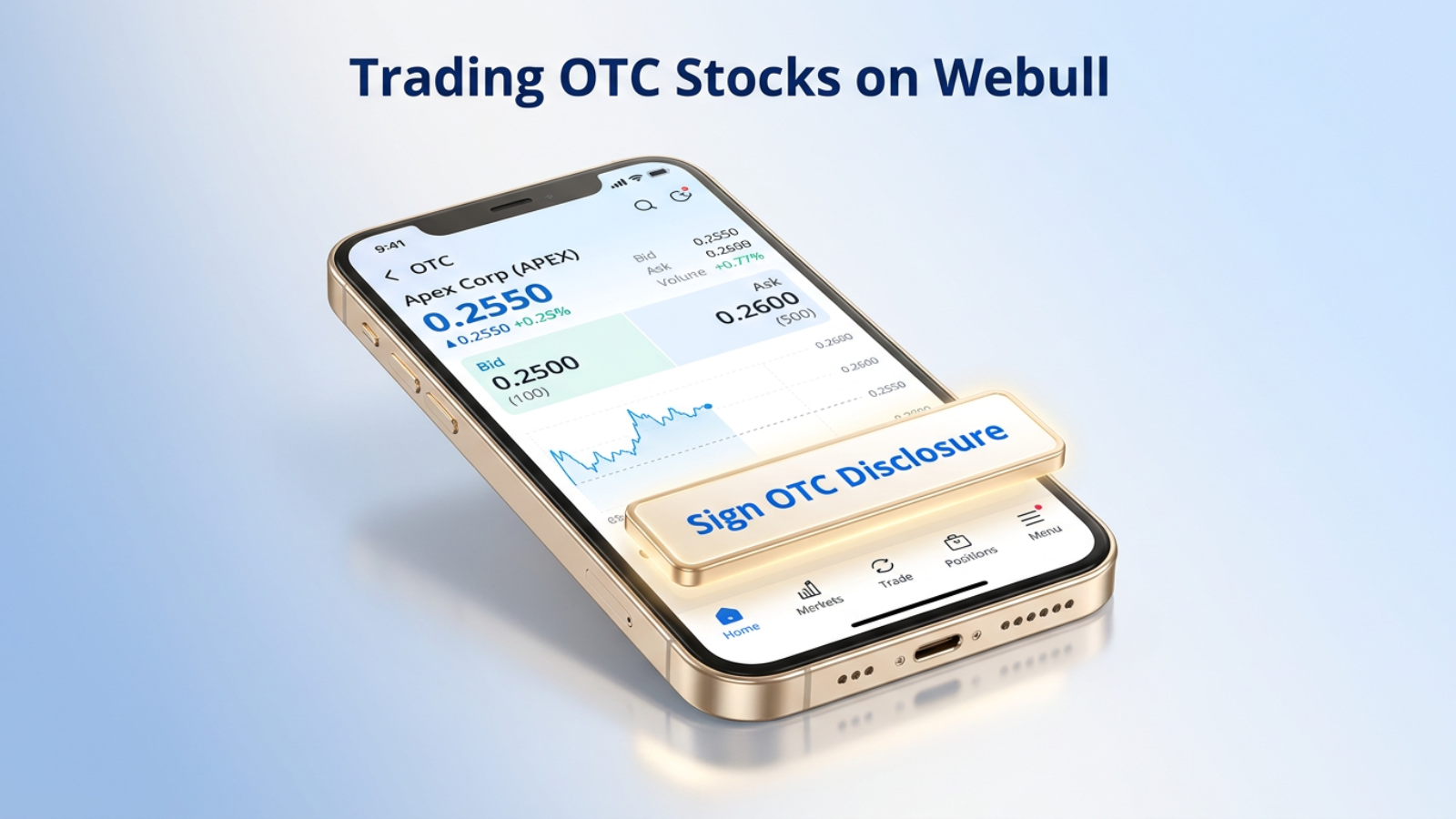
To initiate OTC trading on Webull, users are required to sign an OTC Trading Disclosure. A reminder prompt will appear on both the desktop and mobile applications when attempting to place an order for an OTC stock if this disclosure has not been completed.
It is important to understand the specific trading parameters on Webull:
Order Types: Webull only supports limit day orders for OTC trading.
Trading Hours: These stocks can only be traded during regular U.S. market hours.
Margin and Short Selling: OTC stocks on Webull are non-marginable, meaning they must be purchased with fully settled cash. Additionally, Webull does not support short sales for OTC stocks.
Fractional Shares: Fractional share trading is unavailable for OTC transactions; the minimum purchase quantity is one whole share. Specific minimum purchase quantities may also apply based on the stock's last price (e.g., stocks priced between $0.0001 and $0.0999 require a minimum purchase of 100 shares).
3.3 Fees and Costs
Webull stands out for offering commission-free trading for OTC securities. However, investors should be aware that while Webull does not charge a base commission, regulatory and transaction fees may still apply.
Rates vary by service provider; please refer to the latest pricings on Webull's official fee schedule.
Part 4. The Risks and Rewards of OTC Stocks
Investing in over-the-counter stocks involves a distinct set of risks and potential rewards compared to trading on major exchanges. Because these securities are less regulated and less transparent, they require rigorous due diligence.
4.1 Potential Advantages
The primary allure of OTC markets is access. They provide investors with the opportunity to invest in alternative securities, including early-stage, small-cap, or micro-cap companies that may possess high growth potential before they are widely recognized or listed on a major exchange. Additionally, the OTC market offers access to foreign companies and certain complex derivatives that are not available elsewhere. For institutional investors, OTC trading can offer a degree of anonymity and flexibility in structuring transactions.
4.2 Significant Risks to Consider
The potential for higher returns in the OTC market is intrinsically linked to substantially higher risks:
Limited Information and Transparency: Companies trading OTC, particularly in lower tiers, are not subject to the same rigorous financial reporting and disclosure requirements mandated by the SEC for exchange-listed companies. This lack of transparency makes it difficult for investors to accurately assess the company's financial health and business prospects, increasing the risk of investing in failing businesses or fraudulent schemes.
Low Liquidity and Volatility: Many OTC stocks suffer from low trading volume (liquidity). This means there may be few buyers or sellers at any given time. Consequently, it can be difficult to exit a position quickly without significantly impacting the stock price. This illiquidity also leads to wider spreads (the difference between the bid and ask price) and higher price volatility.
Lack of Minimum Listing Standards: Unlike the NYSE or NASDAQ, most OTC tiers do not have minimum requirements for market capitalization, share price, or corporate governance. This allows companies with poor financial health or unproven business models to issue stock.
Potential for Fraud: The combination of low liquidity, low share prices (penny stocks), and limited disclosure makes OTC markets more susceptible to market manipulation, such as pump-and-dump schemes, where bad actors artificially inflate a stock's price before selling their shares at a profit, leaving other investors with losses.

Part 5. Step-by-Step Guide: How to Approach OTC Trading
Given the speculative nature of the over-the-counter market, a disciplined and informed approach is paramount.
Step 1: Conduct Thorough Research
Never invest in an OTC stock based on tips or promotional emails. Utilize resources like the OTC Markets Group website to check the stock's market tier, review any available financial disclosures, and verify the company's management and business operations.
Step 2: Understand the Costs and Broker Requirements
Ensure your brokerage, such as Webull, supports OTC trading and familiarize yourself with their specific rules (e.g., supported order types, margin restrictions). Review the fee schedule to understand any applicable regulatory or transaction fees.
Step 3: Sign Necessary Disclosures
Brokers typically require investors to acknowledge the elevated risks of OTC trading by signing specific disclosures before allowing access. On Webull, this is the OTC Trading Disclosure.
Step 4: Consider Position Size and Order Types
Because OTC stocks can be highly volatile and illiquid, traders may consider position size when evaluating an OTC trade. Limit orders may provide greater control over the price of a trade. A limit order allows you to specify the maximum price you are willing to pay or the minimum price you are willing to accept when selling. However, limit orders do not guarantee execution, particularly in thinly traded markets.
FAQs
Q1: Are OTC stocks the same as penny stocks?
While many OTC stocks are penny stocks (generally defined as trading below $5 per share), the terms are not synonymous. "OTC" refers to the method of trading (off-exchange), while "penny stock" refers to the price. Some OTC stocks, such as large foreign ADRs, trade well above $5.
Q2: Can I short sell OTC stocks?
Short selling OTC stocks is generally difficult and risky due to low liquidity. Many brokerages, including Webull, do not support short selling for OTC securities.
Q3: Are OTC markets regulated by the SEC?
OTC markets are not governed as strictly as national exchanges, but they are subject to broad SEC regulations concerning fraud and market manipulation. Additionally, FINRA regulates the broker-dealers that facilitate OTC trades.
Q4: Why do companies trade OTC instead of on the NYSE or NASDAQ?
Companies may trade OTC because they cannot meet the stringent financial, reporting, or listing requirements of major exchanges, they cannot afford the listing fees, or they are foreign entities seeking U.S. investors without full SEC registration.
Q5: What happens if an OTC stock gets listed on a major exchange?
If an OTC company grows and meets the listing requirements of an exchange like the NYSE or NASDAQ, it can apply to "up-list." This usually increases the stock's visibility, liquidity, and regulatory oversight.
The Bottom Line
Over-the-counter (OTC) stocks offer a pathway to invest in early-stage companies, foreign equities, and alternative assets not found on major exchanges. However, the decentralized nature of OTC markets brings significant risks, including lower transparency, reduced liquidity, and higher volatility. Investors must approach OTC trading as highly speculative, prioritizing rigorous independent research and utilizing risk management tools like limit orders.
Past performance is not indicative of future results. Actual results may vary by individual.
Dislosure
Trading in Over the Counter ("OTC") equity securities carries a high degree of risk and may not be appropriate for all investors. OTC equity securities may be "thinly traded" or more illiquid than exchange-traded securities, which tends to increase price volatility and impair your ability to buy or sell within a reasonable period of time without adversely impacting execution price(s). Securities trading is offered to self-directed customers by Webull Financial LLC, member SIPC, FINRA. All investments involve risk, including the possible loss of principal. You should consider your investment objectives carefully before investing. This is not a recommendation, investment advice, or a solicitation for the purchase or sale of a security. Additional info: https://www.webull.com/policy
