'%3e %3cpath d='M41.7832962%2c0 C41.9459106%2c0 42.0882746%2c0.0866854658 42.1666825%2c0.216359069 C43.8289923%2c2.66540836 44.7676281%2c5.46271319 44.7676281%2c8.43208061 C44.7676281%2c18.1345746 34.7460532%2c26 22.383814%2c26 C10.0215749%2c26 0%2c18.1345746 0%2c8.43208061 C0%2c5.46716016 0.935826425%2c2.67378733 2.58829888%2c0.223985685 C2.67109477%2c0.0916264068 2.81687473%2c0 2.9840593%2c0 C3.23130408%2c0 3.43173558%2c0.200393004 3.43173558%2c0.447590303 C3.43173558%2c0.475056669 3.42926112%2c0.501945205 3.42452292%2c0.528045226 L3.41810883%2c0.550292077 C3.37800671%2c0.861741908 3.3575721%2c1.17661276 3.3575721%2c1.49443092 C3.3575721%2c7.98336 11.2132389%2c12.5742305 22.383814%2c12.5742305 C33.5543891%2c12.5742305 41.410056%2c7.98336 41.410056%2c1.49443092 C41.410056%2c1.17865223 41.3898828%2c0.865783153 41.3502888%2c0.556288325 C41.3402868%2c0.521941442 41.3356199%2c0.48531078 41.3356199%2c0.447590303 C41.3356199%2c0.200393004 41.5360514%2c0 41.7832962%2c0 Z' id='logo%e5%a4%87%e4%bb%bd-6' fill='white'%3e%3c/path%3e %3cpath d='M74.6899231%2c3.74404927 C75.2411227%2c3.74404927 75.7734299%2c3.66184338 76.2756219%2c3.50883715 L73.8159676%2c20.8666902 C73.5770593%2c22.5662954 72.8072434%2c23.0518969 71.4268838%2c23.0518969 L69.9934336%2c23.0518969 C68.7988917%2c23.0518969 68.1618027%2c22.458384 67.7901674%2c20.893668 L65.6930827%2c11.9909739 C65.639992%2c11.7481731 65.639992%2c11.6942174 65.5338105%2c11.6942174 C65.427629%2c11.6942174 65.4010836%2c11.7481731 65.3479929%2c11.9909739 L63.2509082%2c20.893668 C62.8792729%2c22.458384 62.2421839%2c23.0518969 61.047642%2c23.0518969 L59.6141918%2c23.0518969 C58.2338322%2c23.0518969 57.4640163%2c22.5662954 57.225108%2c20.8666902 L54.7463723%2c3.37406084 C55.3593498%2c3.61307396 56.0249975%2c3.74404927 56.7207458%2c3.74404927 C57.3314263%2c3.74404927 57.918917%2c3.64314414 58.4679557%2c3.4568446 L60.3574623%2c19.3829078 C60.3840076%2c19.6257086 60.3840076%2c19.7875757 60.4901891%2c19.7875757 C60.5963706%2c19.7875757 60.5963706%2c19.6257086 60.6494614%2c19.3829078 L62.9323637%2c9.91367858 C63.0916359%2c9.26620991 63.4632712%2c8.69967483 64.6047223%2c8.69967483 L66.4363532%2c8.69967483 C67.5778044%2c8.69967483 67.9494397%2c9.26620991 68.1087119%2c9.91367858 L70.3916142%2c19.3829078 C70.4447049%2c19.6257086 70.4447049%2c19.7875757 70.5508864%2c19.7875757 C70.6570679%2c19.7875757 70.6570679%2c19.6257086 70.6836133%2c19.3829078 L72.5891207%2c3.32292288 C73.2365902%2c3.59432921 73.9460524%2c3.74404927 74.6899231%2c3.74404927 Z' id='Combined-Shape' fill='white'%3e%3c/path%3e %3cpath d='M84.5933901%2c7.43171536 C88.6813779%2c7.43171536 90.9111894%2c10.2643908 90.9111894%2c14.2840921 L90.9111894%2c15.7948523 C90.9111894%2c16.2264981 90.7519172%2c16.4692988 90.3802819%2c16.4692988 L81.7264895%2c16.4692988 L81.7264895%2c16.5502324 C81.7264895%2c18.1149484 82.3635785%2c19.9764208 84.9119346%2c19.9764208 C86.849747%2c19.9764208 88.6813779%2c19.8145536 89.7962837%2c19.7066422 L89.8759198%2c19.7066422 C90.1413735%2c19.7066422 90.3537366%2c19.8415315 90.3537366%2c20.1113101 L90.3537366%2c21.8918489 C90.3537366%2c22.3234947 90.2741004%2c22.5123397 89.7962837%2c22.5932733 C88.0708343%2c22.9170076 87.0355646%2c23.0518969 84.6464808%2c23.0518969 C81.9919433%2c23.0518969 78.2225%2c21.5950924 78.2225%2c16.2804538 L78.2225%2c14.2840921 C78.2225%2c10.0755457 80.5319476%2c7.43171536 84.5933901%2c7.43171536 Z M84.5933901%2c10.5071915 C82.9475768%2c10.5071915 81.7530349%2c11.6942174 81.7530349%2c13.8254684 L81.7530349%2c13.9333799 L87.3806545%2c13.9333799 L87.3806545%2c13.8254684 C87.3806545%2c11.7211953 86.2392034%2c10.5071915 84.5933901%2c10.5071915 Z' id='Combined-Shape' fill='white'%3e%3c/path%3e %3cpath d='M97.4154906%2c2.98826245 L97.4148064%2c7.62056039 C98.3969853%2c7.48567108 99.3260735%2c7.43171536 99.9631625%2c7.43171536 C104.236968%2c7.43171536 106.307507%2c9.99461216 106.307507%2c14.2031585 L106.307507%2c16.2804538 C106.307507%2c20.4890001 104.236968%2c23.0518969 99.9631625%2c23.0518969 C98.2642584%2c23.0518969 96.2733553%2c22.7821183 94.627542%2c22.3504725 C94.0169984%2c22.1886054 93.9108169%2c22.0267382 93.9108169%2c21.6220703 L93.9098179%2c3.08694115 C94.4185466%2c3.24434375 94.9584615%2c3.32900525 95.5178331%2c3.32900525 C96.184659%2c3.32900525 96.8238351%2c3.20869291 97.4154906%2c2.98826245 Z M99.9631625%2c10.3453244 C99.3260735%2c10.3453244 98.1580769%2c10.4262579 97.4148064%2c10.5341694 L97.4148064%2c19.9494429 C97.9191686%2c20.0573544 99.007529%2c20.1382879 99.9631625%2c20.1382879 C102.246065%2c20.1382879 102.803518%2c18.4926384 102.803518%2c16.2804538 L102.803518%2c14.2031585 C102.803518%2c11.9909739 102.246065%2c10.3453244 99.9631625%2c10.3453244 Z' id='Combined-Shape' fill='white'%3e%3c/path%3e %3cpath d='M111.036668%2c8.72457747 C111.579488%2c8.72457747 112.103987%2c8.64485191 112.599444%2c8.49629404 L112.598761%2c16.5232546 C112.598761%2c19.3289521 113.607485%2c19.9764208 115.147117%2c19.9764208 L115.306389%2c19.9764208 C116.846021%2c19.9764208 117.854746%2c19.3289521 117.854746%2c16.5232546 L117.854207%2c8.4334735 C118.406525%2c8.62226395 118.997939%2c8.72457747 119.612866%2c8.72457747 C120.223332%2c8.72457747 120.810625%2c8.62374317 121.359498%2c8.43756894 L121.358735%2c16.5232546 C121.358735%2c22.4044283 116.872567%2c23.0518969 115.306389%2c23.0518969 L115.060464%2c23.0512514 C113.42215%2c23.0271041 109.094772%2c22.2994073 109.094772%2c16.5232546 L109.094446%2c8.36700801 C109.698522%2c8.59813531 110.353066%2c8.72457747 111.036668%2c8.72457747 Z' id='Combined-Shape' fill='white'%3e%3c/path%3e %3cpath d='M128.314162%2c3.03790128 L128.313623%2c22.269539 C128.313623%2c22.5662954 128.10126%2c22.836074 127.809261%2c22.836074 L125.340541%2c22.836074 C125.048542%2c22.836074 124.809634%2c22.5662954 124.809634%2c22.269539 L124.809455%2c3.04219481 C125.358161%2c3.22824247 125.945253%2c3.32900525 126.555503%2c3.32900525 C127.17043%2c3.32900525 127.761844%2c3.22669173 128.314162%2c3.03790128 Z' id='Combined-Shape' fill='white'%3e%3c/path%3e %3cpath d='M133.90653%2c3.32900525 C134.473329%2c3.32900525 135.02015%2c3.24208064 135.534793%2c3.08063296 L135.533966%2c22.269539 C135.533966%2c22.5662954 135.321603%2c22.836074 135.029603%2c22.836074 L132.560884%2c22.836074 C132.268884%2c22.836074 132.029976%2c22.5662954 132.029976%2c22.269539 L132.029909%2c2.99605058 C132.615669%2c3.21152525 133.2476%2c3.32900525 133.90653%2c3.32900525 Z' id='Combined-Shape' fill='white'%3e%3c/path%3e %3c/g%3e %3c/g%3e %3c/g%3e%3c/svg%3e)



Navigating tax season requires a clear understanding of the wash sale rule, especially when employing a tax-loss harvesting strategy. This IRS regulation prevents investors from claiming a tax deduction on a security sold at a loss if a substantially identical asset is purchased within a specific timeframe. Knowing the mechanics of this rule can help you manage your tax obligations more effectively. Past performance is not indicative of future results. Tax strategies do not constitute tax advice and actual results may vary by individual.
Note:
Webull does not offer tax advice. For any questions about taxes, including how to file, we recommend speaking with a tax professional.
Key Takeaways
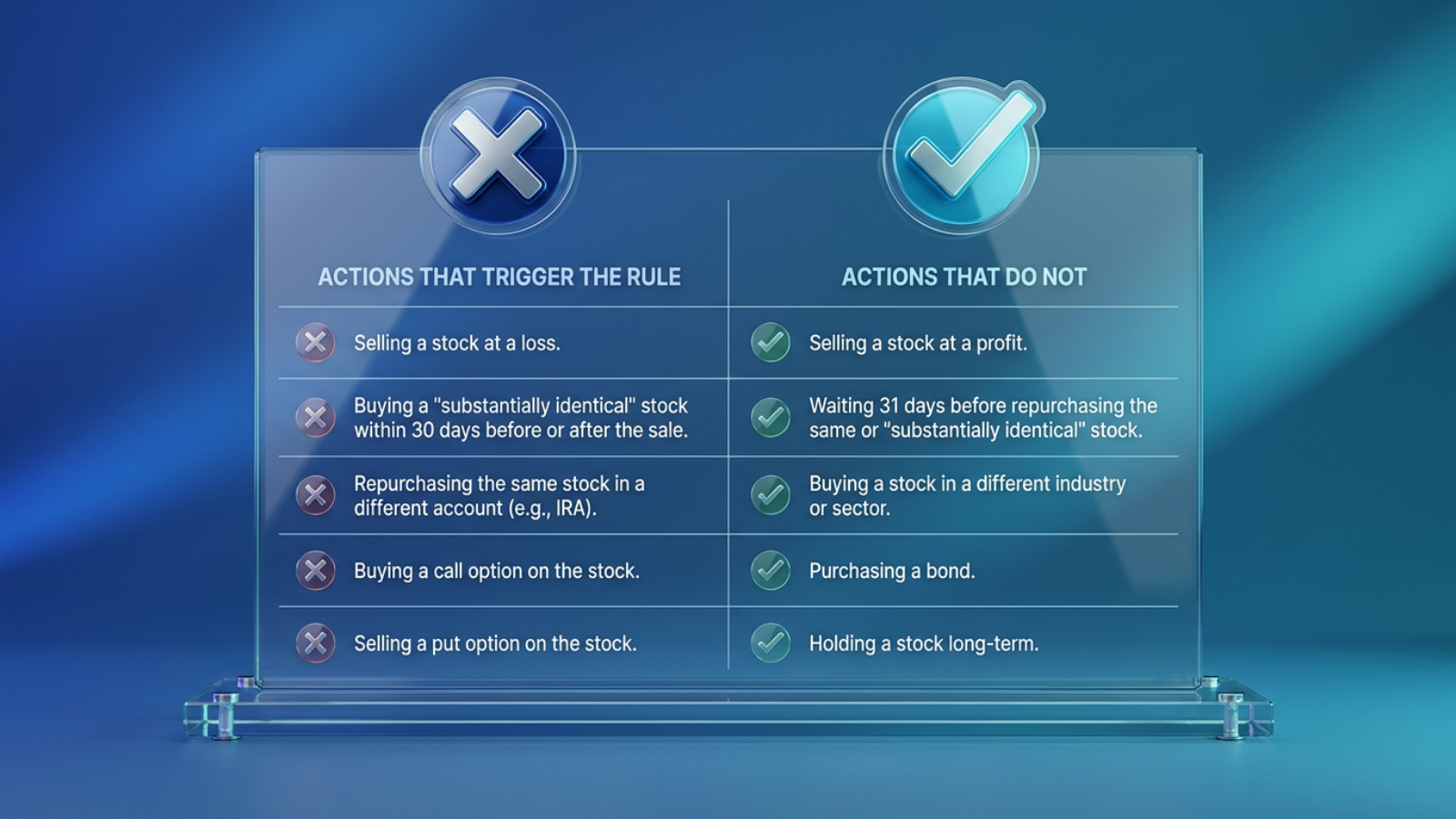
The wash sale rule is triggered if you sell a security at a loss and buy a substantially identical security within 30 days before or after the sale date.
Disallowed losses are added to the cost basis of the newly purchased shares, deferring the tax benefit.
The rule applies across all your investment accounts, including IRAs and accounts held by a spouse.
Active traders may bypass the rule by making a Mark-to-Market election under Section 475(f).

Part 1. What is the Wash Sale Rule and How Does it Work?
When investors sell an investment that has lost money in a taxable account, they generally receive a tax benefit by offsetting other capital gains. However, the IRS implemented the wash sale rule to prevent taxpayers from artificially creating a deductible loss while maintaining their position in the asset. Understanding the timeline and the mechanics of cost basis adjustments is essential for compliant portfolio management.
1.1 The Definition and the 61-Day Window
A wash sale occurs when you sell or trade stock or securities at a loss and, within 30 days before or after the sale, you buy substantially identical stock or securities. This creates a 61-day window, consisting of the day of the sale, the 30 days prior, and the 30 days after. If you acquire the same security, acquire a contract or option to buy it, or acquire it for an Individual Retirement Account (IRA) during this window, the loss is disallowed for current tax purposes. The IRS requires you to track these transactions to ensure accurate reporting.
IRS — https://www.irs.gov/publications/p550
Defining "Substantially Identical"
The IRS does not provide a rigid definition of "substantially identical," but generally, stock of one corporation is not considered substantially identical to stock of another corporation. However, buying a call option on a stock you just sold at a loss, or swapping one S&P 500 index fund for another S&P 500 index fund, may trigger the rule. Investors must weigh facts and circumstances to determine if securities overlap too heavily.
1.2 How Cost Basis is Adjusted After a Wash Sale
If your loss is disallowed due to the wash sale rule, that financial loss does not simply disappear. Instead, the disallowed loss is added to the cost basis of the new stock or securities. This adjustment delays the loss deduction until you eventually sell the new holdings in a non-wash-sale transaction. Additionally, the holding period for the new stock includes the holding period of the stock you originally sold.
Step-by-Step Scenario Example:
Consider this example of how a cost basis is adjusted during a wash sale:
You purchase 1,000 shares of ABC stock at $50 per share. The total traded value is $50,000.
You sell the 1,000 shares at $45 per share. The total traded value is $45,000, resulting in a $5,000 loss.
Within 30 days, you buy 1,500 shares of ABC stock at $40 per share, resulting in a traded value of $60,000.
Because the repurchase occurred within the 30-day window, the $5,000 loss is disallowed. This $5,000 is added to the cost basis of 1,000 of the new shares. The adjusted cost basis for those 1,000 shares becomes $45,000 ($40,000 purchase price plus the $5,000 disallowed loss). The remaining 500 shares retain their original $40 per share cost basis.
Webull — https://www.webull.com/help/faq/10955-Understanding-Wash-Sales

Part 2. Common Scenarios That Trigger the Wash Sale Rule
Investors often accidentally trigger a wash sale by failing to monitor automated account features or by trading across multiple portfolios. Recognizing these common situations can help you preserve your expected tax deductions.
2.1 Trading Across Multiple Accounts and Spousal Portfolios
The wash sale rule applies to the investor, not just a single individual brokerage account. If you sell a losing stock in your taxable brokerage account and then repurchase the identical stock in another account—even at a different institution—it counts as a wash sale. The rule also extends to accounts held by your spouse or a corporation you control.
Furthermore, if you sell a stock at a loss in a taxable account and repurchase it within 30 days in a Traditional or Roth IRA, the wash sale rule applies. In this specific IRA scenario, the disallowed loss does not increase the basis in the IRA. This means the disallowed loss is effectively forfeited, not deferred, making it a critical scenario to avoid.
H&R Block — https://www.hrblock.com/tax-center/income/investments/wash-sales/
2.2 Dividend Reinvestment Plans (DRIPs)
Automatic dividend reinvestment can inadvertently trigger the wash sale rule. If you sell a portion of a stock position at a loss, and a few days later a scheduled dividend is automatically reinvested to purchase fractional shares of that same stock, those fractional shares constitute a repurchase within the 30-day window. This will disallow the loss proportionally to the number of shares automatically purchased. To avoid this, investors may choose to turn off DRIPs on securities they plan to sell for tax-loss harvesting.
2.3 Options, Warrants, and ETFs
The wash sale rule applies to losses from the sale or trade of options and contracts to acquire or sell stock. If you sell a stock at a loss and buy a call option on that identical stock within 30 days, the loss is disallowed. Similarly, selling common stock at a loss and buying warrants for the same corporation's common stock triggers the rule. Exchange-traded funds (ETFs) and mutual funds are also fully subject to the wash sale rule.
Part 3. How to Avoid a Wash Sale When Tax-Loss Harvesting
Tax-loss harvesting is a strategy where investors intentionally sell securities at a loss to offset capital gains realized elsewhere in their portfolio. To maintain market exposure without running afoul of the IRS, specific strategies must be employed.
3.1 Portfolio Management Strategies
The most straightforward way to avoid a wash sale is to simply wait 31 days after selling a security at a loss before repurchasing it. However, if you do not want to be out of the market for a month, you can reinvest the proceeds into a similar, but not "substantially identical," asset.
For example, if you sell an ETF tracking a specific sector at a loss, you might consider purchasing a different ETF that targets the same general industry but tracks a different underlying index or holds a distinctly different basket of stocks.
Pros and Cons of ETF Substitution
Pros: Maintains exposure to the desired market sector; allows realization of tax losses for the current year.
Cons: The alternative ETF may have different expense ratios, liquidity, or tracking error; there is no definitive IRS list defining "substantially identical," so investors must exercise judgment.
Fidelity — https://www.fidelity.com/learning-center/personal-finance/wash-sales-rules-tax
3.2 Mark-to-Market Election Under Section 475(f)
For highly active traders, the IRS offers the Section 475(f) Mark-to-Market election. Under this tax accounting method, qualifying traders treat all unrealized year-end gains and losses as if they were realized. The securities are marked to their fair market value at the end of the year.
Because gains and losses are reported as ordinary income rather than capital gains, the wash sale rule no longer applies to trades made under this election. This allows for the full deduction of trading losses. However, this election must be filed before the end of the first tax year it is intended to apply to, and it is required to consult a tax professional before proceeding.
Part 4. Webull Platform Review: Managing Trades and Cost Basis
When navigating complex tax rules, utilizing a transparent brokerage platform is essential. Webull offers tools and reporting features designed to help investors monitor their cost basis and tax lots.
4.1 Platform Features for Tax Reporting
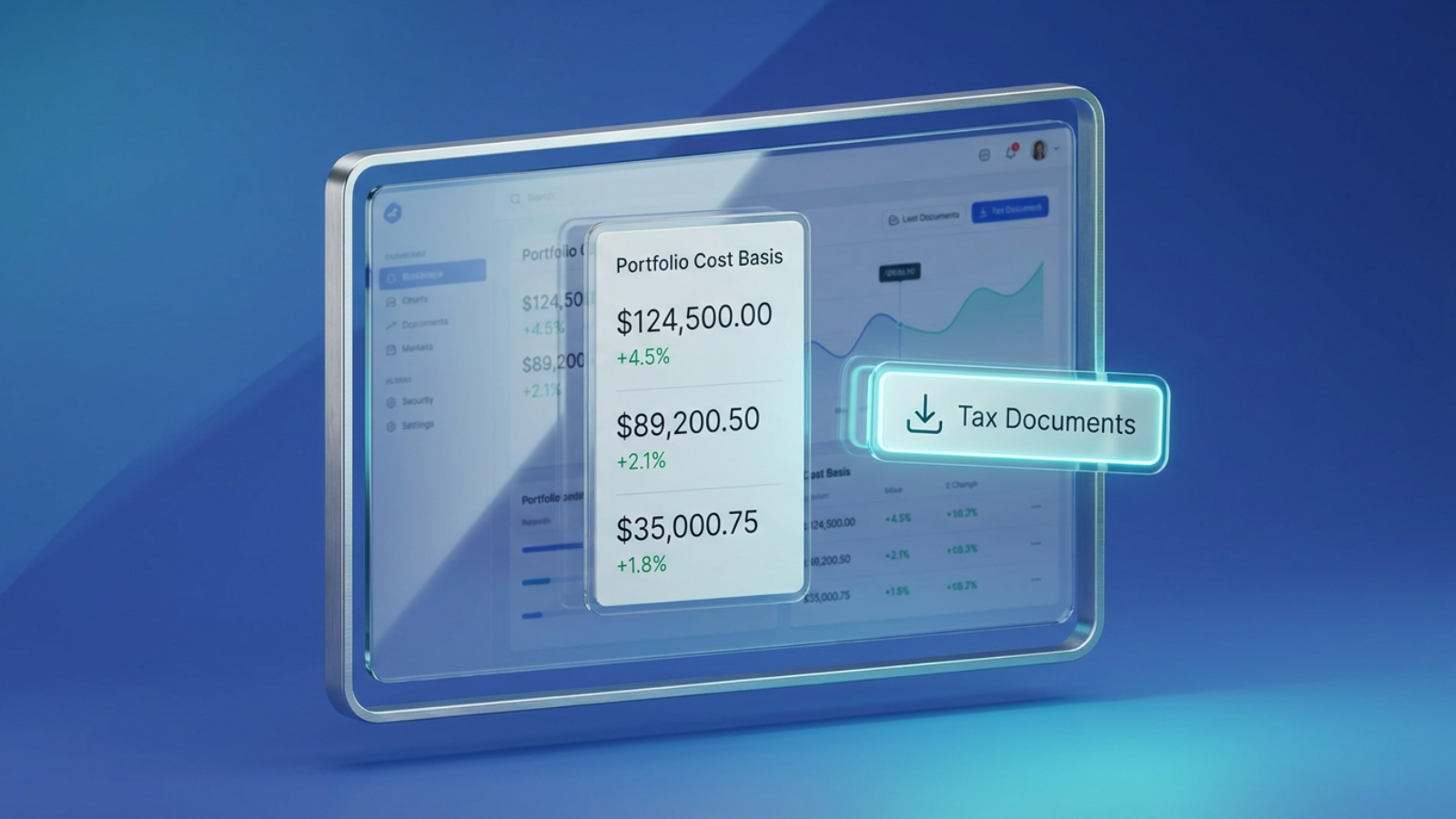
Webull provides tax lot accounting methods including First In, First Out (FIFO) and Last In, First Out (LIFO). The platform generates 1099-B tax forms that flag wash sales involving the same CUSIP number within the same account. The total proceeds and the total cost basis reported on the 1099 tax form are adjusted for these documented wash sales.
Users can access their Webull Account Management interface to download transaction records, which include all purchases and sales. This data assists investors and their tax advisors in verifying whether a wash sale has occurred within the account.
4.2 Understanding Fees and Pricing
When executing trades for tax purposes, investors should review the fee structures of their brokerage. Webull offers pricing schedules for equity and options trades. Rates vary by service provider; please refer to the latest pricings. Before initiating a high volume of transactions, review the full fee schedule to understand any applicable regulatory fees or margin interest costs.
4.3 Platform Security and Regulation
Trust and security are fundamental when managing financial assets. Webull Financial LLC is a registered broker-dealer and a member of the Securities Investor Protection Corporation (SIPC), which protects securities customers of its members up to $500,000 (including $250,000 for claims for cash). Furthermore, Webull is regulated by the Securities and Exchange Commission (SEC) and the Financial Industry Regulatory Authority (FINRA), ensuring compliance with U.S. financial regulations.

Part 5. Reporting Wash Sales to the IRS
Even if your brokerage tracks a wash sale, you are ultimately responsible for reporting it accurately to the IRS. Here is a general outline of how these transactions are documented during tax season.
5.1 Step-by-Step Reporting Guide
Gather Required Information: Collect your 1099-B forms. The form will show your proceeds, original cost basis, and any disallowed wash sale loss, typically found in Box 1g.
Identify the Disallowed Loss: Confirm the amount of the wash sale loss that is nondeductible for the current year. Ensure you have adjusted the cost basis of your replacement shares accordingly.
Complete Form 8949: Report the transaction on Form 8949 (Sales and Other Dispositions of Capital Assets). You will enter the details of the sale, input code "W" in column (f) to indicate a wash sale, and enter the disallowed loss amount as a positive number in column (g).
Transfer to Schedule D: After listing all transactions and adjustments on Form 8949, transfer the final calculated totals to Schedule D of your Form 1040 to determine your net capital gain or deductible capital loss for the year.
As always, tax strategies do not constitute tax advice and actual results may vary by individual. Consult a licensed tax advisor to ensure accurate reporting.
FAQs
Q1: How long do I have to wait to avoid the wash sale rule?
To safely avoid triggering the wash sale rule, you must wait at least 31 days after selling a security at a loss before purchasing the same or a substantially identical security.
Q2: What happens if a wash sale occurs across different brokerage accounts?
The IRS applies the rule to the individual investor, not the specific account. If you sell for a loss at one brokerage and buy the same stock at another brokerage within 30 days, it is a wash sale. You must manually calculate and report this adjustment, as brokerages typically only track activity within their own platforms.
Q3: Do dividend reinvestments trigger a wash sale?
Yes. If you sell shares at a loss and an automatic dividend reinvestment purchases fractional shares of that same company within the 30-day window, those newly purchased shares will trigger the wash sale rule.
Q4: Are exchange-traded funds (ETFs) subject to wash sale rules?
Yes, ETFs and mutual funds are subject to the wash sale rule. Selling an ETF at a loss and repurchasing the identical ETF within 30 days triggers the rule.
Q5: Can I claim a wash sale loss in my IRA?
If you sell a stock at a loss in a taxable account and repurchase it within 30 days in an IRA, the loss is disallowed. Furthermore, the basis in the IRA is not increased, meaning the disallowed loss is effectively forfeited.
The Bottom Line
The wash sale rule is a critical IRS regulation that impacts how investors claim tax deductions on capital losses. By understanding the 61-day restriction window and managing repurchases across all accounts, you can optimize your tax-loss harvesting strategies. Utilizing robust tracking platforms like Webull helps streamline reporting. Rates vary by service provider; please refer to the latest pricings. Past performance is not indicative of future results. Tax strategies do not constitute tax advice and actual results may vary by individual.
Disclaimer:
Webull does not offer tax advice. For any questions about taxes, including how to file, we recommend speaking with a tax professional.
Webull Financial LLC (member SIPC, FINRA) offers self-directed securities trading. All investments involve risk. More info: https://www.webull.com/policy
The information provided does not constitute investment advice and it should not be relied on as such. It should not be considered a solicitation to buy or an offer to sell a security. It does not take into account any investor's particular investment objectives, strategies, tax status or investment horizon. Investing involves risk, including the risk of loss of principal.
