'%3e %3cpath d='M41.7832962%2c0 C41.9459106%2c0 42.0882746%2c0.0866854658 42.1666825%2c0.216359069 C43.8289923%2c2.66540836 44.7676281%2c5.46271319 44.7676281%2c8.43208061 C44.7676281%2c18.1345746 34.7460532%2c26 22.383814%2c26 C10.0215749%2c26 0%2c18.1345746 0%2c8.43208061 C0%2c5.46716016 0.935826425%2c2.67378733 2.58829888%2c0.223985685 C2.67109477%2c0.0916264068 2.81687473%2c0 2.9840593%2c0 C3.23130408%2c0 3.43173558%2c0.200393004 3.43173558%2c0.447590303 C3.43173558%2c0.475056669 3.42926112%2c0.501945205 3.42452292%2c0.528045226 L3.41810883%2c0.550292077 C3.37800671%2c0.861741908 3.3575721%2c1.17661276 3.3575721%2c1.49443092 C3.3575721%2c7.98336 11.2132389%2c12.5742305 22.383814%2c12.5742305 C33.5543891%2c12.5742305 41.410056%2c7.98336 41.410056%2c1.49443092 C41.410056%2c1.17865223 41.3898828%2c0.865783153 41.3502888%2c0.556288325 C41.3402868%2c0.521941442 41.3356199%2c0.48531078 41.3356199%2c0.447590303 C41.3356199%2c0.200393004 41.5360514%2c0 41.7832962%2c0 Z' id='logo%e5%a4%87%e4%bb%bd-6' fill='white'%3e%3c/path%3e %3cpath d='M74.6899231%2c3.74404927 C75.2411227%2c3.74404927 75.7734299%2c3.66184338 76.2756219%2c3.50883715 L73.8159676%2c20.8666902 C73.5770593%2c22.5662954 72.8072434%2c23.0518969 71.4268838%2c23.0518969 L69.9934336%2c23.0518969 C68.7988917%2c23.0518969 68.1618027%2c22.458384 67.7901674%2c20.893668 L65.6930827%2c11.9909739 C65.639992%2c11.7481731 65.639992%2c11.6942174 65.5338105%2c11.6942174 C65.427629%2c11.6942174 65.4010836%2c11.7481731 65.3479929%2c11.9909739 L63.2509082%2c20.893668 C62.8792729%2c22.458384 62.2421839%2c23.0518969 61.047642%2c23.0518969 L59.6141918%2c23.0518969 C58.2338322%2c23.0518969 57.4640163%2c22.5662954 57.225108%2c20.8666902 L54.7463723%2c3.37406084 C55.3593498%2c3.61307396 56.0249975%2c3.74404927 56.7207458%2c3.74404927 C57.3314263%2c3.74404927 57.918917%2c3.64314414 58.4679557%2c3.4568446 L60.3574623%2c19.3829078 C60.3840076%2c19.6257086 60.3840076%2c19.7875757 60.4901891%2c19.7875757 C60.5963706%2c19.7875757 60.5963706%2c19.6257086 60.6494614%2c19.3829078 L62.9323637%2c9.91367858 C63.0916359%2c9.26620991 63.4632712%2c8.69967483 64.6047223%2c8.69967483 L66.4363532%2c8.69967483 C67.5778044%2c8.69967483 67.9494397%2c9.26620991 68.1087119%2c9.91367858 L70.3916142%2c19.3829078 C70.4447049%2c19.6257086 70.4447049%2c19.7875757 70.5508864%2c19.7875757 C70.6570679%2c19.7875757 70.6570679%2c19.6257086 70.6836133%2c19.3829078 L72.5891207%2c3.32292288 C73.2365902%2c3.59432921 73.9460524%2c3.74404927 74.6899231%2c3.74404927 Z' id='Combined-Shape' fill='white'%3e%3c/path%3e %3cpath d='M84.5933901%2c7.43171536 C88.6813779%2c7.43171536 90.9111894%2c10.2643908 90.9111894%2c14.2840921 L90.9111894%2c15.7948523 C90.9111894%2c16.2264981 90.7519172%2c16.4692988 90.3802819%2c16.4692988 L81.7264895%2c16.4692988 L81.7264895%2c16.5502324 C81.7264895%2c18.1149484 82.3635785%2c19.9764208 84.9119346%2c19.9764208 C86.849747%2c19.9764208 88.6813779%2c19.8145536 89.7962837%2c19.7066422 L89.8759198%2c19.7066422 C90.1413735%2c19.7066422 90.3537366%2c19.8415315 90.3537366%2c20.1113101 L90.3537366%2c21.8918489 C90.3537366%2c22.3234947 90.2741004%2c22.5123397 89.7962837%2c22.5932733 C88.0708343%2c22.9170076 87.0355646%2c23.0518969 84.6464808%2c23.0518969 C81.9919433%2c23.0518969 78.2225%2c21.5950924 78.2225%2c16.2804538 L78.2225%2c14.2840921 C78.2225%2c10.0755457 80.5319476%2c7.43171536 84.5933901%2c7.43171536 Z M84.5933901%2c10.5071915 C82.9475768%2c10.5071915 81.7530349%2c11.6942174 81.7530349%2c13.8254684 L81.7530349%2c13.9333799 L87.3806545%2c13.9333799 L87.3806545%2c13.8254684 C87.3806545%2c11.7211953 86.2392034%2c10.5071915 84.5933901%2c10.5071915 Z' id='Combined-Shape' fill='white'%3e%3c/path%3e %3cpath d='M97.4154906%2c2.98826245 L97.4148064%2c7.62056039 C98.3969853%2c7.48567108 99.3260735%2c7.43171536 99.9631625%2c7.43171536 C104.236968%2c7.43171536 106.307507%2c9.99461216 106.307507%2c14.2031585 L106.307507%2c16.2804538 C106.307507%2c20.4890001 104.236968%2c23.0518969 99.9631625%2c23.0518969 C98.2642584%2c23.0518969 96.2733553%2c22.7821183 94.627542%2c22.3504725 C94.0169984%2c22.1886054 93.9108169%2c22.0267382 93.9108169%2c21.6220703 L93.9098179%2c3.08694115 C94.4185466%2c3.24434375 94.9584615%2c3.32900525 95.5178331%2c3.32900525 C96.184659%2c3.32900525 96.8238351%2c3.20869291 97.4154906%2c2.98826245 Z M99.9631625%2c10.3453244 C99.3260735%2c10.3453244 98.1580769%2c10.4262579 97.4148064%2c10.5341694 L97.4148064%2c19.9494429 C97.9191686%2c20.0573544 99.007529%2c20.1382879 99.9631625%2c20.1382879 C102.246065%2c20.1382879 102.803518%2c18.4926384 102.803518%2c16.2804538 L102.803518%2c14.2031585 C102.803518%2c11.9909739 102.246065%2c10.3453244 99.9631625%2c10.3453244 Z' id='Combined-Shape' fill='white'%3e%3c/path%3e %3cpath d='M111.036668%2c8.72457747 C111.579488%2c8.72457747 112.103987%2c8.64485191 112.599444%2c8.49629404 L112.598761%2c16.5232546 C112.598761%2c19.3289521 113.607485%2c19.9764208 115.147117%2c19.9764208 L115.306389%2c19.9764208 C116.846021%2c19.9764208 117.854746%2c19.3289521 117.854746%2c16.5232546 L117.854207%2c8.4334735 C118.406525%2c8.62226395 118.997939%2c8.72457747 119.612866%2c8.72457747 C120.223332%2c8.72457747 120.810625%2c8.62374317 121.359498%2c8.43756894 L121.358735%2c16.5232546 C121.358735%2c22.4044283 116.872567%2c23.0518969 115.306389%2c23.0518969 L115.060464%2c23.0512514 C113.42215%2c23.0271041 109.094772%2c22.2994073 109.094772%2c16.5232546 L109.094446%2c8.36700801 C109.698522%2c8.59813531 110.353066%2c8.72457747 111.036668%2c8.72457747 Z' id='Combined-Shape' fill='white'%3e%3c/path%3e %3cpath d='M128.314162%2c3.03790128 L128.313623%2c22.269539 C128.313623%2c22.5662954 128.10126%2c22.836074 127.809261%2c22.836074 L125.340541%2c22.836074 C125.048542%2c22.836074 124.809634%2c22.5662954 124.809634%2c22.269539 L124.809455%2c3.04219481 C125.358161%2c3.22824247 125.945253%2c3.32900525 126.555503%2c3.32900525 C127.17043%2c3.32900525 127.761844%2c3.22669173 128.314162%2c3.03790128 Z' id='Combined-Shape' fill='white'%3e%3c/path%3e %3cpath d='M133.90653%2c3.32900525 C134.473329%2c3.32900525 135.02015%2c3.24208064 135.534793%2c3.08063296 L135.533966%2c22.269539 C135.533966%2c22.5662954 135.321603%2c22.836074 135.029603%2c22.836074 L132.560884%2c22.836074 C132.268884%2c22.836074 132.029976%2c22.5662954 132.029976%2c22.269539 L132.029909%2c2.99605058 C132.615669%2c3.21152525 133.2476%2c3.32900525 133.90653%2c3.32900525 Z' id='Combined-Shape' fill='white'%3e%3c/path%3e %3c/g%3e %3c/g%3e %3c/g%3e%3c/svg%3e)




Cryptocurrency exchange-traded funds (ETFs) have reshaped how everyday investors access digital assets, offering a way to gain crypto exposure through a standard brokerage account without the complexities of managing digital wallets or private keys. Whether you are researching your first crypto ETF or comparing spot bitcoin ETFs against futures-based alternatives, understanding how these funds work, how they are taxed, and what risks they carry is essential before making any investment decision.
Key Takeaways
Crypto ETFs track the price of cryptocurrencies and trade on regular stock exchanges, allowing investors to buy and sell shares through standard brokerage accounts.
The SEC approved the first spot bitcoin ETFs in January 2024 and began paving the way for spot ether ETFs in May 2024, marking a significant shift in regulated crypto access for US investors.
Spot crypto ETFs directly hold the underlying digital assets, while futures-based ETFs track crypto prices through futures contracts — each with different tax treatments and tracking characteristics.
Crypto ETF gains are subject to capital gains tax, with short-term rates (10%–37%) applying to holdings under one year and long-term rates (0%–20%) for holdings exceeding 12 months.
Futures-based crypto ETFs follow a distinct 60/40 tax rule under IRS Section 1256, where 60% of gains are treated as long-term and 40% as short-term regardless of holding period.
Crypto ETFs can be held in tax-advantaged retirement accounts such as Traditional and Roth IRAs, which may offer benefits not available with direct cryptocurrency holdings.
Investing in crypto ETFs involves risk, including significant price volatility, regulatory uncertainty, and the possibility of loss of principal. Past performance does not guarantee future results.
Part 1. What Is a Crypto ETF and How Does It Work?
Before diving into the different types of crypto ETFs available in the US market, it is helpful to understand what an ETF is in general and how crypto-focused funds differ from traditional ones.
1.1 Understanding Exchange-Traded Funds
An exchange-traded fund (ETF) is an investment fund that trades on stock exchanges, much like an individual stock. ETFs hold a basket of assets — which may include stocks, bonds, commodities, currencies, or other investments — and allow investors to buy and sell shares throughout the trading day at market-determined prices. Some ETFs are broadly diversified across asset classes, while others focus on a specific sector or theme, such as gold or technology.
ETFs are popular with investors in part because they typically carry relatively low fees and can offer instant diversification in a single purchase. The price of an ETF share fluctuates based on supply and demand during market hours, and investors can trade them using the same brokerage accounts they use for stocks and bonds.
1.2 How Crypto ETFs Differ
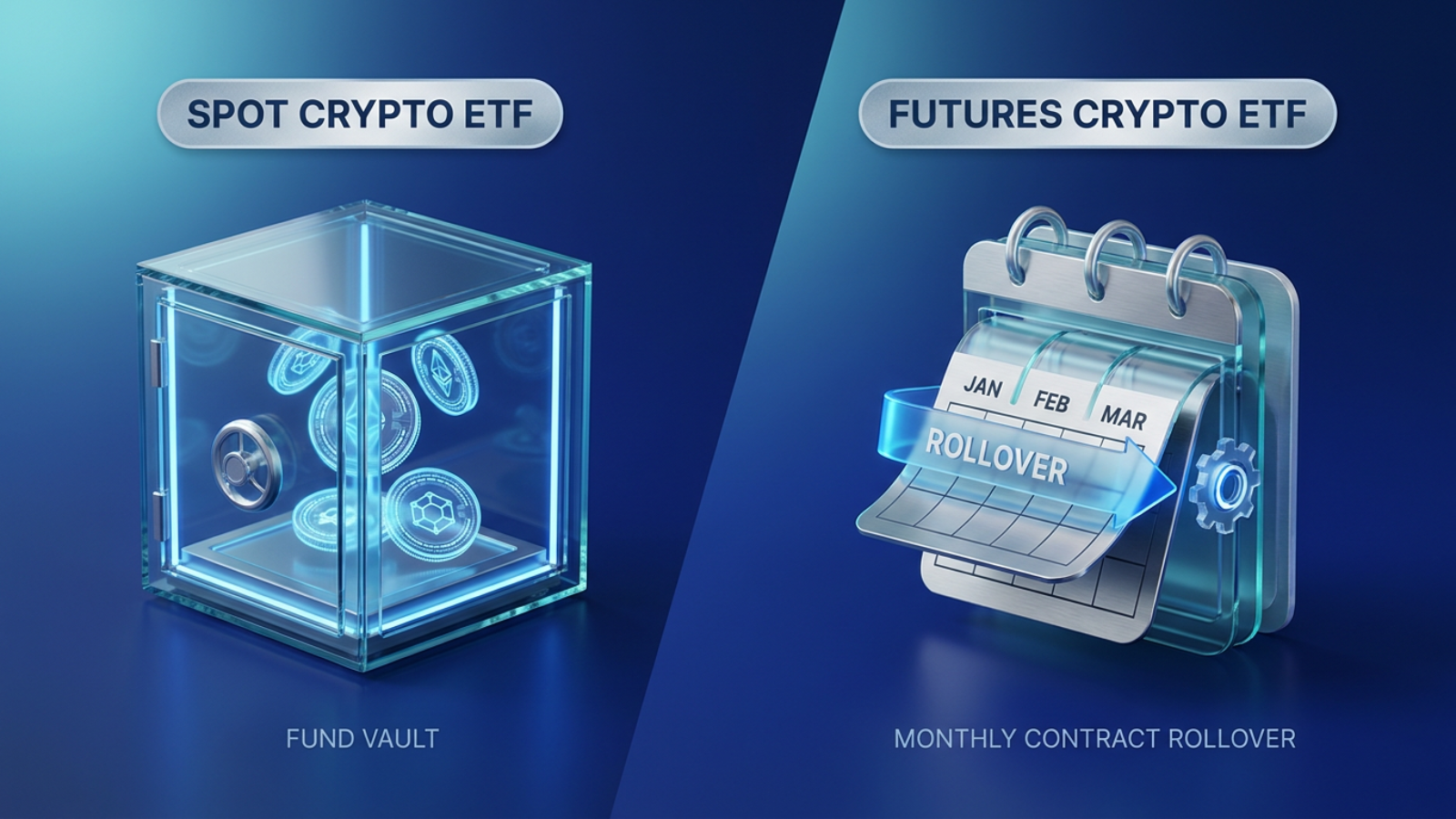
A cryptocurrency ETF is an ETF that tracks the performance of one or more cryptocurrencies. The underlying structure can vary: some crypto ETFs directly hold the digital assets (known as spot ETFs), while others gain exposure through futures contracts — agreements to buy or sell crypto at a preset date and price.
The SEC approved the first crypto futures ETFs for the US market in October 2021, with the ProShares Bitcoin ETF (BITO) becoming the first and largest US crypto futures ETF. Then, in January 2024, the SEC approved the first 11 spot bitcoin ETFs, a milestone that followed roughly a decade of regulatory deliberation. On their first trading day, these spot bitcoin ETFs saw approximately $4.6 billion in trading volume.
The key distinction is simple: spot ETFs aim to replicate the price of the cryptocurrency by holding it directly, while futures ETFs track prices through derivative contracts that must be rolled over as they approach expiration.
1.3 Why Investors Consider Crypto ETFs
For many investors, crypto ETFs address several practical concerns associated with direct cryptocurrency ownership. By purchasing ETF shares in a brokerage account, investors can gain exposure to crypto markets without setting up digital wallets, managing private keys, or navigating cryptocurrency exchanges. This approach also allows investors to hold crypto exposure alongside traditional assets like stocks and bonds in a single portfolio.
Additionally, because crypto ETFs trade on regulated exchanges and are held in brokerage accounts, investors may benefit from certain protections — such as SIPC insurance of up to $500,000 in the event the brokerage firm fails (which protects against broker insolvency, not declines in investment value). Direct cryptocurrency holdings, by contrast, are not insured by the SIPC or the FDIC.
Part 2. Types of Crypto ETFs Available to US Investors
The crypto ETF landscape has expanded considerably since 2021. US investors now have access to several distinct categories, each with its own structure, risks, and potential use cases.
2.1 Spot Bitcoin ETFs
Spot bitcoin ETFs directly hold bitcoin and securitize it for investors. When you buy shares of a spot bitcoin ETF, the fund purchases and holds actual bitcoin on your behalf. The share price is designed to track the price of bitcoin closely, and the fund can create and redeem shares based on market demand, which helps keep the share price aligned with the fund's net asset value.
The SEC approved the first 11 spot bitcoin ETFs in January 2024 after years of rejecting similar proposals. The regulatory concerns that previously blocked approval centered on fraud, market manipulation, volatility, and the absence of surveillance-sharing agreements with regulated markets. The approval was influenced by a 2023 D.C. Circuit US Court of Appeals ruling.
2.2 Spot Ether ETFs
Following the bitcoin ETF approvals, the SEC began paving the way for spot ether ETFs. In May 2024, the SEC approved a rule change allowing for the listing and trading of eight spot ether ETFs. This did not mean immediate trading — individual applications from investment managers still require review and further approvals — but it represented a significant regulatory step.
One area of regulatory attention has been Ethereum's staking feature, which allows ether holders to earn income by locking up their tokens to help validate transactions. Since staking began on the Ethereum platform in 2022, questions have arisen around how staking rewards should be taxed and reported, which contributed to the SEC's cautious approach.
2.3 Futures-Based Crypto ETFs
Futures-based crypto ETFs track cryptocurrency prices through futures contracts rather than by holding the underlying assets directly. The ProShares Bitcoin ETF (BITO), which launched in October 2021, is a prominent example. The fund allocates roughly half of its portfolio to Chicago Mercantile Exchange (CME) bitcoin futures expiring at the end of the current month and the other half to CME bitcoin futures expiring the following month.
As contracts near expiration, the fund must roll over its positions — selling expiring contracts and buying new ones for the coming month. The costs associated with these rollovers can cause the ETF's performance to deviate from the spot price of bitcoin, a phenomenon known as tracking error.
There are also inverse futures ETFs, such as the ProShares Short Bitcoin ETF (BITI), which uses futures to generate returns that move opposite to bitcoin's price. ProShares additionally offers the Ether ETF (EETH), an ether futures ETF, and ETFs that track a mix of bitcoin and ether using equal or market capitalization weighting.
2.4 Crypto-Related Equity ETFs
Beyond funds that directly or indirectly hold cryptocurrencies, there are ETFs that invest in companies engaged with blockchain technology, crypto mining, or digital asset infrastructure. For example, the Amplify Transformational Data Sharing ETF (BLOK) holds a portfolio of companies that develop and use blockchain technologies.
These crypto-related equity ETFs offer a different risk profile: instead of tracking cryptocurrency prices, they reflect the performance of publicly traded companies operating in the crypto and blockchain sectors.
ETF Type | What It Holds | First US Approval | Tax Treatment |
|---|---|---|---|
Spot Bitcoin ETF | Bitcoin directly | January 2024 | Standard capital gains (ST/LT) |
Futures Bitcoin ETF | Bitcoin futures contracts | October 2021 | 60/40 rule under IRS Section 1256 |
Inverse Futures ETF | Short futures positions | Post-2021 | 60/40 rule under IRS Section 1256 |
Crypto-Related Equity ETF | Stocks of crypto/blockchain companies | Varies by fund | Standard capital gains (ST/LT) |
Part 3. How to Buy and Trade Crypto ETFs
One of the primary appeals of crypto ETFs is that they integrate seamlessly with the brokerage infrastructure most investors already use.
3.1 Where You Can Purchase Crypto ETFs
Crypto ETFs can be purchased through a range of investment accounts, including individual and joint brokerage accounts, Traditional and Roth IRAs, and certain 401(k) plans. This broad availability stands in contrast to direct cryptocurrency, which is not supported by most major IRA and 401(k) providers.
Platforms such as Webull provide access to ETF trading within a brokerage environment that also includes stocks, options, and other securities. For investors seeking a unified view of their portfolio, trading crypto ETFs alongside traditional assets in a single brokerage account can simplify portfolio management and recordkeeping.
3.2 A Step-by-Step Guide to Buying Your First Crypto ETF
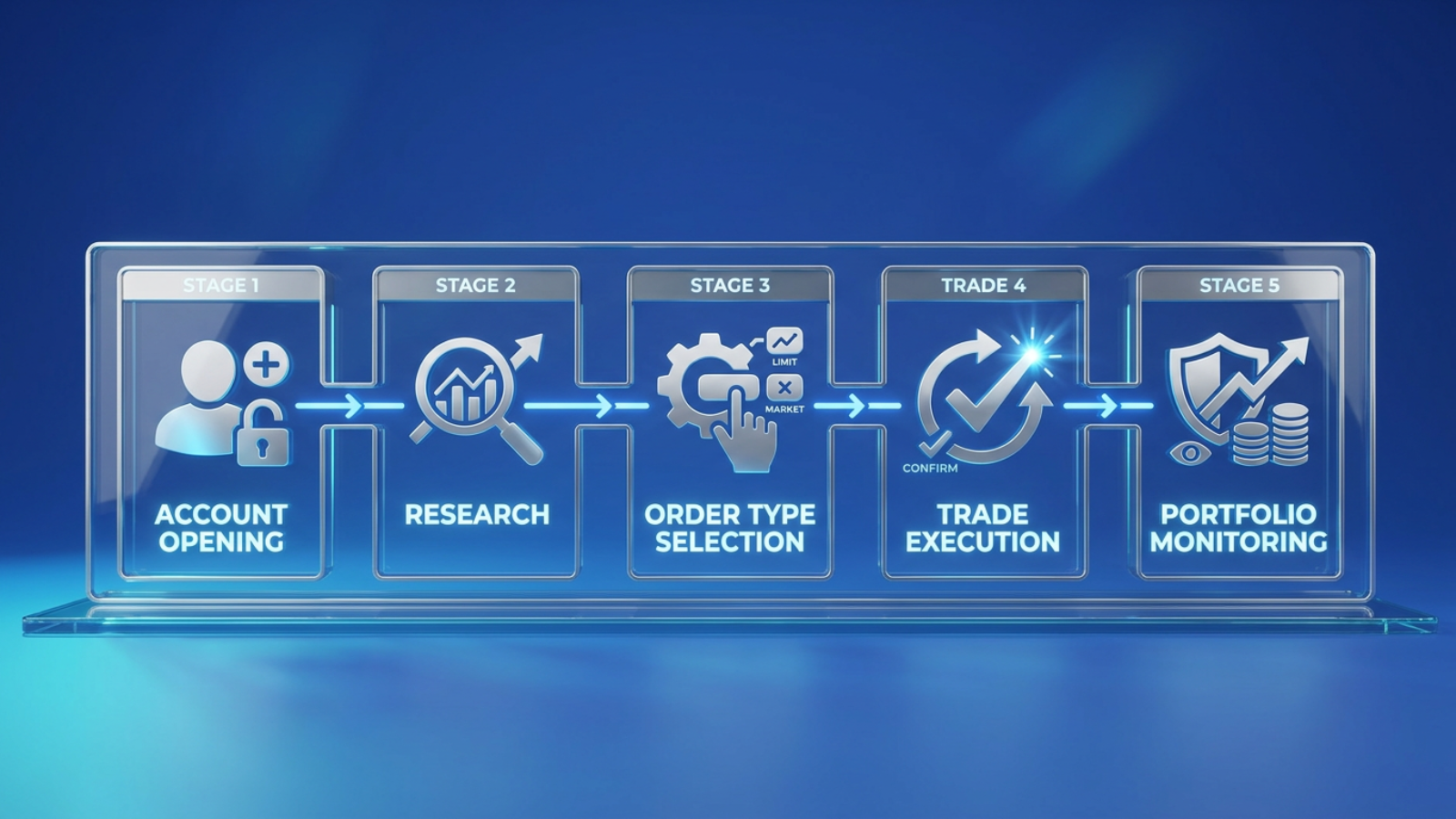
Buying a crypto ETF follows the same general process as purchasing any other ETF. Here is how it typically works:
Step 1: Open and fund a brokerage account. If you do not already have one, you will need to open a brokerage account with a registered broker-dealer. Many platforms, including Webull, allow you to open an account online. The account application typically requires personal information, identity verification, and funding via bank transfer or other accepted methods.
Step 2: Research available crypto ETFs. Before placing an order, review the ETFs available through your brokerage platform. Key details to examine include the fund's structure (spot vs. futures), expense ratio, assets under management, and historical tracking performance. You can find this information through the fund's prospectus and fact sheet, as well as through research tools on your brokerage platform.
Step 3: Decide on order type and quantity. Determine how many shares (or fractional shares, if supported) you wish to purchase and what order type — market order, limit order, or another type — suits your strategy.
Step 4: Place the order. Enter the trade through your brokerage platform. You may wish to review the order details — including any commissions or fees — before confirming.
Step 5: Monitor your position. After the order executes, the ETF shares will appear in your brokerage account. You can track the position, review performance, and manage it as you would any other holding in your portfolio.
3.3 Understanding Account Protections
When you hold crypto ETFs in a brokerage account, the securities are protected by SIPC insurance up to $500,000 (including a $250,000 limit for cash) in the event the brokerage firm fails. It is important to understand that SIPC protection covers broker insolvency — it does not protect against declines in the market value of your investments. Direct cryptocurrency investments are not covered by SIPC or FDIC insurance.
3.4 Fees to Consider
Crypto ETFs carry expense ratios that cover fund management and operational costs. These can be higher than traditional equity ETFs. For example, the ProShares Bitcoin ETF (BITO) has an expense ratio of 0.95%, compared to the SPDR S&P 500 ETF's expense ratio of approximately 0.0945%. The industry average expense ratio across all ETFs was 0.47% as of December 31, 2022.
When trading crypto ETFs through a brokerage platform, investors should also be aware of any applicable brokerage fees, commissions (though many platforms now offer commission-free ETF trading), and potential costs such as spreads or regulatory fees. Reviewing the full fee schedule of both the ETF and the brokerage platform before investing is recommended.
Part 4. Crypto ETF Taxation — What Investors Need to Know
Tax treatment is one of the most important practical considerations for anyone investing in crypto ETFs, and the rules differ meaningfully depending on the type of ETF you hold.
4.1 Capital Gains on Spot Crypto ETFs
When you sell shares of a spot crypto ETF for a gain, you incur a capital gain. The tax rate depends on your holding period:
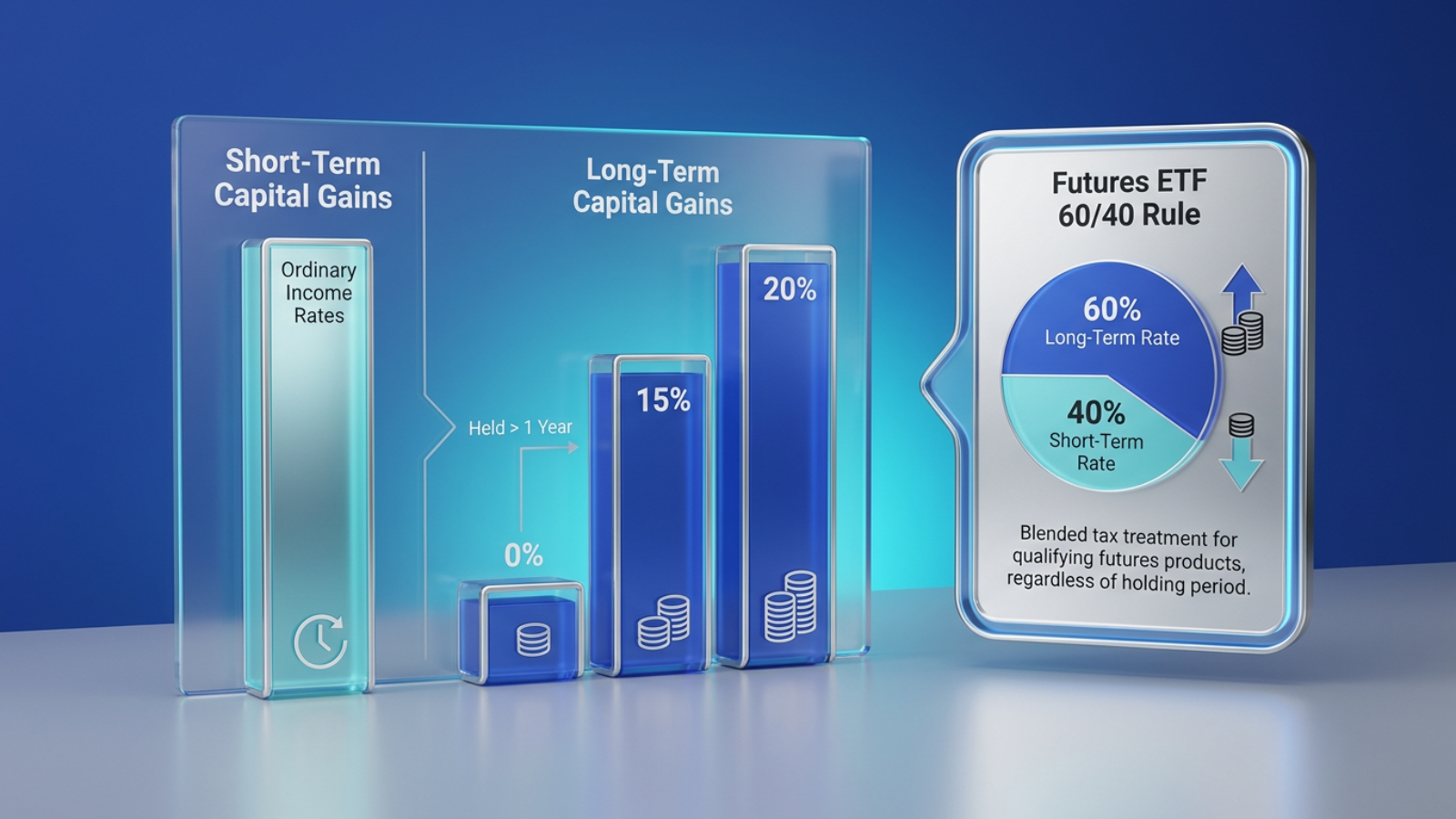
Short-term capital gains: If you hold the ETF shares for one year or less, your gains are taxed at ordinary income tax rates, which range from 10% to 37% depending on your income and filing status.
Long-term capital gains: If you hold the ETF shares for more than one year, your gains qualify for long-term capital gains rates of 0%, 15%, or 20%, depending on your taxable income.
Additionally, investors whose income exceeds certain thresholds may be subject to a 3.8% net investment income tax on top of these capital gains rates.
There is no tax for simply holding a crypto ETF — taxes are triggered only upon a taxable event such as selling shares at a gain.
4.2 The 60/40 Rule for Futures-Based Crypto ETFs
Futures-based crypto ETFs follow a distinct set of tax rules. Under IRS Section 1256, if the fund holds regulated futures contracts (such as those traded on the CME), 60% of any gain is treated as long-term capital gain and 40% is treated as short-term — regardless of how long you held the shares.
This 60/40 treatment can be advantageous for shorter holding periods when compared to standard capital gains rules, but it also means that even investors who hold futures ETF shares for more than a year will have 40% of their gains taxed at ordinary income rates.
If the fund holds non-regulated futures contracts, gains are subject to normal capital gains rules similar to stocks. Taxation of futures contracts can be complex depending on the specific structure of the fund and any tax elections made.
4.3 Tax-Advantaged Accounts
One notable tax advantage of crypto ETFs is that they can be held in tax-advantaged retirement accounts. Most Traditional and Roth IRA providers allow their customers to hold ETFs — including crypto ETFs — while most do not support holding cryptocurrency directly.
Holding crypto ETFs in a Traditional IRA may allow contributions to grow tax-deferred until withdrawal, while a Roth IRA may allow for tax-free growth and tax-free qualified withdrawals. Investors should consult a qualified tax professional regarding their specific situation, as this information is educational in nature and does not constitute tax advice.
4.4 Tax-Loss Harvesting with Crypto ETFs
Because crypto ETFs trade on regulated exchanges and are treated as securities, investors may be able to use tax-loss harvesting strategies — intentionally selling shares at a loss to offset capital gains or up to $3,000 of ordinary income per year. This is a strategy some investors use during market downturns to manage their overall tax liability. As with all tax matters, consulting a qualified tax professional is recommended before implementing any tax strategy.
Tax Consideration | Spot Crypto ETFs | Futures Crypto ETFs (Regulated) |
|---|---|---|
Holding < 1 year | Ordinary income rates (10%–37%) | 60% long-term / 40% short-term |
Holding > 1 year | Long-term rates (0%, 15%, 20%) | 60% long-term / 40% short-term (same) |
Net Investment Income Tax | Applies above income thresholds | Applies above income thresholds |
IRA / 401(k) eligible | Yes | Yes |
Primary tax form | Form 1099-B (future: 1099-DA) | Form 1099-B (future: 1099-DA) |
Part 5. Crypto ETFs vs. Direct Cryptocurrency Ownership
For investors considering crypto exposure, one of the most common questions is whether to invest through an ETF or to buy cryptocurrency directly. Each approach carries distinct trade-offs.
5.1 Key Differences at a Glance
Factor | Crypto ETF | Direct Cryptocurrency |
|---|---|---|
Ownership | Shares in a fund; no direct crypto ownership | Full ownership and control of the asset |
Where to buy | Brokerage account | Cryptocurrency exchange |
Storage responsibility | Managed by ETF provider | Investor manages digital wallet and private keys |
Security | Regulated fund structure; SIPC coverage for broker insolvency | Investor responsible for wallet security and phishing protection |
Trading hours | Regular market hours | Potentially 24/7 |
Use for transactions | Not possible | Can be used for payments and transfers |
Retirement accounts | Supported by most IRA/401(k) providers | Generally not supported (self-directed IRAs available but more complex) |
Annual fees | Expense ratio (varies; e.g., 0.95% for BITO) | No holding fees, but transaction and network fees apply |
5.2 Advantages of Crypto ETFs
Crypto ETFs offer several practical benefits that may appeal to investors who prioritize convenience and integration with their existing brokerage relationship:
Ease of access. Investors can buy and sell crypto ETFs through a brokerage account they already use for stocks and bonds. There is no need to open a separate account on a cryptocurrency exchange or manage a digital wallet. This lowers the learning curve for those unfamiliar with blockchain terminology, wallet management, and crypto exchange interfaces.
Security and custody. The ETF provider handles custody and security of the underlying digital assets, which means investors do not need to worry about managing private keys, securing recovery phrases, or protecting against phishing attacks. Cryptocurrency exchanges and wallets have faced security incidents, and for investors uncomfortable with managing these risks, an ETF offers a regulated alternative.
Tax-advantaged account eligibility. As noted earlier, most IRA and 401(k) providers allow customers to hold ETFs but not direct cryptocurrency. For long-term investors, the ability to hold crypto exposure within a tax-advantaged retirement account may be a significant benefit.
Portfolio integration. Holding crypto ETFs alongside traditional assets in a single brokerage account simplifies portfolio tracking, rebalancing, and tax reporting.
5.3 Advantages of Direct Cryptocurrency Ownership
Direct cryptocurrency ownership also has distinct advantages that matter to many investors:
Full ownership and control. When you own cryptocurrency directly, you hold the actual digital asset. As the saying goes in the crypto community, "not your keys, not your crypto" — direct ownership means no intermediary stands between you and your asset.
24/7 trading potential. Unlike ETFs, which trade during regular market hours, cryptocurrency markets operate around the clock. This can be valuable during periods of rapid price movement outside of traditional trading hours.
No annual fees. Holding cryptocurrency directly does not incur an expense ratio. While there may be transaction fees when buying or selling, and network fees for transfers, there are no ongoing management fees for simply holding the asset.
Usability. Cryptocurrency held directly can be used for transactions, payments, and interacting with decentralized applications — capabilities that ETF shares do not offer.
Decentralization and independence. For some investors, part of the appeal of cryptocurrency is independence from the traditional financial system. Crypto ETFs, by contrast, operate entirely within that system and are managed by financial institutions.
5.4 Which Approach May Be Suitable?
The choice between crypto ETFs and direct cryptocurrency ownership depends on individual investor preferences, goals, and comfort with technology. An investor who values convenience, integration with retirement accounts, and a regulated custody structure may find crypto ETFs to be a practical choice. An investor who values direct control, decentralization, and the ability to use cryptocurrency for transactions may prefer direct ownership.
Both approaches involve risk. Cryptocurrency prices have historically been volatile, and this volatility applies regardless of whether exposure is gained through an ETF or by holding the asset directly. All investing involves risk, including the possible loss of principal.

Frequently Asked Questions About Crypto ETFs
Are there ETFs that focus specifically on bitcoin?
Yes. Several ETFs focus solely or primarily on bitcoin. Spot bitcoin ETFs hold bitcoin directly, while futures-based bitcoin ETFs like the ProShares Bitcoin ETF (BITO) track bitcoin prices through futures contracts. There are also inverse bitcoin ETFs, such as the ProShares Short Bitcoin ETF (BITI), designed to move in the opposite direction of bitcoin's price.
Can I buy fractional shares of a crypto ETF?
Many brokerages, including Webull, support fractional share trading, which may allow you to purchase a portion of a crypto ETF share. For example, if one share costs $100 and you want to invest $50, you could buy 0.5 shares if fractional trading is supported. Some brokerages may have minimum purchase amounts for fractional shares, so reviewing your specific platform's policies is recommended. To explore available ETFs on Webull, you can browse the ETF trading section of the platform.
Do crypto ETFs pay dividends?
Some crypto ETFs may pay dividends or distributions, depending on the fund's structure and holdings. However, how much you earn in dividends correlates to the number of shares you own. It is important to read the fund's summary prospectus to understand its distribution policies before investing.
How are crypto ETF gains taxed compared to direct cryptocurrency?
Spot crypto ETF gains and direct cryptocurrency gains are both generally subject to short-term or long-term capital gains tax depending on the holding period. However, futures-based crypto ETFs follow the Section 1256 60/40 rule, which may result in different tax treatment. Additionally, crypto ETFs can be held in tax-advantaged retirement accounts like IRAs, which most providers do not support for direct cryptocurrency holdings.
What happens if I do not receive a Form 1099-DA for my crypto ETF?
If a Form 1099-DA is not issued, it does not necessarily mean your activity is non-taxable. Not all customers receive one — typically only those with reportable activity during the tax year do. You remain responsible for reporting taxable crypto-related activity when filing your taxes.
Are crypto ETFs protected by SIPC insurance?
Crypto ETFs held in a brokerage account are protected by SIPC insurance up to $500,000 (including a $250,000 limit for cash) in the event the brokerage firm fails. However, this does not protect against a decline in the market value of the ETF shares. Direct cryptocurrency holdings are not covered by SIPC or FDIC insurance.
What risks should I consider before investing in a crypto ETF?
Key risks include significant price volatility, regulatory uncertainty that may affect the fund's operations or tax treatment, potential tracking error (particularly with futures-based ETFs), potential liquidity issues in underlying crypto markets, and higher expense ratios compared to traditional equity ETFs. All investing involves risk, including the possible loss of principal. Past performance does not guarantee future results.
Can I invest in crypto ETFs through my IRA?
Yes. Most Traditional and Roth IRA providers allow customers to hold ETFs — including crypto ETFs — within their retirement accounts. This is a notable difference from direct cryptocurrency, which is generally not supported by major IRA providers. Holding crypto ETFs in an IRA may offer potential tax advantages depending on the type of account.
The Bottom Line
Crypto ETFs offer a regulated, brokerage-friendly way to access digital asset markets without the technical demands of direct cryptocurrency ownership. While they simplify custody and integrate with retirement accounts, investors should carefully weigh fees, tracking characteristics, and tax treatments across fund types. Understanding the risks — including volatility and regulatory shifts — and how an ETF fits within your broader portfolio is essential before committing capital.
Disclaimer:
Investing in Crypto ETPs involves the substantial risks inherent to cryptocurrencies, including extreme price volatility, regulatory uncertainty, and potential for complete loss. This is a high-risk investment suitable only for those with a strong risk tolerance.
Webull Financial LLC (member SIPC, FINRA) offers self-directed securities trading. All investments involve risk. More info: https://www.webull.com/policy
The information provided does not constitute investment advice and it should not be relied on as such. It should not be considered a solicitation to buy or an offer to sell a security. It does not take into account any investor's particular investment objectives, strategies, tax status or investment horizon. Investing involves risk, including the risk of loss of principal.
