
Don't Buy Whitefield Income Limited (ASX:WHI) For Its Next Dividend Without Doing These Checks
Whitefield Income Limited (ASX:WHI) stock is about to trade ex-dividend in 2 days. The ex-dividend date is two business days before a company's record date in most cases, which is the date on which the company determines which shareholders are entitled to receive a dividend. It is important to be aware of the ex-dividend date because any trade on the stock needs to have been settled on or before the record date. Thus, you can purchase Whitefield Income's shares before the 1st of December in order to receive the dividend, which the company will pay on the 31st of December.
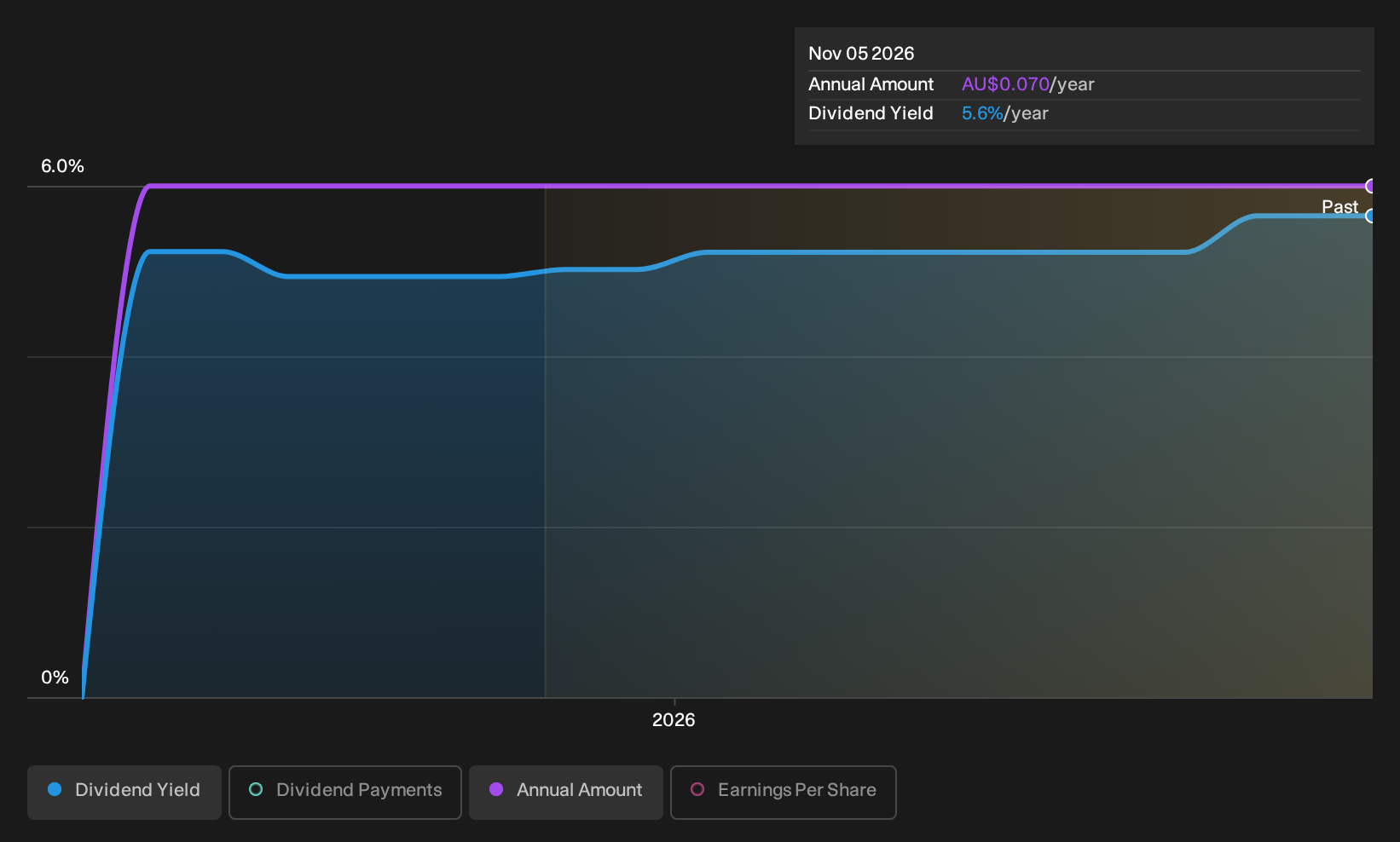
The company's next dividend payment will be AU$0.00583 per share, and in the last 12 months, the company paid a total of AU$0.07 per share. Based on the last year's worth of payments, Whitefield Income has a trailing yield of 6.0% on the current stock price of AU$1.16. Dividends are an important source of income to many shareholders, but the health of the business is crucial to maintaining those dividends. So we need to investigate whether Whitefield Income can afford its dividend, and if the dividend could grow.
If a company pays out more in dividends than it earned, then the dividend might become unsustainable - hardly an ideal situation. Its dividend payout ratio is 89% of profit, which means the company is paying out a majority of its earnings. The relatively limited profit reinvestment could slow the rate of future earnings growth. We'd be worried about the risk of a drop in earnings.
When a company paid out less in dividends than it earned in profit, this generally suggests its dividend is affordable. The lower the % of its profit that it pays out, the greater the margin of safety for the dividend if the business enters a downturn.
View our latest analysis for Whitefield Income
Click here to see how much of its profit Whitefield Income paid out over the last 12 months.
Have Earnings And Dividends Been Growing?
Businesses with shrinking earnings are tricky from a dividend perspective. Investors love dividends, so if earnings fall and the dividend is reduced, expect a stock to be sold off heavily at the same time. As a result, it's definitely disappointing to see that earnings per share have declined 8.4% over the past year.
Whitefield Income also issued more than 5% of its market cap in new stock during the past year, which we feel is likely to hurt its dividend prospects in the long run. It's hard to grow dividends per share when a company keeps creating new shares.
Another key way to measure a company's dividend prospects is by measuring its historical rate of dividend growth. It looks like the Whitefield Income dividends are largely the same as they were two years ago. When earnings are declining yet the dividends are flat, typically the company is either paying out a higher portion of its earnings, or paying out of cash or debt on the balance sheet, neither of which is ideal.
Final Takeaway
Has Whitefield Income got what it takes to maintain its dividend payments? Earnings per share have been declining and the company is paying out more than half its profits to shareholders; not an enticing combination. These characteristics don't generally lead to outstanding dividend performance, and investors may not be happy with the results of owning this stock for its dividend.
Having said that, if you're looking at this stock without much concern for the dividend, you should still be familiar of the risks involved with Whitefield Income. To help with this, we've discovered 2 warning signs for Whitefield Income (1 can't be ignored!) that you ought to be aware of before buying the shares.
If you're in the market for strong dividend payers, we recommend checking our selection of top dividend stocks.
Have feedback on this article? Concerned about the content? Get in touch with us directly. Alternatively, email editorial-team (at) simplywallst.com.