
Jensen Huang Is Back as Nvidia CEO. His $500 Billion AI Financing Plan Still Hasn’t Deployed a Single Dollar. What It Means for NVDA Stock.
On Aug. 10, Nvidia (NVDA) announced that it had partnered with six major financial institutions to launch compute financing platforms. The aim was to raise more than $500 billion in third-party capital for artificial intelligence (AI) infrastructure. The partners included Apollo (APO), BlackRock (BLK), Blackstone (BX), Brookfield (BN), Goldman Sachs (GS), and KKR (KKR), while Huang noted that Nvidia had the option to backstop up to $125 billion of the potential deals.
But according to The Wall Street Journal, no capital has been deployed yet. The reason is that lenders want more protection than Nvidia will give. Huang capped support at 25% of a project's cost. In comparison, Broadcom's (AVGO) residual-value guarantee covers about 85% of Project Big Sky.
These two deals aren't set up the same way, so it's not a direct comparison. But the gap shows why lenders may find Nvidia's offer less attractive. Michael Burry, who recently said he "tried to warn" investors about Nvidia and AI stocks, shared WSJ's report on X as another warning sign.
What Huang's Return Means for the Plan
Before Huang was reinstated on Nov. 23, interim CEO Colette Kress — who had already been skeptical of the backstops — signaled that Nvidia would be disciplined in the deals it supports. On the third-quarter earnings call, Kress said Nvidia would keep supporting these firms but take "a very strong look" at financing.
Now, Huang is back as CEO and Kress has returned to her role as CFO. That puts the plan's original backer back in charge, but a known skeptic of the backstops is still running the company's finances.
I think Huang now faces a difficult choice. Keeping support limited reduces Nvidia's risk. If an AI customer fails, Nvidia isn't stuck covering its debts, which also helps with the “circular financing” worries that critics have raised about the AI boom. On the other hand, customers who can't get funding may buy fewer chips, or turn to Broadcom's custom chips with stronger financing support.
Jensen Huang's $500 billion plan was meant to keep the AI buildout moving. If he wants it to work, he may have to offer lenders more than 25%, which would mean taking on the risk that Kress wanted to avoid.
About Nvidia Stock
Nvidia designs the GPUs that Big Tech companies, AI labs, and cloud providers like CoreWeave (CRWV) use to train and run AI models. Its Blackwell and Rubin chips, along with its CUDA software, keep customers locked into its ecosystem. That customer base is also why the financing plan matters, since many of these buyers need to borrow heavily to afford the company's chips. Nvidia was founded in 1993 and is based in Santa Clara, California, with co-founder Jensen Huang now back as CEO after his resignation earlier this month.
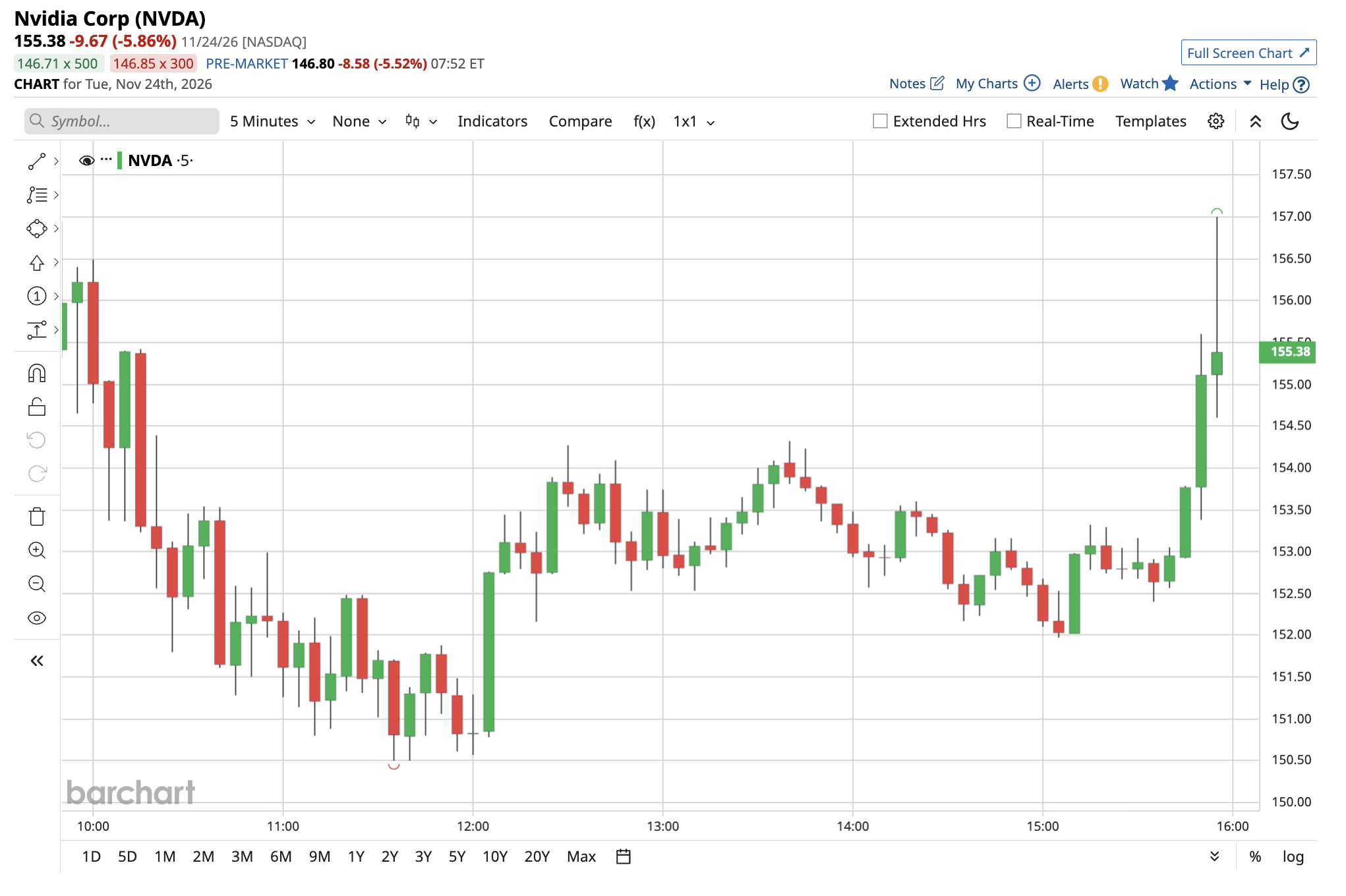
Huang's return sent NVDA stock up 31% at the close on Nov. 23, its best day since 2003. But even that wasn't enough to fix the rough stretch that came before it. Nvidia stock is down 19% this year against a 7% gain for the S&P 500 ($SPX). Shares of Nvidia are also down 31% in the past month alone. New export rules, the investigation linked to Huang's exit, and fears that AI customers will struggle to fund their chip purchases have all weighed on NVDA stock.
Still, there's not much to say against Nvidia's valuation right now. Its forward price-to-earnings (P/E) ratio of 15.5 times is well below its five-year average, while the stock's price-to-sales (P/S) ratio of 16.6 times is also below its average.
The EPS outlook makes the discount look especially attractive. Analysts expect earnings to more than double in fiscal 2027 and grow another 70% in fiscal 2028. Nvidia also has roughly $60 billion in net cash, showing $29.1 billion in cash and cash equivalents as of Q3, so it has the money to offer lenders more protection than 25%. Whether Huang uses it could decide how much of that earnings growth actually happens. This is why I think the financing plan could be crucial for NVDA stock.
What Do Analysts Expect for Nvidia Stock?
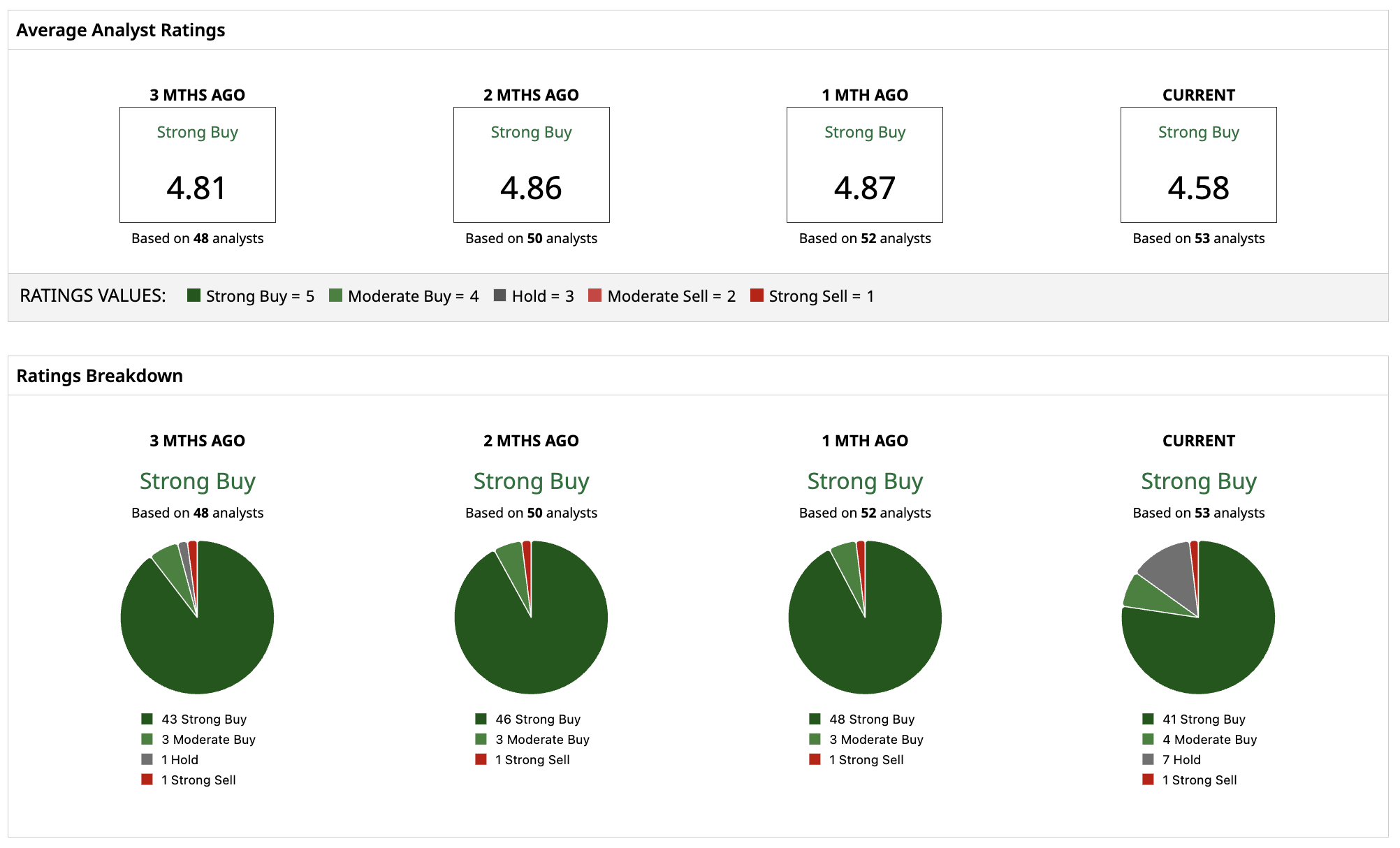
Based on 53 Wall Street analysts with coverage, Nvidia stock holds a consensus “Strong Buy” rating. The mean price target of $239.47 indicates potential upside of about 59% from current levels.
On the date of publication, Jabran Kundi did not directly have a position in any of the securities mentioned in this article. All information and data in this article is solely for informational purposes. For more information please view the Barchart Disclosure Policy here.