
Just Four Days Till SLB N.V. (NYSE:SLB) Will Be Trading Ex-Dividend
Some investors rely on dividends for growing their wealth, and if you're one of those dividend sleuths, you might be intrigued to know that SLB N.V. (NYSE:SLB) is about to go ex-dividend in just four days. The ex-dividend date is one business day before the record date, which is the cut-off date for shareholders to be present on the company's books to be eligible for a dividend payment. The ex-dividend date is of consequence because whenever a stock is bought or sold, the trade takes at least one business day to settle. Therefore, if you purchase SLB's shares on or after the 2nd of December, you won't be eligible to receive the dividend, when it is paid on the 7th of January.
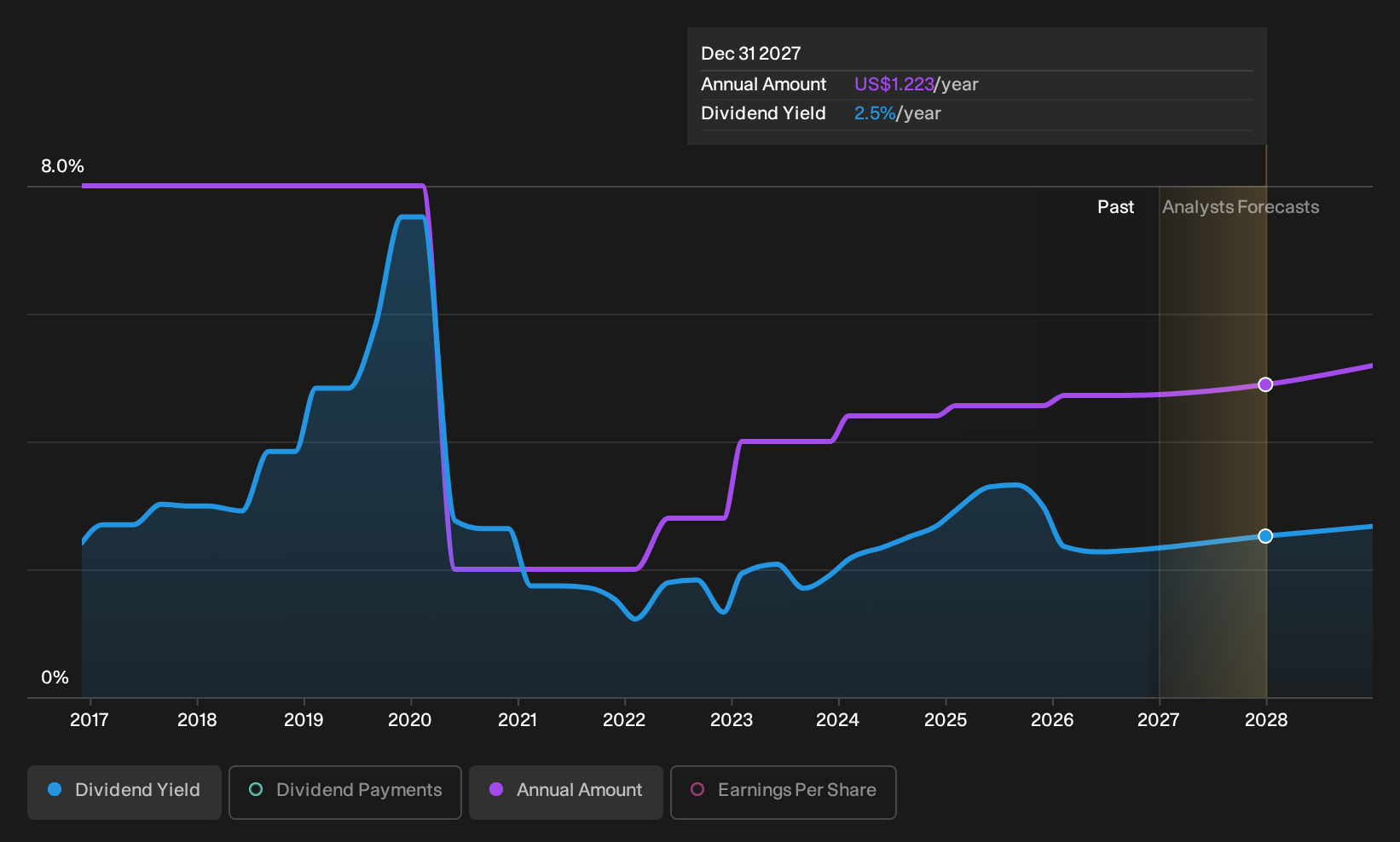
The company's next dividend payment will be US$0.295 per share. Last year, in total, the company distributed US$1.18 to shareholders. Calculating the last year's worth of payments shows that SLB has a trailing yield of 2.4% on the current share price of US$48.52. If you buy this business for its dividend, you should have an idea of whether SLB's dividend is reliable and sustainable. That's why we should always check whether the dividend payments appear sustainable, and if the company is growing.
Dividends are typically paid from company earnings. If a company pays more in dividends than it earned in profit, then the dividend could be unsustainable. SLB paid out more than half (56%) of its earnings last year, which is a regular payout ratio for most companies. That said, even highly profitable companies sometimes might not generate enough cash to pay the dividend, which is why we should always check if the dividend is covered by cash flow. It distributed 45% of its free cash flow as dividends, a comfortable payout level for most companies.
It's encouraging to see that the dividend is covered by both profit and cash flow. This generally suggests the dividend is sustainable, as long as earnings don't drop precipitously.
Check out our latest analysis for SLB
Click here to see the company's payout ratio, plus analyst estimates of its future dividends.
Have Earnings And Dividends Been Growing?
Stocks in companies that generate sustainable earnings growth often make the best dividend prospects, as it is easier to lift the dividend when earnings are rising. Investors love dividends, so if earnings fall and the dividend is reduced, expect a stock to be sold off heavily at the same time. With that in mind, we're encouraged by the steady growth at SLB, with earnings per share up 7.2% on average over the last five years. Decent historical earnings per share growth suggests SLB has been effectively growing value for shareholders. However, it's now paying out more than half its earnings as dividends. Therefore it's unlikely that the company will be able to reinvest heavily in its business, which could presage slower growth in the future.
The main way most investors will assess a company's dividend prospects is by checking the historical rate of dividend growth. SLB's dividend payments per share have declined at 5.1% per year on average over the past 10 years, which is uninspiring. It's unusual to see earnings per share increasing at the same time as dividends per share have been in decline. We'd hope it's because the company is reinvesting heavily in its business, but it could also suggest business is lumpy.
To Sum It Up
Is SLB worth buying for its dividend? Earnings per share growth has been modest and SLB paid out over half of its profits and less than half of its free cash flow, although both payout ratios are within normal limits. In summary, while it has some positive characteristics, we're not inclined to race out and buy SLB today.
While it's tempting to invest in SLB for the dividends alone, you should always be mindful of the risks involved. Every company has risks, and we've spotted 2 warning signs for SLB you should know about.
A common investing mistake is buying the first interesting stock you see. Here you can find a full list of high-yield dividend stocks.
Have feedback on this article? Concerned about the content? Get in touch with us directly. Alternatively, email editorial-team (at) simplywallst.com.