
Q3 rundown: RLI vs other property & casualty insurance stocks

The end of the earnings season is always a good time to take a step back and see who shined (and who didn’t). Let’s take a look at how property & casualty insurance stocks fared in Q3, starting with RLI NYSE:RLI.
Property & Casualty (P&C) insurers protect individuals and businesses against financial loss from damage to property or from legal liability. This is a cyclical industry, and the sector benefits when there is 'hard market', characterized by strong premium rate increases that outpace loss and cost inflation, resulting in robust underwriting margins. The opposite is true in a 'soft market'. Interest rates also matter, as they determine the yields earned on fixed-income portfolios. On the other hand, P&C insurers face a major secular headwind from the increasing frequency and severity of catastrophe losses due to climate change. Furthermore, the liability side of the business is pressured by 'social inflation'—the trend of rising litigation costs and larger jury awards.
The 31 property & casualty insurance stocks we track reported a mixed Q3. As a group, revenues along with next quarter’s revenue guidance were in line with analysts’ consensus estimates.
In light of this news, share prices of the companies have held steady. On average, they are relatively unchanged since the latest earnings results.
RLI NYSE:RLI
Founded in 1965 and named after its original focus on "replacement lens insurance" for contact lens wearers, RLI (NYSE:RLI) is a specialty insurance company that underwrites property, casualty, and surety products through wholesale brokers, independent agents, and carrier partnerships.
RLI reported revenues of $472.4 million, up 5.3% year on year. This print exceeded analysts’ expectations by 0.5%. Overall, it was a satisfactory quarter for the company with a beat of analysts’ EPS estimates but a significant miss of analysts’ book value per share estimates.
“Our third-quarter results reflect consistent, disciplined execution across the business,” said RLI Corp. President & CEO Craig Kliethermes. “We delivered an 86 combined ratio, with strong underwriting performance in our property and surety segments. Gross premiums written increased 2%, led by our casualty segment. Investment income grew 13%, further contributing to earnings. As market conditions evolve across our portfolio, we remain focused on risk selection and profitable growth. We will continue to pursue opportunities where our underwriting expertise can deliver attractive long-term returns.”
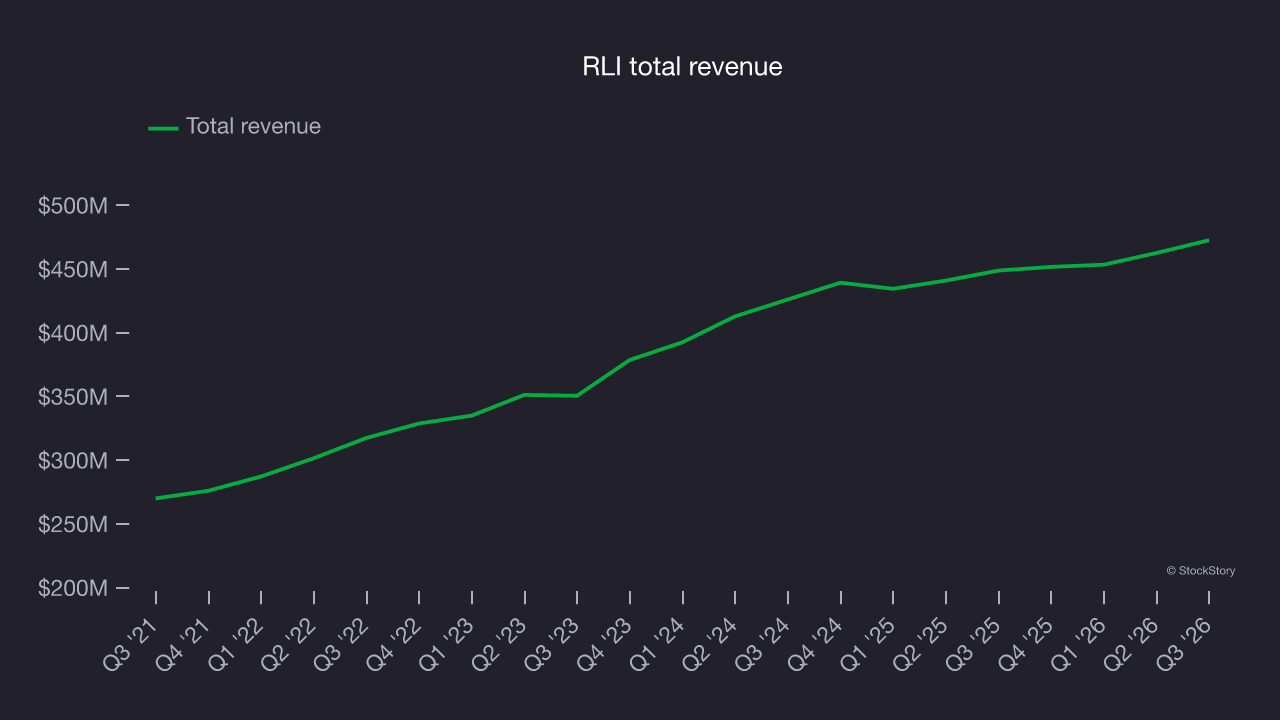
Interestingly, the stock is up 16.4% since reporting and currently trades at $71.26.
Is now the time to buy RLI? Access our full analysis of the earnings results here, it’s free.
Best Q3: Assurant (NYSE:AIZ)
With roots dating back to 1892 when it was founded by a Civil War veteran, Assurant (NYSE:AIZ) provides specialized insurance products and services that protect major consumer purchases like mobile devices, vehicles, homes, and appliances.
Assurant reported revenues of $3.55 billion, up 9.7% year on year, outperforming analysts’ expectations by 2.4%. The business had an impressive quarter with a beat of analysts’ EPS and net premiums earned estimates.
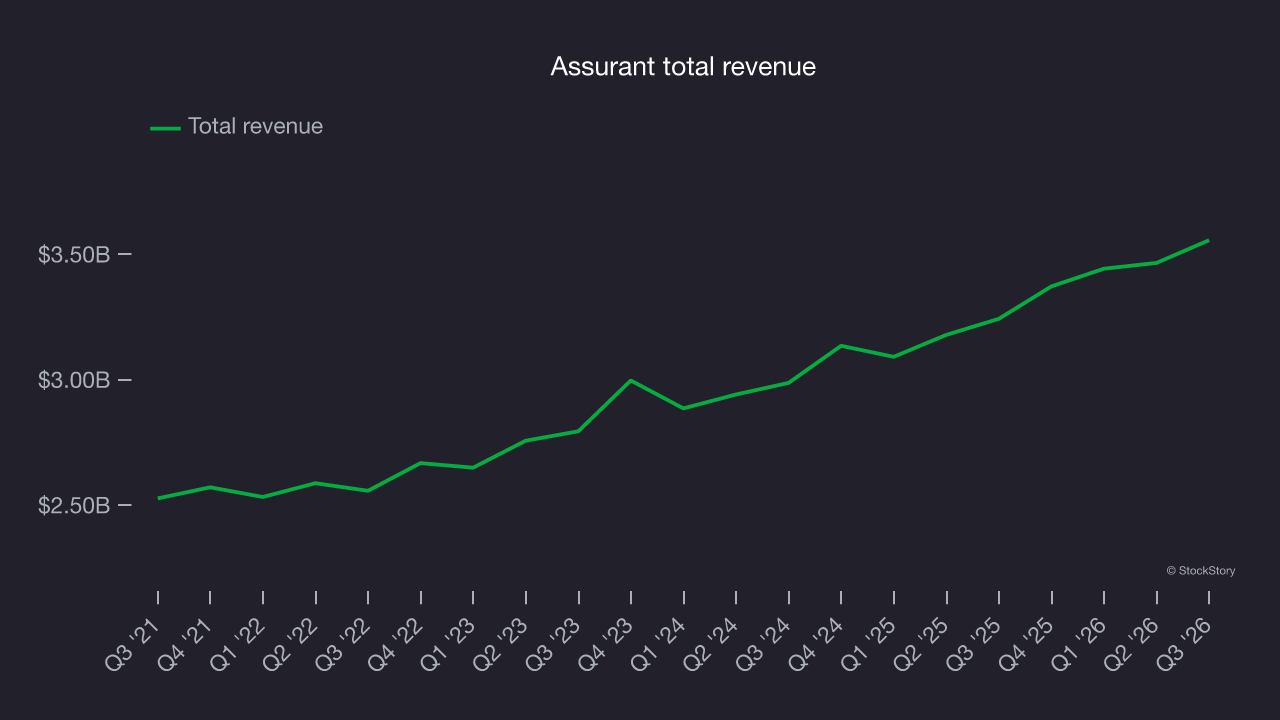
The market seems happy with the results as the stock is up 10% since reporting. It currently trades at $325.69.
Is now the time to buy Assurant? Access our full analysis of the earnings results here, it’s free.
Weakest Q3: Stewart Information Services (NYSE:STC)
Founded in 1893 during America's westward expansion when property records were often disputed, Stewart Information Services (NYSE:STC) provides title insurance and real estate services, helping homebuyers, sellers, and lenders verify property ownership and protect against title defects.
Stewart Information Services reported revenues of $900.7 million, up 13% year on year, falling short of analysts’ expectations by 1.3%. It was an underwhelming quarter as it posted a significant miss of analysts’ EPS estimates.
As expected, the stock is down 8.6% since the results and currently trades at $48.07.
Read our full analysis of Stewart Information Services’s results here.
Markel Group (NYSE:MKL)
Often referred to as a "mini Berkshire Hathaway" for its three-engine business model of insurance, investments, and wholly-owned businesses, Markel Group (NYSE:MKL) is a specialty insurance company that underwrites complex risks, manages investment portfolios, and owns a diverse collection of operating businesses.
Markel Group reported revenues of $4.16 billion, up 5.7% year on year. This result surpassed analysts’ expectations by 10%. It was a favorable quarter as it also put up a beat of analysts’ EPS estimates and a solid beat of analysts’ net premiums earned estimates.
Markel Group pulled off the biggest analyst estimate beat among its peers. The stock is up 5.6% since reporting and currently trades at $1,948.
Read our full, actionable report on Markel Group here, it’s free.
Allstate (NYSE:ALL)
Born from a Sears, Roebuck & Co. initiative during the Great Depression with its famous "You're in good hands" slogan, Allstate (NYSE:ALL) is one of America's largest personal property and casualty insurers, offering protection for autos, homes, and personal property.
Allstate reported revenues of $17.89 billion, up 6.1% year on year. This print beat analysts’ expectations by 2.1%. Overall, it was a solid quarter as it also recorded a beat of analysts’ EPS and net premiums earned estimates.
The stock is flat since reporting and currently trades at $271.35.
Read our full, actionable report on Allstate here, it’s free.
Market update
Over the past year, investors have been forced to repeatedly answer the same question: What is the market’s biggest risk? The answer has changed several times, and each shift has reshaped market leadership.
Late in 2025 and early 2026, artificial intelligence became the market’s primary uncertainty. Investors questioned whether AI would erode software pricing power and weaken competitive moats as AI made it easier to replicate once-differentiated products.
By the spring, technology took a back seat to geopolitics. The U.S. conflict with Iran briefly became the market’s dominant narrative, raising concerns about oil prices, inflation, and global growth. But as energy markets remained orderly and fears of a prolonged supply disruption faded, investors quickly turned their focus back to fundamentals.
Want to invest in winners with rock-solid fundamentals? Check out our Top 6 Stocks and add them to your watchlist. These companies are poised for growth regardless of the political or macroeconomic climate.