
Why Did The Barrick Mining (TSX:ABX) CEO Buy More Shares?
- Group COO, President, CEO & Director Mark Hill bought CA$1.8m of Barrick Mining (TSX:ABX) shares on November 19, 2026.
- That CA$1.8m purchase lifted Hill's stake by 41% of their holding.
- Over twelve months, fourteen insiders bought while eight sold, with CA$8.8m more open market selling than buying.
Insider dealing in Barrick Mining has moved both ways, with some executives adding exposure while others have reduced theirs. For investors who want situations where insider behavior tilts clearly toward buying and those corporate leaders are committing their own capital to their businesses, that is exactly the focus of 27 undervalued small caps that insiders are buying.
Mark Hill’s turn from seller to buyer at Barrick Mining
Mark Hill shifted gears at Barrick Mining over the past year, moving from a run of open market sales to buying in the most recent filing. Across that stretch, his trading cut his overall holding, and the shares now trade 14% below his average sale price, a fall he avoided on the stock he sold. The latest move comes after his September 2026 sale of CA$10.6m, which reduced his stake, followed by a switch to fresh buying rather than more disposals.
Earlier in 2026, the biggest activity around the stock lined up with February earnings. On February 19, 2026, chief financial figure Graham Shuttleworth bought CA$5.1m, shortly after Barrick Mining reported full year 2025 results that set the tone for the new year. Over the next three months, the business released first quarter 2026 numbers and updated production guidance for the rest of the year. During that period, the share price was 16% lower than on the day of Shuttleworth’s purchase, and he then sold on February 23, 2026. Taken together, this mix of earlier selling, a buyer returning after price weakness and one purchase run that ended in sales reads more as caution than conviction on the part of the senior team.
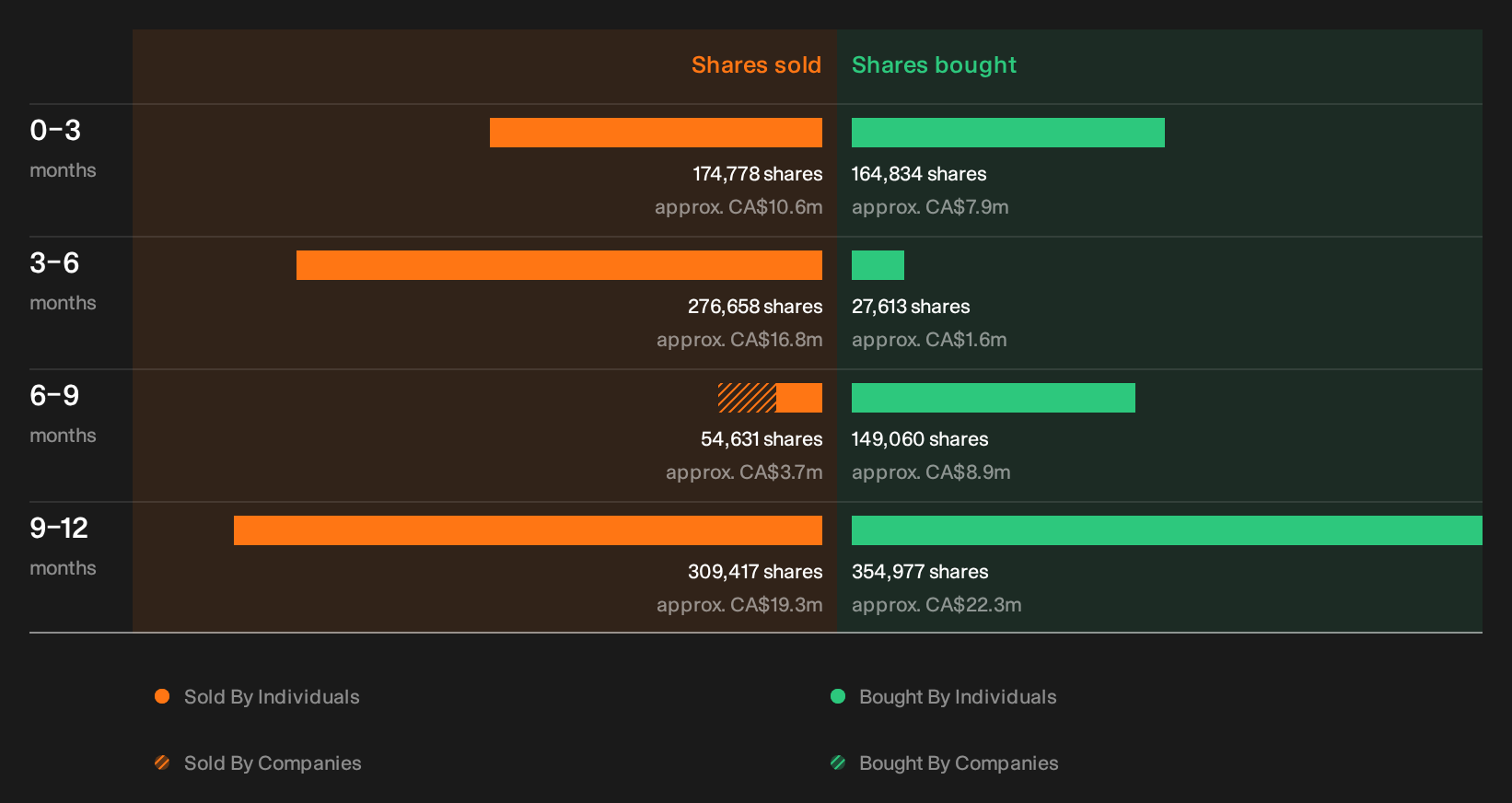
Cash returns at Barrick Mining have to stay ahead of rising project and fiscal demands
For mixed insider trading at Barrick Mining to look better for the buyers than the sellers, the group needs its cash generation to cover shareholder payouts and still fund future projects. On November 9, 2026, the third quarter earnings update showed higher sales and steady net income, which helps that test but does not settle it.
The Narrative argues that the dividend and buyback framework only works if free cash flow reliably covers both distributions and the capex needed to keep mines running. It also calls out the planned partial IPO of the North American portfolio, which has to recycle proceeds into a business mix that does not leave Barrick Mining more exposed to higher risk jurisdictions. Reko Diq and Pueblo Viejo then need to justify ongoing spend by turning current holding and plant costs into future profitable production.
Insiders can't agree on Barrick Mining. Find out where its fair value sits, and why.
Insider stakes that keep trading in perspective
Insiders at Barrick Mining have traded in both directions, so no single reading of the activity holds, and the share register shows why their moves only go so far. Between them, insiders own 0.3% of the company, worth CA$216.2m at today’s price. This is typical for a company this size. That means their holdings are material for them, yet their trades say more about how they manage their own exposure than about who controls the business.
Insiders’ buys and sells are one signal among many, not a guide that outweighs the rest of the holder base.
Add Barrick Mining to your watchlist to get alerts on its news and upcoming events, or compare the CA$60 CEO Hill sold at with our fair value estimate for Barrick Mining.
For the purposes of this article, insiders are those individuals who report their transactions to the relevant regulatory body. We count open-market transactions and private dispositions of directly held shares only, not derivative transactions such as option exercises or interests held indirectly, for example through a family trust or company.
Have feedback on this article? Concerned about the content? Get in touch with us directly. Alternatively, email editorial-team@simplywallst.com