
3 Defensive Healthcare Stocks Investors Are Turning To As Bond Yields Stay High
Markets are being rattled by rising U.S. bond yields, sticky inflation and geopolitical shocks, so many investors are quietly hunting for stocks that can stay calmer when everything else feels noisy. That search for resilience is not just defensive; it can shape how confidently you hold risk when headlines turn ugly. This article walks through 3 stocks from a global defensive screener that appear meaningfully exposed to this new macro story.
The stocks below are just a sample of this idea. The full screen surfaced 72 more large, financially healthy businesses with similar defensive traits that are not covered here. To go deeper, identify candidates that fit your own risk profile and analyze potential high-conviction ideas directly inside the Global Defensive, Low-Volatility Equities screener.
Elevance Health (ELV)
Elevance Health sits neatly in this defensive, low volatility bucket because it sells health coverage and services that people tend to keep paying for even when the cycle turns, and the analyst consensus Narrative on Simply Wall St leans in on how that stability is being reinforced by its tech and services engine.
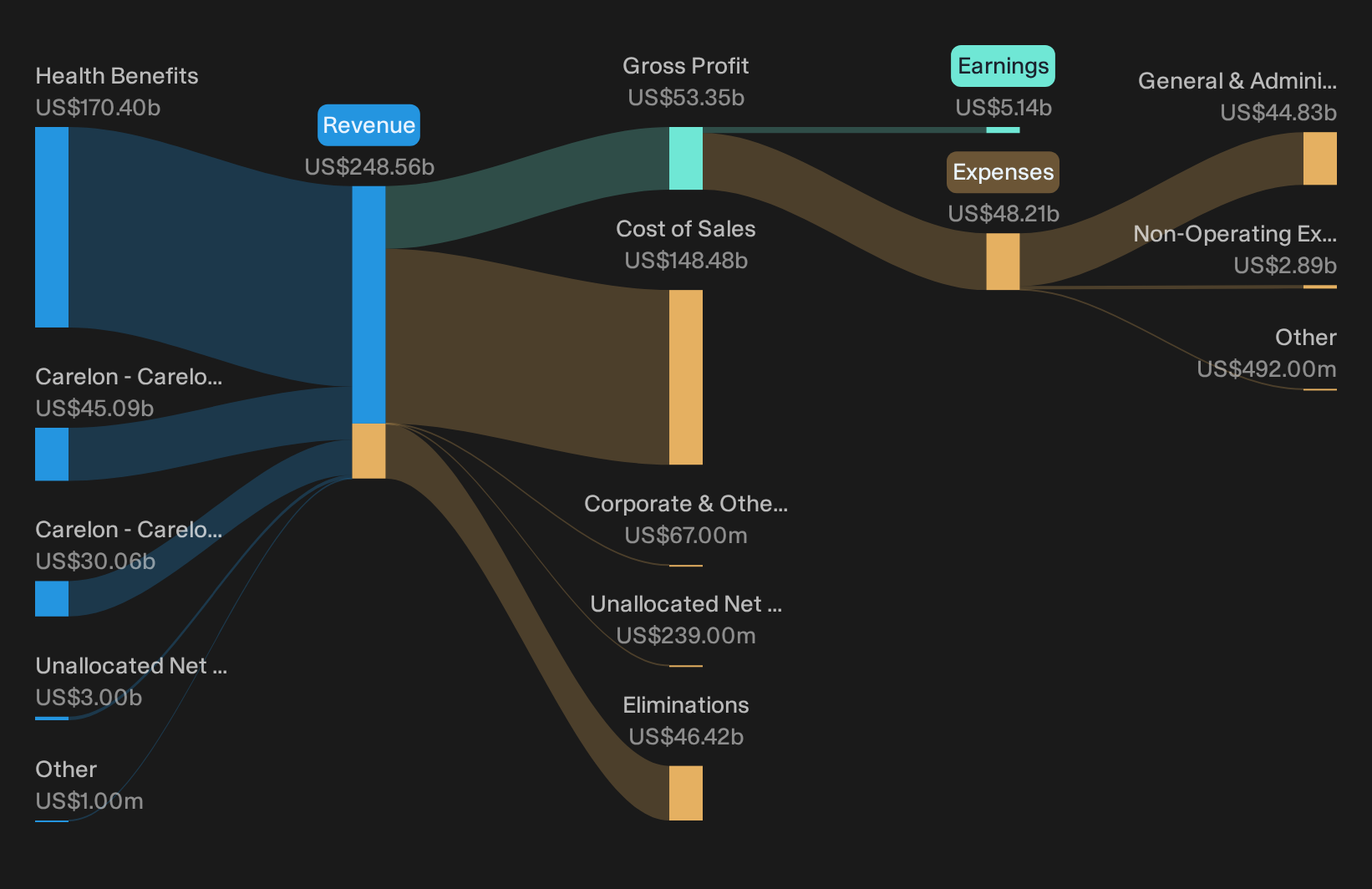
Elevance Health runs a broad US health benefits and services platform, mainly through its Health Benefits arm with about US$170.4b in revenue and CarelonRx and Carelon Services contributing roughly US$45.1b and US$30.1b respectively, all within the United States, and the stock is valued at about US$84.5b in market cap.
Ongoing deployment of Elevance Health’s AI, analytics and digital platforms such as HealthOS and Sydney Health, including automated prior authorization and earlier visibility into medical cost trends, is expected to tighten medical cost management and support more stable net margins and earnings over time.
What really matters now is how one less obvious source of medical cost pressure ultimately filters through to those future margin targets.
That pressure point is exactly where the full narrative for Elevance Health shows how Elevance Health could maintain earnings resilience as medical cost risks shift beneath the surface.
Medtronic (MDT)
Medtronic offers another angle on the Global Defensive, Low-Volatility Equities theme, because its device based therapies for chronic conditions tend to be used regardless of market swings. The analyst consensus Narrative on Simply Wall St describes why that consistency can matter for long term earnings power.
Medtronic develops medical devices across cardiovascular, neuroscience and surgical care, with US$15b from Cardiovascular, US$10.7b from Neuroscience, US$9.1b from Medical Surgical and US$3.2b from Other activities, and the business is valued at about US$117.7b in market cap.
"The rapid global growth in chronic diseases such as cardiovascular disease and diabetes is still supporting demand for Medtronic therapies, now reinforced by strong momentum in Cardiac Ablation Solutions, renal denervation through Symplicity and newer pelvic health options like Altaviva, which together have the potential to lift organic revenue growth and earnings over time."
What really matters now is how one unresolved cost pressure shapes whether that steady procedure demand actually turns into the earnings path investors are counting on.
That cost debate is exactly where the full narrative for Medtronic lays out how procedure demand, pricing power and innovation spending could be decoupling in ways many Medtronic holders might be overlooking.

Johnson & Johnson (JNJ)
Johnson & Johnson brings a mega cap, diversified healthcare profile to this Global Defensive, Low-Volatility Equities screen, and the analyst consensus Narrative on Simply Wall St frames why its pharma and MedTech mix could matter when investors want large, steady cash generators.
Johnson & Johnson develops prescription medicines and medical devices worldwide, with about US$64.3b from Innovative Medicine and US$35b from MedTech, and the stock is valued at roughly US$665.5b in market cap.
"Johnson & Johnson anticipates accelerated growth in their portfolio and pipeline, particularly in the Innovative Medicine sector, despite the headwind from STELARA's loss of exclusivity. This is expected to bolster revenues through next-generation therapies and significant market share gains in oncology and immunology."
What really tests that defensive story is how one pressure on future profitability plays out if current spending plans run hotter than expected.
If that trade off worries you, read the full narrative for Johnson & Johnson to see how Johnson & Johnson’s pipeline, margins and risks could be quietly accelerating ahead.

Curious About What You Might Be Missing?
Fresh breakout themes often get caught early, then momentum can increase once the crowd arrives. Scan these ideas while they are still under the radar for now and consider them before they become widely followed.
- Identify emerging cash generators before they are widely talked about by running the 36 high quality undervalued stocks while pricing still reflects older expectations.
- Explore the build-out of digital pick and shovel providers by checking the curated 52 AI infrastructure stocks while the story is still forming.
- Focus on structural spending related to electricity upgrades and resilience by using the hand picked 41 power grid technology and infrastructure stocks before the next wave of attention arrives.
Have feedback on this article? Concerned about the content? Get in touch with us directly. Alternatively, email editorial-team@simplywallst.com