
HireQuest, Inc. (NASDAQ:HQI) Looks Like A Good Stock, And It's Going Ex-Dividend Soon
Readers hoping to buy HireQuest, Inc. (NASDAQ:HQI) for its dividend will need to make their move shortly, as the stock is about to trade ex-dividend. The ex-dividend date is one business day before the record date, which is the cut-off date for shareholders to be present on the company's books to be eligible for a dividend payment. It is important to be aware of the ex-dividend date because any trade on the stock needs to have been settled on or before the record date. Meaning, you will need to purchase HireQuest's shares before the 1st of December to receive the dividend, which will be paid on the 15th of December.
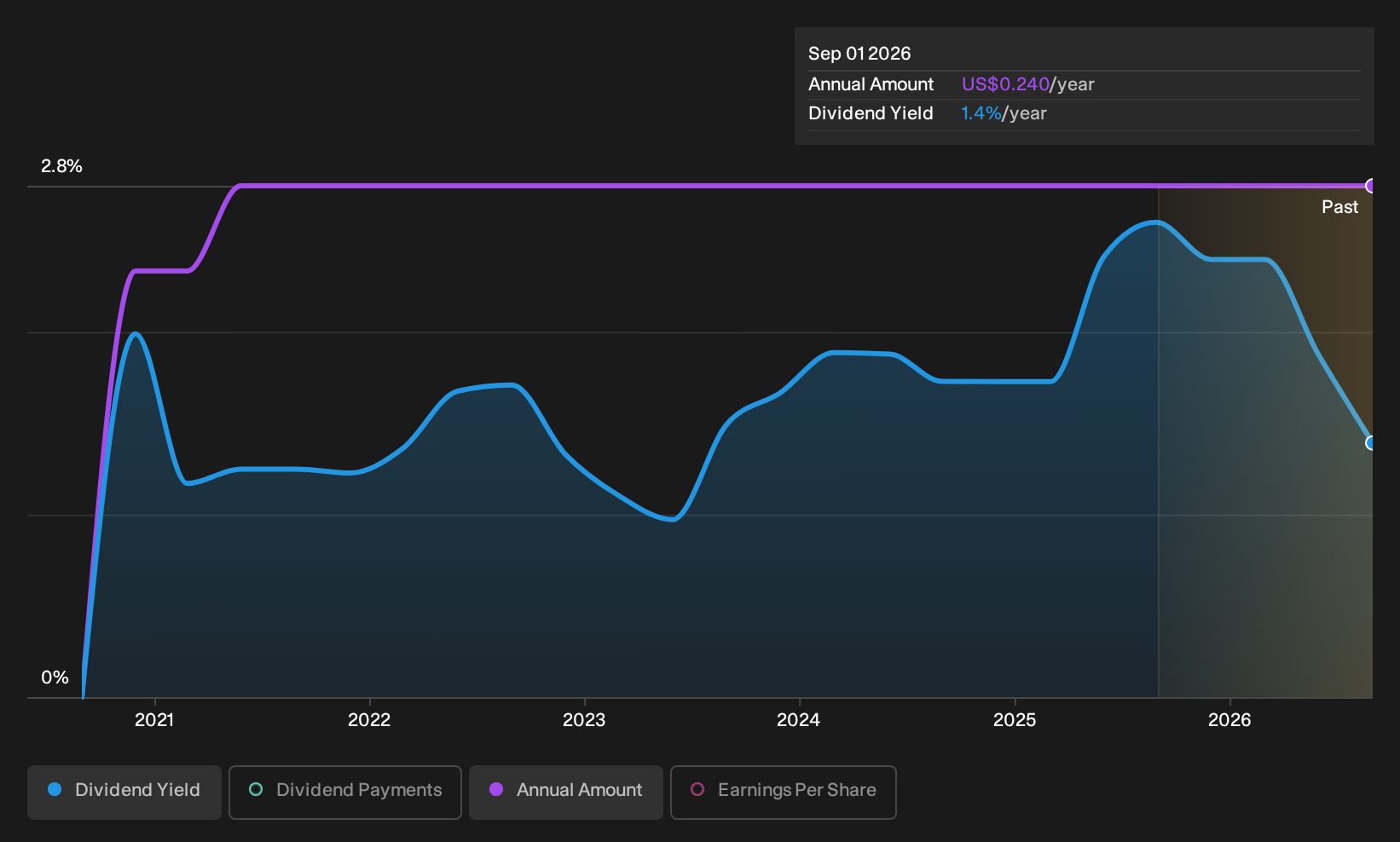
The company's next dividend payment will be US$0.06 per share, and in the last 12 months, the company paid a total of US$0.24 per share. Last year's total dividend payments show that HireQuest has a trailing yield of 1.6% on the current share price of US$15.03. Dividends are an important source of income to many shareholders, but the health of the business is crucial to maintaining those dividends. So we need to check whether the dividend payments are covered, and if earnings are growing.
Dividends are typically paid out of company income, so if a company pays out more than it earned, its dividend is usually at a higher risk of being cut. Fortunately HireQuest's payout ratio is modest, at just 43% of profit. That said, even highly profitable companies sometimes might not generate enough cash to pay the dividend, which is why we should always check if the dividend is covered by cash flow. It distributed 42% of its free cash flow as dividends, a comfortable payout level for most companies.
It's encouraging to see that the dividend is covered by both profit and cash flow. This generally suggests the dividend is sustainable, as long as earnings don't drop precipitously.
See our latest analysis for HireQuest
Click here to see the company's payout ratio, plus analyst estimates of its future dividends.
Have Earnings And Dividends Been Growing?
Businesses with strong growth prospects usually make the best dividend payers, because it's easier to grow dividends when earnings per share are improving. If earnings decline and the company is forced to cut its dividend, investors could watch the value of their investment go up in smoke. This is why it's a relief to see HireQuest earnings per share are up 7.1% per annum over the last five years. The company is retaining more than half of its earnings within the business, and it has been growing earnings at a decent rate. Organisations that reinvest heavily in themselves typically get stronger over time, which can bring attractive benefits such as stronger earnings and dividends.
Many investors will assess a company's dividend performance by evaluating how much the dividend payments have changed over time. In the last six years, HireQuest has lifted its dividend by approximately 3.1% a year on average. We're glad to see dividends rising alongside earnings over a number of years, which may be a sign the company intends to share the growth with shareholders.
Final Takeaway
Has HireQuest got what it takes to maintain its dividend payments? Earnings per share growth has been growing somewhat, and HireQuest is paying out less than half its earnings and cash flow as dividends. This is interesting for a few reasons, as it suggests management may be reinvesting heavily in the business, but it also provides room to increase the dividend in time. It might be nice to see earnings growing faster, but HireQuest is being conservative with its dividend payouts and could still perform reasonably over the long run. There's a lot to like about HireQuest, and we would prioritise taking a closer look at it.
Curious what other investors think of HireQuest? See what analysts are forecasting, with this visualisation of its historical and future estimated earnings and cash flow.
A common investing mistake is buying the first interesting stock you see. Here you can find a full list of high-yield dividend stocks.
Have feedback on this article? Concerned about the content? Get in touch with us directly. Alternatively, email editorial-team (at) simplywallst.com.