
Western Union (WU) Stock Still Looks Undervalued On Merger Lawsuit Pressure
Western Union has seen its share price under pressure in recent years, and the stock closed at US$6.35 most recently. With the company now facing a lawsuit over its terminated US$500 million Intermex merger, the key issue for investors is whether today’s valuation is still aligned with the earnings power of the business.
- Over the past 5 years the share price has fallen 39.9%, which puts the current earnings based valuation question front and center for anyone still holding or considering the stock.
- The Intermex legal dispute tied to the cancelled cash merger may influence how investors think about Western Union’s future profitability, potential cost base and the timing of any benefits from planned synergies.
- The analysts covering Western Union have run their own numbers. See what analysts think Western Union's shares could be worth.
The issue now is whether Western Union’s current share price can be justified by the earnings it generates today and what those profits may reasonably support over time.
If you are questioning whether Western Union’s earnings still justify its share price after the Intermex dispute, it can help to compare that puzzle with other 36 high quality undervalued stocks
Is Western Union Still Cheap on Earnings?
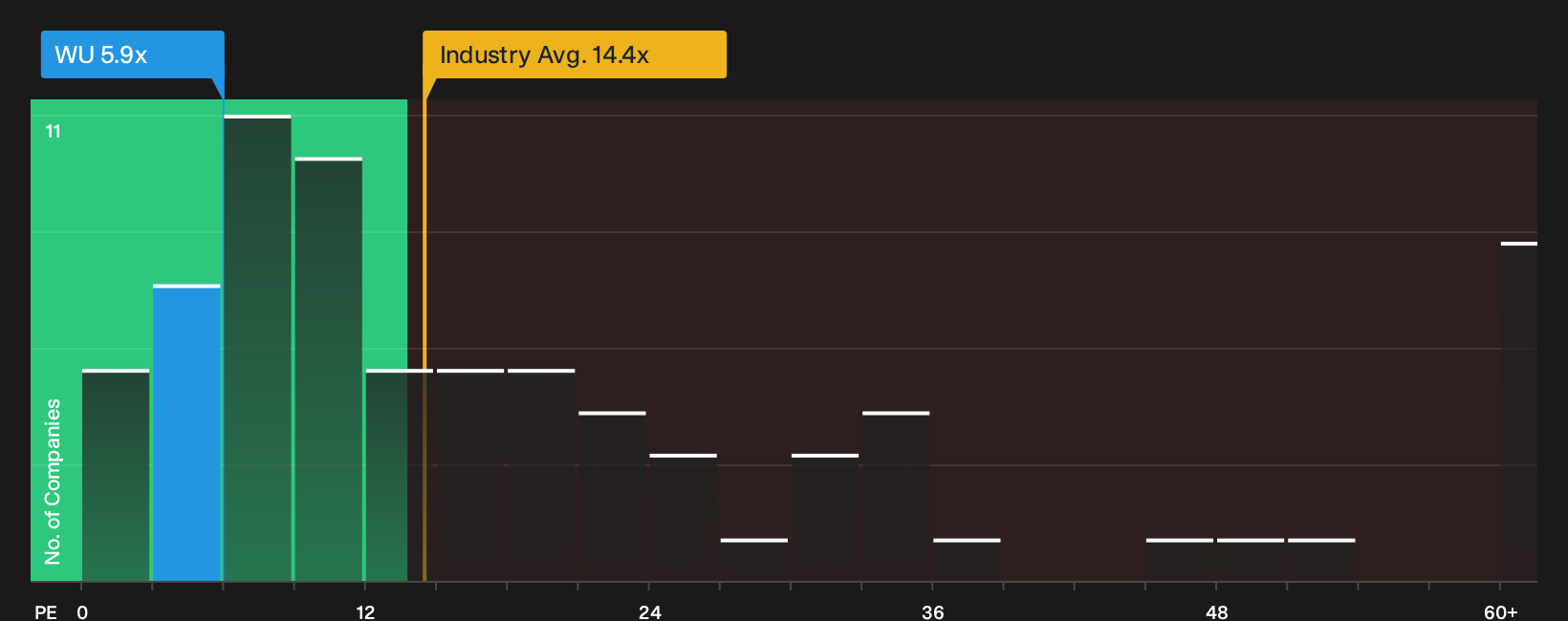
The P/E ratio is a useful starting point for Western Union because earnings remain a central focus for how investors judge a mature financial services business. On this lens, the stock trades at about 5.9x earnings, which sits materially below the diversified financial industry average of roughly 14.4x and also under the peer group at around 7.9x.
Because the Fair Ratio benchmark already reflects Western Union’s size, margins, growth expectations and risk profile, a current P/E below that level points to the shares screening as undervalued on this measure. Despite the Intermex lawsuit raising questions about future legal costs and merger related plans, the earnings multiple still prices Western Union at a discount to both its tailored Fair Ratio and broader industry and peer yardsticks. Explore the numbers behind Western Union's P/E valuation.
The Western Union Narrative: What Would Justify Today's Price?
Simply Wall St Narratives pick up where Western Union's valuation puzzle leaves off by spelling out which assumptions about future earnings, growth and margins would need to hold for the stock to trade materially higher or lower than today. Each scenario ties Western Union's potential catalysts and threats to a specific implied value, so you can track over time which version of the story appears to be gaining traction.
Western Union’s story splits in two, with one camp focused on execution upside from digital and cost cuts and the other fixated on margin and regulatory strain.
Bull case: 8% undervalued
The analyst consensus Narrative on Simply Wall St stresses Western Union’s ability to turn digital, Consumer Services and cost programs into earnings support.
"The ongoing digital transformation, including expanded digital wallet offerings, card-based retail transactions, and value-added services, remains in progress and now includes wallet launches in markets such as Mexico, Singapore, Australia and the Philippines…"
Discover why this Narrative puts Western Union at 8% undervalued.
Bear case: 6% overvalued
The bearish analyst Narrative on Simply Wall St leans into mix pressure, compliance risk and delayed deal benefits as key constraints.
"Q2 2026 data shows consumer money transfer transactions up 3% but adjusted EPS falling from $0.42 to $0.31 as low revenue per transaction partnerships and payout-to-account transactions that grew roughly 50% dilute revenue per transaction…"
Explore why this Narrative puts Western Union at 6% overvalued.
Western Union’s price is only one piece of the decision
Before you put fresh money to work or walk away, it is worth asking who is steering Western Union, how they are rewarded, and whether those incentives line up with your interests. See who runs Western Union and how they are paid.
Have feedback on this article? Concerned about the content? Get in touch with us directly. Alternatively, email editorial-team@simplywallst.com