
The NASDAQ plummeted by nearly 5% in 15 minutes after opening! Wall Street hears 2008's echo, AI bull market belief is collapsing
The Zhitong Finance App noticed that as soon as the opening bell of the New York Stock Exchange rang, there was a rush of sales orders. It seemed like everyone was once again panicking and running away.
Just 15 minutes after opening, the Nasdaq 100 index fell nearly 5%. The excitement that briefly swept Wall Street on Monday — when Wong In-hoon returned to Nvidia (NVDA.US) to rekindle bets on artificial intelligence transactions — has all but disappeared.
These declines gradually narrowed in the afternoon, and the Nasdaq closed down only 0.6%. But across Wall Street, the conclusion is clear: Investors are increasingly concerned about the sustainability of the AI boom. In turn, this is almost bound to continue to shock the market with disgusting swings, as everyone is trying to determine whether these trillions of dollars of investment will ultimately pay off enough.
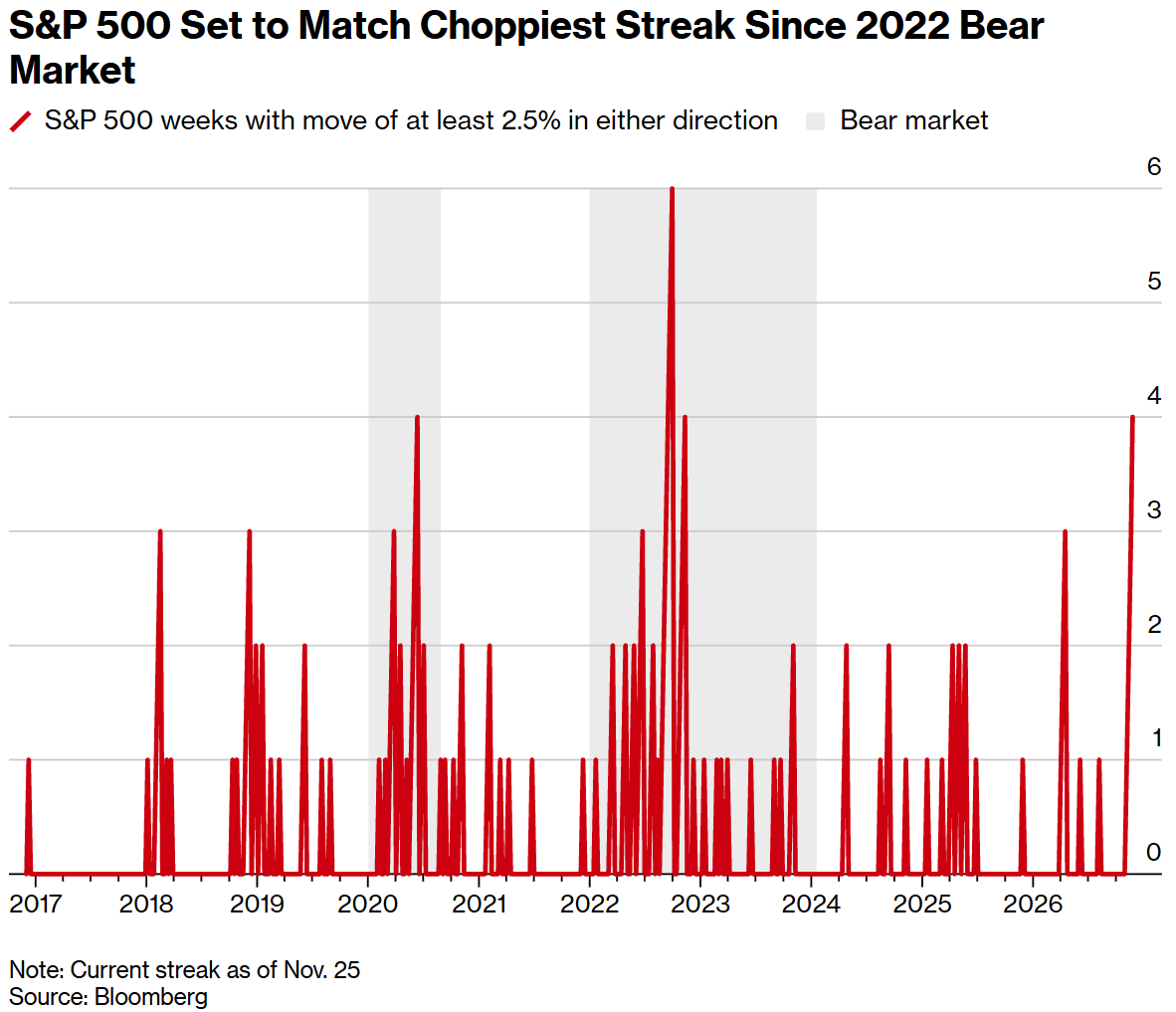
The S&P 500 index may set the record for the longest fluctuation since the 2022 bear market
Jonathan Coppina, who has worked on the New York Stock Exchange trading floor for 30 years, said that the current turmoil is faintly similar to the 2008 financial crisis in his memory.
“Back then, every day felt like 'What's going to happen next? '” said Copina, senior managing partner at Meridian Equity Partners “This all feels similar right now — not the scale of the sell-off and its impact on the economy, but the lingering anxiety.”
These concerns aren't entirely new. Since AI breakthroughs have driven the stock market to new highs and boosted chip makers such as Nvidia that provide computing power devices for artificial intelligence, this concern has heated up over and over again. Technology stocks also fell sharply at the beginning of last year, and eventually rebounded again.
Over the past few months, however, pressure has been building up, as people increasingly doubt whether artificial intelligence can bring in sufficient profits to support high valuations or massive borrowing for financing. The Federal Reserve's reversal of interest rate hikes is also fueling the situation.
This month's election further heightened uncertainty, as voters across the US boycotted the construction of data centers and gave US President Trump, who embraced the artificial intelligence industry, a tough blow.
Nadine Telman, CEO of Solstein Capital, said: “The market is no longer arguing about whether artificial intelligence will change the world, but about who can make money, how much, and whether the huge amount of capital being deployed can reap sufficient returns. It's a completely different question.” “The irony is that the industry may be delivering on its technical promises while disappointing investors financially.”
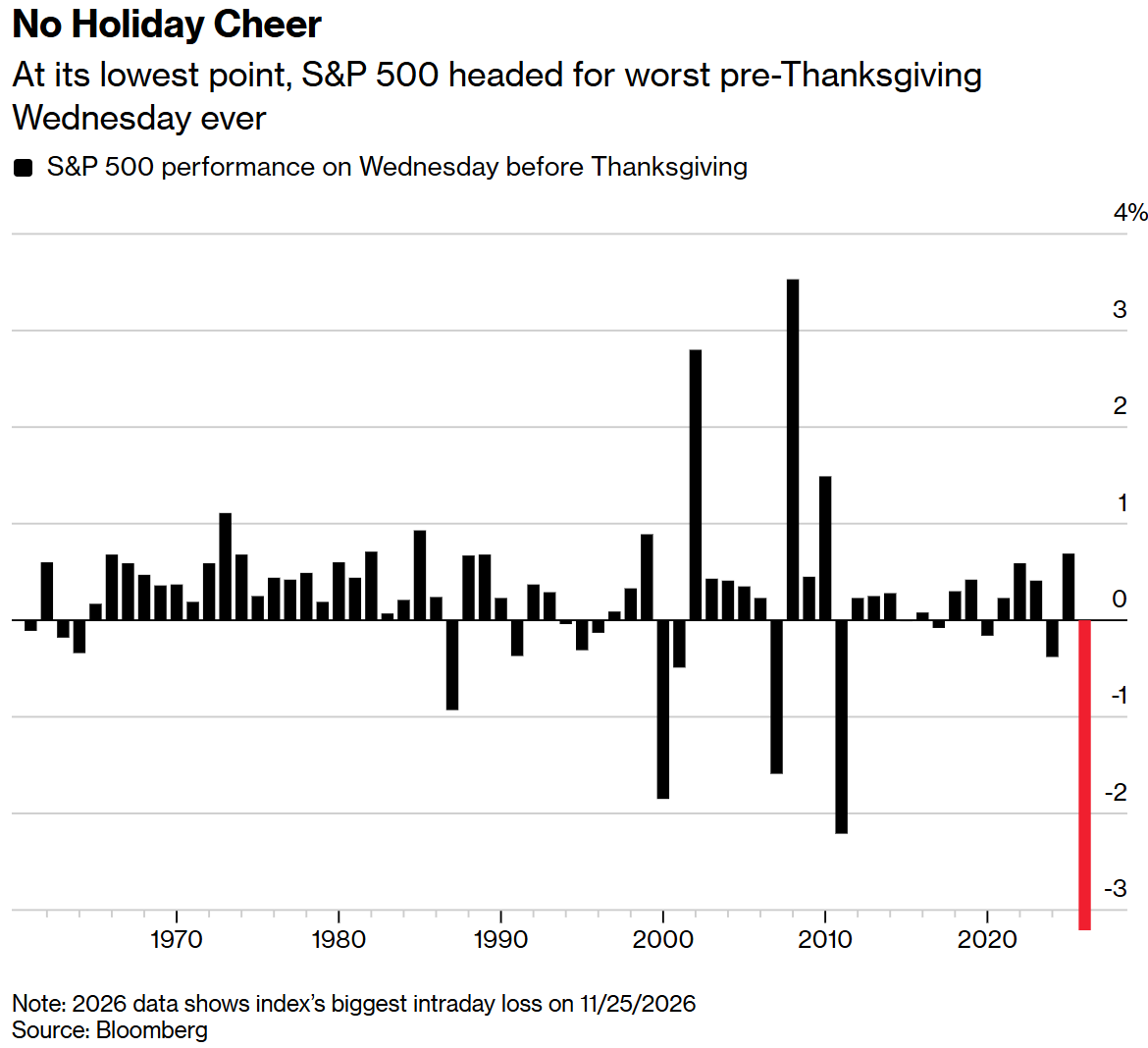
The S&P 500 index once fell to its worst level on the Wednesday before Thanksgiving
After the stock market plummeted last week, Trump shocked the market by persuading Nvidia to re-establish him as CEO less than two weeks after Wong was removed from office. Although this contributed to a sharp rise in the stock market on Monday by easing market concerns about Nvidia's continued role in financing AI spending, the stock market has since returned some of its gains.
Running Oak Capital CEO Seth Cogswell said, “This was an attempt at an artificial intelligence bailout, but it didn't work.” “People saw through it.”
Analysts said that even at the time of the biggest decline on Wednesday, the sell-off was methodical, and the market was receiving significant support from strong corporate profits and the overall economy.
But it just highlights the extent to which the market is subject to swings in investor sentiment.
Peter Tutchman, a senior market trader at the New York Stock Exchange TradeMas, said investors are looking for explanations for the large swings in the market.
He said, “The phone kept ringing. People are worried and ask, 'Why are there more sales? '” “In the decades I've been on this trading floor, I've never seen a completely reversal like Nvidia's. This isn't your grandpa's stock market anymore.”
Mark Malik, chief investment officer at Siebert Financial, said that repeated turbulence in the market was disconcerting. He said, “Shaking my head for the past 10 days has made my neck ache.”
Like others, he said he's always trying to guide his clients on how to deal with this turmoil. He said an experienced investor said, “What she is worried about is not so much the companies themselves as why the market hasn't rebounded yet.” He also said that she sticks to her opinion and is worried that she will miss out on profits when the market rebounds.
As the market closes closer on Wednesday, this looks like a wise decision. By the end of the trading day, major stock indexes had recovered most, if not all, of their losses. The S&P 500 index fell only 0.3%. The Dow Jones Industrial Average barely recorded a slight increase.
“This narrative is doing its best to wash out all the undetermined holders,” Malik said. “In the end, only those hardcore investors with the strongest beliefs will be left behind.”