
What Eli Lilly Stock Data Means For Shareholders
- Eli Lilly is set to showcase new data across its breast cancer portfolio at the San Antonio Breast Cancer Symposium, including late breaking Phase 3 EMBER-3 results for Inluriyo and biomarker findings for Verzenio, as well as updated data on investigational PI3Ka inhibitor tersolisib.
- The breadth of these oncology readouts, spanning approved therapies and pipeline assets in both early and advanced HR+ breast cancer, highlights how Lilly is trying to build a multi drug, multi target franchise around estrogen receptor, CDK4/6 and PI3Ka pathways.
- This article will examine how Eli Lilly's investment narrative could be shaped by these broad breast cancer data presentations in December.
Scan Eli Lilly's oncology push against a wider field of potential beneficiaries in cancer care by comparing it with curated 36 healthcare AI stocks.
Eli Lilly Investment Narrative Recap
To own Eli Lilly, according to AHaron, a Simply Wall St Community investor who wrote the Narrative, you need to believe in a large, durable obesity and diabetes franchise, with cardiometabolic drugs funding aggressive reinvestment into oncology and neuroscience. The immediate catalyst now sits in December oncology data and how convincingly the breast cancer portfolio can support a second growth pillar beside GLP 1s.
The biggest near term risk still lies in pricing pressure and safety scrutiny on incretin therapies, now including new NAION warnings for GLP 1 drugs. Recent breast cancer readouts look important for long term diversification but do not materially change that central risk reward balance in the very short term.
The San Antonio breast cancer data drop ties most closely to Lilly’s push to make oncology its next major growth engine, alongside obesity treatments like Mounjaro, Zepbound and Foundayo. Inluriyo, Verzenio and tersolisib readings test whether the firm can build a coherent HR positive breast cancer suite that justifies the R&D spend and commercial focus.
If EMBER 3, monarchE biomarkers and PIKALO data hold up well, they could strengthen upcoming oncology focused catalysts that management plans to spotlight at Lilly Innovation Day on December 7, 2026. Poor quality signals or safety concerns would cut the appeal of oncology as a diversification path and keep investors more exposed to GLP 1 related pricing and regulatory swings.
AHaron’s narrative reaches a fair value of $1,477 a share by applying 15.3% yearly revenue growth and a 31.7% future profit margin. Together, these inputs imply higher long term earnings power that, in this model, justify a materially richer valuation for Eli Lilly than the current quote.
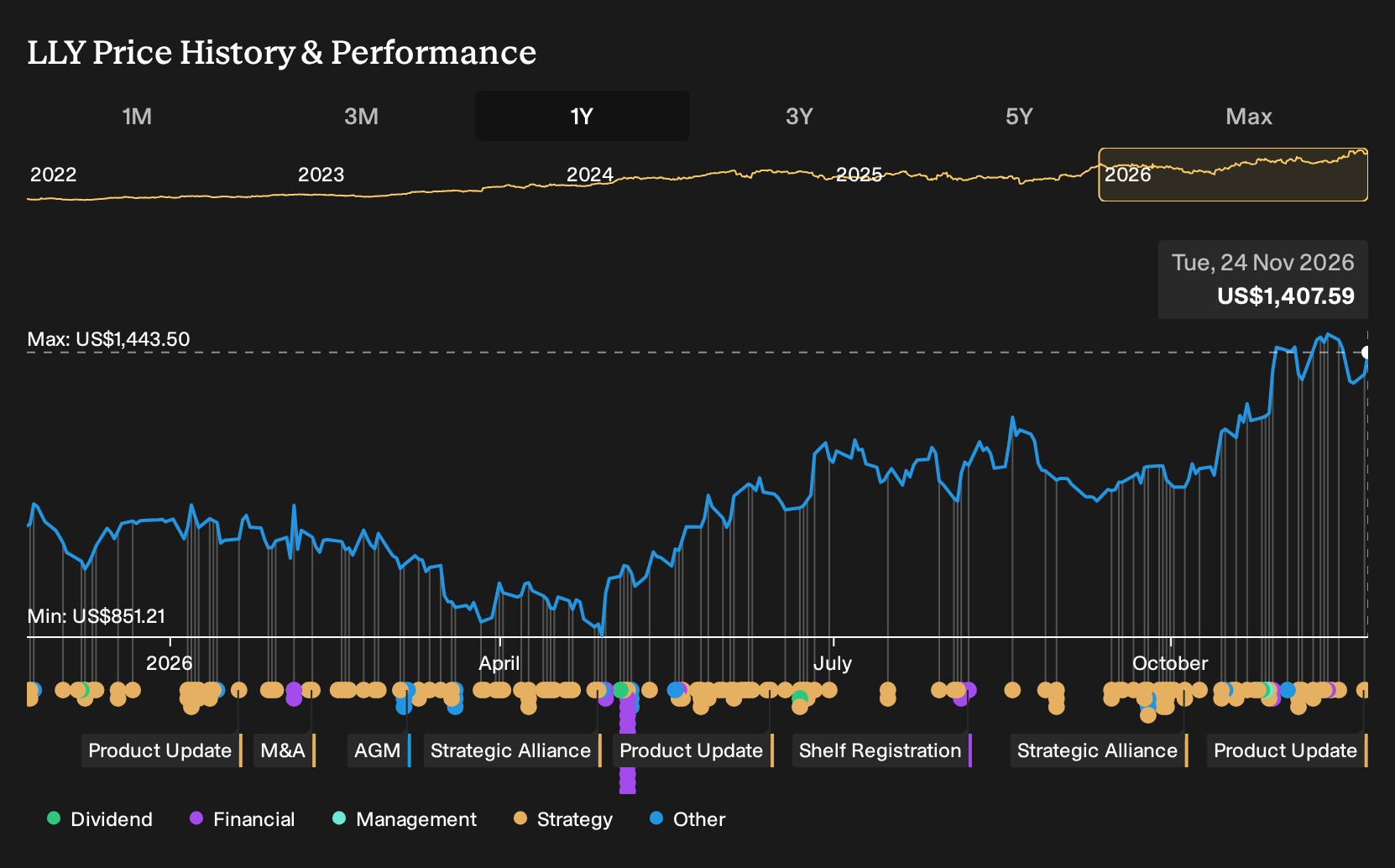
Uncover why Eli Lilly's fair value indicates a 5% potential upside to its current price before a relatively small discount closes.
Exploring Other Perspectives
One alternate view puts far more weight on Eli Lilly’s obesity pricing and legal risks than on the new breast cancer data. Those bearish analysts were modeling revenue of about US$113.2b and earnings of US$49.1b by 2029, yet still saw fair value nearer US$940. That is a sharply more cautious story. It shows how far opinions can stretch and why it helps you to compare several narratives before deciding how this week’s oncology news might shift expectations.
Explore 8 other Eli Lilly fair value estimates, including one that suggests it could be worth just $1432.
Form Your Own Verdict
Disagree with existing narratives? Extraordinary investment returns rarely come from following the herd, so trust your own research and judgement.
- A great starting point for your Eli Lilly research is our analysis highlighting 3 key rewards and 2 important warning signs that could impact your investment decision.
- See our latest analysis for Eli Lilly. The report includes a comprehensive fundamental analysis summarized in a single visual, the Snowflake, making it easy to evaluate Eli Lilly's overall financial health at a glance.
Looking for more Eli Lilly style investment ideas?
If the Eli Lilly story has sharpened your thinking, it can help to stress test your thesis against a wider watchlist of companies with different strengths and risk profiles.
- For investors who care most about balance sheet strength and durable fundamentals, start with this curated list of solid balance sheet and fundamentals (23 results) and see which businesses clear your quality bar.
- If you want to tilt toward mispriced quality, filter for potential value opportunities using a focused 37 high quality undervalued stocks that blend strong cash generation with more modest expectations.
- Income seekers can anchor their portfolio research around resilient payers by scanning a targeted 11 dividend fortresses to find yields that may complement Eli Lilly’s growth story.
Have feedback on this article? Concerned about the content? Get in touch with us directly. Alternatively, email editorial-team@simplywallst.com