
Teradyne Stock After Gen 7 AI Vision Integration
- Teradyne's robotics unit Universal Robots has already integrated Inbolt's AI-powered 3D vision guidance software natively into its Gen 7 cobot platform, removing extra hardware and cabling for manufacturers.
- The move turns Universal Robots into a direct distributor and licensor of Inbolt Standard, which can shift robotics demand by simplifying AI vision deployment in automotive, electronics and data center hardware production lines.
- We will now look at how Teradyne's investment narrative could be affected by deeper AI vision integration inside its Universal Robots platform.
Spot similar robotics and AI automation stories taking shape by scanning our hand-picked 91 robotics and automation stocks, which could benefit from the same shift toward software-first, vision-guided production lines.
Teradyne Investment Narrative Recap
To hold Teradyne, you need to believe the analyst consensus Narrative on Simply Wall St that AI focused test demand and robotics can support both higher earnings and margins over time. The near term swing factor is still order flow tied to AI data centers and complex chip packaging, not this single Universal Robots software deal, which looks incremental rather than transformational.
The largest short term risk is still margin pressure from product mix and higher R&D and go to market spend if new programs do not scale as expected. Deeper AI vision inside Universal Robots slightly leans against that risk by aiming to make the Robotics segment more software heavy, but the financial impact is not yet material.
With no new filings or earnings releases tied directly to this announcement, the most relevant context is Teradyne guidance for record Q2 2026 revenue of about US$1.33b and a stronger second half. This points to active AI test and automation programs already in motion. The Universal Robots and Inbolt integration fits into that backdrop as one more way to deploy automation around those same customers.
That Q2 and second half commentary matters because the key catalysts in the analyst consensus Narrative on Simply Wall St involve test intensity rising toward an automated test equipment market that management sees reaching about US$20b, memory programs growing, and Robotics moving beyond US$100m a quarter. If those larger Semi Test and memory cycles stay on track, tighter AI vision integration in cobots mainly acts as a supporting feature rather than the main driver.
Teradyne's narrative projects US$8.9b revenue and US$2.9b earnings by 2029, based on analyst estimates that imply about 21.2% yearly revenue growth and an earnings increase of roughly US$1.5b from current earnings of US$1.4b.
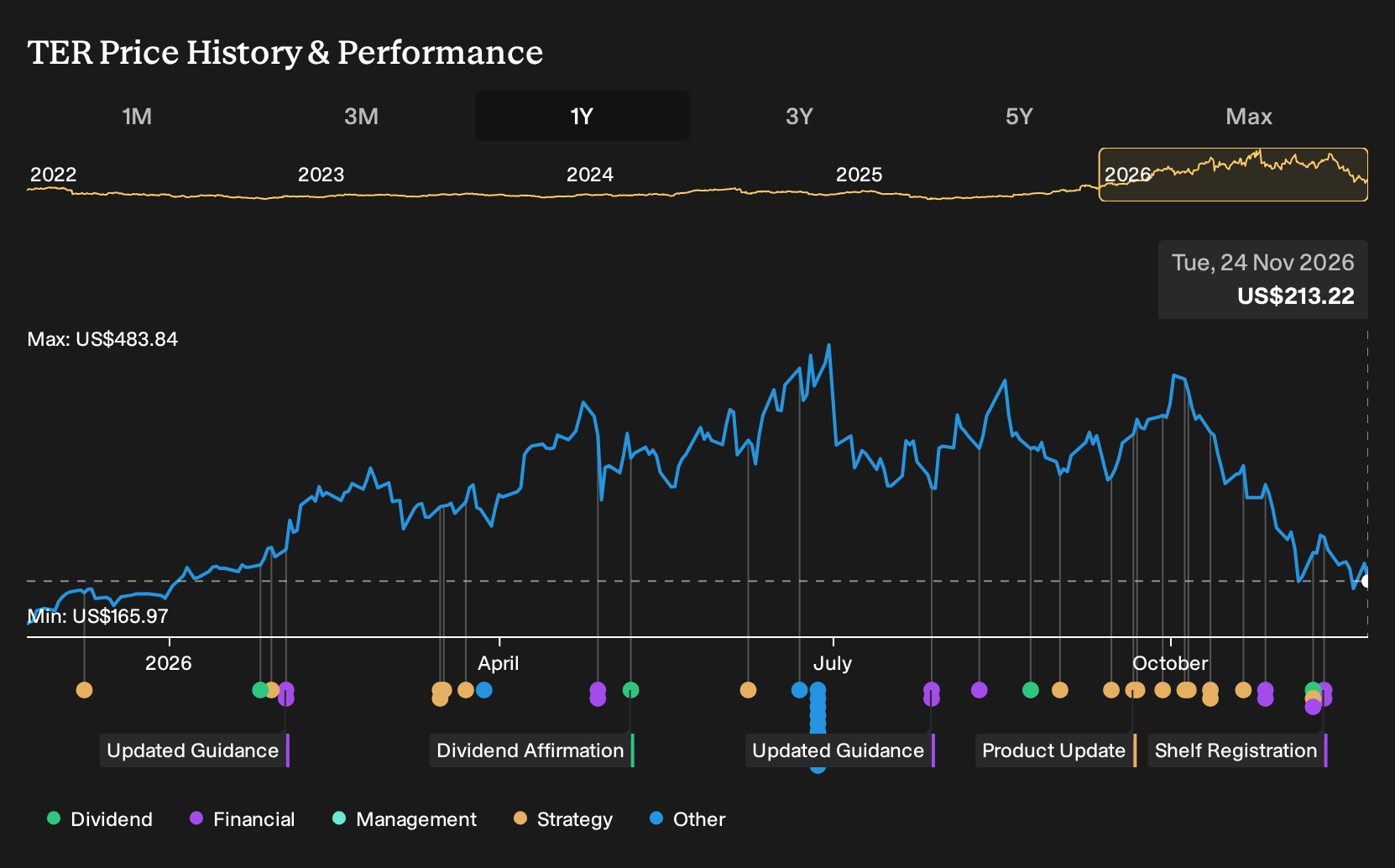
Uncover why Teradyne's fair value indicates a 95% potential upside to its current price that could narrow quickly.
Exploring Other Perspectives
One alternate story around Teradyne focuses on the risk of an AI spending pause. The most cautious analysts were only pencilling in about 18.0% annual revenue growth and earnings of roughly US$2.6b by 2029 before this Universal Robots AI vision deal. That is far more restrained than consensus, and it shows how widely views can spread. Use this news as a prompt to compare those different assumptions for yourself, as both narratives may shift as cobot software adoption plays out.
Explore 4 other Teradyne fair value estimates, including one that suggests it could be worth just $245.79.
Decide For Yourself
Disagree with existing narratives? Extraordinary investment returns rarely come from following the herd, so consider your own analysis.
- A great starting point for your Teradyne research is our analysis highlighting 4 key rewards and 2 important warning signs that could impact your investment decision.
- See our latest analysis for Teradyne. The report includes a comprehensive fundamental analysis summarized in a single visual, the Snowflake, making it easy to evaluate Teradyne's overall financial health at a glance.
Looking for more investment ideas beyond Teradyne?
If this Teradyne update has you thinking about where else AI, automation and resilient balance sheets could shape returns over the next few years, it can help to widen the lens using the Simply Wall St Screener.
- For investors who care most about financial resilience, start with companies that appear well capitalized and conservatively run through the list of solid balance sheet and fundamentals (23 results).
- If your focus is on quality at a potentially appealing entry point, filter for established businesses that combine fundamentals with pricing that analysts view as attractive using the 37 high quality undervalued stocks.
- Those who prefer to hunt for earlier stage stories can scan for smaller companies with strong underlying metrics that have not yet drawn broad attention through the 19 high quality undiscovered gems.
Have feedback on this article? Concerned about the content? Get in touch with us directly. Alternatively, email editorial-team@simplywallst.com