
AGNC Yields About 18%, and Main Street Capital about 6%. Only 1 of Them Covered Its Dividend With Room to Spare.
Key Points
AGNC Investment has a massive 18% dividend yield, but its dividend reliability has been troubling.
Main Street Capital's yield is a far more modest 5.8%, but it is built to survive hard times.
Normally, the higher a stock's yield, the more risk you are taking on as a dividend investor. This is why reaching for yield can lead to buying dividend traps, or companies that end up cutting their dividends. AGNC Investment (NASDAQ:AGNC) has a massive 18% dividend yield, but investors may want to tread carefully. Main Street Capital (NYSE:MAIN) has a still-attractive yield of 5.8% (more on this below) and ample leeway against adversity. Even conservative income investors may want to look at it. Here's the big difference between these two high-yield stocks.
Main Street has room to spare
In the third quarter of 2026, Main Street Capital reported distributable net investment income of $0.96 per share. The business development company's regular dividend totaled just under $0.80. The regular dividend payout ratio was roughly 85%.
Missed AI’s "Act 1"? Act 2 Could Be 15x Bigger. Most investors think they missed the AI boat because they didn't buy Nvidia in 2005. But according to our analysts, we’re only at the end of "Act 1"—the R&D phase. "Act 2" is the global rollout. Continue »

Image source: Getty Images.
By comparison, AGNC Investment, a mortgage real estate investment trust (REIT), paid dividends of $0.36 per share and had net spread and dollar roll income per share of just $0.37 per share. From a dollars-and-cents perspective, there's just a single penny difference between those two numbers. And it's a far more troubling payout ratio of 97%.
If you are worried about the safety of your dividends, Main Street's regular dividend looks far safer. That said, Main Street also paid a $0.30-per-share supplemental dividend in the quarter, pushing its payout above its distributable income. That money comes from the gains it generates from owning the stock of the companies it lends to. And, as its name implies, it is supplemental. Adding it to the regular dividend brings the yield up to 8%. The supplemental dividend will stop if there's a difficult period, but there will still be material coverage for the regular dividend. In fact, Main Street has never cut its regular dividend.
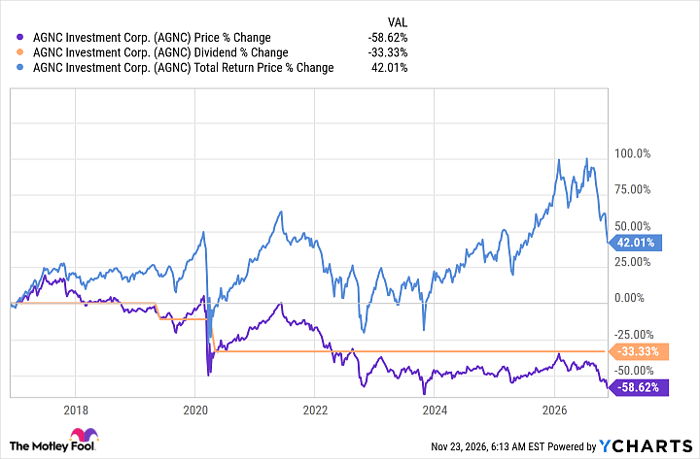
AGNC's dividend history isn't nearly as consistent. In fact, over the past decade or so, the dividend has headed steadily lower. The stock price has followed the dividend down, which means buying it would have left dividend investors with less income and less capital. That's not to suggest that AGNC is a bad business. If you had reinvested the dividends, your total return over that decade would be positive. But many dividend investors use their dividends to pay for living expenses and don't reinvest.
Know what you own
If you are a dividend investor looking to maximize the income your portfolio generates, AGNC Investment isn't likely to be a good fit for you. Not only is the dividend coverage tight right now, but the stock has a long history of dividend volatility. Main Street, despite a lower yield, will be a better choice. It has room for adversity before a dividend cut would be needed, and a long history of protecting its regular dividend. Add in the supplemental payment during good times, and it looks like a much better income offering if you need your dividends to pay your bills.
Reuben Gregg Brewer has no position in any of the stocks mentioned. The Motley Fool has no position in any of the stocks mentioned. The Motley Fool has a disclosure policy.