
Trends in Beishui | Beishui's net purchases of 6.434 billion yuan, the Hang Seng Index fell below the 20,000 mark, and Beishui raised the Prosperity Fund (02,800) over HK$7.4 billion
The Zhitong Finance App learned that on November 25, in the Hong Kong stock market, Beishui traded a net purchase of HK$6.434 billion. Among them, Hong Kong Stock Connect (Shanghai) had a net purchase of HK$4,010 billion, and Hong Kong Stock Connect (Shenzhen) had a net purchase of HK$2,424 billion.
The individual stocks that Beishui Net bought the most were Yingfu Fund (02800), Southern Hang Seng Technology (03033), and Hang Seng China (02828). The individual stocks sold the most by Beishui Net were China Construction Bank (00939), Huahong Hongli (01347), and Alibaba-W (09988).
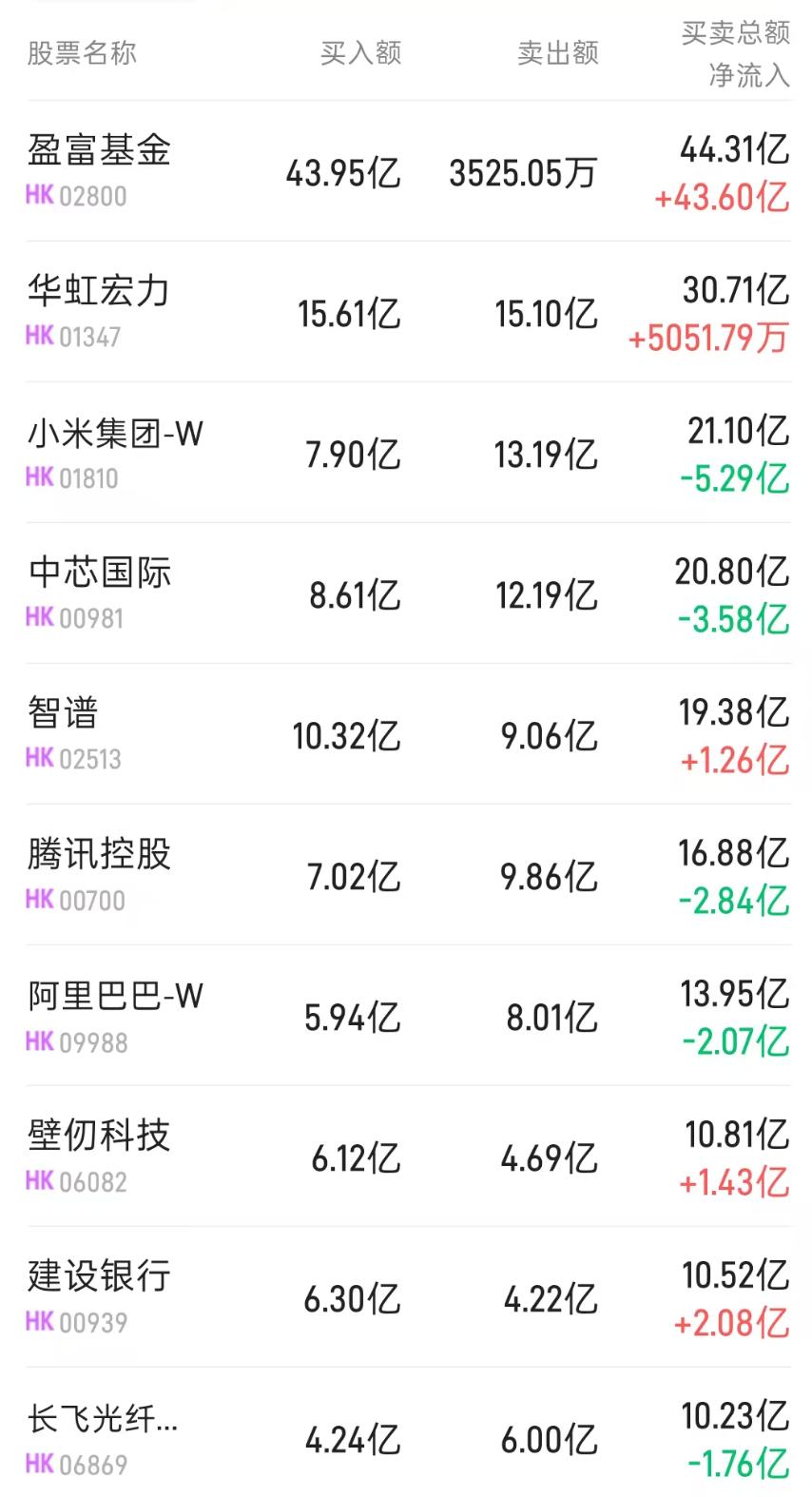

Hong Kong Stock Connect (Shanghai) active trading stocks
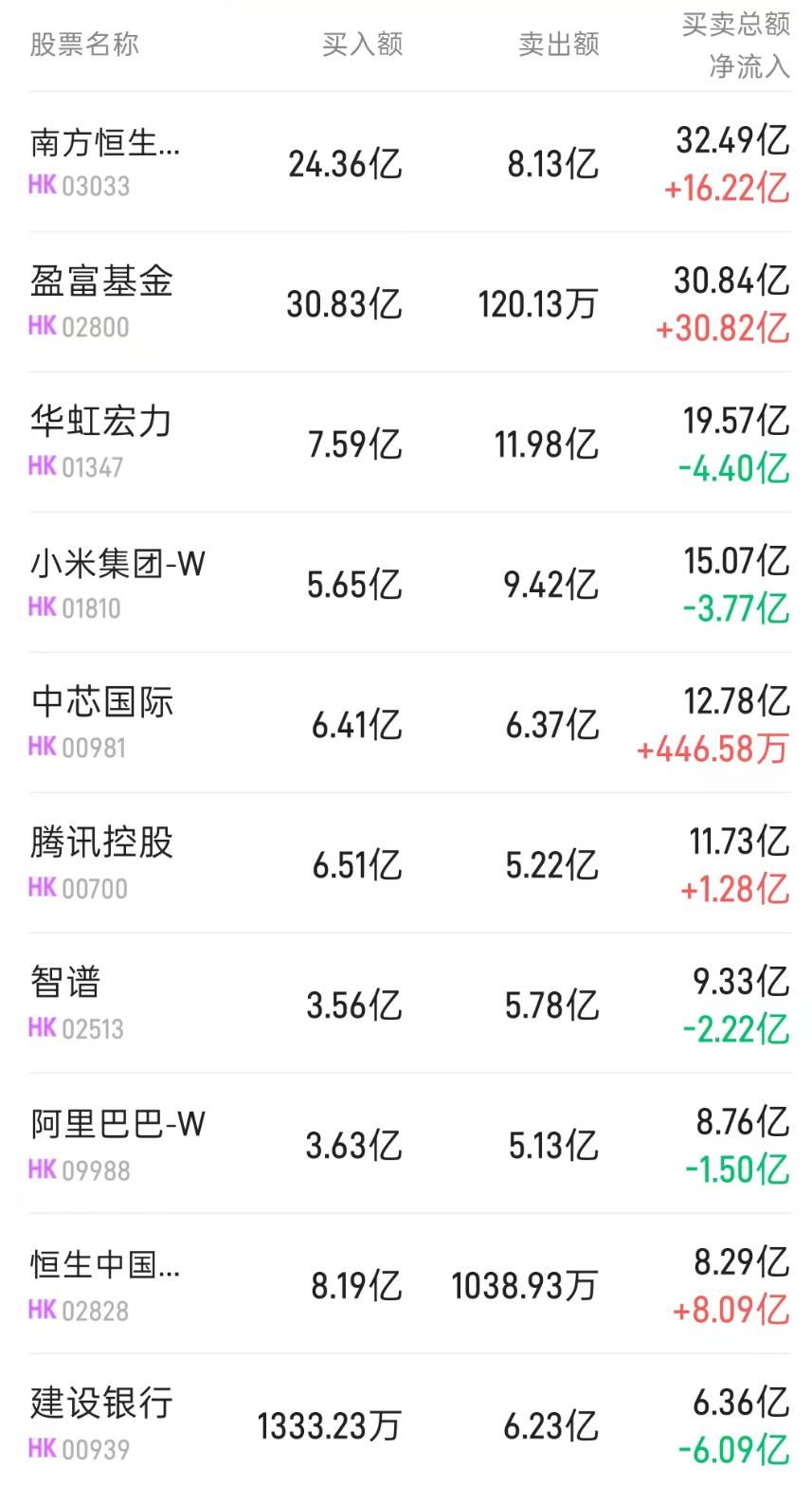
Hong Kong Stock Connect (Shenzhen) active trading stocks
The Hang Seng Index fell below the 20,000 mark, and Beishui funds grabbed funds when it fell. Yingfu Fund (02800), Southern Hang Seng Technology (03033), and Hang Seng China (02828) received net purchases of HK$7.442 billion, $1,622 million and HK$808 million respectively. Dongwu Securities believes that looking ahead, it will still maintain a cautious attitude towards Hong Kong stocks in the short term, with a relatively low win rate and mainly defensive thinking. Mainly, the current overseas environment is unfriendly. In the short term, it is difficult for Hong Kong stocks to take the lead in stabilizing due only to the large decline in the previous period; in a context where the overseas AI sector is still adjusting the trend, the Hang Seng Technology Index has insufficient signals to stop falling in the short term.
Bijiao Technology (06082) received a net purchase of HK$143 million. According to the latest quarterly review results announced by Hang Seng Index Company on November 20, Bijiao Technology was included as a constituent stock of the Hang Seng Technology Index. The relevant changes will be implemented after the market closes on December 4 and will take effect on December 7. Since this year, Bizao Technology has successively been included in the Hang Seng Composite Index constituent stocks, Hong Kong Stock Exchange Stock Exchange Index, and Hong Kong Stock Exchange Technology 100 Index, Artificial Intelligence Index, and Semiconductor Index.
Tencent (00700) and Alibaba-W (09988) had net sales of HK$155 million and HK$357 million respectively. There are reports today that Alibaba is considering issuing offshore bonds next year. Bank of America Securities updated its forecast after Tencent's financial report for the third quarter of 2026 was released. It believes that the intensification of macroeconomic pressure and stricter restrictions on AI computing power have made it more cautious about recent earnings per share. However, AI investment and macro concerns have reached a peak, and AI's ability to monetize will gradually become apparent.
Changfei Optical Fiber Cable (06869), SMIC (00981), and Huahong Hongli (01347) received net sales of HK$176 million, $353 million, and HK$389 million respectively. According to Apollo Global Management's latest report, according to the announced investment plan, the cumulative capital expenditure for AI infrastructure may reach approximately $3.5 trillion from 2026 to 2028. To support this scale of construction, by the end of 2028, the AI industry may require an annualized revenue of 1.5 trillion to 2 trillion US dollars, which is about 5 to 7 times the current level. When AI revenue growth falls short of expectations, companies may slow down infrastructure construction.
CCB (00939) had a net sale of HK$401 million. CITIC Securities pointed out that in terms of fundamentals, the revenue and profit growth rate of listed banks improved quarterly in the three quarters, and the quality of book assets continued to be steady. We believe that the banking sector will still be affected by capital in the short term, but continued rise and capital fluctuations may increase the sector's subsequent valuation volatility.