
3 Airline Stocks Worth Watching As Lower Fuel Costs Reshape Margins
Fuel has quietly become one of the biggest plot twists in markets this month. Crude prices have dropped over 20% in November while diesel remains tight, creating a split world where some transport and logistics stocks see relief on costs as others still grapple with elevated fuel bills. This article unpacks that tension and highlights 3 global transportation and logistics stocks that are exposed to this fuel story.
The stocks covered below are just a sample set, and the wider screen surfaced 49 more transportation and logistics companies with equally compelling fuel related stories that are not discussed here. If you want to identify and analyze those additional candidates in one place, head straight to the Global Transportation & Logistics Companies Benefiting from Lower Fuel Costs screener.
United Airlines Holdings (UAL)
United Airlines Holdings is one of the purest plays on the screener’s theme because jet fuel is such a major input for its global passenger and cargo network. The analyst consensus Narrative on Simply Wall St argues that what happens to fuel costs can heavily shape how its investment story unfolds.
"Lower crude prices could ease operating costs and inflation pressures, although the impact on profitability varies by company and is not assessed in this list. Persistent fuel price volatility linked to geopolitical conflict could keep United Airlines Holdings facing large and unpredictable fuel expense swings, and if these cannot be offset through fares as planned then earnings and free cash flow could remain under pressure instead of improving."
What really moves the needle for United Airlines Holdings from here is how one hard to forecast cost line filters through into margins and cash generation.
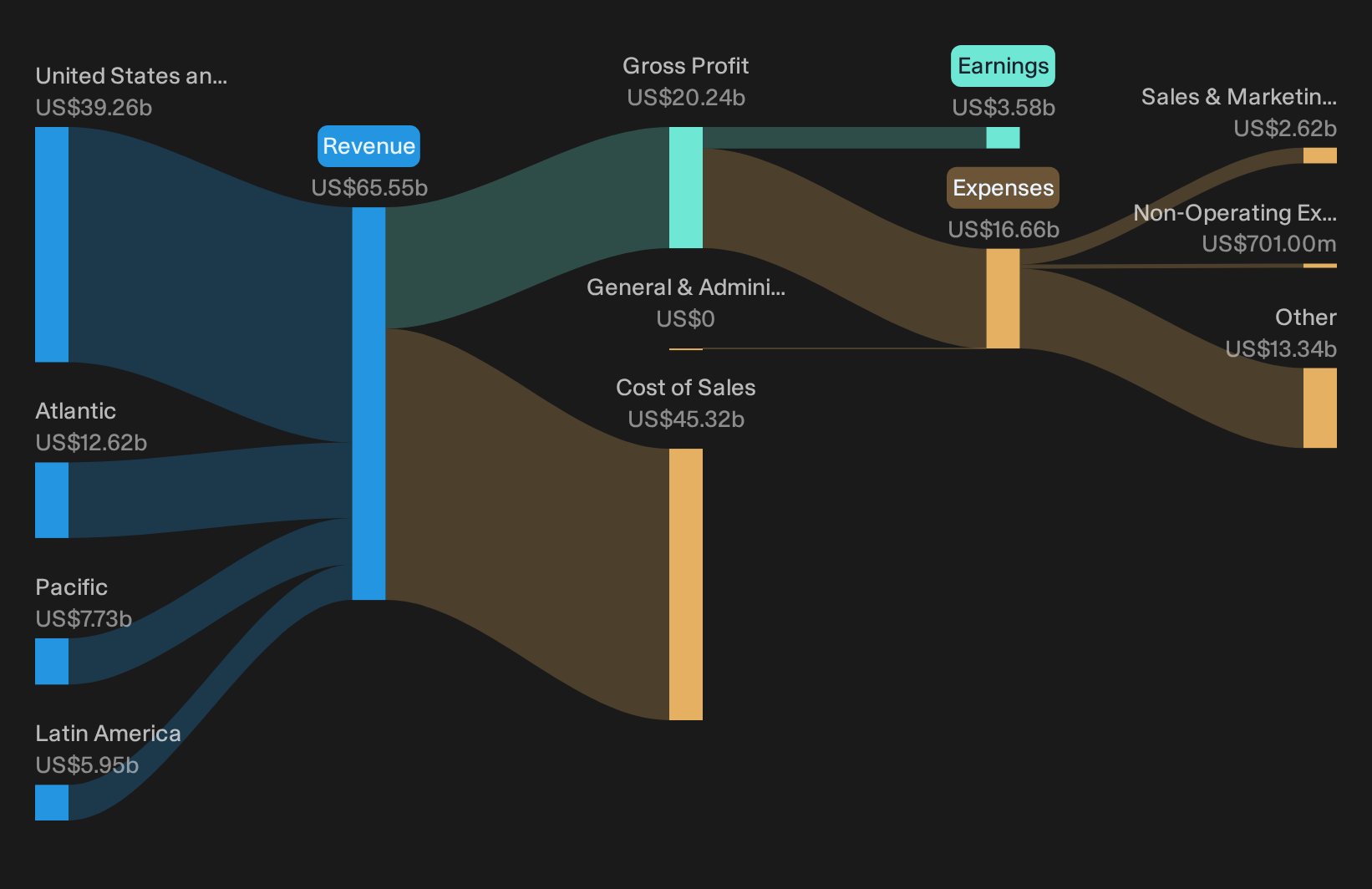
United Airlines Holdings runs a large passenger and cargo airline business, making it highly sensitive to jet fuel prices in this fuel themed screen. The group generates essentially all of its revenue from transportation airlines at about US$65.6b, and the stock carries a market value near US$35.3b.
When that jet fuel wildcard matters to your portfolio, the full narrative for United Airlines Holdings shows how fuel swings, capacity moves and demand trends might be colliding next.
Delta Air Lines (DAL)
Delta Air Lines is one of the clearest fuel plays in this screener, with a large global route network where jet fuel is a top variable cost. Limited hedging means changes in crude prices can quickly filter through to its financial profile, as captured in the analyst consensus Narrative on Simply Wall St.
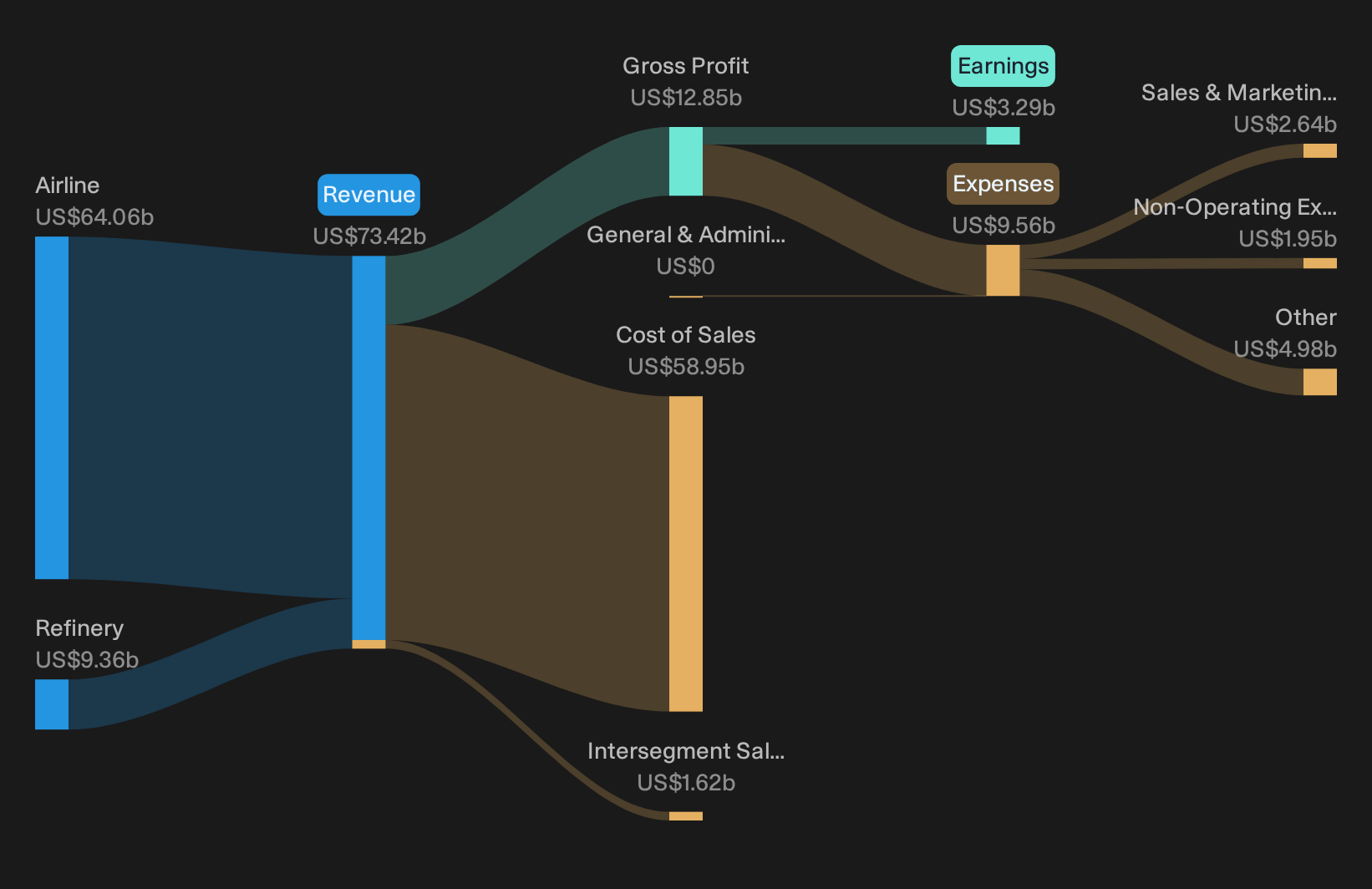
Delta Air Lines operates a global passenger and cargo network, with its Airline segment generating about US$64.1b of revenue and its Refinery arm adding roughly US$9.4b, offset by US$1.6b of intersegment items, and the stock carries a market value near US$55.2b.
"Delta is capitalizing on resilient revenue streams such as premium, loyalty, and international segments, with diversified premium, loyalty, cargo, and MRO revenue now representing 61% of total revenue and growing faster than the Main Cabin, which supports future revenue and earnings mix."
What happens when one powerful external cost swing collides with that higher quality revenue mix could have an outsized effect on future margins.
When those high quality revenue engines meet volatile fuel costs, the full narrative for Delta Air Lines lays out how Delta Air Lines’ earnings profile could be accelerating or stalling next.
Southwest Airlines (LUV)
Southwest Airlines is a fuel-intensive low-cost carrier where cheaper jet fuel can make a meaningful difference to what drops through to profit. The analyst consensus Narrative on Simply Wall St frames that fuel sensitivity alongside loyalty economics, product changes and fleet upgrades that are reshaping how the business earns money.
"Lower crude prices could ease operating costs and inflation pressures, although the impact on profitability varies by company and is not assessed in this list."
What happens to Southwest Airlines’ margins if one key cost lever moves more sharply than expected is where investors may focus next.
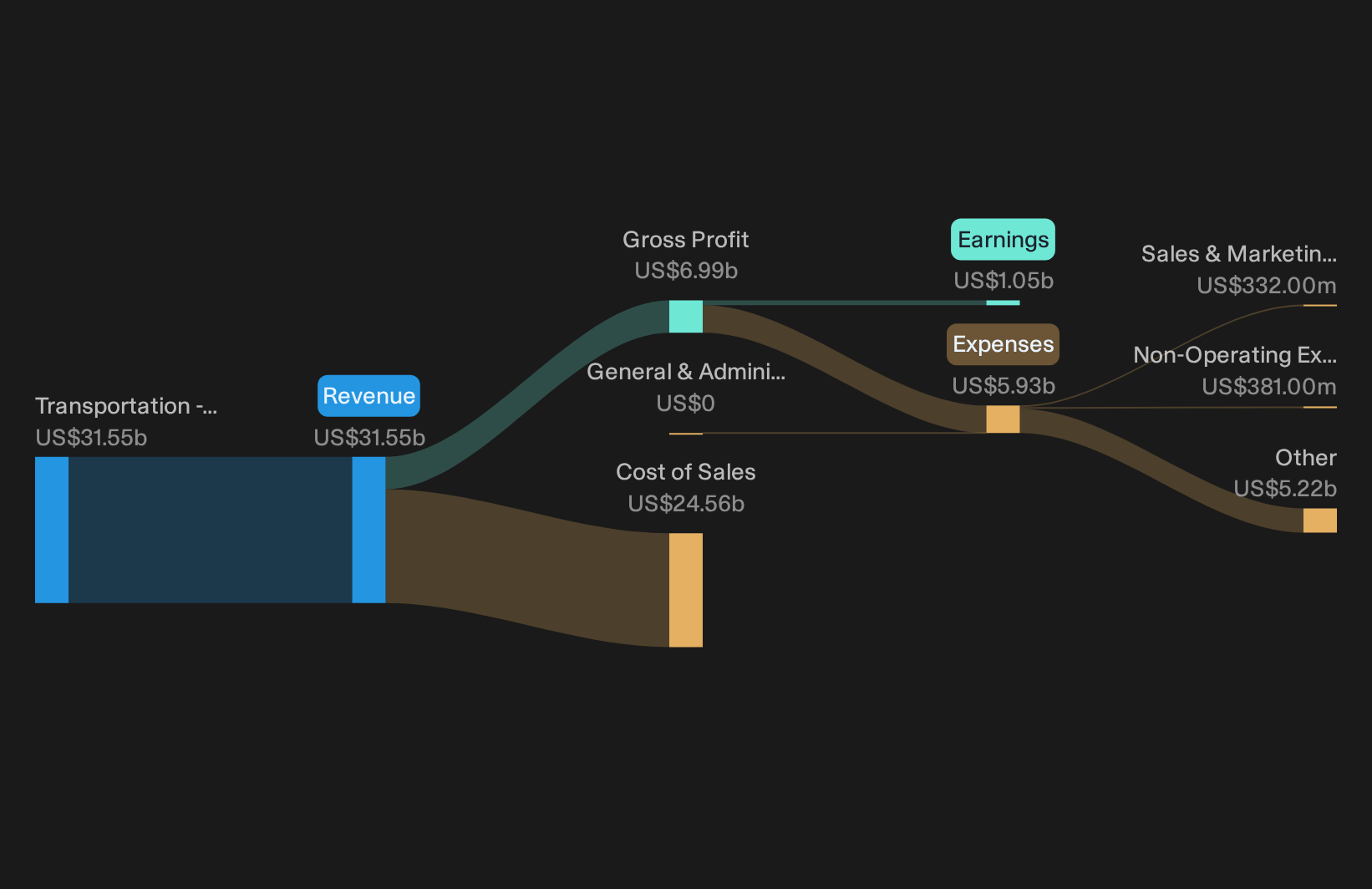
Southwest Airlines runs a large US focused passenger carrier built around low fares and high aircraft utilization. It generates about US$31.5b of revenue from Transportation, Airlines and carries a market value near US$22.3b, so movements in jet fuel prices can quickly influence how that low cost model feels in a portfolio.
That margin question is only the start, and the full narrative for Southwest Airlines shows how Southwest Airlines could turn fuel swings, loyalty leverage, and fleet decisions into accelerating or stalled cash generation.
Seeking Fresh Alternatives Before They Fly
Some of the most interesting breakout stories start quietly, while attention is caught elsewhere and prices are still dropping or drifting. Use that lull while it matters, focus on under the radar for now opportunities, and get in early.
- Track steady momentum in companies built on strong finances and low risk profiles by scanning the list of solid balance sheet and fundamentals (23 results) before others spot the shift.
- Target income ideas with real staying power by running through the 11 dividend fortresses and see which high yield payouts still look supported by underlying cash flows.
- Hunt for future leaders riding AI demand by checking the 53 AI infrastructure stocks while many investors remain focused on headline tech tickers instead.
Have feedback on this article? Concerned about the content? Get in touch with us directly. Alternatively, email editorial-team@simplywallst.com