
3 Indian Refrigeration Stocks Tied To Food Inflation And Cold Storage Demand
Food prices are running hotter than headline inflation, rural budgets are feeling the squeeze, and policy signals from the RBI look less friendly to easy money. That mix hurts some interest rate sensitive areas, yet it also shines a light on businesses that help cut wastage and preserve food quality. This article walks through 3 Indian cold-chain and refrigeration stocks exposed to this inflation story, and explains why they might matter for your watchlist.
The companies profiled below are just a sample, since the broader screen surfaced 8 more Indian cold-chain and refrigeration players with equally interesting stories that are not covered here. To hunt for your own highest-conviction ideas in this space, head straight to the Indian cold-chain equipment and refrigeration technology providers screener to filter and analyze the full set of stocks that fit this cold-chain theme.
Blue Star (BSE:500067)
Overview: Blue Star is an Indian air conditioning and commercial refrigeration specialist that supplies chillers, cold rooms, cold storage and related systems to customers ranging from food players to data centres.
Operations: Blue Star generates about ₹72.5b from Electro-Mechanical Projects and Commercial Air Conditioning Systems, ₹57.3b from Unitary Products, and ₹3.3b from Professional Electronics.
Market Cap: ₹366.4b
For the Indian cold-chain theme, Blue Star matters because its chillers, cold rooms and refrigeration projects operate at the intersection of rising food inflation, wastage concerns, storage upgrades and capital spending. This is the focus of the bullish analyst Narrative on Simply Wall St.
"The growing data center MEP order book of more than ₹7,700 crores and guided FY '29 revenue contribution of about ₹4,000 crores opens room for a mix shift toward shorter cycle, escalation protected projects that can improve cash conversion and support more stable operating margins at the group level."
The key factor to watch is how pressure on Blue Star’s commercial refrigeration margins interacts with this shift to shorter cycle projects.
That pressure point is exactly where the full narrative for Blue Star shows how Blue Star could see refrigeration volatility masking a broader shift in earnings quality and project mix resilience.

KRN Heat Exchanger and Refrigeration (NSEI:KRN)
Overview: KRN Heat Exchanger and Refrigeration manufactures HVAC and refrigeration components and complete systems that feed into cold rooms, chillers and industrial cold-chain equipment for food and other perishables.
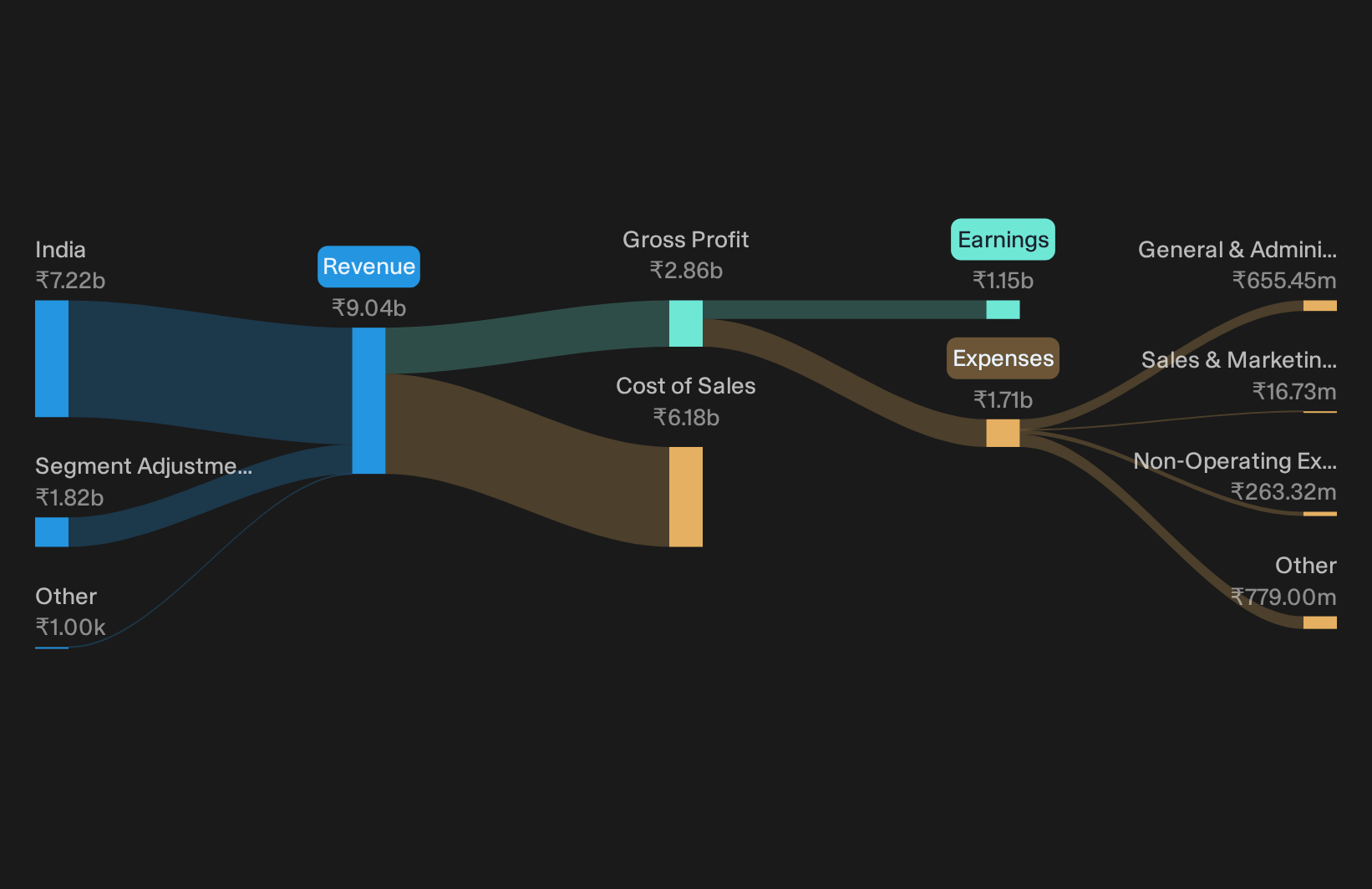
Operations: KRN Heat Exchanger and Refrigeration reports about ₹9,042 million in revenue from manufacturing and selling HVAC parts and accessories, primarily within India.
Market Cap: ₹62.1 billion
High food inflation is pushing more attention onto storage losses rather than just farm output. This is where KRN Heat Exchanger and Refrigeration fits the cold-chain theme as a supplier of the hardware behind chillers, blast freezers and industrial refrigeration, and where the bearish analyst Narrative on Simply Wall St sees both promise and pressure building.
"Although KRN Heat Exchanger and Refrigeration is seeing strong data center order inflow, the move toward liquid cooling and brazed heat exchangers can require fresh investment and engineering effort before meaningful revenue arrives. If the company delivers the expected improvement in working capital and cash flows by the end of FY27 through inventory monitoring, export factoring and import buyer’s credit, then cash generation and balance sheet strength could be stronger than bearish investors anticipate."
What happens to KRN Heat Exchanger and Refrigeration’s appeal hinges on how one quiet shift in its cold-chain mix ultimately feeds through to margins.
That quiet shift is exactly what the full narrative for KRN Heat Exchanger and Refrigeration unpacks, showing where cold-chain demand and data center cooling could be accelerating past the headline worries.
Kirloskar Pneumatic (BSE:505283)
Overview: Kirloskar Pneumatic makes industrial compressors and transmission equipment used across sectors, including refrigeration systems for cold storage and food processing facilities.
Operations: Kirloskar Pneumatic generates about ₹16.6b from Compression Systems and roughly ₹918m from Other Non Reportable Segments.
Market Cap: ₹80.9b
Kirloskar Pneumatic plugs into the cold-chain story through compressors that power large refrigeration systems. The analyst consensus Narrative on Simply Wall St argues that the more interesting angle is how its manufacturing choices could reshape profitability as food storage and processing demand builds out.
"Ongoing backward integration through in house manufacturing of forgings, castings, motors and other components is translating into lower raw material to sales ratios, with a 3.1 percentage point reduction in FY26 and a 3.3 percentage point reduction in Q1 FY27. Persistent reliance on imported core components such as third party compressors for certain packages remains a live issue, and any renewed global supply chain disruption or supplier specific constraint could still slow project execution and conversion of the order book, which would weigh on revenue recognition and EBITDA margins."
This raises the question of what happens when one quiet shift in how Kirloskar Pneumatic sources and builds key parts starts to pull margins and cold-chain demand together.
That turning point starts where project execution risk meets cold-chain capital spending momentum, and the full narrative for Kirloskar Pneumatic shows how that tension could fuel an accelerating profitability reset.

Seeking Alternatives Before The Crowd
Fresh themes are breaking out, momentum is shifting, and under the radar ideas get caught quickly. Scan what others might miss while it matters and get in early.
- Target durable income streams before yields start dropping by scanning the 247 dividend fortresses curated for investors who care about cash flow strength and balance sheet resilience.
- Hunt for early movers in automation where demand tailwinds are already building by reviewing the curated 90 robotics and automation stocks packed with businesses reshaping industrial productivity.
- Spot infrastructure plays before they start flying by running through the hand picked 42 power grid technology and infrastructure stocks focused on companies wired into long term grid upgrades.
Have feedback on this article? Concerned about the content? Get in touch with us directly. Alternatively, email editorial-team@simplywallst.com