
3 Japanese Financial Stocks Built For Higher Bank Of Japan Rates
Japanese domestic banks and insurers suddenly sit in the spotlight as services inflation in October hit 4.2% YoY, the fastest pace since 1990, and traders now talk seriously about a path toward a 1.75 to 2.0% Bank of Japan rate. Higher local rates can reshape who earns, who pays, and who gets squeezed. This article unpacks three Japanese financial stocks exposed to that shift, and why their stories may matter for your portfolio.
The three stocks below are a sample of what rising domestic rates could mean for Japanese banks and insurers, and the full screen surfaced 7 more locally focused institutions with equally compelling narratives that are not covered in this article. To identify and analyze the highest conviction ideas from this broader universe, go straight to the Japanese Domestic-Oriented Financials (Banks & Insurers) screener.
JAPAN POST BANK (TSE:7182)
JAPAN POST BANK is one of the clearest examples of this screener’s idea in action, a large domestic deposit franchise whose earnings are closely tied to Japanese interest rates. The analyst consensus Narrative on Simply Wall St describes how that link now shapes the medium term plan.
The shift to positive yen interest rates, together with management commentary that Japan is now firmly in an era of positive interest rates with more valuable deposits and relatively high JGB yields, is being used to support targets for higher net interest income by FY 2028, which is tied to net margins and overall earnings.
This raises the question of what happens if a single assumption inside that rate driven income target moves even modestly against those plans.
JAPAN POST BANK operates a broad retail focused franchise built on savings accounts, payment services, loans and pension products, generating about ¥2,068.3b from banking services in Japan and carrying a market value of roughly ¥10.5t.
If that rate sensitivity is what you care about, read the full narrative for JAPAN POST BANK to see how management plans to turn those deposit economics into accelerating earnings power.

Hirogin Holdings (TSE:7337)
Hirogin Holdings is a regional banking group built around Hiroshima Bank, firmly aligned with the screener’s focus on domestic lenders. It generates about ¥210.8b from its Banking Segment and ¥23.6b from Leasing, with other activities at ¥40.7b, and carries a market value near ¥597.6b.
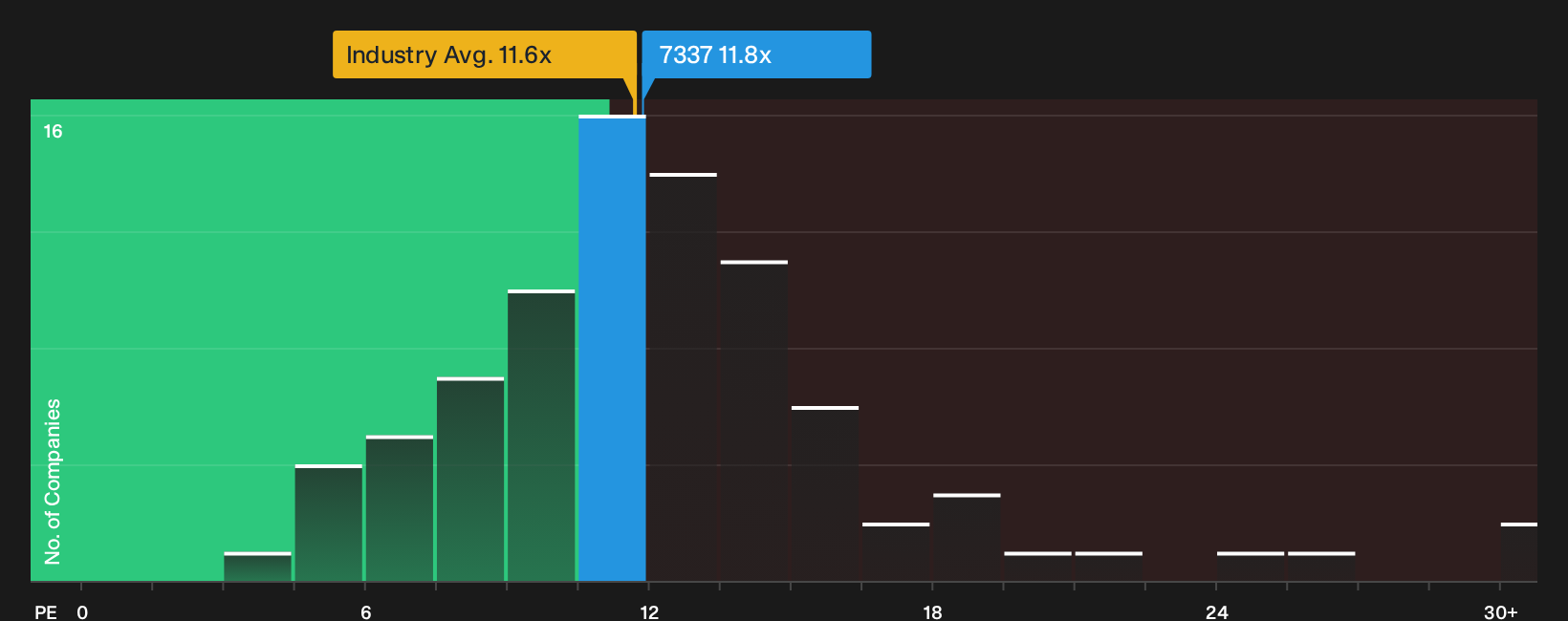
Hirogin Holdings offers focused exposure to Japanese regional banking, with essentially all of its roughly ¥232.0b in revenue tied to domestic customers. Its P/E of 11.8x sits around sector levels. With earnings and revenue both projected to grow in the mid-teens, the key issue is how a single adverse development could affect the loan deposit spreads that investors may be monitoring.
Those spreads are exactly what the market is trying to price in, so use the 3 key rewards and 2 important warning signs to see how Hirogin Holdings could surprise either way.
Sumitomo Mitsui Financial Group (TSE:8316)
Sumitomo Mitsui Financial Group is a major Japanese banking group that links a large domestic lending and deposit base with global wholesale and retail services, giving direct exposure to rising local interest rates. The business is valued at about ¥22.3t in the equity market.
Sumitomo Mitsui Financial Group ties a sizeable Japanese loan and deposit book to higher health, future performance and dividend scores, all in a world where BoJ rate moves now matter more for bank earnings. That combination of income, scale and rate sensitivity looks powerful if a single assumption about the shape of the yield curve holds.
If that yield curve assumption is what you are weighing, go straight to the 4 key rewards and 2 important warning signs to see where Sumitomo Mitsui Financial Group could surprise next.

Seeking Alternatives Before Momentum Flies Past
Fresh opportunities often break out quietly, gather momentum, then get caught by the crowd. Scan these ideas while it matters and before attention spikes, then consider your options promptly.
- Target income streams that can help anchor your portfolio while markets keep moving by reviewing the 36 dividend fortresses curated for stability and yield focus.
- Explore accelerating themes tied to rising infrastructure and power demand by scanning the 42 power grid technology and infrastructure stocks before these under the radar operators start attracting broader money.
- Track early movers supplying the metal behind long term electrification trends by checking the 16 top copper producer stocks while pricing dislocations and sentiment gaps still create room to position.
Have feedback on this article? Concerned about the content? Get in touch with us directly. Alternatively, email editorial-team@simplywallst.com