
FROM FACTORY FLOOR TO FLIGHT LINE
SIRIM Bhd is positioning itself as a strategic guide for the nation’s push into aerospace, with chairman Datuk Khairol Anuar Mohamad Tawi describing a shift “from the factory floor to the flight line”.
Long synonymous with the country’s industrial development, SIRIM now sees its foundation as the platform for its next chapter.
“As Malaysia embarks on this remarkable journey to establish itself as a regional aerospace leader, we see SIRIM’s role as one of strategic guidance in support of this national transformation,” said Khairol Anuar.
Aerospace, he added, sits at the heart of the effort and is a key pillar of the nation’s ambition to build a high-value, inclusive and globally competitive economy.
The transition demands “foresight and discipline in equal measure”, and he said the board’s task is to ensure SIRIM is well positioned to support industries in meeting international standards and competing globally.
That work began under the 12th Malaysia Plan, with SIRIM securing the United Kingdom Accreditation Service (UKAS) accreditation in March 2023 for AS9100, the aerospace quality management standard.
Since then, 25 companies have been certified, and 16 are Bumiputera-owned.
It then expanded into maintenance, repair and overhaul (MRO) through AS9110, gaining UKAS accreditation in October 2026. To date, four companies are targeted for AS9110 certification, with one already completed.
Beyond the numbers
Malaysia’s aerospace targets include RM55.2bil in MRO revenue by 2030 and more than 32,000 high-skilled jobs, goals Khairol Anuar said align with the Madani Economy Framework, the 13th Malaysia Plan (13MP) and the New Industrial Master Plan 2030.
“We are not simply chasing figures on a page; we are laying the runway for a generation of high-skilled jobs and lasting prosperity,” he said.
That journey will be showcased at Majlis SIRIM Industri (MSI) 2026, the flagship annual gathering which recognises companies certified across all its schemes, from quality and environmental management to occupational safety.
Themed “Maintenance Excellence. Airworthiness Assured.”, this year’s event will also see the official launch of the AS9110 certification scheme, supporting the civil and military MRO organisations critical to the RM55.2bil target.
“In aviation there is no room for cutting corners; safety is not a box to be ticked but a culture to be lived, day in and day out,” he said.
Collaboration, he stressed, is essential to secure Malaysia’s position as a credible player in the global MRO market.
SIRIM’s ambition under 13MP is to introduce AS9120 for distributors and stockists, completing a globally recognised certification ecosystem that spans manufacturing, MRO and the supply chain.
Ahead of the curve
At the strategic level, he said SIRIM Transformation 3.0 marks the organisation’s shift for the decades ahead.
“If the first 50 years were dedicated to building Malaysia’s industrial foundation, the next 50 will be defined by transformation,” he said.
He added that the focus now is on strengthening technical capabilities, advancing digitalisation and developing a more agile organisation to meet the faster pace of change in modern markets.
“SIRIM 3.0 is about anticipating the future rather than reacting to it. We would rather light a lamp than curse the darkness, and that means investing in readiness today so that Malaysian industries are not caught flat-footed tomorrow,” he said.
He noted that for many small and medium enterprises (SMEs), the backbone of the industry, adopting smart technologies can be challenging.
That is the purpose of the Investment, Trade and Industry Ministry (Miti)’s Smart Tech Up programme, which offers readiness assessments, technology roadmaps, implementation support and matching grants of up to RM500,000 per project.
“More than 100 companies have benefitted so far, and our target is to reach over 2,000 companies between 2027 and 2030,” he said.
On sustainability, he said SIRIM also helps businesses strengthen their ESG practices through testing, certification, research and technical services, while advancing capabilities in areas such as carbon capture, utilisation and storage.
Its National Rechargeable Battery Testing Centre also supports the electric vehicle (EV) and energy storage industries.
Partnerships that endure
Khairol Anuar thanked Miti for its continued support, as well as the generations of scientists, engineers, researchers and partners who built SIRIM’s foundation.
“No organisation is an island, and SIRIM’s strength has always been drawn from the partnerships it nurtures,” he said.
Looking ahead, he said SIRIM remains steadfast as “the nation’s compass, guiding industries to innovate with integrity, grow sustainably and compete globally”.
“We are, in a sense, planting trees under whose shade we may never sit, and that is precisely as it should be,” he said.
“The true measure of our next chapter will be the opportunities we create for the generations who follow.”
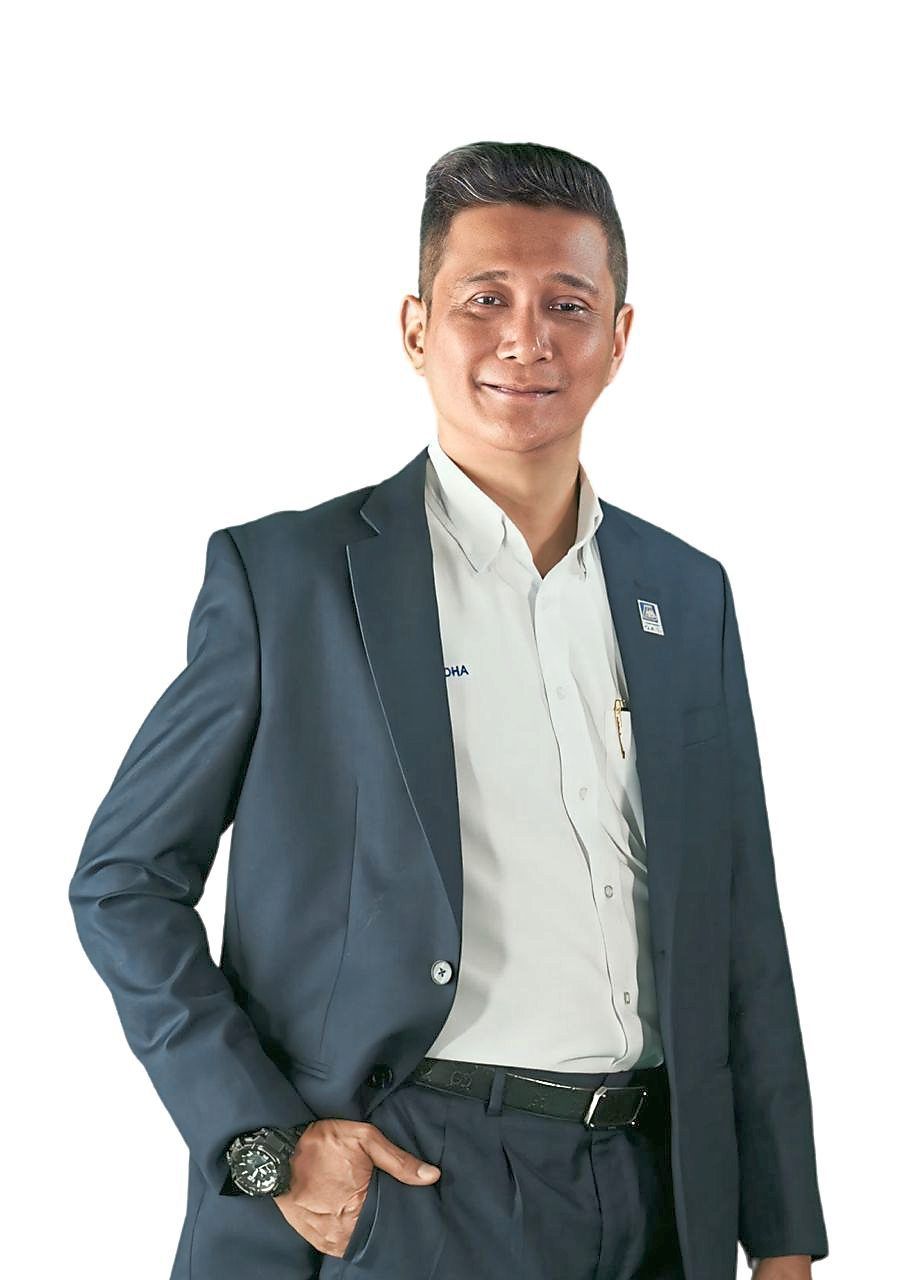
SIRIM QAS International is bringing its AS9110 certification scheme to Malaysia’s maintenance, repair and overhaul (MRO) sector, closing a gap that once forced local operators to look abroad for the aerospace credential.
Its chief executive officer Md Adha Rahmat said the scheme is meant to help local MRO firms compete for higher-value, international work.
“AS9110 is more than a certification. It is a recognised mark of confidence that demonstrates an organisation’s commitment to meeting international aerospace quality standards,” he said.
What AS9110 covers
AS9110 is the quality management system standard for aviation, space and defence maintenance organisations, developed by the International Aerospace Quality Group (IAQG).
It is not a new standard – the current version has been in place since 2016 – but it is designed for organisations that maintain the airworthiness of aircraft and aerospace components, from maintenance facilities and engine repair outfits to airline maintenance departments.
It builds on ISO 9001 and incorporates aerospace-specific requirements from AS9100, while including additional requirements tailored to the maintenance environment. These cover airworthiness, maintenance planning, configuration management, risk management, human factors, records and traceability and technical data control.
“It provides a structured framework to help organisations deliver safe, reliable and consistently high-quality maintenance services, which is critical in an industry where safety and operational excellence are crucial,” said Md Adha.
He added that through SIRIM QAS, local MRO organisations can obtain AS9110 certification accredited by the United Kingdom Accreditation Service.
Previously, they had to engage overseas certification bodies, which often meant higher costs, longer timelines and added administrative complexity.
The timing reflects an industry in transition as local MRO players are moving beyond basic maintenance into more complex work for airlines, leasing companies and regulatory authorities – and increasingly, those customers are looking for suppliers with AS9110 certification specifically.
The nation’s aerospace sector generated RM32.5bil in revenue in 2025, and the Malaysia Aerospace Industry Blueprint 2030 targets RM55.2bil.
Md Adha said that MRO is central to that growth, with Malaysia aiming to lift its global MRO market share from 4% to 5% by 2030.
“The industry told us they needed this capability locally. SIRIM QAS has responded by incorporating it into our services,” he said.
More than regulatory approval
Md Adha stressed that AS9110 does not replace regulatory approval from authorities such as the Civil Aviation Authority of Malaysia, European Union Aviation Safety Agency or US Federal Aviation Administration, which are mandatory for maintaining civil aircraft.
“AS9110 takes a broader organisational perspective on how maintenance is planned and controlled, how configuration and airworthiness requirements are managed, how human factors and competence are addressed, how records and traceability are maintained, and how risks are identified and mitigated,” he said.
He emphasised that for a Malaysian firm bidding for international contracts, certification signals to clients that its processes meet a globally recognised benchmark.
Certified organisations are also listed in IAQG’s Online Aerospace Supplier Information System (Oasis), a global database used by airlines, aerospace manufacturers and major contractors to identify qualified suppliers.
“This increases credibility and can create opportunities within the global aerospace supply chain,” he said.
The benefits, he added, are twofold. The first is market access.
Because AS9110 is recognised throughout the global aerospace supply chain, it assures airlines, lessors, manufacturers and major contractors that an organisation meets international quality standards.
For firms moving into higher-value activities, Md Adha said it can be “an important differentiator”.
The second benefit is operational. Certification promotes a more systematic approach to maintenance planning, risk and traceability, helping to reduce errors, improve consistency, enhance safety and increase efficiency.
While he acknowledged that achieving certification requires an investment of time and resources, he said the long-term payoff includes stronger process discipline, greater customer confidence and access to opportunities that may otherwise be hard to secure.
Part of a wider portfolio
For SIRIM QAS, a nationally and internationally accredited certification body, AS9110 reflects its ability to support the aerospace sector, one of the world’s most demanding and highly regulated industries.
“It is part of our broader mission to help Malaysian organisations meet internationally recognised standards and enhance their competitiveness in the global market,” said Md Adha.
“It reflects our ability to develop specialised certification capabilities in response to emerging industry needs, while providing local organisations with access to world-class certification services.”
His message to MRO operators is that the opportunity is there, and they are well positioned to capture it as customers place greater emphasis on quality, consistency, safety and reliability.
“We are committed to supporting Malaysian organisations on that journey by providing internationally recognised certification services backed by technical expertise and global accreditation,” he said.