
Insiders Could Have Profited By Holding onto Future Data Group Shares Despite 18% Drop
Future Data Group Limited's (HKG:8229) stock price has dropped 18% in the previous week, but insiders who sold HK$21m in stock over the past year have had less luck. Insiders might have been better off holding onto their shares, given that the average selling price of HK$0.68 is still below the current share price.
Although we don't think shareholders should simply follow insider transactions, logic dictates you should pay some attention to whether insiders are buying or selling shares.
The Last 12 Months Of Insider Transactions At Future Data Group
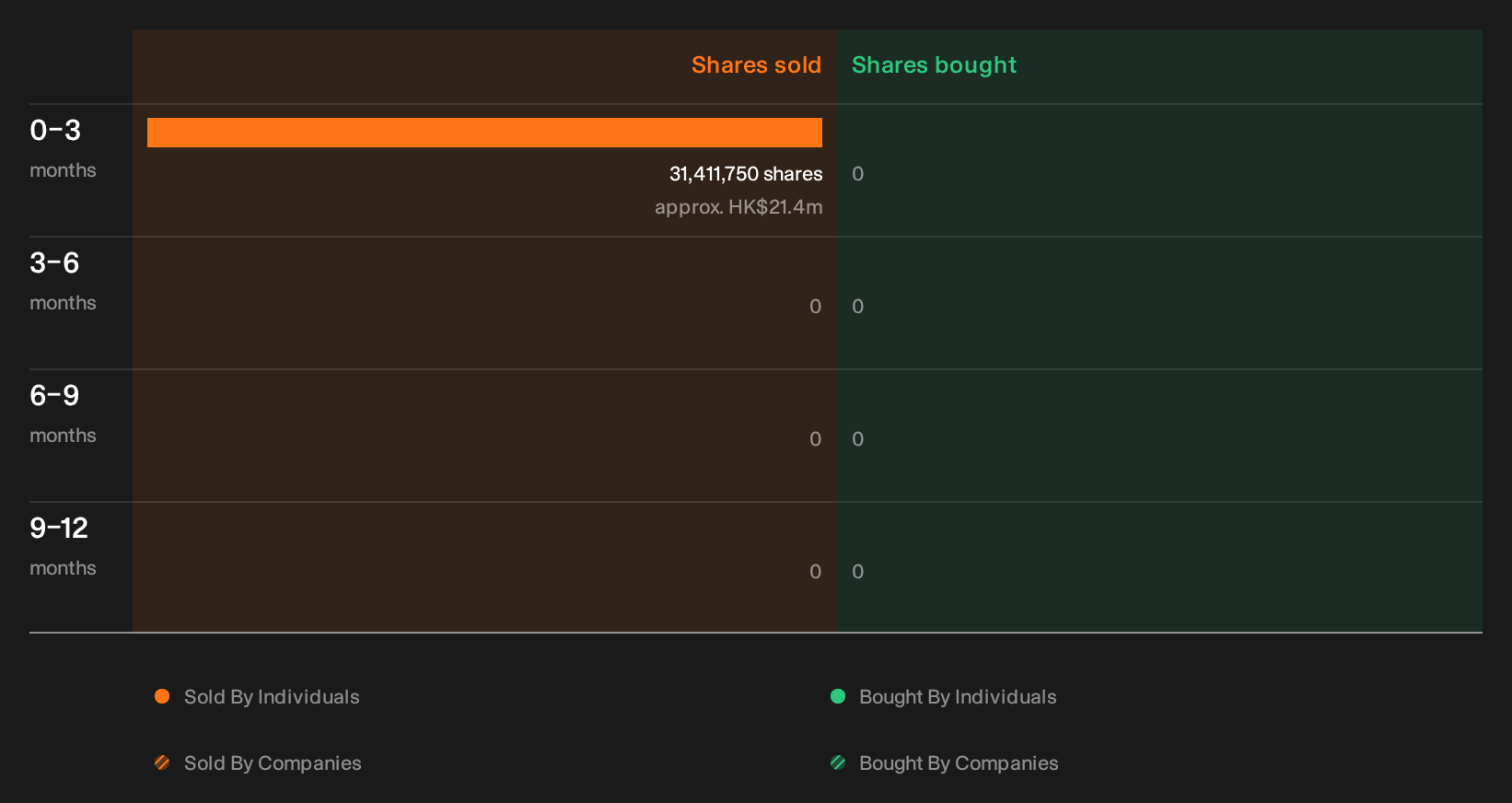
In the last twelve months, the biggest single sale by an insider was when the Non-Executive Director, Hongxia Tao, sold HK$21m worth of shares at a price of HK$0.68 per share. While insider selling is a negative, to us, it is more negative if the shares are sold at a lower price. The silver lining is that this sell-down took place above the latest price (HK$0.58). So it may not shed much light on insider confidence at current levels. Hongxia Tao was the only individual insider to sell over the last year.
You can see a visual depiction of insider transactions (by companies and individuals) over the last 12 months, below. By clicking on the graph below, you can see the precise details of each insider transaction!
Check out our latest analysis for Future Data Group
I will like Future Data Group better if I see some big insider buys. While we wait, check out this free list of undervalued and small cap stocks with considerable, recent, insider buying.
Insiders At Future Data Group Have Sold Stock Recently
The last quarter saw substantial insider selling of Future Data Group shares. Specifically, Non-Executive Director Hongxia Tao ditched HK$21m worth of shares in that time, and we didn't record any purchases whatsoever. This may suggest that some insiders think that the shares are not cheap.
Insider Ownership
Many investors like to check how much of a company is owned by insiders. We usually like to see fairly high levels of insider ownership. It's great to see that Future Data Group insiders own 42% of the company, worth about HK$161m. This kind of significant ownership by insiders does generally increase the chance that the company is run in the interest of all shareholders.
What Might The Insider Transactions At Future Data Group Tell Us?
An insider sold stock recently, but they haven't been buying. And there weren't any purchases to give us comfort, over the last year. While insiders do own a lot of shares in the company (which is good), our analysis of their transactions doesn't make us feel confident about the company. So these insider transactions can help us build a thesis about the stock, but it's also worthwhile knowing the risks facing this company. Case in point: We've spotted 3 warning signs for Future Data Group you should be aware of, and 1 of them can't be ignored.
Of course Future Data Group may not be the best stock to buy. So you may wish to see this free collection of high quality companies.
For the purposes of this article, insiders are those individuals who report their transactions to the relevant regulatory body. We currently account for open market transactions and private dispositions of direct interests only, but not derivative transactions or indirect interests.
Have feedback on this article? Concerned about the content? Get in touch with us directly. Alternatively, email editorial-team (at) simplywallst.com.