
How £7b Loan Risk Sale Will Impact NatWest Shares (LSE:NWG)
- NatWest Group has received regulatory approval for its Targeted Support service and completed a significant risk transfer on about £7b of large corporate loans. This adjusts how it manages customer guidance and credit exposure.
- The combination of targeted investment support for retail clients and first loss risk transfer on corporate loans reshapes how NatWest balances fee potential, balance sheet usage and protection for both customers and shareholders.
- We will look at how NatWest's investment narrative is influenced by the £7b corporate loan risk transfer and customer Targeted Support.
Scan how NatWest Group's mix of capital raising, credit risk transfer and retail investment support compares with a hand-picked list of solid balance sheet and fundamentals (7 results).
NatWest Group Investment Narrative Recap
To own NatWest Group, you need to be comfortable with a UK focused bank that leans on interest income today while pushing hard into fee based wealth and payments. The analyst consensus narrative on Simply Wall St frames the key belief as disciplined cost control, AI driven efficiency and steady profit growth rather than rapid expansion. The recent Targeted Support approval and £7b corporate loan risk transfer nudge the story toward advice led retail fees and tighter credit risk management, without clearly changing the near term focus on margins and cost to income.
The most important short term swing factor still sits in net interest margin, which management guides to flatten as lower spread mortgages and Commercial & Institutional loans grow. The biggest operational risk is the mix of rising wholesale funding needs, a loan to deposit ratio around 92% and ongoing UK bank tax uncertainty. The new services and risk transfer support balance sheet resilience and fee potential, but do not remove those pressures.
The Targeted Support approval looks most relevant for your thesis because it links directly to NatWest Group's push into advice and investment services after the Evelyn Partners deal more than doubled assets under management to £131b. Management is targeting a larger share of customer savings and investment flows, which could gradually tilt earnings toward more capital light and recurring fees if execution is solid.
For catalysts and risks, the new support service fits into the same theme as NatWest Group's AI use and Tyl merchant payments work, all aimed at higher value, less balance sheet intensive activities. The key watchpoints now are how quickly Targeted Support is rolled out, how regulators respond to customer outcomes and whether the bank can keep costs in check while fee income grows enough to cushion any pressure on lending spreads.
NatWest Group's narrative projects £20.8 billion revenue and £7.0 billion earnings by 2029. This projection assumes revenue grows at 7.1% per year and earnings rise by about £1.0 billion from £6.0 billion today.
Uncover why NatWest Group's fair value indicates a 32% potential upside to its current price, which could narrow faster than many investors expect.
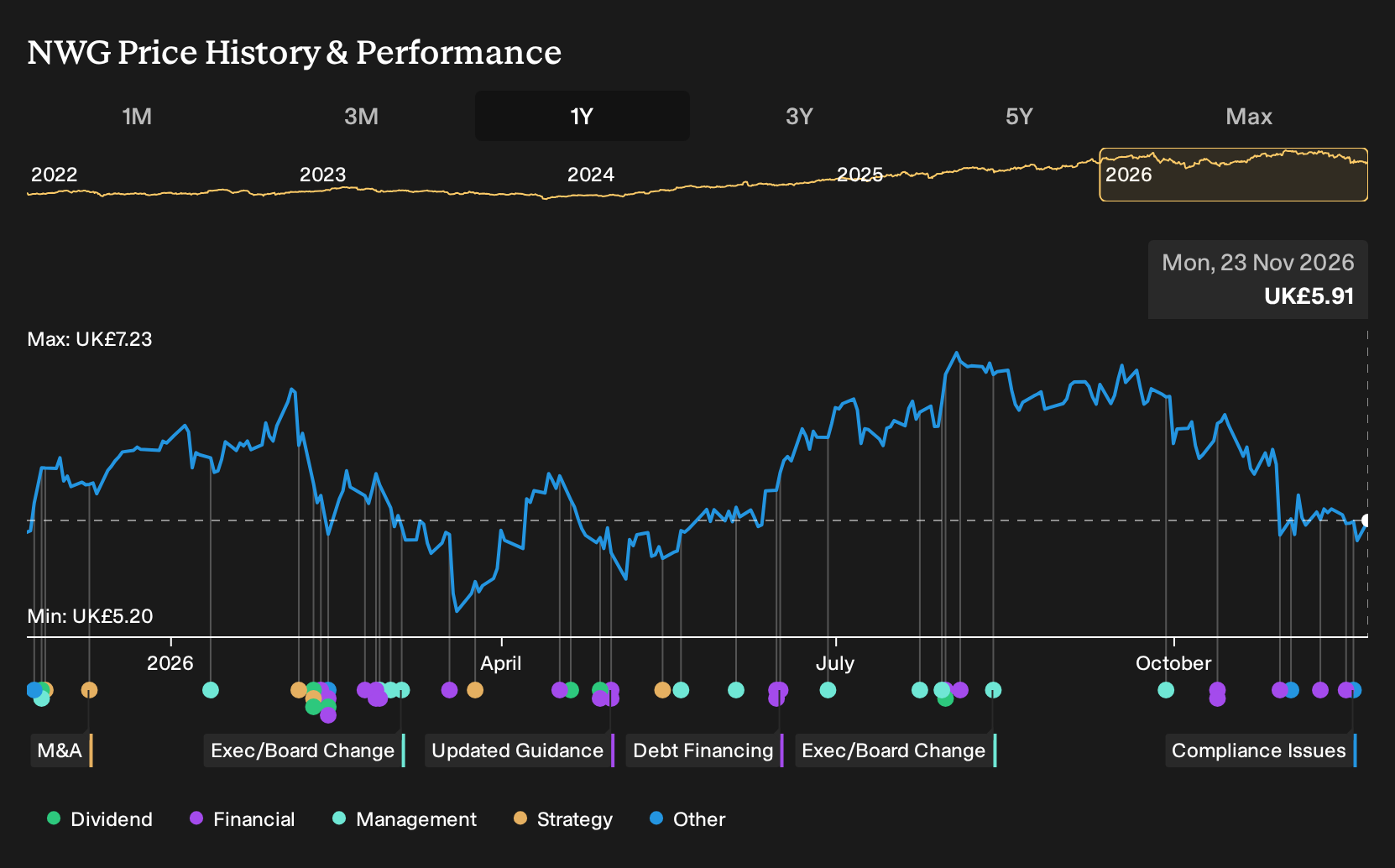
Exploring Other Perspectives
Four fair value estimates from the Simply Wall St Community cluster between £7.74 and about £12.84, so some retail investors see NatWest Group materially undervalued while others sit closer to the top of that band. When you also consider risks around net interest margin pressure and heavier wholesale funding, you get sharply different opinions worth exploring in more detail.
Explore 3 other NatWest Group fair value estimates, including one that suggests it could be worth just £7.74!
Decide For Yourself
Don't just follow the ticker; dig into the data and build a conviction that's truly your own.
- A great starting point for your NatWest Group research is our analysis highlighting 4 key rewards and 3 important warning signs that could impact your investment decision.
- See our latest analysis for NatWest Group. The report includes a comprehensive fundamental analysis summarized in a single visual, the Snowflake, making it easy to evaluate NatWest Group's overall financial health at a glance.
Looking for more investment ideas beyond NatWest Group?
Once you have formed a view on NatWest Group, it often helps to line it up against other companies with different risk and income profiles using the Simply Wall St Screener.
- If you want income to do more of the heavy lifting in your portfolio, scan for higher yielding opportunities with 7 dividend fortresses.
- If capital preservation sits higher on your priority list, compare NatWest Group with financially resilient businesses through the 7 resilient stocks with low risk scores.
- If you are hunting for quality that has not yet attracted broad attention, widen your research with the 5 high quality undiscovered gems.
Have feedback on this article? Concerned about the content? Get in touch with us directly. Alternatively, email editorial-team@simplywallst.com