
Oil Refiners Stocks With Margin Swings Investors Should Watch
Oil markets are being pulled in opposite directions right now, with surplus fears, shipping risks and gas price swings all hitting refiners in very different ways. That mix of cheaper crude inputs and jumpy product demand can reshape profit pools quickly, which means some stocks may suddenly appear more interesting while others carry fresh risk. This article explains how three refiners are exposed to the latest headlines and what that could mean for your watchlist.
The three refiners covered below are only a starter sample, and the full screen surfaced 21 more listed fuel specialists with equally compelling stories that are not broken out in this article. If you want to identify patterns, analyze different balance sheet profiles and refine your own watchlist, head straight to the Independent Oil Refiners and Downstream Fuel Producers screener.
SK Innovation (KOSE:A096770)
SK Innovation is closely linked to the refining and downstream fuel theme, with a large energy and chemicals arm supplying global fuel, petrochemical and lubricant markets. The analyst consensus Narrative on Simply Wall St suggests that how the company repurposes parts of the business could be important for that story.
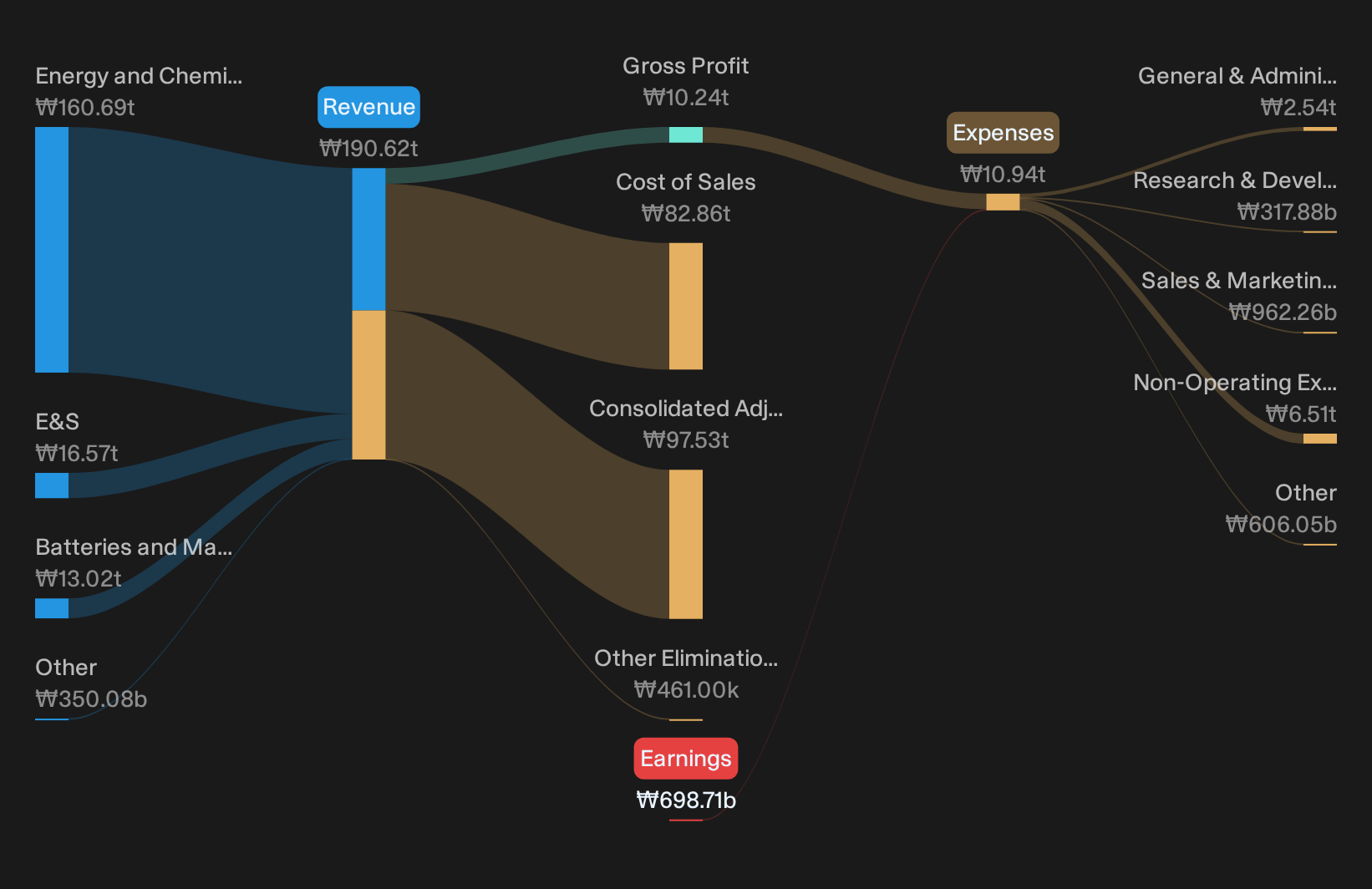
SK Innovation generates most of its revenue from Energy and Chemicals at about ₩160,687,350 million, with E&S at roughly ₩16,567,367 million and Batteries and Materials contributing around ₩13,018,986 million, while its market cap is approximately ₩16,018.7b.
"SK Innovation is shifting underutilised EV battery capacity into energy storage systems using the same form factor, which relies on limited capex to support future ESS revenue growth and can improve returns on existing assets."
How margins are affected if an unseen pressure on fuel and petrochemical spreads moves in SK Innovation’s favour or against it will be crucial.
If that pressure on spreads is what you are watching, read the full narrative for SK Innovation to see how battery shifts, ESS demand and fuel cycles might be decoupling.
CVR Energy (CVI)
CVR Energy gives this screener a textbook example of a pure-play U.S. refiner, with earnings closely tied to the spread between crude feedstock costs and selling prices for fuels and fertilizer. This relationship is the focus of the analyst consensus Narrative on Simply Wall St.
"Escalating RFS compliance costs, including recent net RIN expense levels of $143 million in one quarter and $216 million in the next, are set to remain a large structural burden that can continue to compress net margins and free cash flow even if headline crack spreads stay supportive."
For investors watching CVR Energy, much now hinges on how this less visible cost pressure interacts with changing crude and product pricing.
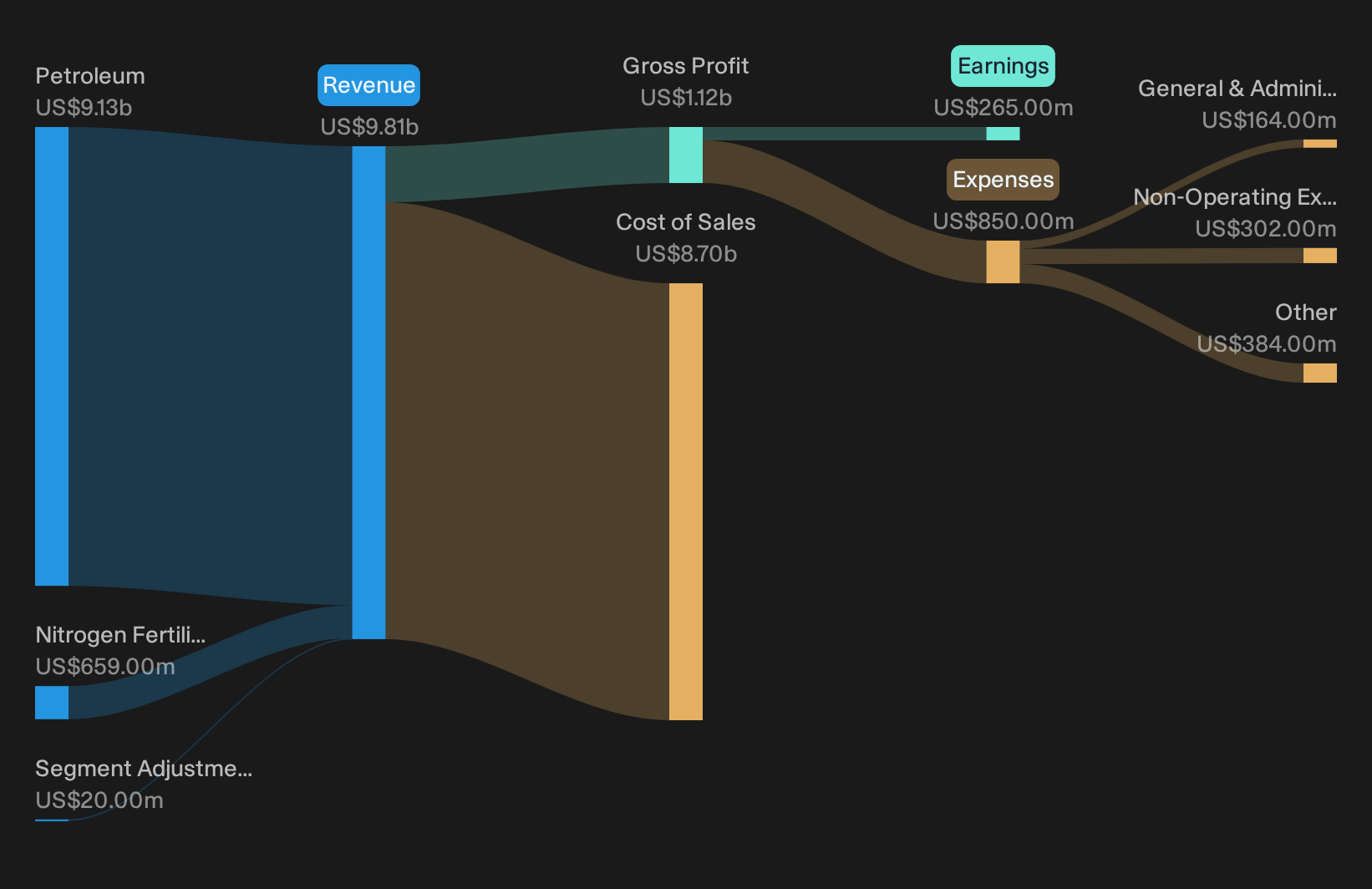
CVR Energy runs two U.S. refineries and a linked fertilizer arm, aligning it closely with the Independent Oil Refiners and Downstream Fuel Producers theme. It reports about $9.1b of revenue from Petroleum and $659 million from Nitrogen Fertilizer, with a market value near $3.6b.
That hidden squeeze on CVR Energy margins is only part of the story, and the full narrative for CVR Energy explains how those pressures could be masking fresher upside catalysts.
EQT (EQT)
EQT ties this refiner focused theme back to the gas that feeds power plants, petrochemical facilities and some fuel supply chains. This is why the bullish analyst Narrative on Simply Wall St leans so heavily on how its integrated gas and midstream footprint converts molecules into cash flow.
EQT is a large Appalachian natural gas producer and midstream operator, supplying fuel and feedstock to U.S. utilities and industrial buyers through upstream operations that generated about US$8.7b, plus Gathering and Transmission at roughly US$1.3b and US$600 million respectively, supporting a US$30.6b market value.
"The acquisition of Blackline Midstream, which adds 46 million gallons of New England propane storage underwritten at a 20% free cash flow yield with room for that yield to roughly double without major new spending, opens a path for EQT to turn underutilized propane volumes and storage into an incremental, high margin cash flow stream that is only loosely tied to Henry Hub pricing."
What really matters for EQT is how one unseen pressure on future demand for its molecules reshapes the durability of those cash flows.
That unseen demand swing is exactly what the full narrative for EQT unpacks, showing how EQT’s gas and propane engine could accelerate or stall under different pricing and policy paths.

Curious About What You Might Be Missing Next?
Fresh breakout stories often move quietly at first, then fly once the crowd catches on. Screen for momentum while it matters and act now.
- Spot under-the-radar income plays before yields get compressed by demand using the curated 240 dividend fortresses. This could help anchor a more resilient portfolio.
- Track the next wave of infrastructure momentum by scanning the focused 41 power grid technology and infrastructure stocks. This highlights businesses tied to long term grid upgrades and electrification.
- Target higher quality value ideas early through the curated 236 high quality undervalued stocks. This filters for stronger balance sheets and cash generation before prices move away.
Have feedback on this article? Concerned about the content? Get in touch with us directly. Alternatively, email editorial-team@simplywallst.com