
LIKE, Inc. (TSE:2462) Pays A JP¥30.00 Dividend In Just Three Days
LIKE, Inc. (TSE:2462) is about to trade ex-dividend in the next 3 days. Typically, the ex-dividend date is two business days before the record date, which is the date on which a company determines the shareholders eligible to receive a dividend. The ex-dividend date is important because any transaction on a stock needs to have been settled before the record date in order to be eligible for a dividend. Therefore, if you purchase LIKE's shares on or after the 27th of November, you won't be eligible to receive the dividend, when it is paid on the 10th of February.
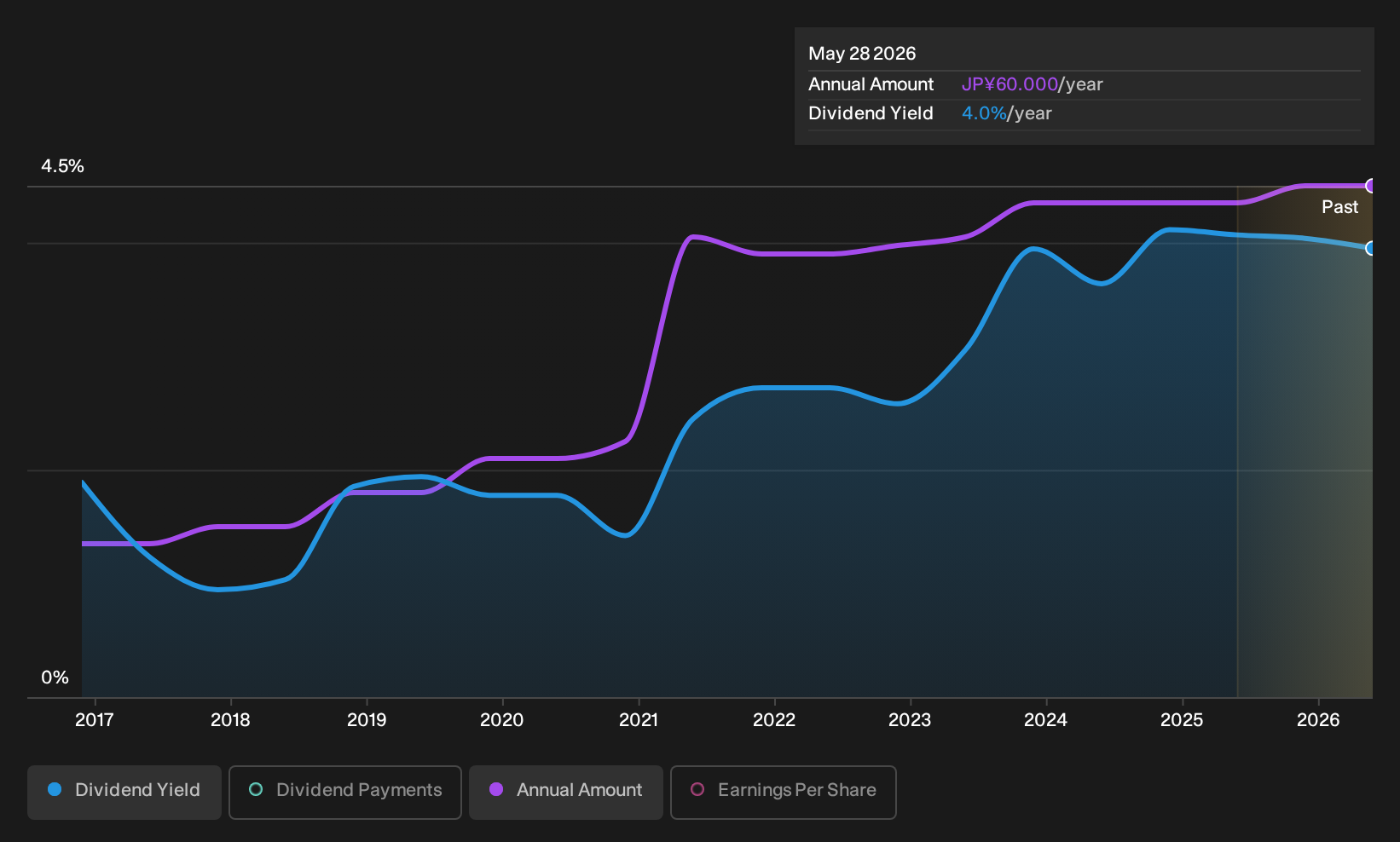
The company's upcoming dividend is JP¥30.00 a share, following on from the last 12 months, when the company distributed a total of JP¥60.00 per share to shareholders. Calculating the last year's worth of payments shows that LIKE has a trailing yield of 4.2% on the current share price of JP¥1428.00. Dividends are a major contributor to investment returns for long term holders, but only if the dividend continues to be paid. So we need to investigate whether LIKE can afford its dividend, and if the dividend could grow.
Dividends are typically paid from company earnings. If a company pays more in dividends than it earned in profit, then the dividend could be unsustainable. LIKE paid out 53% of its earnings to investors last year, a normal payout level for most businesses. Yet cash flow is typically more important than profit for assessing dividend sustainability, so we should always check if the company generated enough cash to afford its dividend. It distributed 38% of its free cash flow as dividends, a comfortable payout level for most companies.
It's positive to see that LIKE's dividend is covered by both profits and cash flow, since this is generally a sign that the dividend is sustainable, and a lower payout ratio usually suggests a greater margin of safety before the dividend gets cut.
Check out our latest analysis for LIKE
Click here to see how much of its profit LIKE paid out over the last 12 months.
Have Earnings And Dividends Been Growing?
Businesses with shrinking earnings are tricky from a dividend perspective. If earnings decline and the company is forced to cut its dividend, investors could watch the value of their investment go up in smoke. Readers will understand then, why we're concerned to see LIKE's earnings per share have dropped 7.8% a year over the past five years. When earnings per share fall, the maximum amount of dividends that can be paid also falls.
The main way most investors will assess a company's dividend prospects is by checking the historical rate of dividend growth. LIKE has delivered an average of 12% per year annual increase in its dividend, based on the past 10 years of dividend payments. That's interesting, but the combination of a growing dividend despite declining earnings can typically only be achieved by paying out more of the company's profits. This can be valuable for shareholders, but it can't go on forever.
The Bottom Line
Is LIKE worth buying for its dividend? The payout ratios are within a reasonable range, implying the dividend may be sustainable. Declining earnings are a serious concern, however, and could pose a threat to the dividend in future. Overall, it's hard to get excited about LIKE from a dividend perspective.
However if you're still interested in LIKE as a potential investment, you should definitely consider some of the risks involved with LIKE. Every company has risks, and we've spotted 1 warning sign for LIKE you should know about.
Generally, we wouldn't recommend just buying the first dividend stock you see. Here's a curated list of interesting stocks that are strong dividend payers.
Have feedback on this article? Concerned about the content? Get in touch with us directly. Alternatively, email editorial-team (at) simplywallst.com.