
Consumer discretionary - specialized consumer services stocks Q3 teardown: WeightWatchers vs the rest

Quarterly earnings results are a good time to check in on a company’s progress, especially compared to its peers in the same sector. Today we are looking at WeightWatchers NASDAQ:WW and the best and worst performers in the consumer discretionary - specialized consumer services industry.
The Consumer Discretionary sector, by definition, is made up of companies selling non-essential goods and services. When economic conditions deteriorate or tastes shift, consumers can easily cut back or eliminate these purchases. For long-term investors with five-year holding periods, this creates a structural challenge: the sector is inherently hit-driven, with low switching costs and fickle customers. As a result, only a handful of companies can reliably grow demand and compound earnings over long periods, which is why our bar is high and High Quality ratings are rare. Some consumer discretionary companies don’t fall neatly into a category because their products or services are unique. Although their offerings may be niche, these companies have often found more efficient or technology-enabled ways of doing or selling something that has existed for a while. Technology can be a double-edged sword, though, as it may lower the barriers to entry for new competitors and allow them to serve customers better.
The 11 consumer discretionary - specialized consumer services stocks we track reported a softer Q3. As a group, revenues missed analysts’ consensus estimates by 0.7% while next quarter’s revenue guidance was 0.8% above.
Amidst this news, share prices of the companies have had a rough stretch. On average, they are down 5.5% since the latest earnings results.
WeightWatchers NASDAQ:WW
Known by many for its old cable television commercials, WeightWatchers (NASDAQ:WW) is a wellness company offering a range of products and services promoting weight loss and healthy habits.
WeightWatchers reported revenues of $152.9 million, down 11.2% year on year. This print was in line with analysts’ expectations, and overall, it was a solid quarter for the company with a beat of analysts’ EPS estimates and a solid beat of analysts’ EBITDA estimates.
“Since joining Weight Watchers on October 1, I made it my priority to listen to our members, coaches, clinicians, registered dietitians, and colleagues. Through these conversations, two core truths emerged: weight loss is personal, and the support people need changes along the way,” said Stephen Bye, President and Chief Executive Officer. “Our strength lies in the commitment of our team and our ability to bring together science-backed behavioral programs, clinical care, and the human connection that has defined this brand for more than 60 years. My focus is on strengthening our member experience, improving our products and applications, and building on the work already underway.”
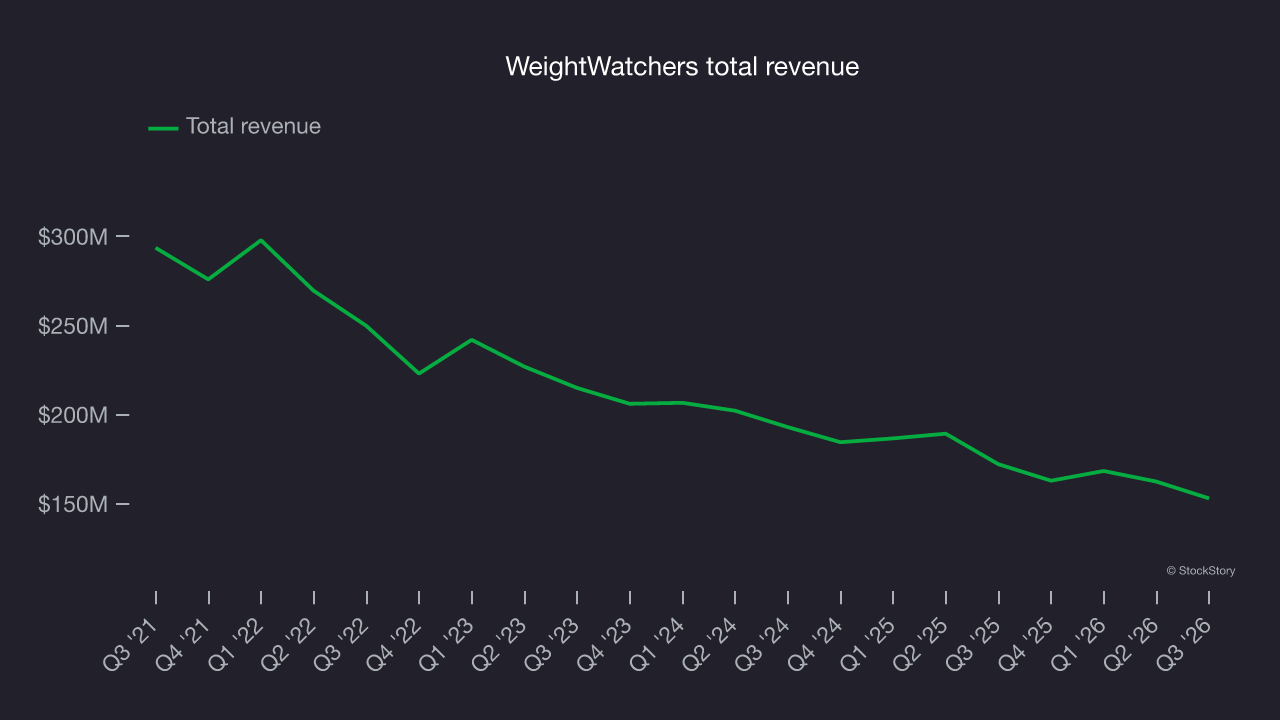
Investor expectations, however, were likely higher than Wall Street’s published projections, leaving some wishing for even better results (analysts’ consensus estimates are those published by big banks and advisory firms, not the investors who make buy and sell decisions). The stock is down 34.6% since reporting and currently trades at $7.93.
Is now the time to buy WeightWatchers? Access our full analysis of the earnings results here, it’s free.
Best Q3: Matthews (NASDAQ:MATW)
Originally a death care company, Matthews International (NASDAQ:MATW) is a diversified company offering ceremonial services, brand solutions and industrial technologies.
Matthews reported revenues of $256.7 million, down 19.5% year on year, outperforming analysts’ expectations by 1.6%. The business had a favorable quarter with a beat of analysts’ EPS estimates and a decent beat of analysts’ EBITDA estimates.
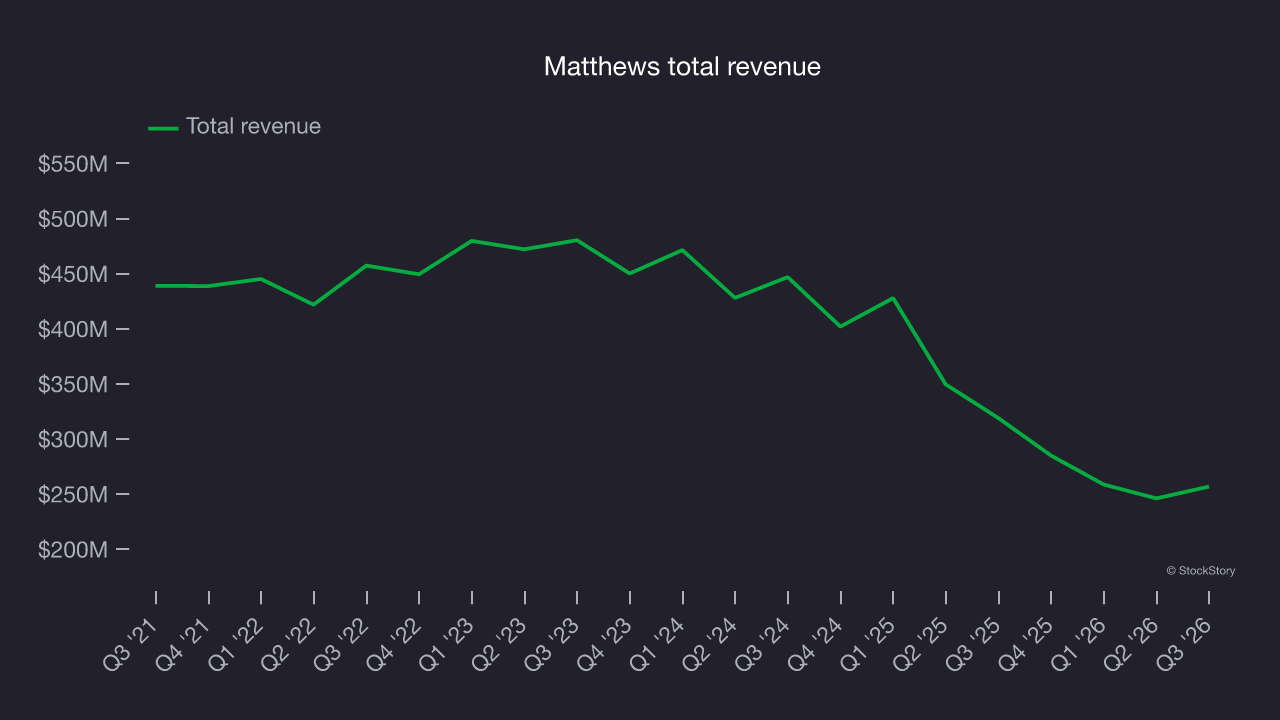
Although it had a fine quarter compared to its peers, the market seems unhappy with the results as the stock is down 1.7% since reporting. It currently trades at $19.05.
Is now the time to buy Matthews? Access our full analysis of the earnings results here, it’s free.
Weakest Q3: Carriage Services (NYSE:CSV)
Established in 1991, Carriage Services (NYSE:CSV) is a provider of funeral and cemetery services in the United States.
Carriage Services reported revenues of $100.3 million, down 2.4% year on year, falling short of analysts’ expectations by 8.4%. It was an underwhelming quarter as it posted full-year revenue guidance missing analysts’ expectations significantly and a significant miss of analysts’ EPS estimates.
Carriage Services delivered the weakest full-year guidance update of the whole group. As expected, the stock is down 17.5% since the results and currently trades at $29.68.
Read our full analysis of Carriage Services’s results here.
Frontdoor (NASDAQ:FTDR)
Established in 2018 as a spin-off from ServiceMaster Global Holdings, Frontdoor (NASDAQ:FTDR) is a provider of home warranty and service plans.
Frontdoor reported revenues of $655 million, up 6% year on year. This number beat analysts’ expectations by 1.1%. Overall, it was a solid quarter as it also recorded EBITDA guidance for next quarter exceeding analysts’ expectations and revenue guidance for next quarter slightly topping analysts’ expectations.
Frontdoor delivered the highest full-year guidance raise among its peers. The stock is down 3.2% since reporting and currently trades at $89.85.
Read our full, actionable report on Frontdoor here, it’s free.
LKQ (NASDAQ:LKQ)
A global distributor of vehicle parts and accessories, LKQ (NASDAQ:LKQ) offers its customers a comprehensive selection of high-quality, affordably priced automobile products.
LKQ reported revenues of $3.32 billion, down 5.1% year on year. This print lagged analysts’ expectations by 1.6%. It was a sluggish quarter as it also logged a significant miss of analysts’ EPS estimates and a slight miss of analysts’ organic revenue estimates.
The stock is up 9.8% since reporting and currently trades at $18.88.
Read our full, actionable report on LKQ here, it’s free.
Market update
Over the past year, investors have been forced to repeatedly answer the same question: What is the market’s biggest risk? The answer has changed several times, and each shift has reshaped market leadership.
Late in 2025 and early 2026, artificial intelligence became the market’s primary uncertainty. Investors questioned whether AI would erode software pricing power and weaken competitive moats as AI made it easier to replicate once-differentiated products.
By the spring, technology took a back seat to geopolitics. The U.S. conflict with Iran briefly became the market’s dominant narrative, raising concerns about oil prices, inflation, and global growth. But as energy markets remained orderly and fears of a prolonged supply disruption faded, investors quickly turned their focus back to fundamentals.
Want to invest in winners with rock-solid fundamentals? Check out our 9 Best Market-Beating Stocks and add them to your watchlist. These companies are poised for growth regardless of the political or macroeconomic climate.