
S&P is only one close away from risk control and position reduction! As global technology stocks plummeted, Citi shouted “it's not time to bottom out yet”
The Zhitong Finance App learned that the latest global macroeconomic strategy outlook released by Wall Street financial giant Citigroup shows that the agency's top strategy team, led by Dirk Willer, maintains a prudent investment position, stressing that the key risks of AI transactions have extended from how many chips Nvidia can sell during the season to whether computing power operators can continue to finance, turning the next batch of GPU orders into operation and rental income. The Citigroup Strategy Team previously lowered the risk of US stocks in early October. The November 20 outlook revealed that it would clear the European stock index bulls, increase the downward exposure to Australian dollar interest rates, and buy Brent crude oil. This latest set of three-way deals express a judgment: the tightening of AI financing may drag down global investment prospects, while a rebound in oil prices may also delay central bank easing. Both risks can exist at the same time.
Citigroup strategists said that the ability of critical operators related to AI computing power to continue financing is related to the next round of expansion and the rebound trend in technology stocks, and the performance of those oversized stocks in the S&P 500 index is approaching the threshold for reducing their positions. As of the close of trading on November 19, EST, Anthropic rose 17.07% from the issue price on the first day of listing, but the S&P 500 closed lower for the sixth consecutive trading day. The Philadelphia Semiconductor Index retreated 35.63% from the June closing high.
Therefore, at a time when global technology stocks, especially the AI computing power theme and semiconductor sector, are facing a sharp sell-off, the Citigroup strategist team first reduced the sensitivity of the stock portfolio to the decline in the global stock market MSCI market index, laid out declining interest rates in Australia, Canada, and Europe, and then used Brent crude oil bulls to hedge against a rebound in energy inflation. This combination targets two risks that may occur simultaneously: tightening AI financing is dragging down investment and growth, while supply disruptions in the Middle East push up oil prices and limit the central bank's room for easing.
On the stock side, Citi reduced its risk exposure to US stocks at the beginning of October, then eliminated European STOCK 50 futures bulls in the November 20 outlook. The Citigroup Strategy Team said that the original purchase of European stocks was to reduce dependence on US AI leaders and at the same time benefit from falling oil prices; in the actual market, European stocks followed the decline in US stocks, and low oil prices failed to provide sufficient support.
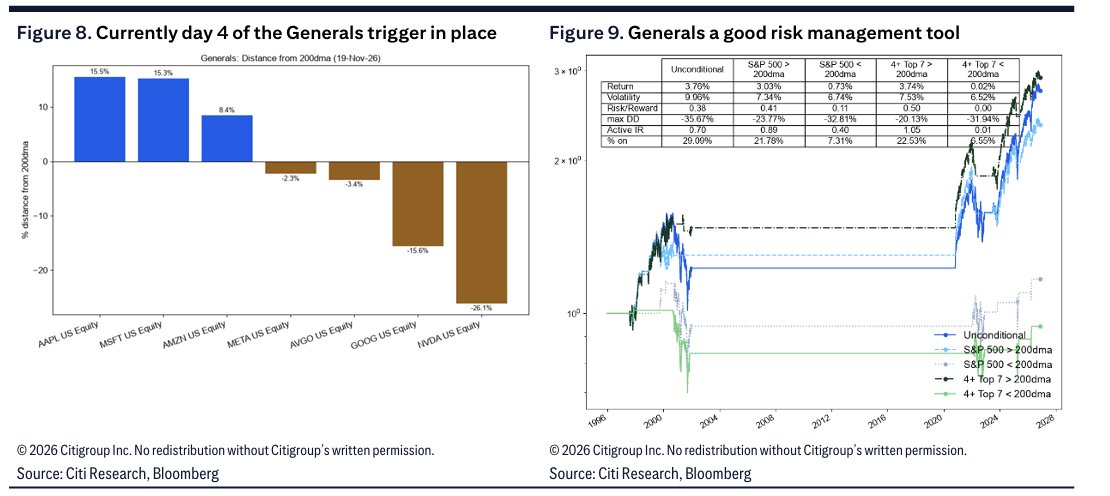
As to whether US stock positions need to be further reduced, Citi is looking at whether the leading stocks can maintain the long-term trend. As of November 19, among the top seven S&P market capitalization stocks, Nvidia, Alphabet, Broadcom, and Meta have closed below their respective 200-day EMAs for the fourth day in a row. If the conditions are met at the close of Friday, the risk control threshold will only be met for five consecutive days. The combination is still retaining bullish options on the Nasdaq 100 Index to participate in a possible rebound.
On the interest rate side, Citi prioritizes working outside of the US for how long. The historical sample of copper prices falling more than 10% in ten trading days is more consistent with the subsequent decline in yield than the continued decline in the stock market; however, the Federal Reserve is still hawkish, and buying US bonds too early may first endure the last round of interest rate hikes and heavy pricing. As a result, Citi uses a fixed interest rate of 4.813% for a five-year Australian dollar swap starting half a year, maintaining a fixed Canadian two-year closing position and retaining a long position on Euro-rate futures. Meanwhile, the team bought Brent crude oil futures for March 2027 at $87.92 per barrel: if growth slows down and dominates the market, lower interest rate positions are expected to benefit; if the escalation in Iran pushes up oil prices and interest rates, the crude oil bulls can offset some of the losses.
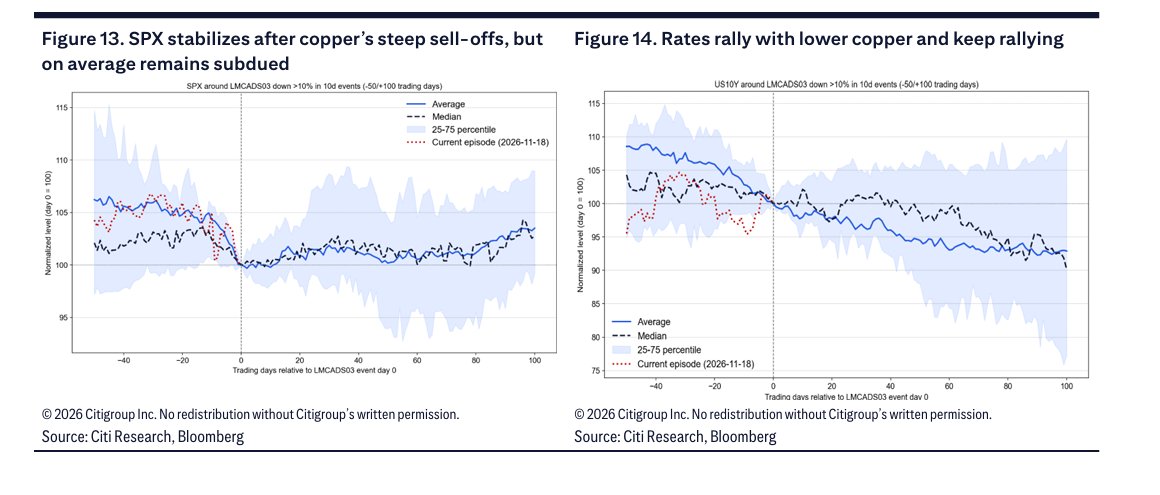
According to Citi, when copper prices fell more than 10% in ten trading days, it gave a clearer interest rate signal than the stock index: historically, S&P has often traded sideways since then, but the decline in treasury bond yields has been more consistent. If the deceleration in data center investment is compounded by the negative wealth effect of the decline in the stock market on consumption, growth pressure will become even more apparent. Considering that the Federal Reserve is still an eagle, Citi prioritizes the decline in yield by charging fixed interest rates in Australian dollars and Canadian dollar swaps and retaining the long-term layout of euro interest rate futures, while also eliminating European stock index bulls that have failed to benefit from low oil prices.
Oil prices have fallen about 17% from their local high before the US midterm elections, and Iran's supply risk is still there. Therefore, Citi bought March 2027 Brent futures at $87.92 per barrel to hedge against possible losses to these interest rate positions when oil prices rebound and inflation expectations rise.
Anthropic rose 17% on the first day, and chip stocks continued to fall! Citi has its eye on the financing woes behind AI orders
As of the close of trading on November 19, EST, Anthropic was issued at $83, opened at $111.50, and finally closed at $97.17. The allotted investors had a profit of 17.07% on the first day, while investors who bought and held until the close lost 12.85%. On the same day, the Dow fell 2.19%, the S&P 500 fell 2.02%, closing low for six consecutive days, the NASDAQ fell 2.25%, and the Philadelphia Semiconductor Index retreated 35.63% from its historical closing high in June. The Asian market closed the next day. In recent years, the core Asian stock index, which can be described as taking advantage of AI computing power infrastructure dividends, continued to plummet. Among them, Nikkei 225 fell 5.1%, South Korea's KOSPI index fell 5.2%, and the Taiwan Weighted Index fell 6.23% and 17.5% throughout the week.
Citi lowered its risk exposure to US stocks at the beginning of October. On November 20, it also revealed that it had eliminated European stock index longings, increased the Australian dollar's interest rate downside exposure, and bought Brent crude oil. This set of three-way deals expressed a judgment: the tightening of AI financing may drag down global growth, while a rebound in oil prices may also delay central bank easing. Both risks can exist at the same time.
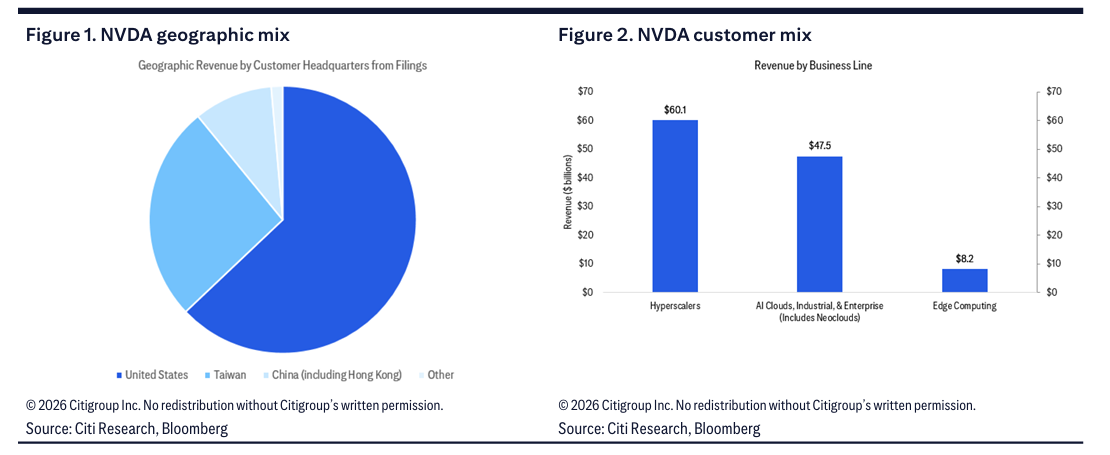
Nvidia's revenue has doubled, and the market is more concerned about whether the next batch of customers can raise money. Nvidia's latest quarter revenue increased 103% year over year to US$115.8 billion, but Citi indicated that its maximum or secured exposure had increased from US$108 billion in the previous quarter to US$118 billion, of which US$105 billion involved approximately 4.25 gigawatt projects in Ohio.
Meanwhile, computing power procurement commitments to new cloud vendors fell from 36 billion to 32 billion US dollars, plus 20 billion US dollars of future equity investment promises and 74 billion US dollars of unleased data center leases. What really affects chip orders is the order of entry into force of the contract: New Cloud vendors must first obtain financing, complete deployment, and pass inspection before Nvidia's computing power purchase commitment takes effect. CoreWeave's first-tier bonds had a yield of 9.625% when issued in June, and the yield in the secondary market was close to 15% in mid-November. If new projects also have to bear higher financing costs, even if demand for terminal inference continues to grow, financing, electricity, and GPU procurement for some computer rooms may be delayed.
Asia's top AI computing power infrastructure supply chain is also facing valuation pressure from the US's stricter restrictions on leasing cloud AI computing power against China. According to Nvidia's customer headquarters statistics, mainland China and Hong Kong account for about 10% of revenue; in the past, Singapore's revenue was included by billing address, but now a large portion is included in the US. The headquarters, computer room location, and final computing power users are divided into three locations, so it is difficult to directly measure the demand risk caused by remote access restrictions in Asia's revenue share.
The Citigroup strategist team warned that the concentration on the financing side is also worth paying attention to: according to PitchBook, Nvidia has participated in the full round of financing since 2026, accounting for 27.2% of global venture capital transactions, compared to only 7.1% last year. If new management tightens incremental support, the impact could also spread to model companies, new cloud vendors, and Asian hardware vendors.
The trend of weighted stocks determines when to further reduce exposure to US stocks. The fall in copper prices by more than 10% on the 10th indicates a decline in US bond yields
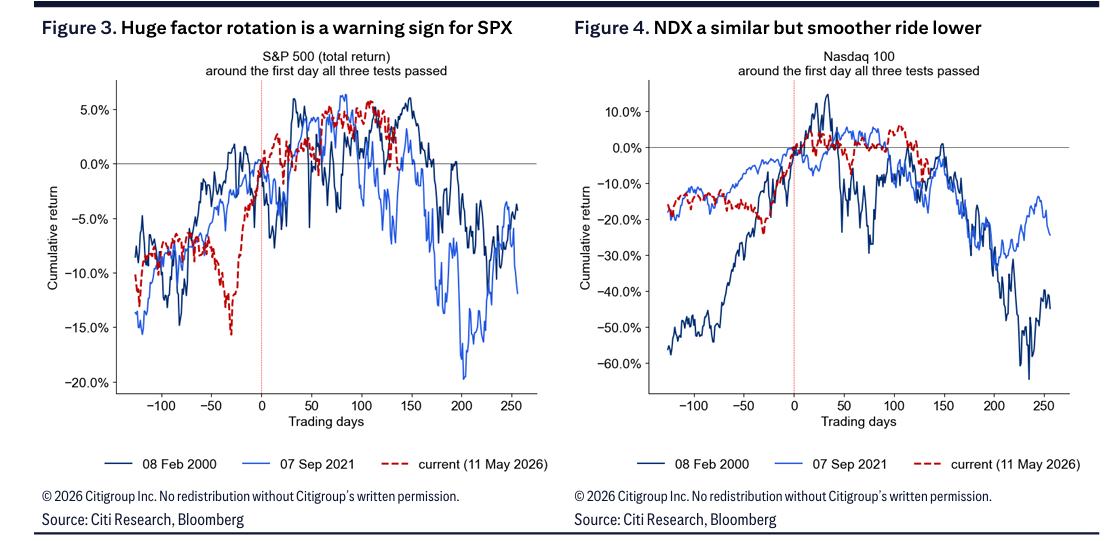
Within the stock market, the closest change in 2000 and 2021 is the reversal of the leading trend. Citi compared factor earnings and correlations over the past six months: relative growth in quality, value, price momentum, and profit momentum. At the same time, the trends of quality stocks and growth stocks diverged and converged with value stocks. Selected according to the intensity set, only February 2000, September 2021, and May 2026 are eligible.
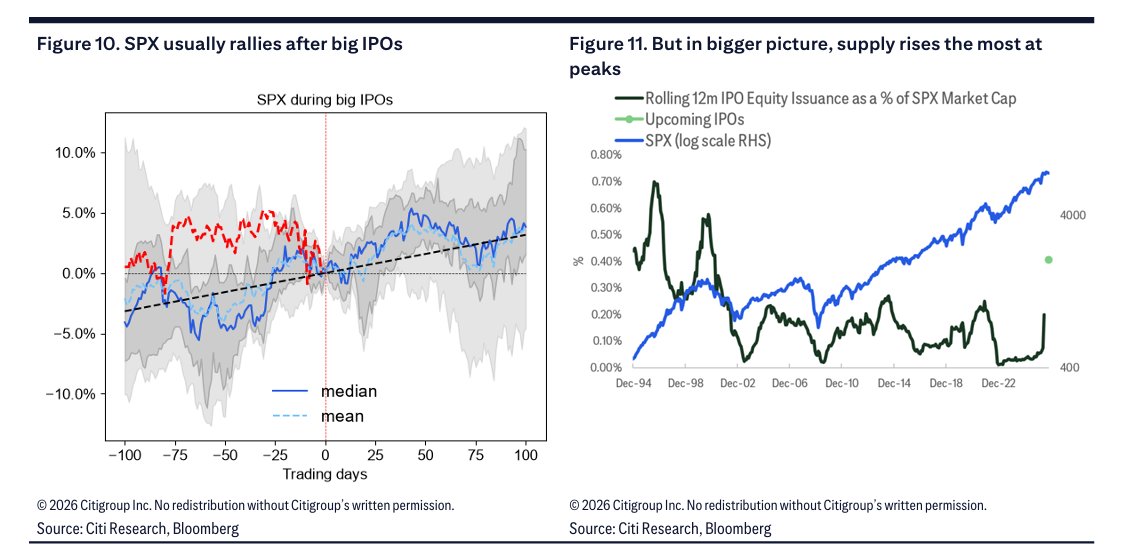
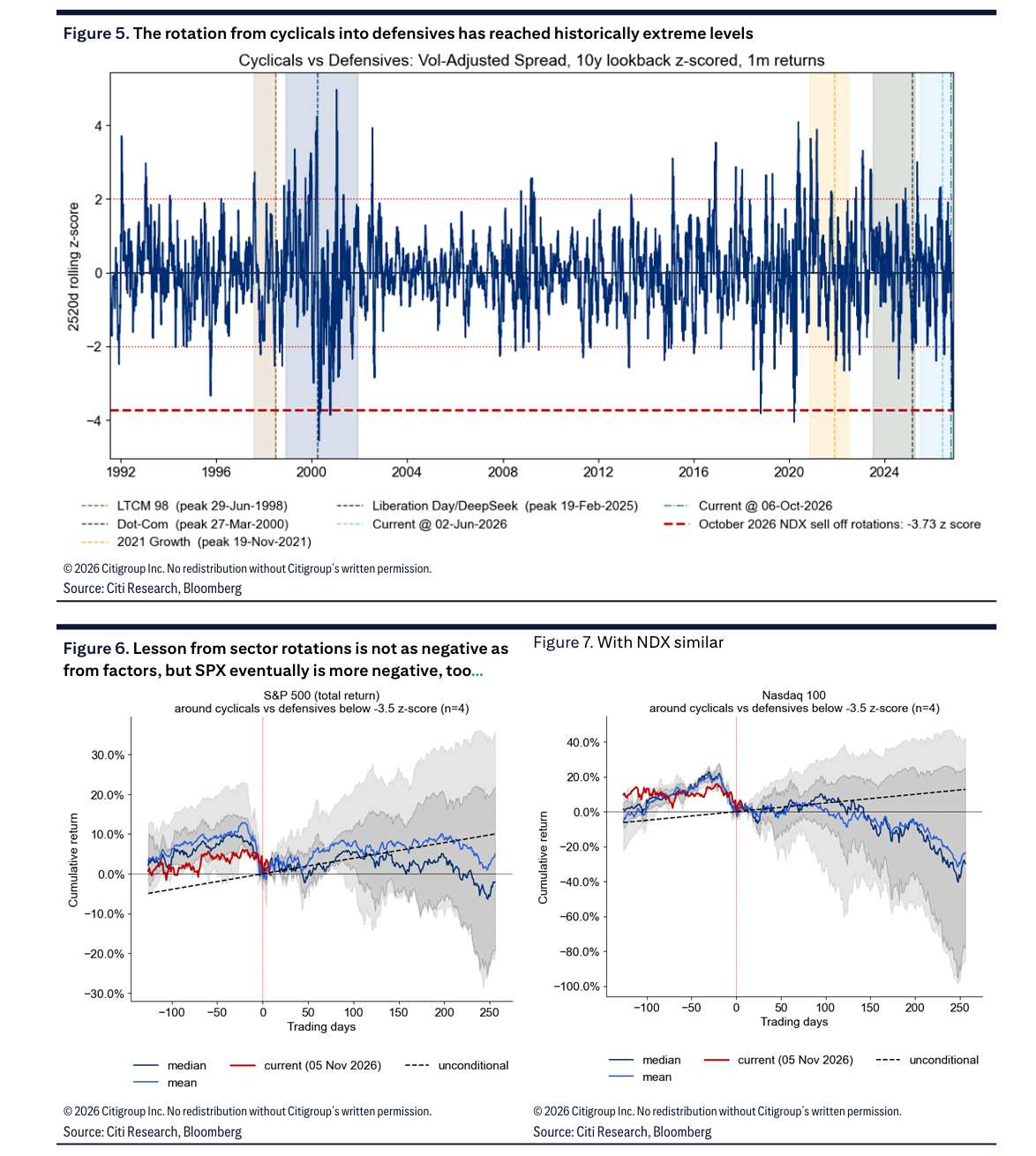
Citi's strategic outlook report shows that on November 5, the rotation of cyclical stocks to defensive stocks also reached an extreme level in history, but this signal is less indicative of the direction of the stock index. Large-scale IPOs also need time scales: before 2026, there were only seven cases where capital was raised more than 0.1% of the total market value of US stocks, and S&P often rebounded after listing; throughout the cycle, the share of IPO financing in market capitalization rose rapidly, and also appeared at the top of the market around 2000.
Based on this, Citi has set enforceable position reduction conditions. On October 9, its short-term indicator POLLS sent a signal to reduce the risk of US stocks; as of November 19, Meta, Broadcom, Alphabet, and Nvidia were below their respective 200-day EMAs of about 2.3%, 3.4%, 15.6%, and 26.1%, respectively. It was the fourth day in a row.
If at least four of the top seven S&P market capitalization stocks are still below the 200-day line at the close of trading on November 20, the conditions for five consecutive days will be met, and action will be taken on November 23 in accordance with the rules. In the bubble phase defined by Citi, when at least four weighted stocks were above the moving average, the historical backtest information ratio was about 1.05; when at least four fell offline, it dropped to about zero. The value of this rule is to reduce the exposure of combinations to deep declines; it is difficult to accurately position the top of the index on its own.
The “five-day confirmation threshold” is a reduction rule set by Citi for US stock portfolios. When Citi's own model indicates that there is a risk of a bubble in the market, the strategy team will observe the seven constituent stocks with the largest market capitalization of the S&P 500. If for five consecutive trading days, at least four stocks fall below their respective 200-day EMA every day at the close, Citi will confirm that most leading stocks have continued to be weak enough to trigger risk control.
As of November 19, this state of affairs has continued for four trading days. If at least four are still below the moving average when trading closes on Friday, November 20, and confirmation is completed at the close of the fifth day, Citi's model will give a signal to reduce risk exposure to US stocks from Monday, November 23. If there are only three left below the moving average at the close of Friday, the consecutive count will be interrupted. For investors, the trigger signal means that the portfolio should be less sensitive to the continued decline in US stocks. The purpose of Citi's use is to control a potential sharp retracement when leading stocks collectively weaken; as to whether the S&P 500 has peaked, this rule itself cannot determine.
The signal for LME copper prices, which continues to plummet, to the bond market is more clear than the signal to the stock market. Citigroup downgraded its basic metals position from overallocated to neutral on October 29. At that time, some global economic indicators were still strong, but the unexpected economic indicators of the nine major economies had turned negative, the US dollar strengthened, and the revised profit forecast indicators also fell below the four-week EMA. The ten manufacturing cycles since the 90s of the last century show that the peak of copper prices usually lags behind the peak of the US ISM manufacturing index by about 50 trading days. The recent decline is probably in line with ISM peaking in July.
Citi's review of 10 historical events shows that copper prices usually peak later than the US ISM manufacturing index, with a median lag of about 50 trading days. The recent weakening of copper prices provides circumstantial evidence that the US manufacturing boom may have peaked in July. This judgment still needs to be confirmed by subsequent ISM data.
Furthermore, the Citigroup research report shows that there is another historical sample where copper prices fell by more than 10% in 32 trading days: copper prices often stabilized afterwards, the median performance of the S&P 500 fluctuated sideways, but the decline in treasury bond yields was more consistent. In Citigroup Strategy Team Kelly, the specific economic meaning behind this is that once investment in data centers slows down, both GPU orders, power supply and distribution, and computer room construction needs are affected; if the stock market falls and further weakens consumer consumption, the industrial chain adjustment may only evolve into a global macro-growth shock, which in turn causes the global financial market to plummet in a panic.
Why did the Citigroup Strategy Team buy oil for $87.92 after collecting the Australian gala rate and equalizing European stocks?
Citi estimates that the market value of the US stock market is already equivalent to about 240% of GDP, and deep adjustments may simultaneously weaken the effects of AI investment and household wealth. Its “Walsh shadow interest rate” model is still hawkish, but the credit score is already below the historical average, and the financial conditions segment is usually about a month ahead of the composite index.
Judging from historical data, when inflation is not abnormally high, the S&P 500 total return index retracts by about 20% from a one-year high, so it is easier to accompany interest rate cuts; the market can withdraw interest rate hike bets earlier.
On November 20, the yield on 10-year US Treasury bonds fell below 5%, but Waller, who has permanent voting rights on the Federal Reserve's FOMC monetary policy during his term, proposed the option of raising interest rates by 50 basis points in December. Citi is particularly concerned about the lessons of 2000: after the Nasdaq index peaked, the Federal Reserve still raised interest rates once, and even 10-year US Treasury yields rose markedly. As a result, Citi prioritized the market layout closer to the end of the austerity cycle.
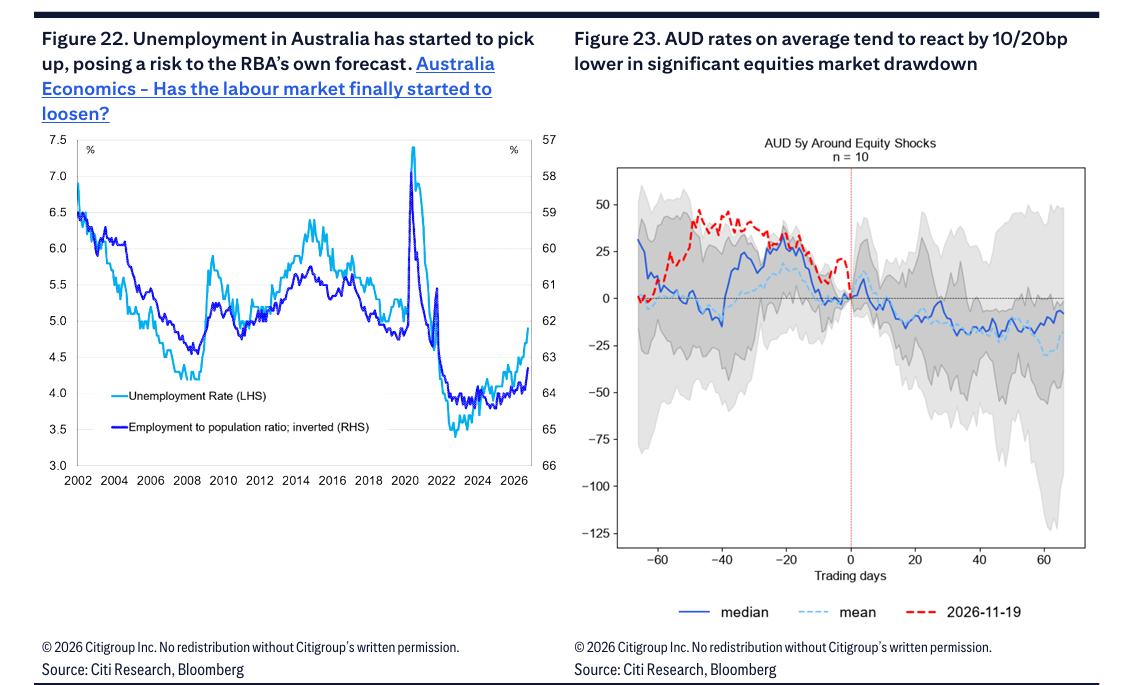
Citi emphasized that the lesson of 2000 is that even if technology stocks have peaked, as long as the Federal Reserve continues to raise interest rates, US bond yields may still rise. In contrast, Citi believes that the Australian job market is weakening, Canada's core inflation is close to the central bank's target, and there is more limited room for the two countries to continue to raise interest rates, so it chose to charge a fixed interest rate and pay a floating interest rate in the Australian dollar and Canadian dollar interest rate exchange. As long as the market lowers expectations for future interest rate hikes, the swap interest rate for the relevant period may fall first, making the fixed interest rate that has already been locked down more valuable.
Since the Federal Reserve is likely to continue to raise interest rates after technology stocks fall, and the time period for buying technology stocks and dips at the stock market level has yet to arrive, Citi prioritizes Australia and Canada, where there is more limited room for interest rate hikes, and arranges for market interest rates to fall back through interest rate swaps.
Australia: Use medium-term interest rates to express slower growth. The unemployment rate rose from 4.7% to 4.9% in October, and the labor participation rate fell to 66.6%. Citi charges a 5-year Australian dollar swap fixed interest rate of 4.813% starting six months later. The target is about 4.35%, and the observation level is about 5.06%. Historically, when S&P retraced 20%, the median interest rate for the Australian dollar fell by about 10 to 20 basis points. This deal only requires the market to lower the future interest rate path and is expected to benefit; there is no need for the Bank of Australia to cut interest rates immediately.
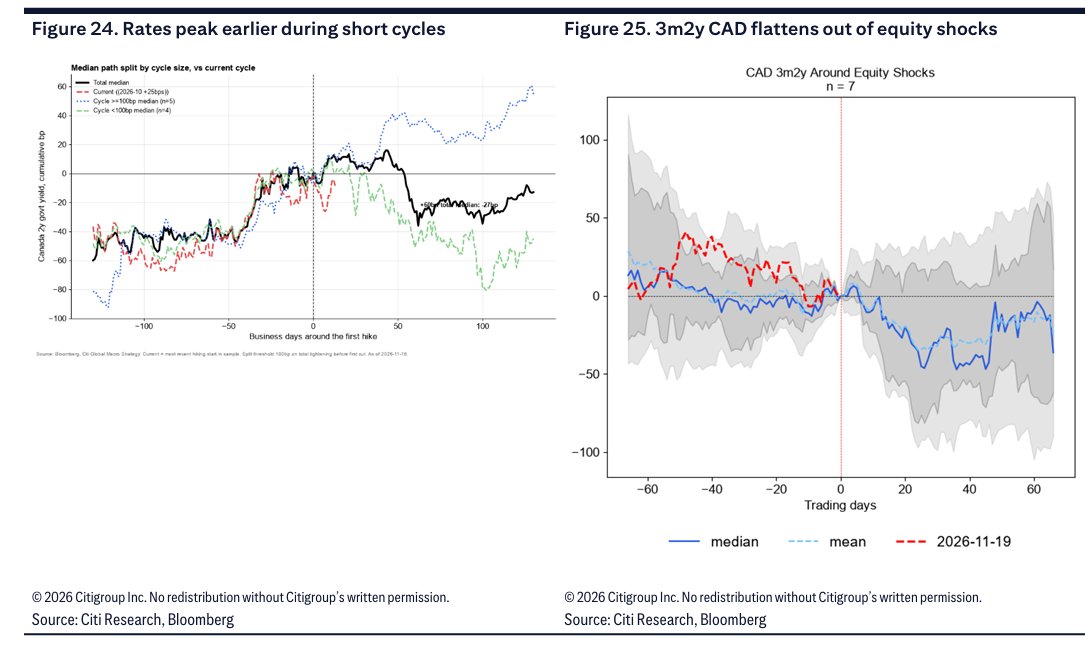
Canada and Europe: Retain exposure to falling interest rates and adjust hedging. Canada's two consecutive inflation figures are weak, and the output gap is still negative, yet at one point the market took into account a further contraction of about 100 basis points. Citi charges Canada's two-year fixed interest rate at 3.20%, and at the same time pays the fixed interest rate corresponding to the January meeting of the following year at 2.78%. The latter's interest rate sensitivity is about half that of the former to prevent the central bank from continuously raising interest rates. Europe, on the other hand, retained long positions on EURO interbank interest rate futures in December 2027, and eliminated the matching US dollar SOFR futures shorts at 95.37.
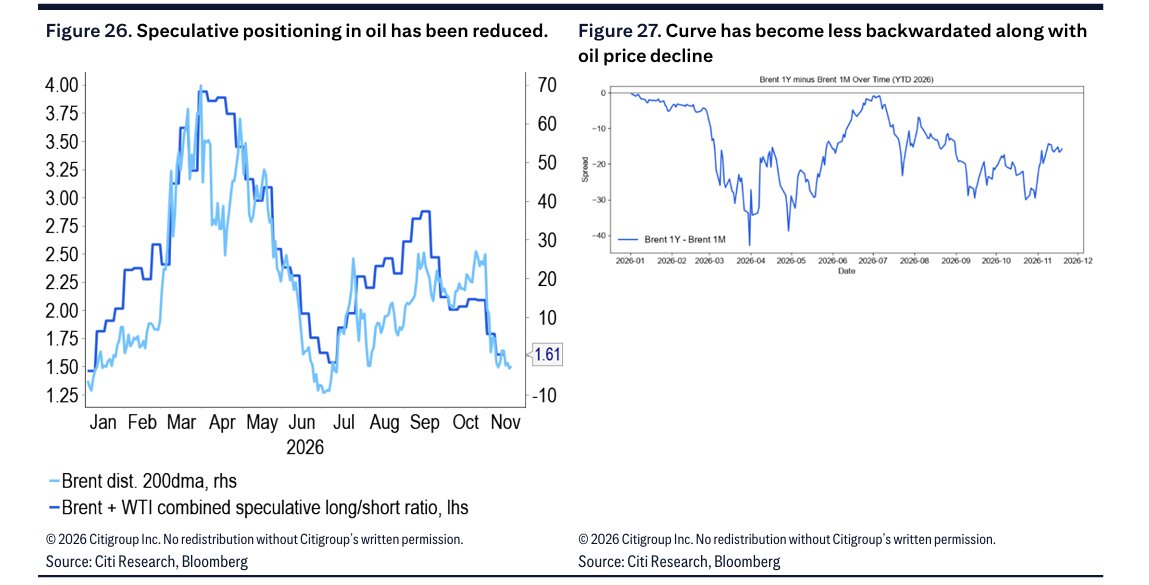
European stocks and crude oil: remove unsuccessful bulls and preserve protection against energy shocks. Citi originally wanted to use European stocks to participate in the year-end rebound, while reducing AI concentration and benefiting from falling oil prices. However, European stocks followed the decline in US stocks, and the support provided by low oil prices was limited. In the end, European Stoxx 50 futures bulls opened positions from 6,286 points and closed their positions at 6,063 points, with a loss of 390,000 US dollars. During the same period, oil prices have fallen by about 17% from local highs before the US midterm elections, speculative positions have been reduced, and premiums have narrowed in recent months compared to previous months, yet there is still a risk that the situation in Iran will escalate. Citi then bought March 2027 Brent futures at $87.92 per barrel, with a target of $115 and an observation level of $70. If supply shocks push up oil prices, inflation expectations, and interest rates, crude oil bulls can offset some interest rate position losses; if weakening growth dominates the market, interest rate positions in Australia, Canada, and Europe will benefit.
The stock transactions in the Citibank Strategy Team Schedule are also consistent with this judgment. The portfolio still holds 100 digital bullish options on the NASDAQ, retaining significant opportunities for technology stocks to rebound earnings in the market. At the same time, it also holds double conditional options with “falling European stocks and rising oil prices”, Japanese yen volatility and foreign exchange relative value transactions, and after hedging the exchange rate, it lengthens British and Spanish 10-year treasury bonds and shortens French treasury bonds for the same period.