
SMBC Nikko: Yield is showing signs of peaking+AI concerns are heating up, and Japanese bonds are expected to welcome a “major turning point”
The Zhitong Finance App learned that SMBC Nikko Securities said that with soaring bond yields showing signs of peaking, and market concerns about artificial intelligence (AI) are heating up, investors in Japan and abroad are increasing their holdings of Japanese treasury bonds. “We may be at a major turning point,” said Keita Matsumoto, head of the financial market economy department at SMBC Nikko Securities in an interview on November 11.
Keita Matsumoto pointed out that although inflation risks and monetary policy uncertainty are still increasing market fluctuations, investors are clearly adjusting their positions to prepare for a possible fall in yield — the market is betting that interest rates will continue to rise in the previous few months.
The price of Japanese treasury bonds has risen over the past month. Decades of high yields have attracted fund managers, while global stock market sell-offs triggered by AI concerns have boosted demand for safe-haven assets. As of November 6, overseas investors had net purchases of Japanese treasury bonds for the sixth consecutive week, setting the longest continuous net purchase record since March 2020.
Keita Matsumoto said that concerns about the sustainability of AI spending and the financing required have further intensified risk aversion and pushed investors to adjust positions between stocks and bonds.
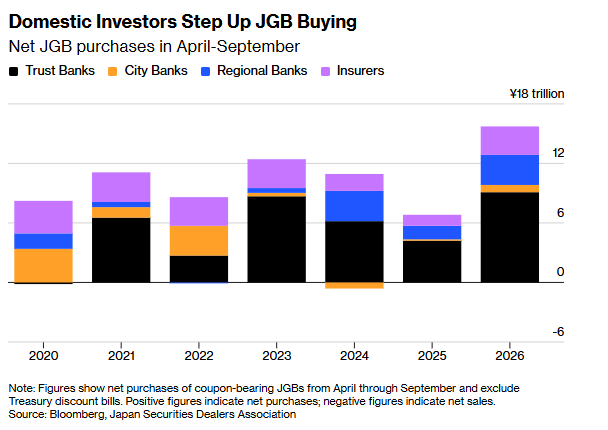
According to Keita Matsumoto, domestic banks in Japan, which are the main buyers of Japanese bonds, are gradually increasing the length of 5 to 10 year treasury bonds. This trend is consistent with data released last month: in the first half of the year, net purchases of Japanese treasury bonds by investors in Japan rose to the highest level in 17 years. Some analysts attribute this to pension fund portfolio rebalancing.
Japanese investors are increasing their efforts to buy Japanese bonds
Despite this, expectations of further interest rate hikes by the Bank of Japan and concerns about fiscal expansion still make some investors wary of increasing their holdings of Japanese bonds. The Bank of Japan's latest summary of opinions shows that many policy committee members believe that a recent rate hike is necessary; overnight index exchange (OIS) market pricing shows that the probability of interest rate hikes before December is over 80%.
Keita Matsumoto said that even so, position adjustments are still ongoing. In the field of ultra-long-term Japanese bonds, overseas investors are still key buyers providing stable demand. Participants are no longer limited to hedge funds, and long-term overseas asset management agencies have also begun to step in.
Looking ahead to the future market, Matsumoto Keita believes that if the interest rate spread between the US and Japan narrows to strengthen the yen, it may reduce the pressure on the Bank of Japan to raise interest rates rapidly due to the weakening yen, thereby helping to stabilize long-term yields, and may further encourage capital inflows into Japanese bonds.