
It's not a sharp drop, it's “chronic blood loss”: Bitcoin continues to weaken beliefs, and the low of 58,000 US dollars during the year once again became anxious
The Zhitong Finance App learned that the latest wave of Bitcoin sell-offs is testing the patience of the most determined investors in the crypto market. A series of setbacks pushed prices to a low level during the year, while the main source of demand weakened at the same time.
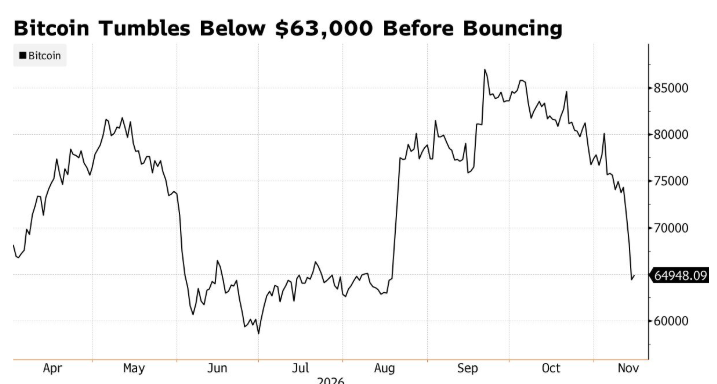
The largest digital asset fell to $62,000 in weekend trading, the weakest level since July, continuing its accelerated decline over several weeks. Unlike the sudden crashes of previous crypto winters, most of this round of decline occurred during relatively quiet transactions — it wasn't until the last few days that liquidations began to accelerate.
This slow erosion has exacerbated the exhaustion of the entire market. The market is facing a growing list of hurdles: Binance's record hacking incident, renewed political uncertainty after the Democratic Party won the midterm elections, rising US Treasury yields, and a stronger dollar. Meanwhile, the AI boom and Anthropic's upcoming IPO are vying for capital and attention originally destined for digital assets.
“The immediate direction will largely depend on whether institutional demand stabilizes and whether macroeconomic conditions leave room for recovery in risk appetite,” said Ayesha Kiani, chief operating officer of Monarq Asset Management. “Until then, the rebound is likely to remain fragile, and volatility will remain high.”
ETF changes from “entry” to “exit”
US spot Bitcoin ETFs that helped Wall Street investors enter this market are now another source of selling pressure. From October 30 — the day after Binance was hacked — to November 13, these ETFs had a net outflow of nearly $3 billion.
The economic environment also did not provide relief. As inflation stubbornly pushes up expectations of the Federal Reserve's tightening policy, the 10-year US Treasury yield has risen to more than 5%. Higher yields raise the opportunity cost of holding unprofitable assets, while a stronger dollar puts additional pressure on Bitcoin and gold.
The crypto industry's “own lesion”
The crypto industry's own progress has also added to its weakness.
The Binance hack has reignited market questions about the security of the trading platform — at a time when the entire industry is struggling to rebuild investor confidence. Competition for speculative capital is also intensifying: Anthropic's planned IPO has attracted significant demand in anticipation of a listing, which makes it possible — investors are freeing up capital from other holdings, including cryptocurrencies, to participate. Exactly how much money was transferred directly from digital assets is currently unclear.
“The explanation for market weakness often centers on large-scale outflows of stablecoin balances — close to $20 billion in the past month — and the impact of Anthropic's upcoming IPO on liquidity,” said Joshua Lim, co-head of markets at FalconX.
This round of decline was particularly disheartening to a group of investors: they had anticipated that mainstream adoption would provide a more lasting basis for prices. Large financial institutions have expanded their participation in the digital asset sector, and ETFs have also enabled Bitcoin to reach a much wider range of investors than ever before. However, these developments have not made the market immune to this round of decline.
Many small-cap tokens have taken back years of gains, greatly reducing earnings for holders who have gone through several rounds of the industry.
Technical reference level: August rebound and $58,000
August provided a point of reference for traders looking for potential bottoms.
After the US Treasury announced an increase in long-term debt repurchases and an improvement in risk appetite, Bitcoin rose all the way from below $65,000 to breaking through $87,000 in late September. However, the latest round of decline has erased most of these gains and left the price facing the possibility of falling below the one-year low of around $58,000.
“We are in an environment where all financial markets are risk-off at the same time. Interest rates continue to rise, and the war is still putting pressure on inflation,” said Ryan Watkins, co-founder of crypto investment fund Syncracy Capital.