
Child Labor Settlement Might Change The Case For Investing In Walmart Stock (WMT)
- Walmart has agreed to a historic US$7.8 million settlement with Pennsylvania over widespread Child Labor Act violations, along with commitments to tighter monitoring and increased future penalties if new breaches are found.
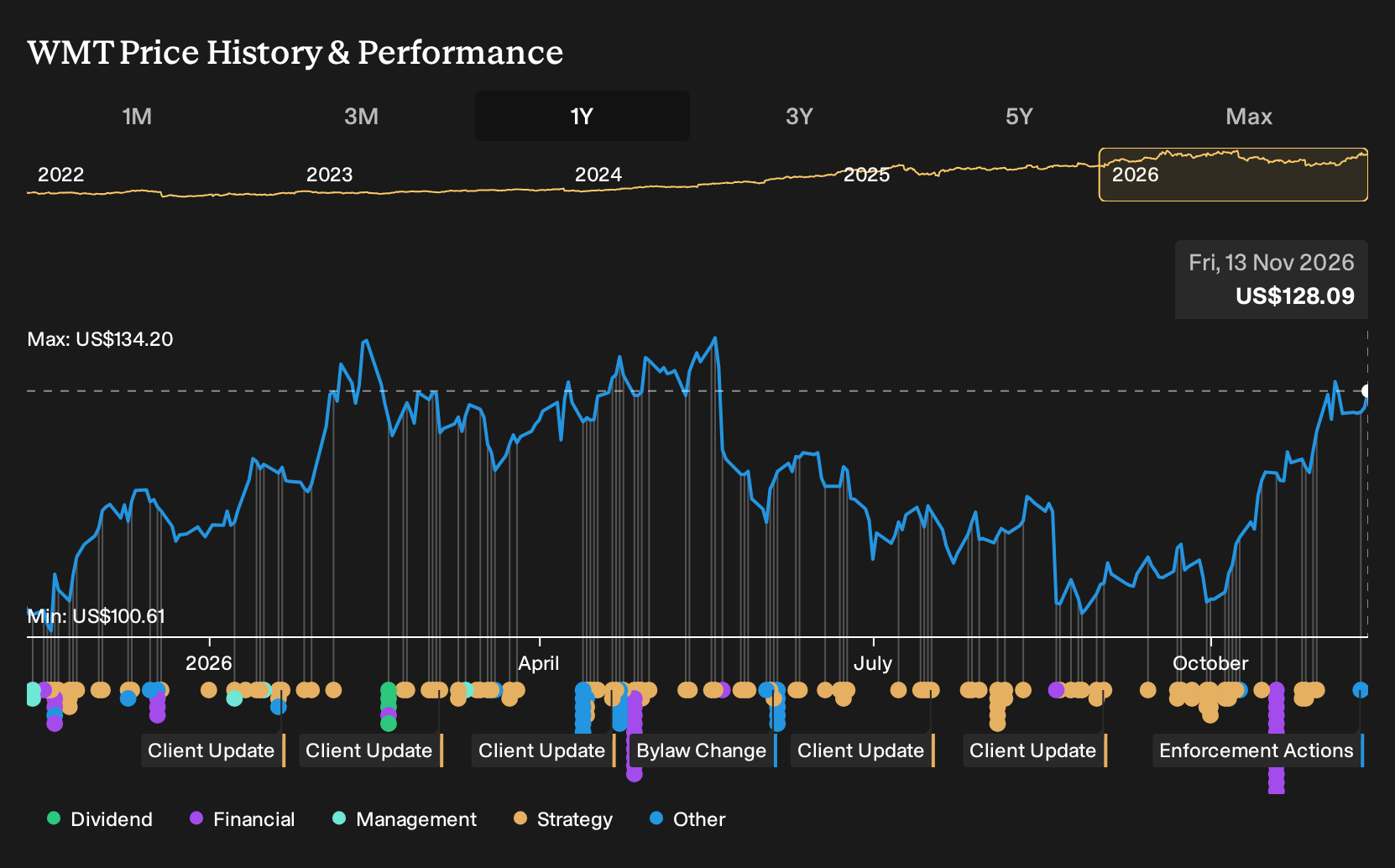
- The settlement adds regulatory and reputational pressure at a time when investors are focused on Walmart’s execution ahead of its upcoming earnings update and ongoing efforts in higher margin digital and advertising services.
- Next is an examination of how Walmart’s broader investment narrative intersects with this child labor settlement and the additional compliance commitments.
Walmart Investment Narrative Recap
To own Walmart you need to believe the retail giant can keep turning its scale, membership and marketplace reach into steadier earnings, even as costs and regulatory demands build. The key near term catalyst is the 19 November earnings release, which should show how price investments, tariff refund reinvestment and higher margin services are feeding into operating income.
The record US$7.8 million Pennsylvania child labor settlement is material for reputation and compliance, but small against more than US$700b in annual sales. The bigger risk right now is that tighter oversight, recalls and higher wage or safety costs weigh on profitability if execution on omnichannel and automation slips.
The most relevant recent announcement is Walmart’s expanded third party laboratory assignment list, adding SGS to support testing across multiple apparel categories. That move directly intersects with the Pennsylvania case because it points to more structured quality, safety and compliance processes across a wide range of products, including those aimed at children.
This kind of operational tightening sits alongside the “Other” segment that prakhar_ef9px, an investor in the Simply Wall St Community, highlights as a growth engine. Strong GMV and merchandise profit in that unit, plus rising advertising and marketplace services, form important earnings catalysts, while robust testing and compliance infrastructure aim to reduce the risk of costly future violations.
On prakhar_ef9px’s numbers, the narrative’s fair value of US$154.58 for Walmart rests on revenue expanding 13.0% a year and the group sustaining a future profit margin of 3.1%, with the “Other” SBU framed as a key contributor within those top line and earnings assumptions.
Uncover how Walmart's fair value indicates a 21% potential upside to its current price that could narrow quickly.
Exploring Other Perspectives
Thirteen fair value estimates from the Simply Wall St Community range from about US$65.78 to US$154.58, so you are seeing everything from deep caution to clear optimism on Walmart. When you compare those private investor views with fresh child labor penalties and tighter compliance costs, you get a broader debate about how regulatory risk could affect future profitability. Use this spread of opinions to pressure test your own thesis rather than rely on a single narrative.
Explore 12 other Walmart fair value estimates, including one that suggests as much as 49% downside from the current price!
Decide For Yourself
Disagree with existing narratives? Extraordinary investment returns rarely come from following the herd, so consider conducting your own research.
- A great starting point for your Walmart research is our analysis highlighting 2 key rewards and 1 important warning sign that could impact your investment decision.
- See our latest analysis for Walmart. The report includes a comprehensive fundamental analysis summarized in a single visual called the Snowflake, making it easy to evaluate Walmart's overall financial health at a glance.
Looking for more investment ideas beyond Walmart?
If the Walmart story has you thinking about position sizing, risk and where to deploy fresh capital, it can help to scan a wider field of companies that better match your own tolerance for volatility and balance sheet strength.
- For investors who want potential upside without abandoning quality, focus on companies that pair robust cash flows with appealing valuations by checking out a curated 32 high quality undervalued stocks.
- If income and resilience matter most to you, concentrate on businesses that prioritize consistent payouts and balance that with financial strength by reviewing a targeted 6 dividend fortresses.
- When capital preservation is the priority, concentrate on businesses with sturdier finances and steadier risk profiles by running a filter through a list of solid balance sheet and fundamentals (24 results).
Have feedback on this article? Concerned about the content? Get in touch with us directly. Alternatively, email editorial-team@simplywallst.com