
It Might Not Be A Great Idea To Buy Vodafone Group Public Limited Company (LON:VOD) For Its Next Dividend
Regular readers will know that we love our dividends at Simply Wall St, which is why it's exciting to see Vodafone Group Public Limited Company (LON:VOD) is about to trade ex-dividend in the next four days. The ex-dividend date is usually set to be two business days before the record date, which is the cut-off date on which you must be present on the company's books as a shareholder in order to receive the dividend. It is important to be aware of the ex-dividend date because any trade on the stock needs to have been settled on or before the record date. This means that investors who purchase Vodafone Group's shares on or after the 19th of November will not receive the dividend, which will be paid on the 3rd of February.
The company's next dividend payment will be €0.02306 per share. Last year, in total, the company distributed €0.047 to shareholders. Based on the last year's worth of payments, Vodafone Group has a trailing yield of 3.4% on the current stock price of UK£1.1695. We love seeing companies pay a dividend, but it's also important to be sure that laying the golden eggs isn't going to kill our golden goose! So we need to investigate whether Vodafone Group can afford its dividend, and if the dividend could grow.
Dividends are typically paid from company earnings. If a company pays more in dividends than it earned in profit, then the dividend could be unsustainable. Vodafone Group reported a loss after tax last year, which means it's paying a dividend despite being unprofitable. While this might be a one-off event, this is unlikely to be sustainable in the long term. Considering the lack of profitability, we also need to check if the company generated enough cash flow to cover the dividend payment. If cash earnings don't cover the dividend, the company would have to pay dividends out of cash in the bank, or by borrowing money, neither of which is long-term sustainable. It paid out 14% of its free cash flow as dividends last year, which is conservatively low.
Check out our latest analysis for Vodafone Group
Click here to see the company's payout ratio, plus analyst estimates of its future dividends.
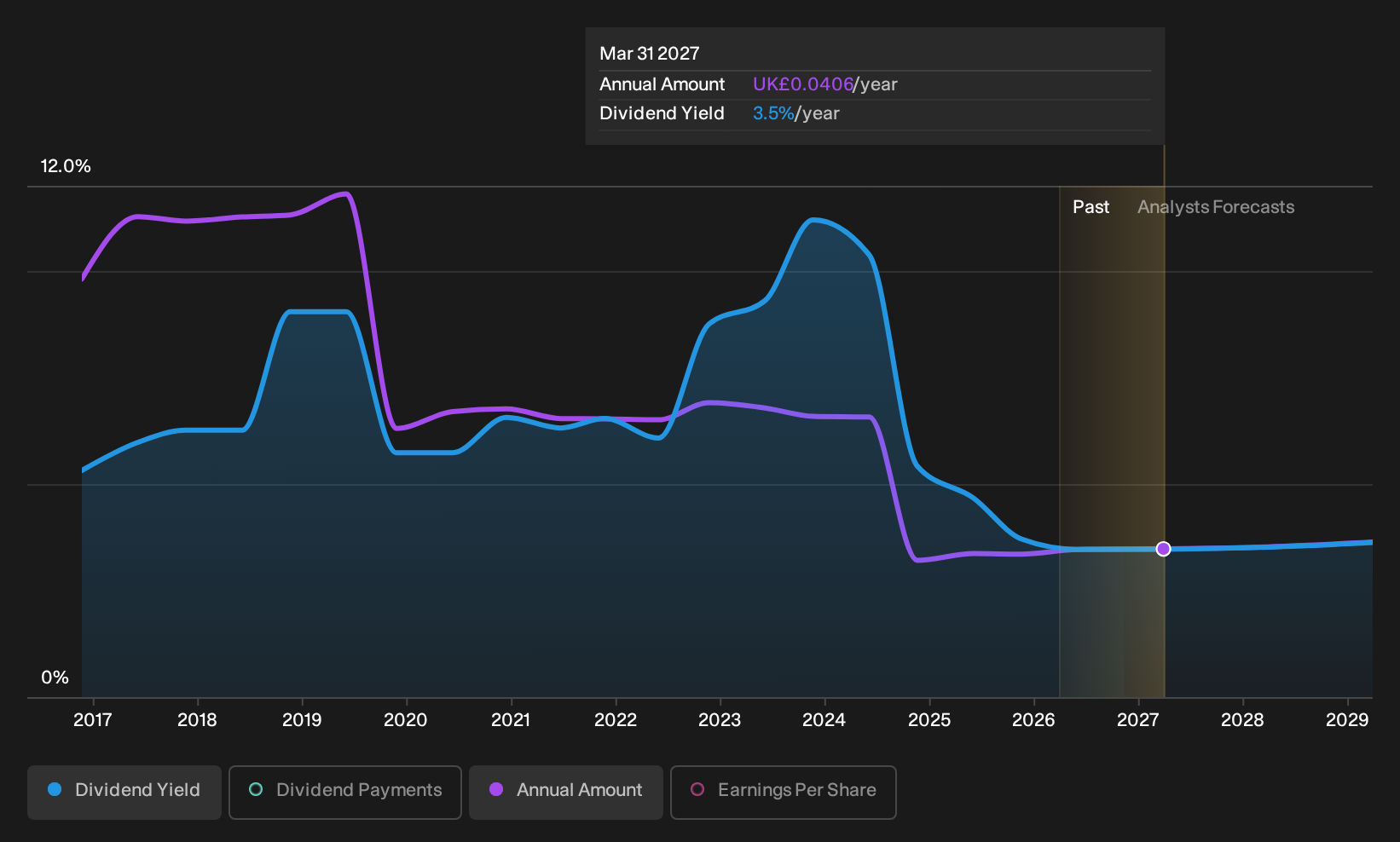
Have Earnings And Dividends Been Growing?
Companies with falling earnings are riskier for dividend shareholders. If earnings decline and the company is forced to cut its dividend, investors could watch the value of their investment go up in smoke. Vodafone Group was unprofitable last year and, unfortunately, the general trend suggests its earnings have been in decline over the last five years, making us wonder if the dividend is sustainable at all.
Another key way to measure a company's dividend prospects is by measuring its historical rate of dividend growth. Vodafone Group's dividend payments per share have declined at 9.7% per year on average over the past 10 years, which is uninspiring. It's never nice to see earnings and dividends falling, but at least management has cut the dividend rather than potentially risk the company's health in an attempt to maintain it.
Remember, you can always get a snapshot of Vodafone Group's financial health, by checking our visualisation of its financial health, here.
The Bottom Line
From a dividend perspective, should investors buy or avoid Vodafone Group? It's hard to get used to Vodafone Group paying a dividend despite reporting a loss over the past year. At least the dividend was covered by free cash flow, however. It's not that we think Vodafone Group is a bad company, but these characteristics don't generally lead to outstanding dividend performance.
Having said that, if you're looking at this stock without much concern for the dividend, you should still be familiar of the risks involved with Vodafone Group. Be aware that Vodafone Group is showing 2 warning signs in our investment analysis, and 1 of those is potentially serious...
If you're in the market for strong dividend payers, we recommend checking our selection of top dividend stocks.
Have feedback on this article? Concerned about the content? Get in touch with us directly. Alternatively, email editorial-team (at) simplywallst.com.