
What Vibra Energia Holders Bought Into
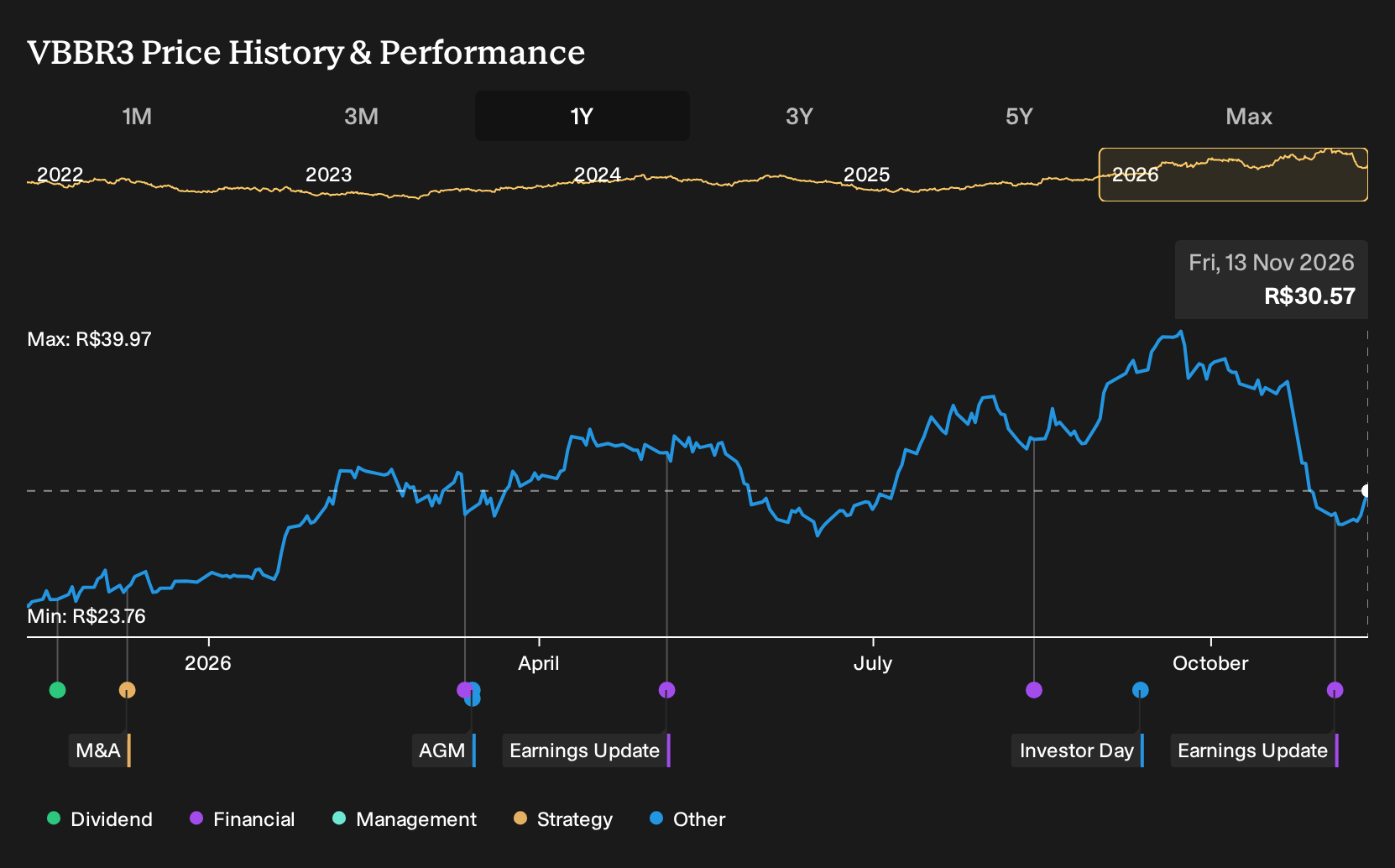
If you only glanced at the 2025 analyst debate around Vibra Energia, the story looked messy. Bulls were lifting price targets even as they penciled in shrinking margins. Bears warned that decarbonization could crush fossil fuel economics while still assigning the stock a higher future P/E. Holding Vibra Energia over the past year would have returned 35.9%, including dividends. If you had acted on those clashing forecasts at the start, what exactly were you betting on in this business?
Narratives are how investors here put a case on the record, with explicit assumptions about revenue, margins and the multiple. Those assumptions imply an estimated Fair Value.
Vibra Energia has already moved. See which of 198 high quality undervalued stocks still trade below our estimates.
The Two Vibra Energia Stories Investors Were Arguing Over
The shares cost R$25.3 at the start of the period, and Vibra Energia came with two very different stories attached.
On the optimistic side, analysts saw Fair Value at R$26.73, about 6% above that level. They were assuming revenue growth of roughly 4.8% a year and a future P/E of 16.3x, even with profit margins easing toward 1.7%.
The bearish camp put Fair Value at R$20.5, about 19% below the same starting point. That view focused on the risk that global decarbonization and electric vehicles would gradually erode traditional fuel volumes and long term fossil fuel margins.
What The Results Changed In The Vibra Energia Debate
The most concrete update came from Vibra Energia reporting Q3 2026 numbers, with total revenue of R$56,647m and net income of R$2,462m. Net margin moved from 0.9% in Q3 2025 to 4.3%. That kind of profitability shift challenged the cautious case that saw margins grinding toward 0.9% and supported the more optimistic story on earnings power.
The takeaway for any stock like Vibra Energia is simple: when the argument hinges on future profitability, track the reported net margin and compare it directly with the margin path each side built into its narrative.
What Vibra Energia's Recent Run Leaves You Paying For
With Vibra Energia now trading at R$30.57, the analyst consensus Narrative on Simply Wall St places its Fair Value above that level, built on a story of stronger unit economics rather than just volume recovery or lower rates.
The distinctive thread is higher fuel and ethanol margins supported by branded sites, convenience stores and a tidier balance sheet. The key assumption you need to weigh is whether Vibra Energia can keep unit margins and cash generation elevated while bedding down Comerc.
"Structural improvement in Vibra Energia’s unit margins, with recurring EBITDA per cubic meter already well above the BRL 200 per cubic meter level that management had previously framed as an aspiration, leaves room for further earnings impact if logistics efficiencies, SG&A control and ethanol sourcing flexibility continue to support higher net margins."
That disagreement has a full argument behind it. → Uncover the higher Fair Value this Narrative argues for
Looking Beyond Vibra Energia
Once you have a handle on Vibra Energia, the next question is where similar cash engines might appear in other sectors.
Fuel distribution depends on hard assets and recurring demand. Digital commerce rests on a different base, a hidden infrastructure layer that keeps transactions, content and AI tools running smoothly.
One large platform company has spent years building that foundation. It rents computing power, storage and AI building blocks to many customers.
Your fuel thesis around margins, mix and reinvestment can apply here as well.
The unresolved challenge is judging a business that keeps margins lower today to seed a potentially much larger platform tomorrow.
The case is on the record, with the assumptions it rests on. → See the Narrative that values this company 69% above its price
Have feedback on this article? Concerned about the content? Get in touch with us directly. Alternatively, email editorial-team@simplywallst.com