
The Bet DHL Holders Made
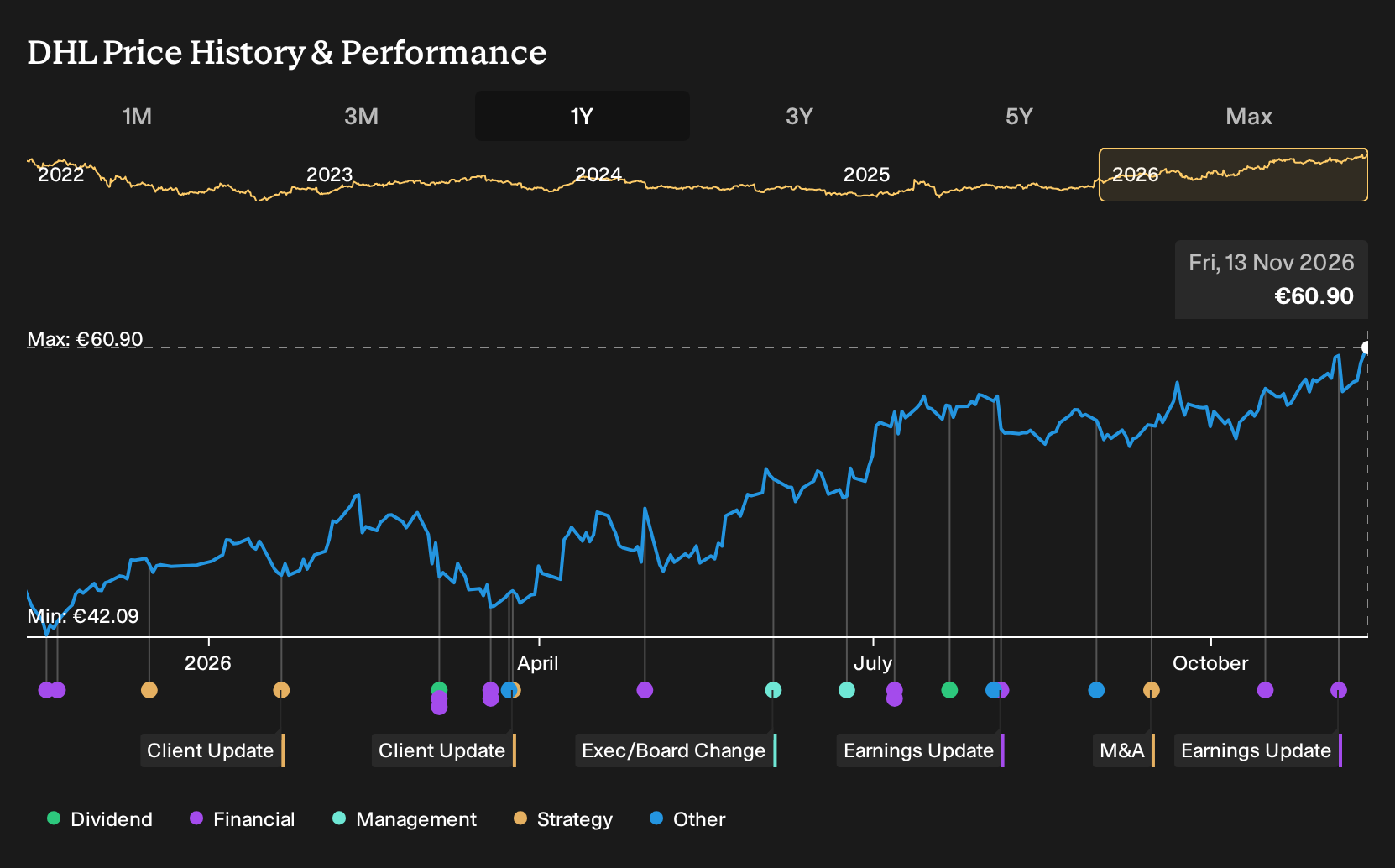
If you only glanced at DHL headlines over the past year, with tariff noise, restructuring moves, and a legal name change on the way, you might not expect much from the share price. Investors who held DHL over the past year are up 44.4%, including dividends. If you had been weighing that decision a year ago, with trade risks and mail decline in view, what in the record then could have justified taking that ride?
If the move has made DHL harder to judge, start where the gap is still open and scan 198 high quality undervalued stocks.
The Two Stories DHL Investors Were Weighing
The shares cost €44.56 at the start of the period, and anyone looking at DHL then had to pick between two very different stories about where the group might be heading.
On the bullish side, one camp saw e-commerce growth and urbanization as a long runway. This view implied a Fair Value of €60, a price based on assumptions that these trends would let DHL use its diversified global footprint to capture more last mile and emerging market parcel demand.
The cautious view put more weight on trade barriers and regulation. This perspective suggested a Fair Value of €34, a level based on concerns that stricter rules on cross border shipments could reduce volumes in international express lanes and strain group margins.
What The DHL Evidence Actually Tested
The clearest test came from results. DHL reported revenue of €22,658m and net income of €907m in Q3 2026, both above Q3 2025, while the net margin slipped from 4.2% to 4.0%. That mix of higher sales and profit but slightly thinner profitability cut both ways for the original bullish and cautious cases.
The key assumption investors can take from DHL is margin resilience. When you assess another logistics stock, watch whether net income grows in step with revenue and whether the net margin trend supports the stated efficiency story.
What DHL's One Year Run Already Prices In
DHL now trades at €60.9 after a 44.4% gain over the past year, and the bearish analyst Narrative on Simply Wall St places its Fair Value below that level.
The Narrative argues the key question has shifted from trade risks to execution. For today’s price to hold, a buyer must assume DHL keeps lifting profit quality without sliding back into lower margin parcel volume.
"The main thing that has to go right is that DHL successfully converts its smart industrial growth strategy, Heavyweight Express focus, cost reset programs and AI driven efficiency into durable profit without slipping back into low margin B2C volumes."
One Narrative has put a figure on that disagreement. → See the Narrative with its lower Fair Value, assumptions and all
Looking Beyond DHL's Trucks
DHL lives in the world of moving parcels and freight. You could stop there. Or you could ask who controls the ride when the driver disappears.
Passenger transport is wrestling with that question already. One platform is pouring serious cash into autonomous fleets, software partnerships and vehicle commitments.
Its goal is to stay the distribution layer when cars drive themselves. That means owning the relationship with riders while others supply hardware and code.
The open question for you is simple. If logistics eventually follows mobility toward autonomy, who ends up owning the meter on every trip?
It is written up in full, assumptions and all. → Explore the Narrative that puts this company 66% above its price
Have feedback on this article? Concerned about the content? Get in touch with us directly. Alternatively, email editorial-team@simplywallst.com