
MaxLinear Stock In Focus After New AI Optics Power Chip Launch
- MaxLinear introduced the Jeju (MxL77904) power management IC, a custom multiphase PMIC for DSP based 1.6T pluggable optical modules in AI data center networks, designed for up to 95% peak efficiency, 0.5W per DSP power savings, and reduced thermal load in compact OSFP and QSFP DD form factors.
- The Jeju PMIC extends MaxLinear’s role inside 1.6T optical modules from signal processing into tailored power delivery, which can increase content per port as AI data centers adopt advanced 3nm and 4nm PAM4 DSPs with tighter voltage and thermal requirements.
- This development may influence how investors view MaxLinear's positioning, as Jeju's 0.5W per DSP savings could affect power and thermal economics in AI optics.
Look beyond MaxLinear and Jeju by focusing on other AI infrastructure plays in our hand picked list of 53 AI infrastructure stocks that could reshape data center power and optics economics.
MaxLinear Investment Narrative Recap
To own MaxLinear, you need to buy into the analyst consensus narrative on Simply Wall St that AI data center optics and broadband can turn today’s lossmaking profile into meaningful earnings over the next few years. The Jeju PMIC fits that idea by pushing MaxLinear deeper into 1.6T optics content, but the Jeju sampling timeline means little changes for near term revenue.
The key short term swing factor still lies in how quickly Keystone, Rushmore and related optics and broadband ramps translate into cash, given wafer prepayments and recent operating cash outflow of US$13.6 million in Q3 2026. The biggest risk remains any slowdown or cancellation in those orders, which could strain liquidity and compress already tight gross margins.
The Jeju launch aligns most clearly with the catalyst around AI data center optical interconnects, where guidance for 2026 optical revenue sits at US$250 million to US$270 million with strong bookings into 2027 and 2028. Jeju is tailored for 1.6T PAM4 DSPs and is optimized for MaxLinear’s Rushmore, so it supports that higher content per port story rather than redefining it.
What appears more incremental is how Jeju expands MaxLinear’s role from DSPs and TIAs into power delivery inside the same 1.6T module. That ties directly into the broader catalyst list that already pointed to Annapurna 1.6T retimers, RackCommander control, power ICs and Panther storage accelerators. Execution risk remains, because each added component also increases exposure to competitive pricing and manufacturing complexity.
MaxLinear Forecasts And What Needs To Happen
MaxLinear's narrative projects US$1.7b revenue and US$402.0 million earnings by 2029. This setup assumes 36.0% yearly revenue growth and an earnings swing of about US$431.4 million, from a loss of US$29.4 million today to US$402.0 million in the forecast period.
Discover why MaxLinear's fair value indicates a 59% potential upside to its current price that may not last much longer.
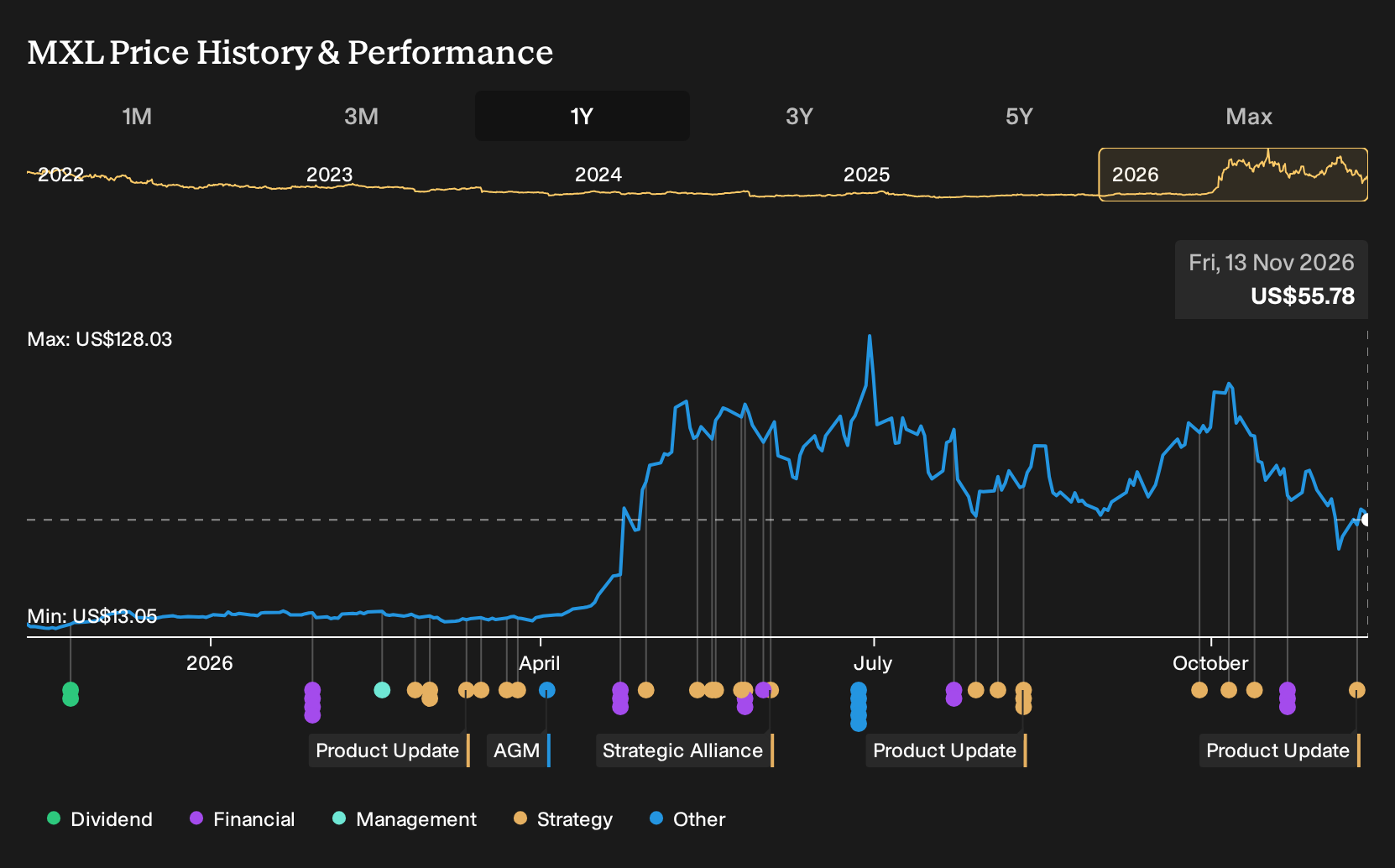
Exploring Other Perspectives
One alternate view says the real risk for MaxLinear is not product execution but capital intensity. The most cautious analysts were pencilling in about US$1.1b of 2029 revenue and US$127.6 million of earnings before this Jeju news, far below consensus, which shows how widely opinions differ and why you may want to compare several narratives yourself.
Explore 4 other MaxLinear fair value estimates, including one that suggests as much as 27% downside from the current price!
Form Your Own Verdict
Disagree with existing narratives? Extraordinary investment returns rarely come from following the herd, so consider going with your instincts.
- A great starting point for your MaxLinear research is our analysis highlighting 2 key rewards and 2 important warning signs that could impact your investment decision.
- See our latest analysis for MaxLinear. The report includes a comprehensive fundamental analysis summarized in a single visual, the Snowflake, making it easy to evaluate MaxLinear's overall financial health at a glance.
Looking For More Investment Ideas Beyond MaxLinear?
If the MaxLinear story has you thinking about where else AI infrastructure, connectivity and cash generation could intersect, broaden your search with a few focused stock lists built from the Simply Wall St Screener.
- If resilience matters most to you, start with companies that pair steadier balance sheets with controlled risk profiles through the 29 resilient stocks with low risk scores.
- If valuation discipline is your edge, check out businesses that combine quality fundamentals with depressed pricing in the 32 high quality undervalued stocks.
- If you prefer underfollowed possibilities, scan for solid fundamentals in the 20 high quality undiscovered gems.
Have feedback on this article? Concerned about the content? Get in touch with us directly. Alternatively, email editorial-team@simplywallst.com