
What Aeon Holders Got Wrong Before The Slide
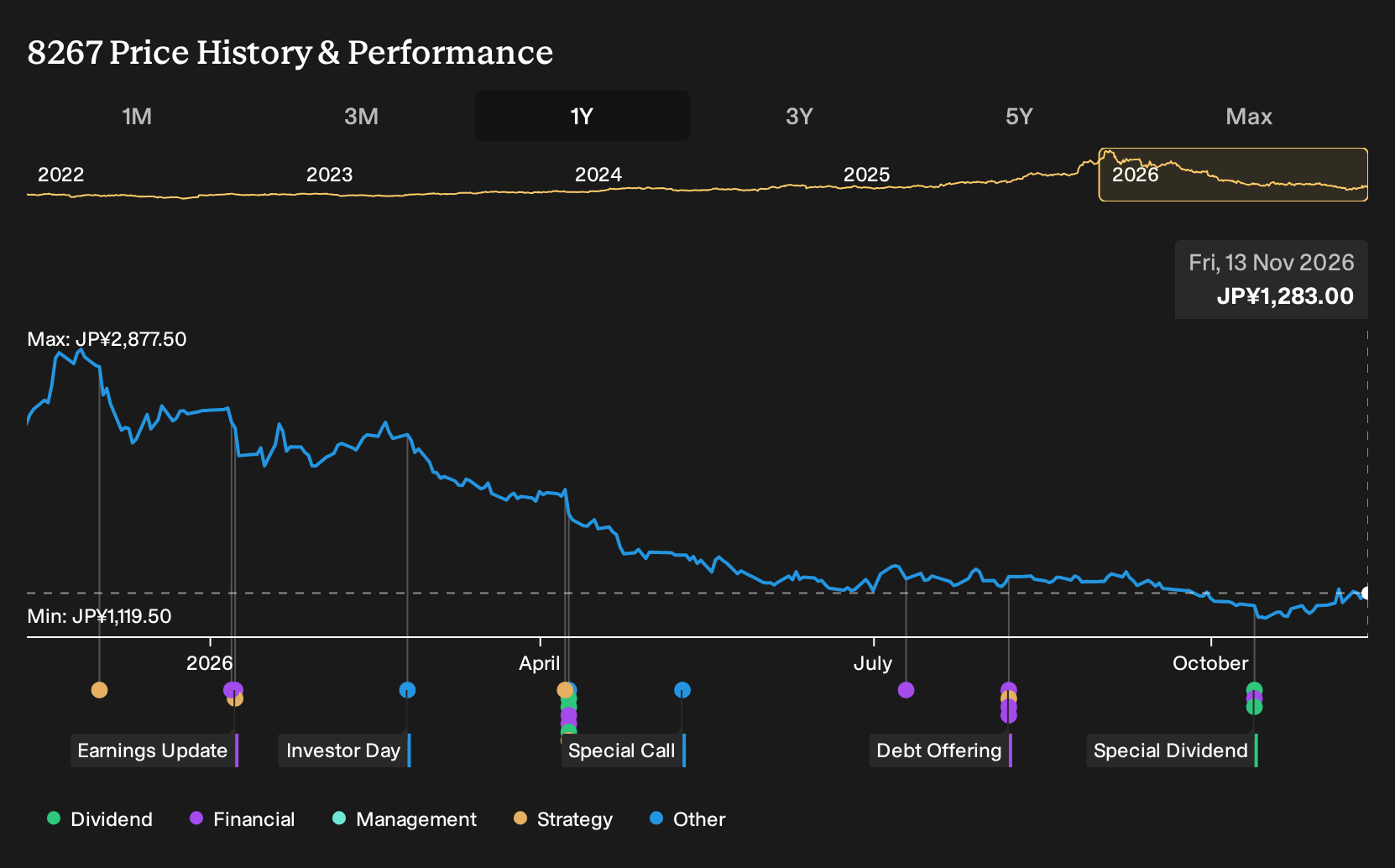
If you had been weighing Aeon against flashier retailers in late 2025 and decided to sit it out, the result over the next year might look deceptively simple. Holding Aeon over the past year would have meant a 47.9% loss, including dividends. Yet analysts went into that period arguing over digital gains, private brands, and demographic headwinds. Which of those on-record fault lines would you have treated as the key warning sign?
On Simply Wall St, a Narrative is an investor's thesis written down: the reasoning, plus the numbers it rests on. Run those numbers and you get an estimated Fair Value.
If the move has made Aeon harder to judge, start where the gap is still open and scan 19 high quality undervalued stocks.
The Two Aeon Stories Investors Had To Choose Between
The shares cost ¥2,444 at the start of the period, and anyone looking at Aeon then had to choose between two very different stories about where the group might be heading.
The bullish narrative put fair value at ¥4,800, leaning on private label growth and digital tools such as self checkout and AI driven labor optimisation as a route to stronger margins and lower SG&A costs.
The bearish view pointed to a fair value of ¥1,279 and focused on aging demographics in Japan, rising operating costs, and expansion into riskier markets such as Vietnam as threats to long term profitability.
What The Evidence Around Aeon Actually Tested
Strong April and May 2026 sales for Aeon malls and supermarkets, helped by Golden Week traffic, experiential tenants, and value pricing, backed the bullish focus on format mix and customer experience. The results told a tougher story. Revenue reached ¥2,962,176m in Q2 2027, yet net income moved to a loss and net margin slipped to -0.0% from 0.4%. Overall, the evidence cut both ways.
The episode turned on one assumption: margin expansion. If you see a retailer sold as a margin story, track net income and net margin in each report and test whether higher sales actually translate into sustained profitability.
What Aeon’s Lower Price Really Asks You
Aeon trades at ¥1,283 today, with the shares down 47.9% over the past year. The bullish analyst Narrative on Simply Wall St still places its Fair Value above that level, hinging less on topline growth and more on how profit mix and execution could reshape earnings.
The Narrative focuses on Aeon turning private brands, logistics spending and ASEAN expansion into a more profitable blend of revenue and operating income. For that higher figure to be reached, a buyer today would need to believe Aeon can lift margins through these projects despite structural cost pressure.
"The 2030 plan for Aeon to reach ¥15 trillion in operating revenue and ¥530 billion in operating profit with EBITDA above ¥1 trillion implies latent earnings leverage that could surface if capital allocation toward higher-margin formats and regions drives a more efficient mix of revenue and operating income than analysts currently factor into long-term models, which would affect both operating margin and ROE."
That disagreement has a full argument behind it. → Uncover the higher Fair Value this Narrative argues for
Go Straight To The Source
The next headline does not have to be where your research begins. Go straight to the companies and see whether a contrarian opportunity could be taking shape.
- Company 1 - 19% below our estimate - supplies wiring and fiber products that support telecoms, data and power infrastructure.
- Company 2 - 33% below our estimate - wins recurring elevator servicing work as property owners seek independent maintenance providers.
- Company 3 - 22% below our estimate - sells bundled SaaS tools and onsite IT support to smaller firms upgrading office systems.
That is three of the list. See all 24 companies with the balance sheet to back it up →
Have feedback on this article? Concerned about the content? Get in touch with us directly. Alternatively, email editorial-team@simplywallst.com