
Winners and losers of Q3: Merit Medical Systems vs the rest of the healthcare equipment and supplies stocks

Looking back on healthcare equipment and supplies stocks’ Q3 earnings, we examine this quarter’s best and worst performers, including Merit Medical Systems NASDAQ:MMSI and its peers.
The healthcare equipment and supplies sector thrives on innovation in medical devices and consumables, the latter providing recurring revenue. Future growth is buoyed by an aging population with increasing chronic diseases and a shift towards minimally-invasive surgery. Advancements in materials science and AI-driven diagnostics also offer significant opportunities. Key headwinds remain, including pricing pressure from cost-conscious healthcare providers, evolving regulations, and potential supply chain disruptions.
The 35 healthcare equipment and supplies stocks we track reported a satisfactory Q3. As a group, revenues beat analysts’ consensus estimates by 1.3% while next quarter’s revenue guidance was 3.1% below.
While some healthcare equipment and supplies stocks have fared somewhat better than others, they have collectively declined. On average, share prices are down 1.4% since the latest earnings results.
Merit Medical Systems NASDAQ:MMSI
Founded in 1987 and now offering over 1,700 patented products across global markets, Merit Medical Systems (NASDAQ:MMSI) manufactures and markets specialized medical devices used in minimally invasive procedures for cardiology, radiology, oncology, critical care, and endoscopy.
Merit Medical Systems reported revenues of $416.2 million, up 8.4% year on year. This print exceeded analysts’ expectations by 1.5%. Overall, it was a solid quarter for the company with a solid beat of analysts’ organic revenue estimates and a beat of analysts’ EPS estimates.
“Merit delivered third quarter financial results that exceeded the high end of our expectations, driven primarily by 9% organic, constant currency revenue growth, excluding the impact of a strategic divestiture,” said Martha G. Aronson, Merit’s President and CEO. “We experienced strong revenue growth trends in the U.S. and better-than-expected demand for Merit’s products across both our Foundational and our Therapeutic platforms. We also delivered strong growth in both our non-GAAP operating profit and our non-GAAP earnings per share, which increased 17% and 22%, respectively, year-over-year.” Ms. Aronson continued: “We have raised our 2026 revenue and non-GAAP earnings per share guidance to reflect the stronger-than-expected results over the first nine months of 2026 and remain confident in our team’s ability to execute, with attractive constant currency growth, improving profitability, and solid cash flow generation this year. Our team remains focused on delivering our Continued Growth Initiative financial targets for the three-year period ending December 31, 2026, and, in parallel, we are finalizing our longer-term strategic plan focused on identifying opportunities to better position the company for sustainable growth, enhanced profitability and value creation for our shareholders.”
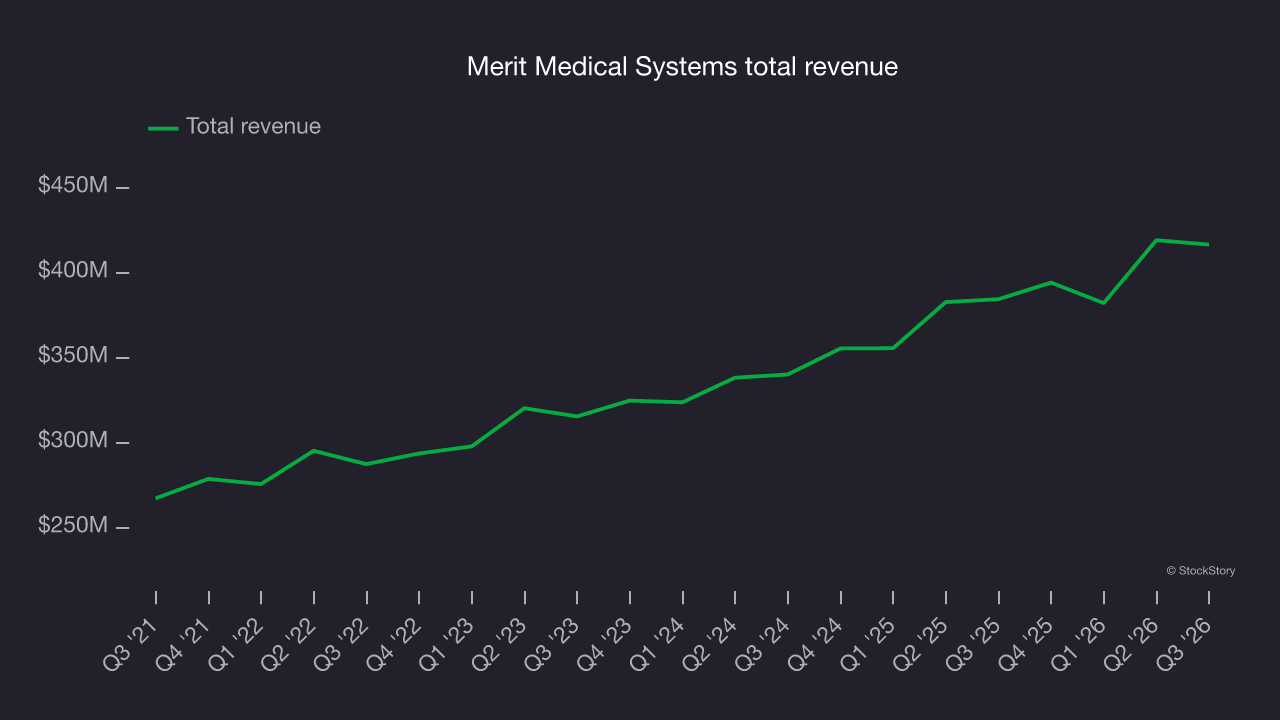
Investor expectations, however, were likely higher than Wall Street’s published projections, leaving some wishing for even better results (analysts’ consensus estimates are those published by big banks and advisory firms, not the investors who make buy and sell decisions). The stock is down 7.3% since reporting and currently trades at $86.60.
Is now the time to buy Merit Medical Systems? Access our full analysis of the earnings results here, it’s free.
Best Q3: Lantheus (NASDAQ:LNTH)
Pioneering the "Find, Fight and Follow" approach to disease management, Lantheus Holdings (NASDAQGM:LNTH) develops and commercializes radiopharmaceuticals and other imaging agents that help healthcare professionals detect, diagnose, and treat diseases.
Lantheus reported revenues of $389.9 million, up 1.5% year on year, outperforming analysts’ expectations by 9.6%. The business had an exceptional quarter with a beat of analysts’ EPS estimates.
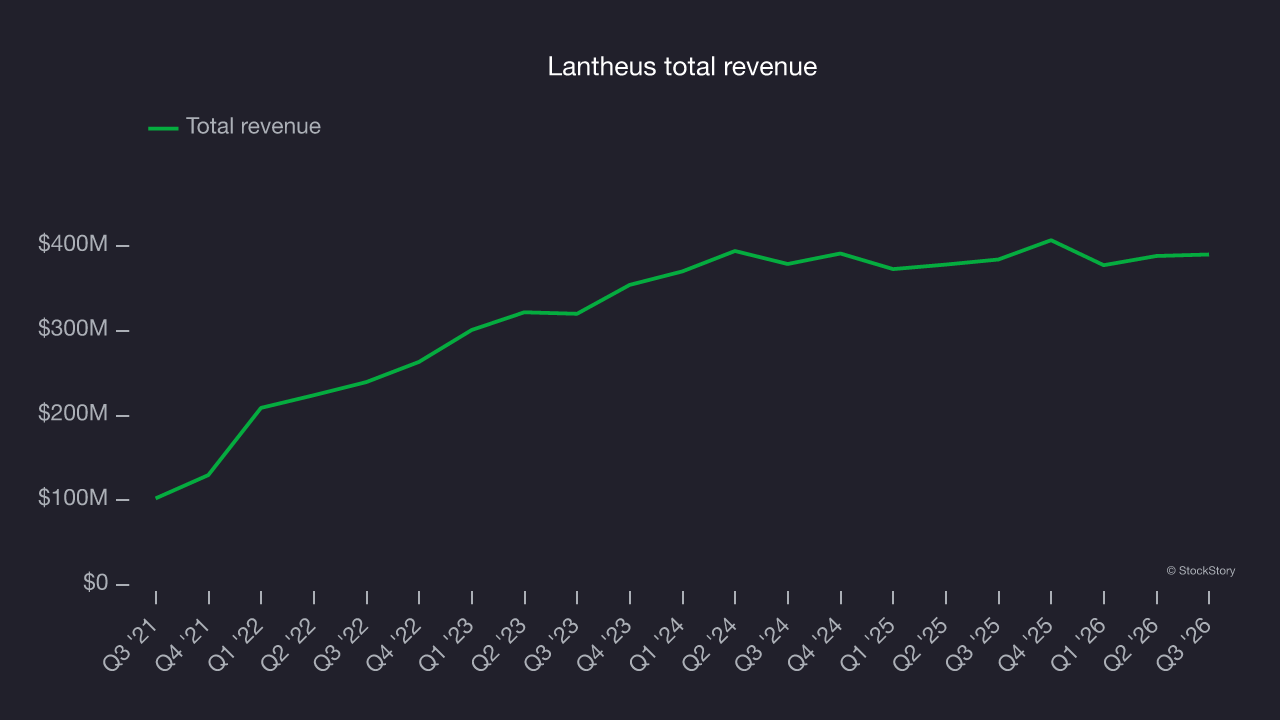
Lantheus achieved the biggest analyst estimate beat in the group. However, the results were likely priced into the stock as it’s traded sideways since reporting. Shares currently sit at $101.26.
Is now the time to buy Lantheus? Access our full analysis of the earnings results here, it’s free.
Weakest Q3: Dentsply Sirona (NASDAQ:XRAY)
With roots dating back to 1877 when it introduced the first dental electric drill, Dentsply Sirona (NASDAQ:XRAY) manufactures and sells professional dental equipment, technologies, and consumable products used by dentists and specialists worldwide.
Dentsply Sirona reported revenues of $836 million, down 7.5% year on year, falling short of analysts’ expectations by 2.7%. It was an underwhelming quarter as it posted a significant miss of analysts’ full-year EPS guidance estimates and a significant miss of analysts’ EPS estimates.
As expected, the stock is down 7.7% since the results and currently trades at $9.31.
Read our full analysis of Dentsply Sirona’s results here.
GE HealthCare (NASDAQ:GEHC)
Spun off from industrial giant General Electric in 2023 after over a century as its healthcare division, GE HealthCare (NASDAQ:GEHC) provides medical imaging equipment, patient monitoring systems, diagnostic pharmaceuticals, and AI-enabled healthcare solutions to hospitals and clinics worldwide.
GE HealthCare reported revenues of $5.51 billion, up 7.2% year on year. This number beat analysts’ expectations by 3%. It was a favorable quarter as it also recorded a solid beat of analysts’ organic revenue estimates and a beat of analysts’ EPS estimates.
The stock is up 15.2% since reporting and currently trades at $81.94.
Read our full, actionable report on GE HealthCare here, it’s free.
Haemonetics (NYSE:HAE)
With roots dating back to 1971 and a mission to improve blood-related healthcare, Haemonetics (NYSE:HAE) provides specialized medical devices and software for blood collection, processing, and management across plasma centers, blood banks, and hospitals.
Haemonetics reported revenues of $357.8 million, up 9.3% year on year. This result surpassed analysts’ expectations by 3.7%. Overall, it was a very strong quarter as it also produced a solid beat of analysts’ organic revenue estimates and a beat of analysts’ EPS estimates.
The stock is down 1.8% since reporting and currently trades at $125.14.
Read our full, actionable report on Haemonetics here, it’s free.
Market update
Over the past year, investors have been forced to repeatedly answer the same question: What is the market’s biggest risk? The answer has changed several times, and each shift has reshaped market leadership.
Late in 2025 and early 2026, artificial intelligence became the market’s primary uncertainty. Investors questioned whether AI would erode software pricing power and weaken competitive moats as AI made it easier to replicate once-differentiated products.
By the spring, technology took a back seat to geopolitics. The U.S. conflict with Iran briefly became the market’s dominant narrative, raising concerns about oil prices, inflation, and global growth. But as energy markets remained orderly and fears of a prolonged supply disruption faded, investors quickly turned their focus back to fundamentals.
Want to invest in winners with rock-solid fundamentals? Check out our Strong Momentum Stocks and add them to your watchlist. These companies are poised for growth regardless of the political or macroeconomic climate.