
Q3 rundown: The Ensign Group vs other healthcare providers & services stocks

The end of the earnings season is always a good time to take a step back and see who shined (and who didn’t). Let’s take a look at how healthcare providers & services stocks fared in Q3, starting with The Ensign Group NASDAQ:ENSG.
The healthcare providers and services sector, from insurers to hospitals, benefits from consistent demand, generating stable revenue through premiums and patient services. However, it faces challenges from high operational and labor costs, reimbursement pressures that squeeze margins, and regulatory uncertainty. Looking ahead, an aging population with more chronic diseases and a shift toward value-based care create tailwinds. Digitization via telehealth, data analytics, and personalized medicine offers new revenue streams. Nonetheless, headwinds persist, including clinical labor shortages, ongoing reimbursement cuts, and regulatory scrutiny over pricing and quality.
The 38 healthcare providers & services stocks we track reported a solid Q3. As a group, revenues beat analysts’ consensus estimates by 2.2% while next quarter’s revenue guidance was 1.1% above.
In light of this news, share prices of the companies have held steady as they are up 3.6% on average since the latest earnings results.
The Ensign Group NASDAQ:ENSG
Founded in 1999 and named after a naval term for a flag-bearing ship, The Ensign Group (NASDAQ:ENSG) operates skilled nursing facilities, senior living communities, and rehabilitation services across 15 states, primarily serving high-acuity patients recovering from various medical conditions.
The Ensign Group reported revenues of $1.48 billion, up 14.5% year on year. This print fell short of analysts’ expectations by 7.1%. Overall, it was a softer quarter for the company with a significant miss of analysts’ EPS estimates.
“We continue to see strong demand across our portfolio and experienced growth in occupancy and skilled mix during the quarter. In particular, we saw year-over-year growth across all skilled payor categories during the quarter, with growth in Medicare being particularly strong. On the census front, our Same Facilities and Transitioning occupancy for the third quarter was 84.1% and 86.1%, respectively. In addition to growing census, our Same Facilities and Transitioning Facilities skilled mix revenue increased by 10.7% and 10.5%, respectively, over the prior year quarter. Medicare revenue increased for both our Same Facilities and Transitioning Facilities by 11.1% and 7.8%, respectively. Also, managed care revenue increased by 9.1% and 7.2%, respectively, for Same Facilities and Transitioning Facilities over the prior year quarter, with total skilled days up 7.2% and 7.9%, respectively, from the prior year quarter,” Port said.
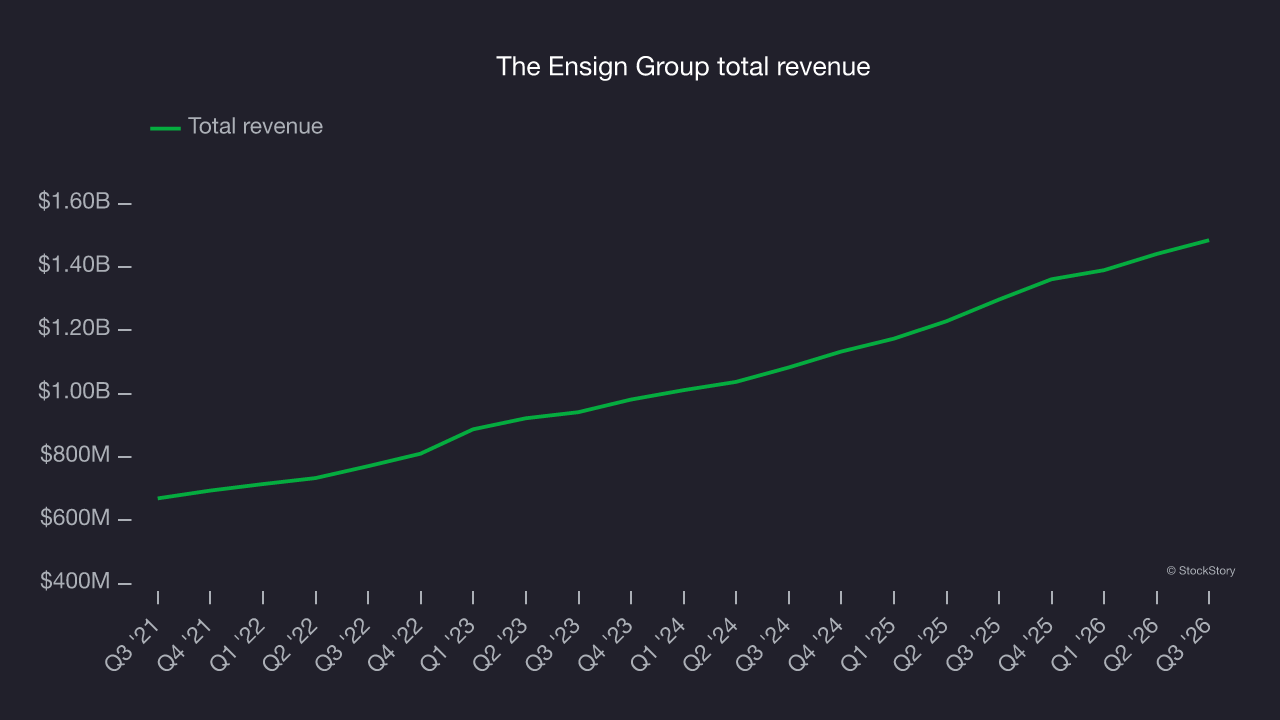
The Ensign Group delivered the weakest performance against analyst estimates of the whole group. Interestingly, the stock is up 10% since reporting and currently trades at $186.46.
Is now the time to buy The Ensign Group? Access our full analysis of the earnings results here, it’s free.
Best Q3: LifeStance Health Group (NASDAQ:LFST)
With over 6,600 licensed mental health professionals treating more than 880,000 patients annually, LifeStance Health (NASDAQ:LFST) provides outpatient mental health services through a network of clinicians offering psychiatric evaluations, psychological testing, and therapy across 33 states.
LifeStance Health Group reported revenues of $455.9 million, up 25.3% year on year, outperforming analysts’ expectations by 5.6%. The business had an impressive quarter with EBITDA guidance for next quarter exceeding analysts’ expectations and a beat of analysts’ EPS estimates.
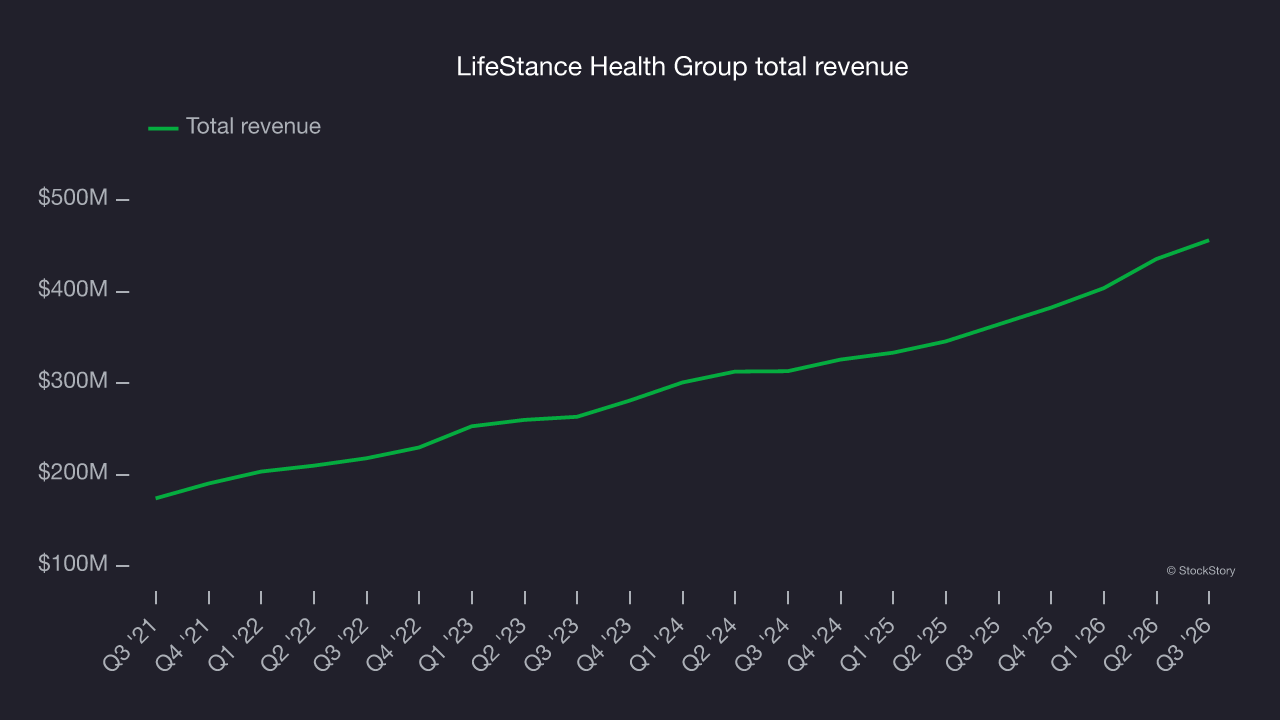
LifeStance Health Group scored the highest guidance raise among its peers. However, the results were likely priced into the stock as it’s traded sideways since reporting. Shares currently sit at $14.17.
Is now the time to buy LifeStance Health Group? Access our full analysis of the earnings results here, it’s free.
Weakest Q3: Brookdale (NYSE:BKD)
With a network of over 650 communities serving approximately 59,000 residents across 41 states, Brookdale Senior Living (NYSE:BKD) operates senior living communities across the United States, offering independent living, assisted living, memory care, and continuing care retirement communities.
Brookdale reported revenues of $712.1 million, down 12.4% year on year, falling short of analysts’ expectations by 0.5%. It was a sluggish quarter as it posted EPS in line with analysts’ estimates and full-year EBITDA guidance slightly missing analysts’ expectations.
Brookdale delivered the slowest revenue growth in the group. As expected, the stock is down 14.5% since the results and currently trades at $9.25.
Read our full analysis of Brookdale’s results here.
Labcorp (NYSE:LH)
With over 600 million tests performed annually and involvement in 90% of FDA-approved drugs in 2023, Labcorp (NYSE:LH) provides laboratory testing services and drug development solutions to doctors, hospitals, pharmaceutical companies, and patients worldwide.
Labcorp reported revenues of $3.81 billion, up 6.9% year on year. This number topped analysts’ expectations by 1.2%. It was a solid quarter as it also logged a narrow beat of analysts’ organic revenue estimates and full-year revenue guidance slightly topping analysts’ expectations.
The stock is up 11.5% since reporting and currently trades at $369.36.
Read our full, actionable report on Labcorp here, it’s free.
CVS Health (NYSE:CVS)
With over 9,000 retail pharmacy locations serving as neighborhood health destinations across America, CVS Health (NYSE:CVS) operates retail pharmacies, provides pharmacy benefit management services, and offers health insurance through its Aetna subsidiary.
CVS Health reported revenues of $108.4 billion, up 5.4% year on year. This result beat analysts’ expectations by 4.1%. Overall, it was a favorable quarter as it also put up a beat of analysts’ EPS estimates and a decent beat of analysts’ full-year EPS guidance estimates.
The stock is down 1.8% since reporting and currently trades at $89.74.
Read our full, actionable report on CVS Health here, it’s free.
Market update
Over the past year, investors have been forced to repeatedly answer the same question: What is the market’s biggest risk? The answer has changed several times, and each shift has reshaped market leadership.
Late in 2025 and early 2026, artificial intelligence became the market’s primary uncertainty. Investors questioned whether AI would erode software pricing power and weaken competitive moats as AI made it easier to replicate once-differentiated products.
By the spring, technology took a back seat to geopolitics. The U.S. conflict with Iran briefly became the market’s dominant narrative, raising concerns about oil prices, inflation, and global growth. But as energy markets remained orderly and fears of a prolonged supply disruption faded, investors quickly turned their focus back to fundamentals.
Want to invest in winners with rock-solid fundamentals? Check out our Hidden Gem Stocks and add them to your watchlist. These companies are poised for growth regardless of the political or macroeconomic climate.