
Should AI Call Tools Require Action From Bandwidth (BAND) Investors?
- Bandwidth Inc. recently used its Reverb showcase to present Super Intelligence processing upgrades, new Call Intelligence capabilities on Maestro, and GPU-powered network infrastructure aimed at richer AI voice and trusted communications for global enterprises.
- The firm is embedding speech-to-text models and compliance tooling directly into its network and Maestro platform, which could shift more customer value toward Bandwidth’s higher-margin software and orchestration layers.
- Attention now turns to how Bandwidth’s GPU-enabled Super Intelligence call processing and compliance features might influence the longer term investment narrative.
Bandwidth Investment Narrative Recap
To be a shareholder in Bandwidth, you need to believe the firm can keep shifting its mix toward higher margin software like Maestro while keeping its global connectivity base productive, not just large. The analyst consensus narrative on Simply Wall St leans on strong earnings growth forecasts and expanding enterprise contracts. The fresh Super Intelligence push fits that storyline but does not, on its own, change the fact that the slower growing global voice plans still anchor the revenue base.
In the near term, the main operational catalyst is continued software ARR expansion and the attachment of Maestro to big enterprise deals. The biggest risk remains that usage heavy AI workloads do not ramp fast enough to offset modest voice-plan growth, leaving overall revenue tracking closer to telecom peers while the share price stays volatile. The Reverb updates help execution odds but do not erase that mix and sentiment risk.
The most relevant new piece for that mix shift is Bandwidth Call Intelligence on Maestro. It brings recording, transcription, sensitive data redaction and compliance monitoring into one network level layer that covers the full call flow. That gives large customers a single operational view across AI agents, human agents and their handoffs, instead of stitching together multiple point tools.
For you as an investor, the interest is practical. Call Intelligence and the streaming native speech to text model running on GPUs inside Bandwidth’s network both push more value into software and orchestration, where margins are typically higher than basic connectivity. The execution test is whether enterprises standardize on these capabilities at scale, which would support the catalysts analysts are watching while still leaving valuation and share price swings as independent risks.
Bandwidth's narrative projects US$1.2b revenue and US$139.6m earnings by 2029. That aligns with analysts assuming 11.1% yearly revenue growth and implies an earnings increase of roughly 16x from US$8.8m today.
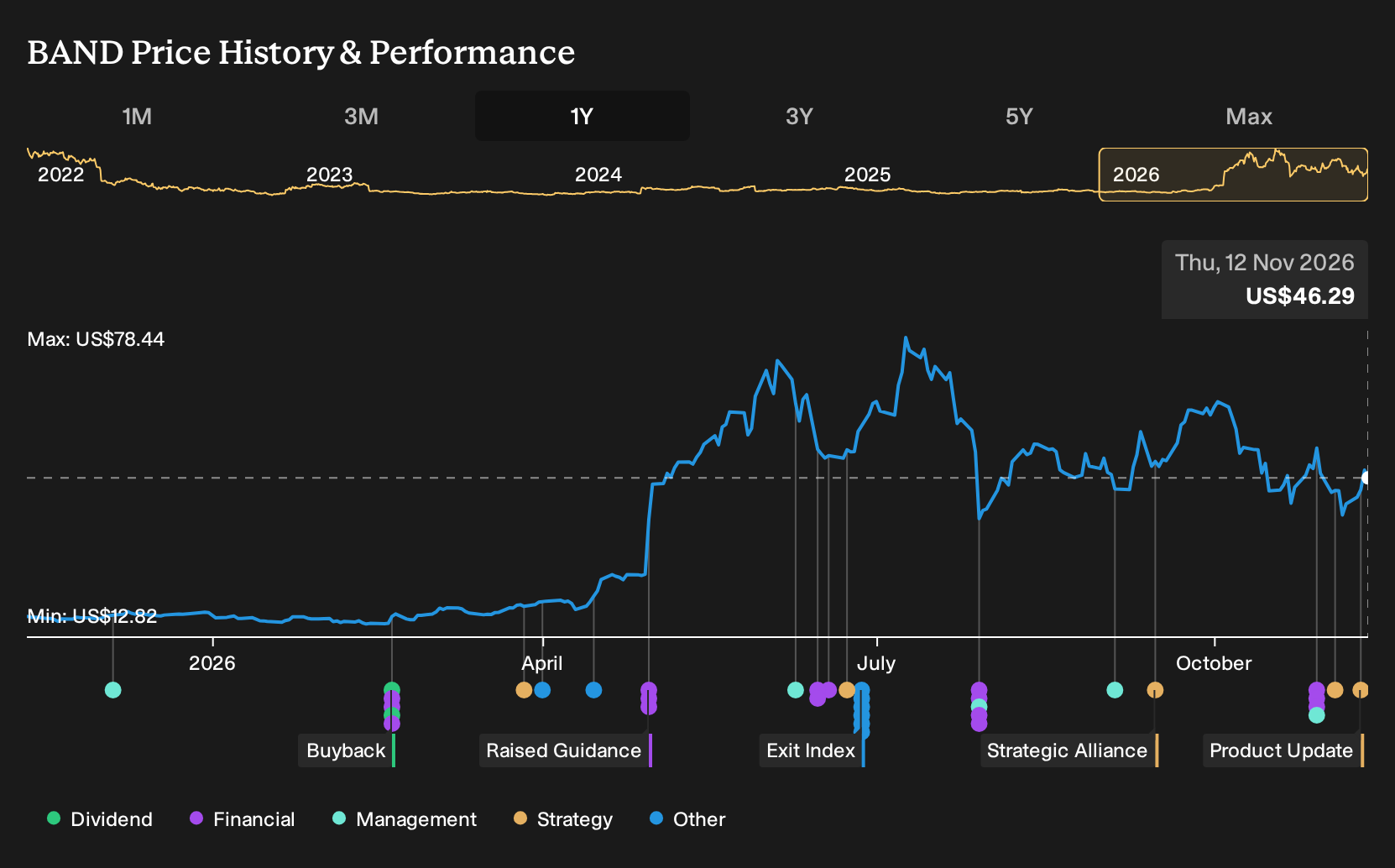
Uncover why Bandwidth's fair value indicates a 45% potential upside to its current price that could narrow quickly.
Exploring Other Perspectives
One alternate view focuses on dilution risk rather than AI upside. The most cautious analysts were assuming only about US$1.1b revenue and US$119.4m earnings by 2029 before this Reverb news, while also expecting faster share count growth. You can read that as a reminder that opinions on Bandwidth’s AI bet and funding mix differ widely and may shift as this Super Intelligence rollout sinks in.
Explore 2 other Bandwidth fair value estimates, including one that suggests as much as 29% downside from the current price.
Decide For Yourself
Don't just follow the ticker. Dig into the data and build a conviction that's truly your own.
- A great starting point for your Bandwidth research is our analysis highlighting 3 key rewards and 2 important warning signs that could impact your investment decision.
- See our latest analysis for Bandwidth. The report includes a comprehensive fundamental analysis summarized in a single visual, the Snowflake, making it easy to evaluate Bandwidth's overall financial health at a glance.
Looking for more Bandwidth investment ideas?
If you want to stress test your thesis on Bandwidth against other opportunities, the Simply Wall St Screener can help you compare different types of businesses quickly and on consistent data.
- For investors who care most about stability and capital preservation, review a 29 resilient stocks with low risk scores that may suit a more cautious profile.
- If your focus is dependable income, check out a hand picked set of 6 dividend fortresses that might appeal to long term yield seekers.
- When you want quality first and are prepared to do deeper work on less followed companies, scan through 20 high quality undiscovered gems that could merit a spot on your watchlist.
Have feedback on this article? Concerned about the content? Get in touch with us directly. Alternatively, email editorial-team@simplywallst.com