
PepsiCo And 2 Other Top Class Dividend Stocks
AI related trade is surging, with AI enabling goods driving a large share of global trade growth in 2025 and early 2026. That boom puts reliable dividend payers with room to grow into sharp focus for investors who want exposure to long term themes without relying only on headline grabbing high flyers. This article discusses three stocks from a curated list of US companies that currently offer 2% to 5% dividend yields and have a history of raising their payouts.
The companies in this piece are a small sample, and the full screen surfaced 40 more dividend payers with similarly structured stories that are not covered here. To identify potential Type 2 dividend ideas that fit your own risk profile, head straight into the Growing Dividend Payers with 2-5% yield screener
PepsiCo (PEP)
PepsiCo is a consumer staples heavyweight in the screener because its North American beverages and convenient foods throw off steady cash that supports a growing dividend, and according to AshleighG, a Simply Wall St Community investor who wrote the latest view on the stock, the product mix is quietly evolving.
"The company is pushing into functional and health-focused drinks with the acquisition of Poppi, ownership of Bubly, and a partnership with Celsius, which could provide growth opportunities alongside its established brands."
The next chapter for PepsiCo’s dividend story may hinge on how one quiet efficiency push reshapes margins more than headline sales.
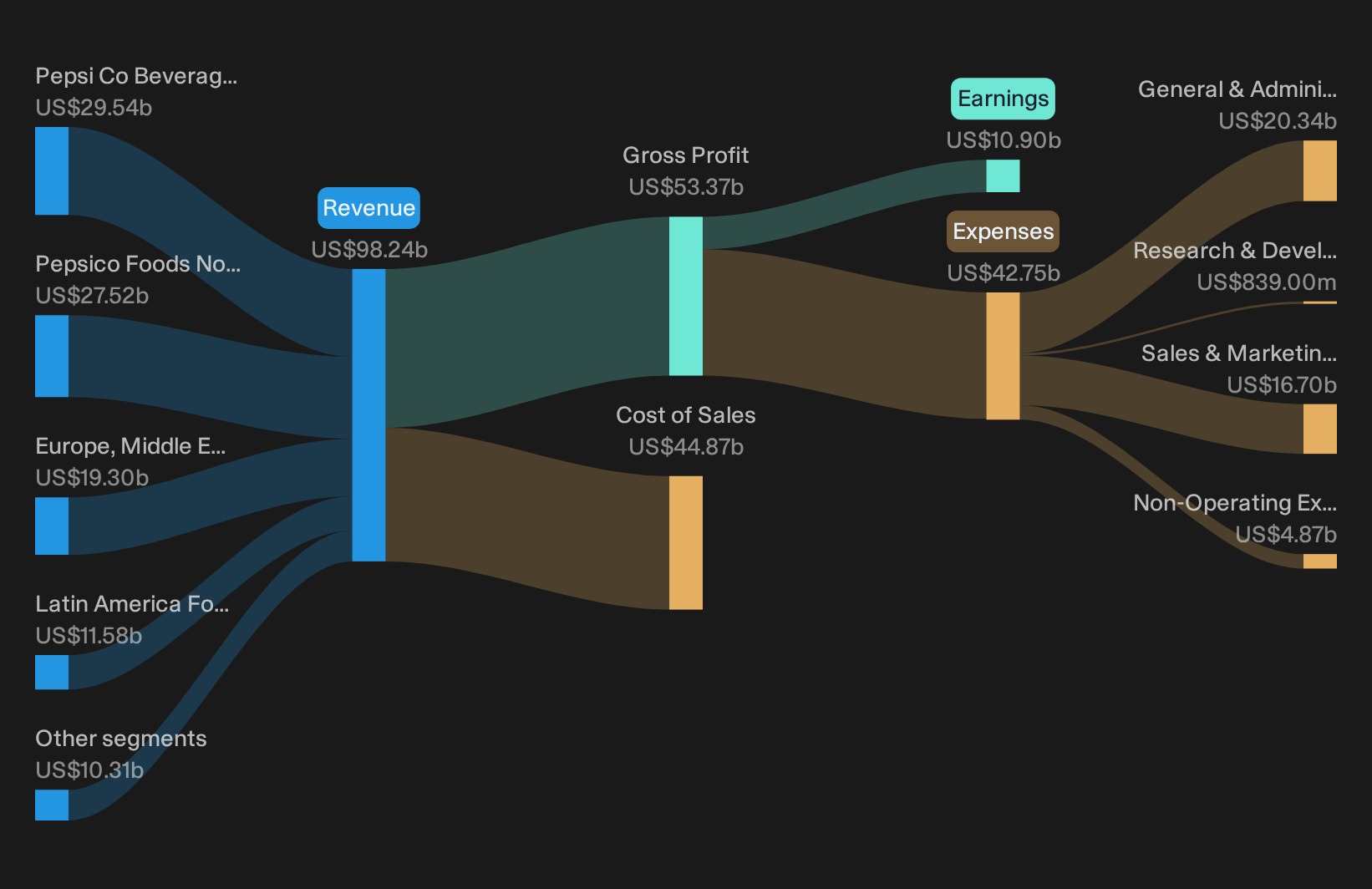
PepsiCo runs a global beverages and snacks platform. PepsiCo Beverages North America and PepsiCo Foods North America together generate around US$57b of its roughly US$98b in segment revenue, supported by regional units across EMEA, Latin America, Asia Pacific and international franchises, and the group carries a market value near US$196.2b.
That margin story is where the real tension sits, and the full narrative for PepsiCo shows how PepsiCo’s quiet efficiency push could accelerate or cap future dividend firepower.
Lockheed Martin (LMT)
Lockheed Martin brings a different flavor of dividend reliability to this screener, with long running defense programs helping to fund a 2 to 5% yield and steady payout growth. The analyst consensus Narrative on Simply Wall St lays out how those contracts may support that profile.
"Lockheed Martin is moving munitions like PAC-3, THAAD, PrSM and JATM onto seven year framework agreements that aim to triple or quadruple production and allow the company to retain a larger share of cost savings from capacity investments such as robotics in Camden, which can support higher future revenue and structurally stronger net margins."
What that means for investors could hinge on how one quiet shift in defense spending priorities feeds through to long term cash generation.
Lockheed Martin is a global defense contractor whose Aeronautics, Missiles and Fire Control, Rotary and Mission Systems, and Space segments together generated about US$81.1b in sales, led by Aeronautics at roughly US$32.2b and supported by other divisions, and the stock carries a market value near US$140.9b.
That quiet shift in priorities is exactly where the full narrative for Lockheed Martin pulls the story together, mapping how contracts, cash flow and risks could be decoupling from headlines.

Procter & Gamble (PG)
Procter & Gamble anchors this growing dividend payer theme through everyday staples like Tide and Pampers, and according to andre_santos, an investor in the Simply Wall St Community, the real story is how a wide moat and solid profitability help keep that income stream resilient.
"Procter & Gamble operates within a very competitive environment. However, its higher operating margins and wide moat is a clear sign it still operates with competitive advantages over its competitors, and it has the capability of raising prices if needed."
What happens if one quiet shift in cost and pricing pressure either protects those margins or starts to narrow them will really matter.
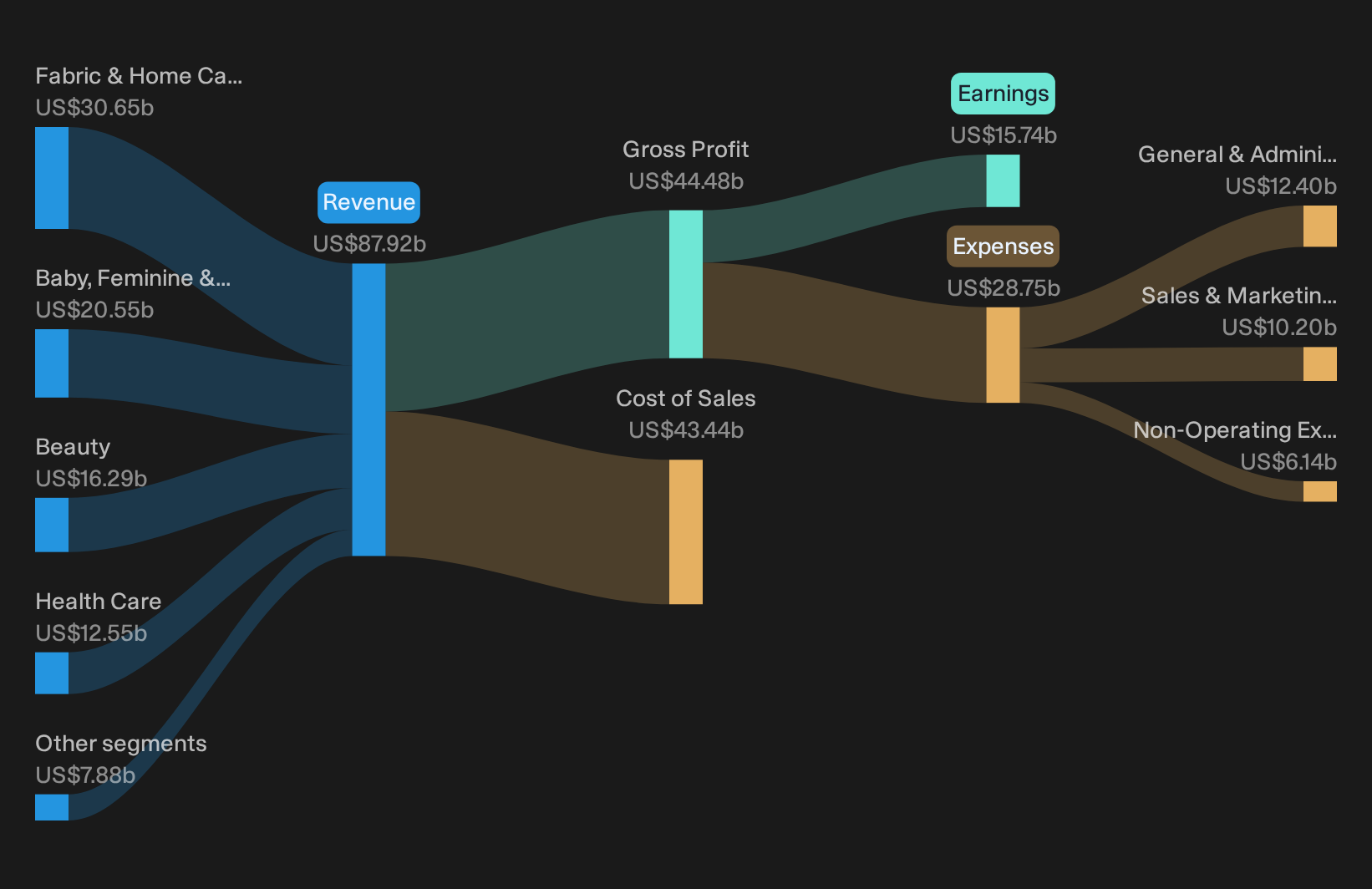
Procter & Gamble is a global consumer products giant built around everyday brands across beauty, grooming, health and home, with Fabric & Home Care and Baby, Feminine & Family Care generating about US$30.6b and US$20.6b of its roughly US$88.9b segment revenue, and the stock valued near US$388.6b.
If that pricing power holds or cracks, the full narrative for Procter & Gamble shows how Procter & Gamble’s moat, cash generation and risks could be quietly shifting under the surface.
Seeking Fresh Alternatives For Your Watchlist
Fresh ideas tend to move first. By the time a breakout is clearly underway, early momentum can be gone and prices may already reflect much of the move. Consider scanning under-the-radar areas and acting according to your own research and risk tolerance.
- Target durable income by reviewing a curated mix of high-yield payers described as 6 dividend fortresses while the strongest cash generators are still trading before the crowd pays wider attention.
- Explore structural power demand by assessing infrastructure players inside the 43 power grid technology and infrastructure stocks while the grid upgrade story is still building momentum.
- Evaluate long-run automation by checking out carefully filtered industrials and enablers through the 85 robotics and automation stocks while adoption trends are still developing.
Have feedback on this article? Concerned about the content? Get in touch with us directly. Alternatively, email editorial-team@simplywallst.com