
How Strong Half Year Earnings At National Grid (LSE:NG.) Has Changed Its Investment Story
- National Grid reported half year sales of £8,138m and net income of £1,343m for the period to 30 September 2026, and the board proposed an interim dividend of 16.97p per ordinary share, with payment scheduled for 12 January 2027 to investors on the register as at 20 November 2026.
- The combination of higher half year earnings per share from continuing operations and a defined interim dividend timetable reflects how National Grid is using current profitability to support ongoing cash returns to shareholders.
- Attention now shifts to how this stronger half year profit picture and higher interim dividend may influence National Grid's broader investment narrative.
Scan how National Grid's dividend move compares with other potential income plays by reviewing the hand picked 5 dividend fortresses in the market today.
National Grid Investment Narrative Recap
To own National Grid, you need to be comfortable with a regulated utility that is heavily investing for future electricity and gas demand while relying on supportive outcomes from UK and US regulators. The analyst consensus narrative on Simply Wall St points to that regulatory backdrop and the multi decade infrastructure build out as the core belief. The latest half year figures show the business currently generating enough profit to support that investment agenda and an interim payout.
The key short term catalyst remains how regulators treat returns and cost recovery under frameworks like RIIO T3 and upcoming US rate decisions. The main risk is that pressure on customer bills in both regions pushes allowed returns or recovery timing lower. The latest earnings and dividend news does not change those regulatory swing factors in a material way.
The most relevant update for that story is National Grid's half year to 30 September 2026. Sales were £8,138m and net income was £1,343m, with basic earnings per share from continuing operations at £0.269. That level of profitability provides context for the higher planned capital programme and helps frame how much room there is to fund both investment and dividends.
Stronger earnings also tie into the proposed interim dividend of 16.97p per ordinary share for the year ending 31 March 2027, with payment scheduled for 12 January 2027. For you as an investor, the operational question is whether cash generation and future allowed returns can comfortably support both that payout and the at least £70b investment plan, given existing debt and the warning that dividends are not well covered by free cash flow.
National Grid's current earnings are about £3.2b and analysts are assuming revenue will grow by 9.0% a year, with earnings expected to reach £5.4b by 2029. This implies an earnings increase of roughly £2.2b by that year and is underpinned by a revenue outlook that points to £22.9b of sales in 2029.
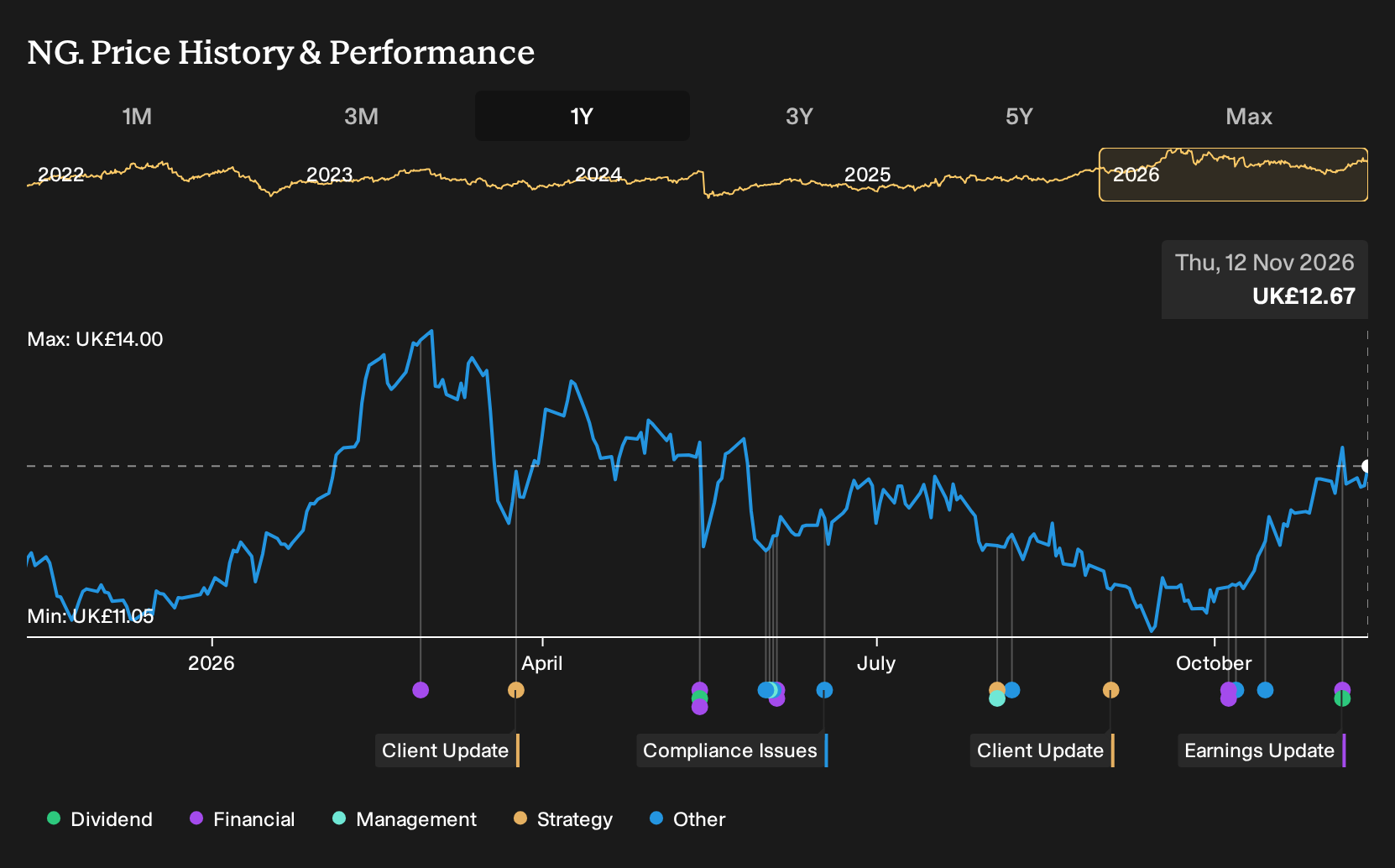
Uncover how National Grid's fair value indicates a 4% potential upside to its current price before the market closes that gap.
Exploring Other Perspectives
Four fair value estimates from the Simply Wall St Community cluster tightly between £13.01 and £13.40, so retail opinions here are closely grouped rather than scattered. Those views were formed before the latest dividend increase and half year earnings, so you might weigh them against regulatory risks around RIIO T3 and bill affordability when judging National Grid's longer term appeal.
Explore 3 other National Grid fair value estimates, including one that suggests up to 6% upside from the current price.
Decide For Yourself
Disagree with existing narratives? Extraordinary investment returns rarely come from following the herd, so go with your instincts.
- A great starting point for your National Grid research is our analysis highlighting 3 key rewards and 2 important warning signs that could impact your investment decision.
- See our latest analysis for National Grid. The report includes a comprehensive fundamental analysis summarized in a single visual, the Snowflake, making it easy to evaluate National Grid's overall financial health at a glance.
Looking for more investment ideas beyond National Grid?
If this National Grid update has sharpened your focus on income, risk and balance sheet strength, broaden that lens by scanning what the rest of the market offers through the Simply Wall St Screener. It is an efficient way to compare different opportunities side by side rather than anchoring on a single stock.
- If capital preservation sits high on your list, start by reviewing a collection of 5 resilient stocks with low risk scores that score well on resilience.
- If quality at a reasonable price is the goal, sort through a focused group of 6 high quality undiscovered gems that pair strong fundamentals with limited current attention.
- If balance sheet strength matters most to you, filter for a list of solid balance sheet and fundamentals (9 results) and see which companies combine financial stability with sound underlying businesses.
Have feedback on this article? Concerned about the content? Get in touch with us directly. Alternatively, email editorial-team@simplywallst.com