
Will Rig Upgrades Change Patterson UTI Energy's (PTEN) Narrative
- Patterson-UTI Energy has been highlighted in recent industry coverage for operational strengths as oil and gas drilling faces geopolitical pressures, higher equipment costs and supply chain challenges.
- The business is drawing attention for upgrading rigs with advanced technology and expanding natural gas powered systems aimed at supporting returns and free cash flow.
- This article will examine how Patterson-UTI Energy’s investment narrative is shaped by its push into advanced, natural gas powered drilling and completion capacity.
Scan other drilling and energy contractors pursuing similar upgrades by checking the hand picked 43 power grid technology and infrastructure stocks, which taps into infrastructure linked to the same long cycle forces shaping Patterson-UTI Energy.
Patterson-UTI Energy Investment Narrative Recap
Patterson-UTI Energy appeals to investors who buy into a simple idea. High spec rigs and gas powered frac fleets need to stay busy at premium pricing for the thesis to work. The analyst consensus narrative on Simply Wall St focuses on that mix of utilization, dayrates and margin recovery across drilling and completion.
The recent industry focus on geopolitical risks, supply chains and equipment inflation does not appear to alter Patterson-UTI Energy’s near term catalyst. The main focus remains execution on upgraded rigs and natural gas powered fleets. The bigger swing risk remains earnings fragility after recent net losses and weather or customer budget shocks that can hit quarterly profit.
One of the most relevant data points around this story is the shift of Patterson-UTI Energy’s frac fleet toward natural gas fueled horsepower, with an expectation that about 90% of active horsepower will be substantially gas powered and more than 15% fully gas powered by the end of 2026. That directly links to the recent coverage of natural gas powered systems.
This move ties into catalysts that focus on tighter frac markets and repricing potential in Completion Services, where management guided adjusted gross profit from US$98 million in Q1 2026 to about US$140 million in Q3. Execution risk is clear. The business needs sustained demand for gas capable fleets and consistent operations to offset recent net losses and international retrenchment.
Patterson-UTI Energy's narrative points to revenues of US$5.9b and earnings of US$345.5 million by 2029, based on analysts assuming 6.8% yearly revenue growth and an earnings shift of about US$370.5 million from current earnings of a US$25 million loss.
Uncover why Patterson-UTI Energy's fair value indicates a 35% potential upside to its current price, which could narrow quickly.
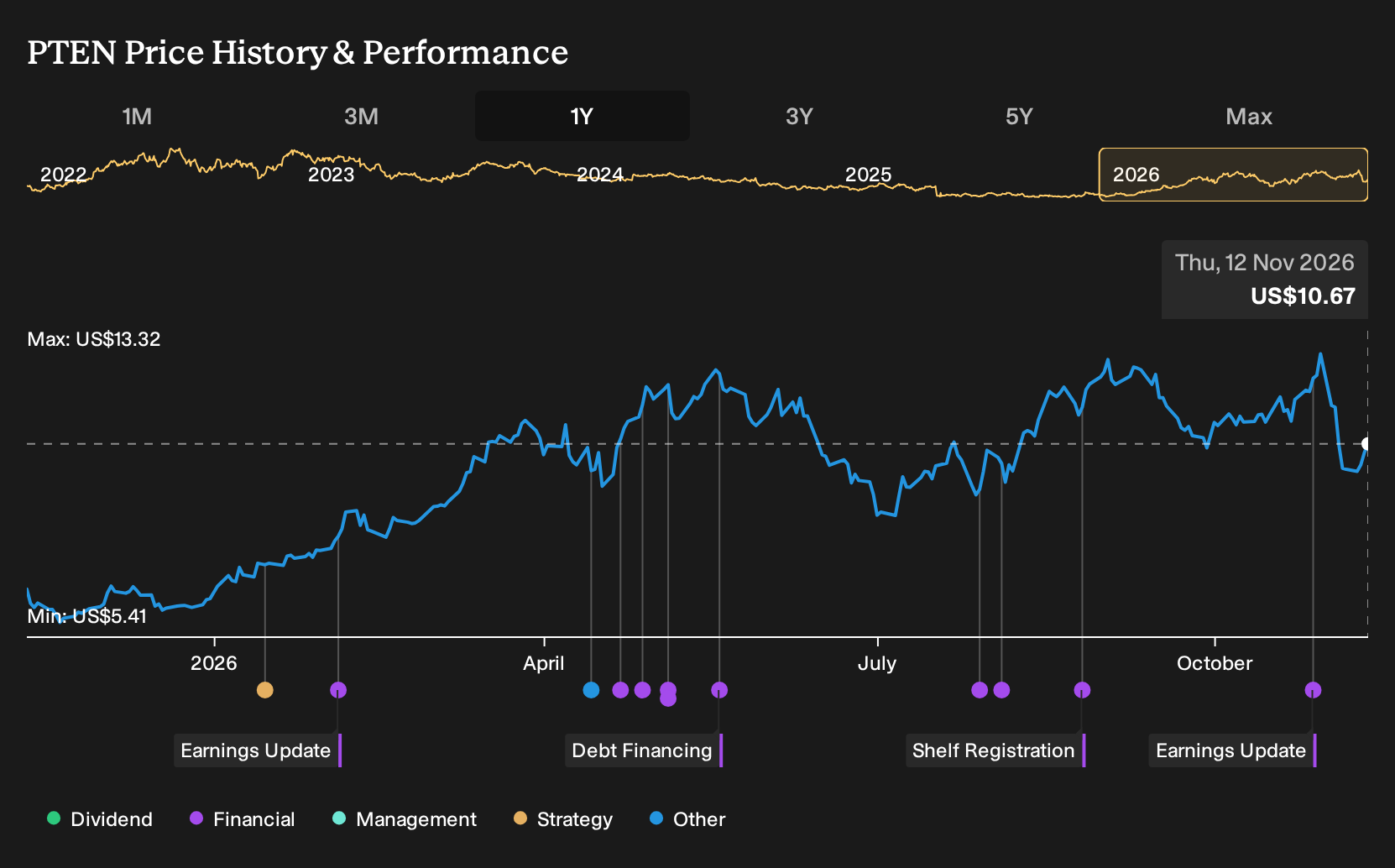
Exploring Other Perspectives
One alternative view on Patterson-UTI Energy focuses heavily on capital spending risk. The most pessimistic analysts worried that the roughly US$600 million 2026 capex plan could strain free cash flow, even while they still penciled in about US$5.8b of 2029 revenue and US$362.9 million of earnings. Those forecasts came before this news, so you may want to compare how your own expectations might shift from here.
Explore 3 other Patterson-UTI Energy fair value estimates, including one that suggests it could be worth just $12.00.
Form Your Own Verdict
Disagree with existing narratives? Extraordinary investment returns rarely come from following the herd, so go with your instincts.
- A great starting point for your Patterson-UTI Energy research is our analysis highlighting 3 key rewards and 2 important warning signs that could impact your investment decision.
- See our latest analysis for Patterson-UTI Energy. The report includes a comprehensive fundamental analysis summarized in a single visual, the Snowflake, making it easy to evaluate Patterson-UTI Energy's overall financial health at a glance.
Looking For More Investment Ideas Beyond Patterson-UTI Energy?
If the Patterson-UTI Energy story has sharpened your thinking around risk, cash generation and balance sheet strength, it can be useful to compare that framework across a wider set of listed businesses using the Simply Wall St Screener.
- If you want potential value with quality backing it up, check out a curated 31 high quality undervalued stocks that already combine strong cash flows with more robust balance sheets.
- For investors who care most about resilience and capital protection, scan a 29 resilient stocks with low risk scores that score well on stability and risk metrics.
- If you are hunting for under the radar ideas with solid fundamentals, focus on a 20 high quality undiscovered gems that the market may not be paying full attention to yet.
Have feedback on this article? Concerned about the content? Get in touch with us directly. Alternatively, email editorial-team@simplywallst.com