
Pelagos Insurance’s Q3 2026 sales top estimates

Specialty insurance provider Pelagos Insurance (NYSE:PLGO) reported Q3 2026 results topping the market’s revenue expectations, with revenue up 22.9% year on year to $800.9 million. Its GAAP profit of $0.74 per share was 6.2% below analysts’ consensus estimates.
For more on Pelagos Insurance, read our free full research report.
Pelagos Insurance Q3 2026 highlights:
- Net premiums earned $783.7 million vs analysts' consensus estimates of $666 million (30.7% year-on-year growth, 17.7% beat)
- Revenue $800.9 million vs analysts' consensus estimates of $709.2 million, according to S&P (22.9% year-on-year growth, 12.9% beat)
- Combined ratio 91.5% vs analysts' consensus estimates of 92.1% (60 basis point beat)
- EPS (GAAP) $0.74 vs analysts' consensus estimates of $0.79 (6.2% miss)
- Book value per share $26.60 vs analysts' consensus estimates of $27.53 (13.4% year-on-year growth, 3.4% miss)
- Market capitalization $2.34 billion
Revenue growth
Insurers generate revenue from three key sources. The first is the core business of underwriting policies. The second source is income from investing the “float” (premiums collected upfront not yet paid out as claims) in fixed-income assets and equities. The third is fees from various sources such as policy administration, annuities or other value-added services. Over the last four years, Pelagos Insurance grew its revenue at a strong 17.5% compounded annual growth rate. Its growth beat the average insurance company and shows its offerings resonate with customers.
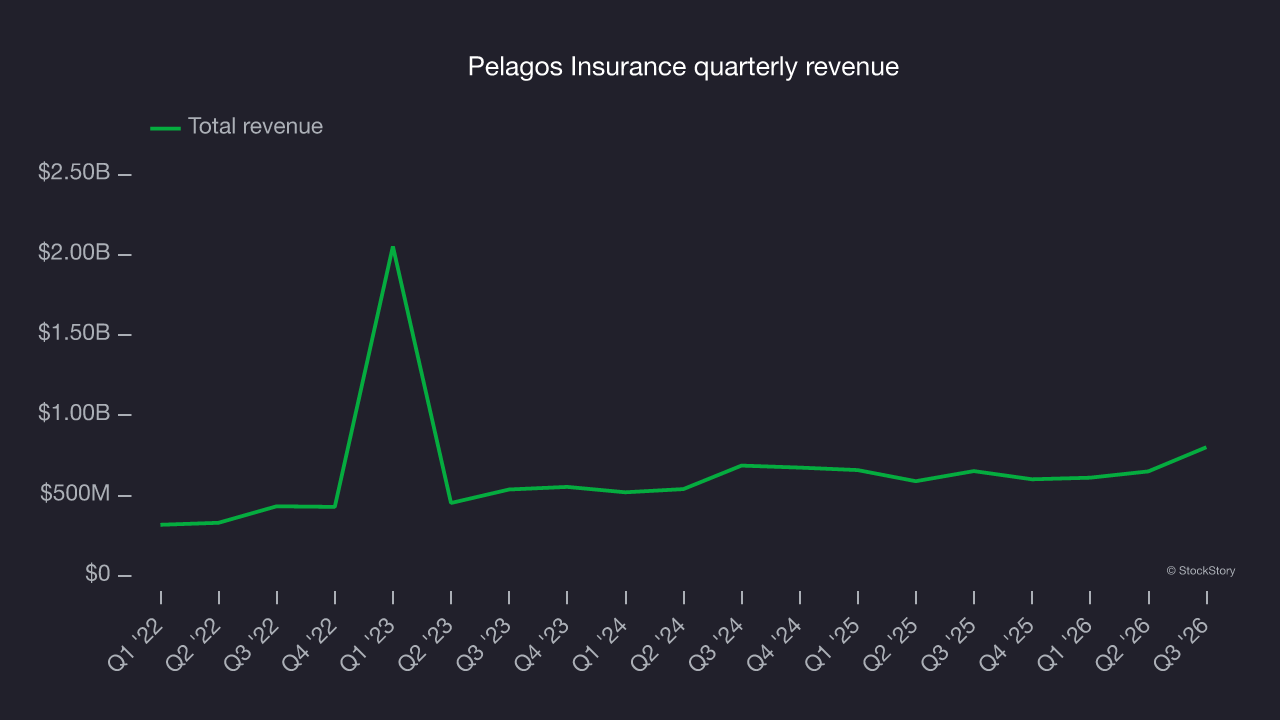
Long-term growth is the most important, but within financials, a longer historical view may miss recent interest rate changes and market returns. Pelagos Insurance’s annualized revenue growth of 7.6% over the last two years is below its four-year trend, but the results were still respectable.
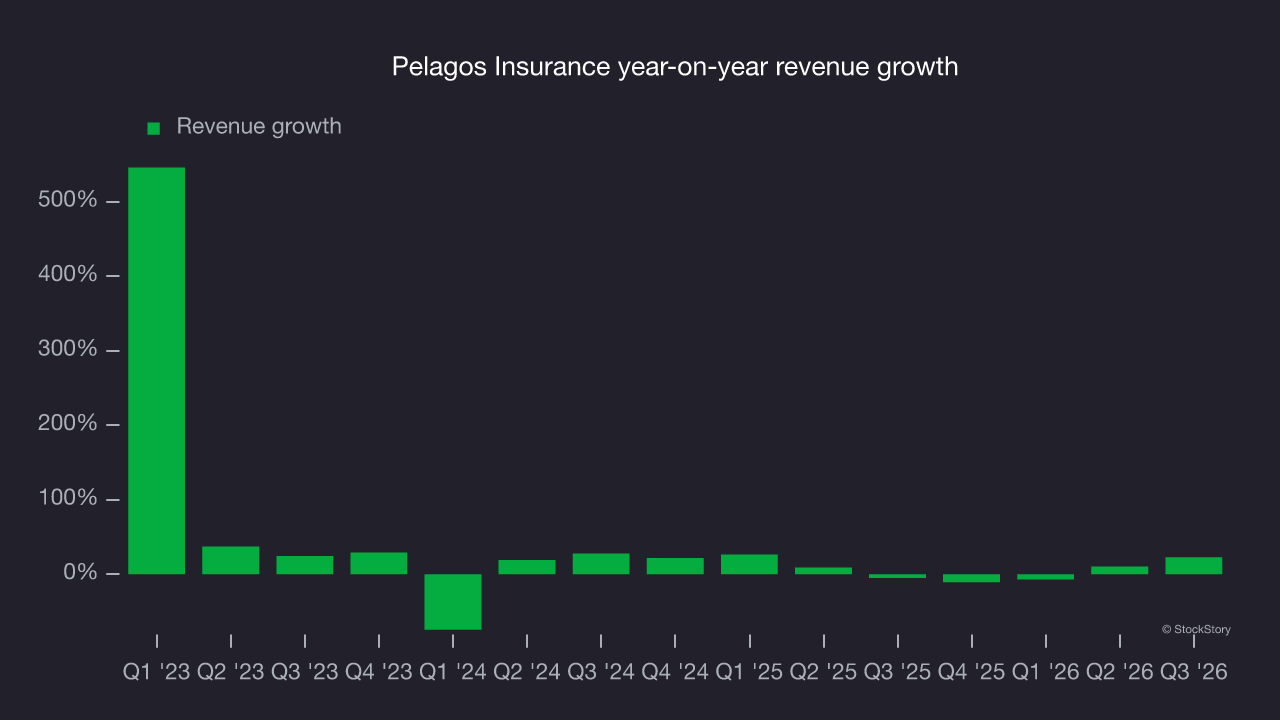
This quarter, Pelagos Insurance reported strong year-on-year revenue growth of 22.9%, and its $800.9 million of revenue topped Wall Street’s consensus estimates by 12.9%.
Net premiums earned made up 81.2% of the company’s total revenue during the last five years, meaning Pelagos Insurance barely relies on non-insurance activities to drive its overall growth.
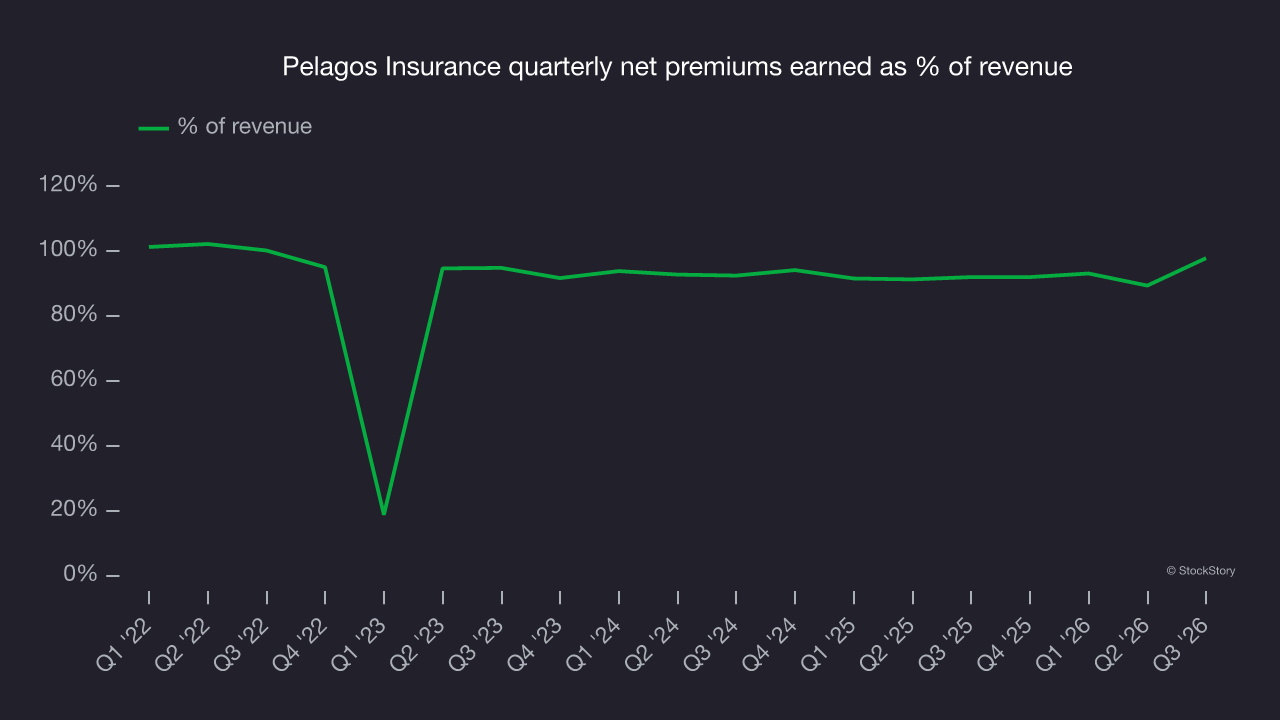
The market cares primarily about an insurer’s net premiums earned growth as investment and fee income are considered more susceptible to market volatility and economic cycles.
Book value per share, or BVPS
Insurers are balance sheet businesses, collecting premiums upfront and paying out claims over time. Premiums collected but not yet paid out, often referred to as the float, are invested and create an asset base supported by a liability structure. Book value per share, or BVPS, captures this dynamic by measuring these assets (investment portfolio, cash and reinsurance recoverables) less liabilities (claim reserves, debt and future policy benefits). BVPS is essentially the residual value for shareholders.
BVPS is therefore an important metric to track for insurers and sheds light on business quality because it reflects long-term capital growth and is harder to manipulate than more commonly used metrics like EPS.
Pelagos Insurance’s BVPS grew at a sluggish 6.3% annual rate over the last two years.
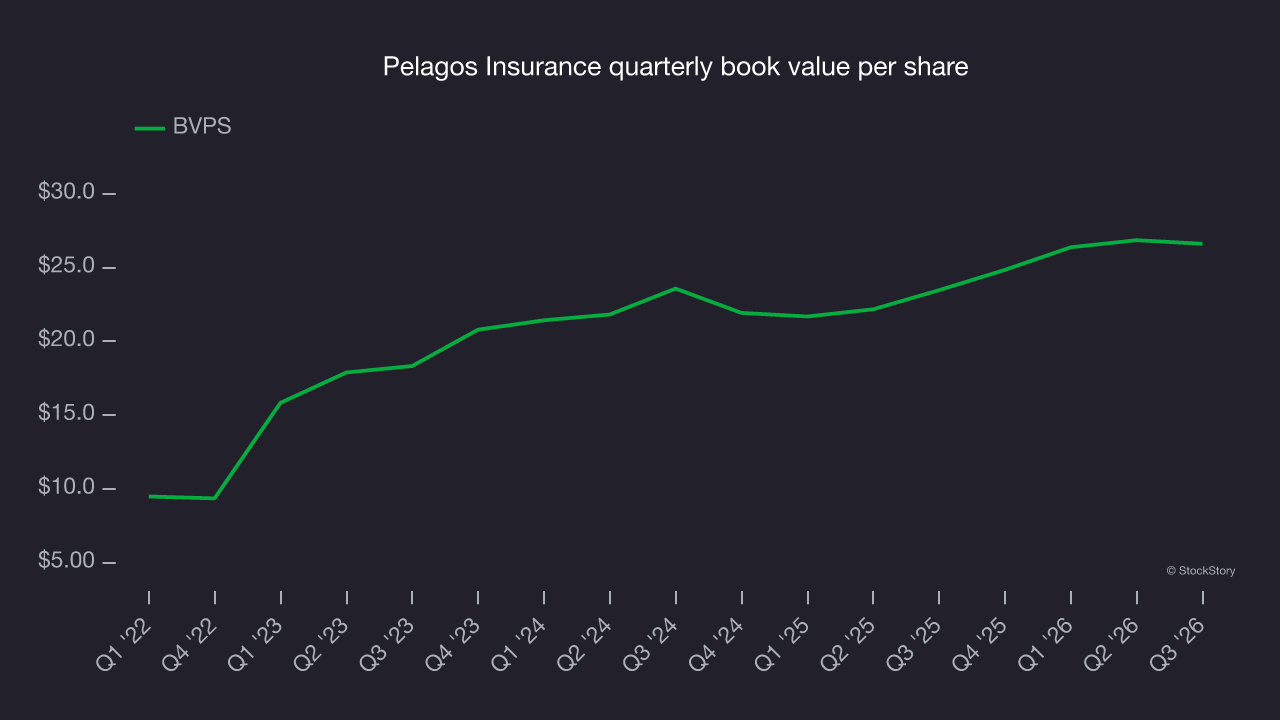
Over the next 12 months, consensus estimates call for Pelagos Insurance’s BVPS to grow by an impressive 17.3% to $27.53.
Key takeaways from Pelagos Insurance’s Q3 results
Pelagos Insurance’s quarter was mixed: book value per share missed expectations and EPS fell short of Wall Street’s consensus estimates, despite wide beats on both net premiums earned and revenue. Shares remained flat at $27.96 immediately after the results.
Pelagos Insurance’s latest earnings report disappointed. One quarter doesn’t define a company’s quality, so let’s examine the stock at its current price. When making an investment decision, it’s important to consider its valuation and business quality alongside the latest quarterly results. For more on Pelagos Insurance, read the full research report here (it’s free).