
Board Vote Rejection Might Change The Case For Investing In Whitbread Stock
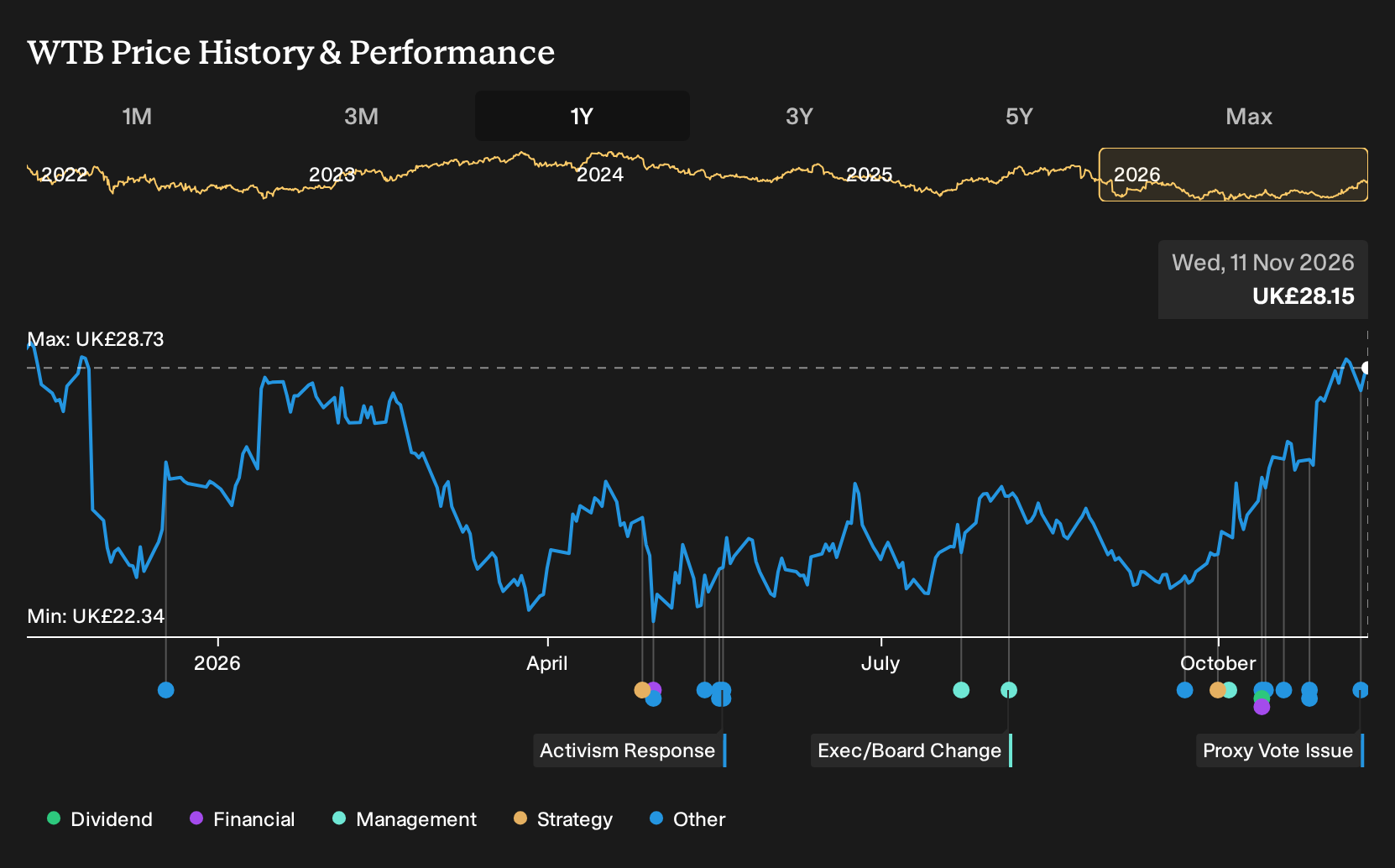
- Whitbread held an Extraordinary Shareholders Meeting on 9 November 2026, where investors voted against Corvex Management’s proposal to appoint James Gemmel to the board.
- The vote signals investor backing for Whitbread’s existing leadership and multi year plan, keeping the current board fully in control of capital allocation and execution priorities.
- We will look at how Whitbread’s investment narrative intersects with shareholder support for the current board after rejecting Corvex’s proposal.
Scan how other hotel and leisure stocks balance activist pressure with long term capital plans by running the curated 17 high quality undervalued stocks alongside Whitbread’s latest boardroom outcome.
Whitbread Investment Narrative Recap
To own Whitbread, you need to be comfortable with a hotel focused group pushing hard on a capital lighter model while UK profit margins are under pressure. Higher business rates, weaker net profit margins at 2% and a dividend that is not well covered all put more weight on cash generation. The analyst consensus Narrative on Simply Wall St expects earnings to grow strongly, so the key short term catalyst is evidence that cost savings and pricing are holding up UK profitability.
The biggest risk right now sits in execution. Management is recycling £1.5b of property into leases and extending the Accelerating Growth Plan, which initially reduces UK profit before tax by about £40m in FY27. The shareholder vote against Corvex’s board proposal does not materially change these operational priorities, so attention stays on delivery of efficiency savings and returns from new and converted rooms.
The most relevant operational update beside the vote is Whitbread’s lease agreement for a proposed 110 room Premier Inn in Lancaster city centre. It fits directly into the shift toward a capital lighter estate and the plan to add rooms without matching freehold spend. For you as an investor, the interest is less the single site and more what it signals about continued pipeline build.
That Lancaster project also shows the execution risks baked into the current catalyst set. The hotel depends on planning approval and then needs to meet expectations on demand, RevPAR and return on capital while UK costs are rising and German expansion is ramping. When you line this up against forecasts for 25.5% annual earnings growth, the question becomes how consistently Whitbread can open and fill similar hotels while offsetting higher rates, lease costs and a still thin 2% net margin.
Whitbread's current analyst narrative points to revenues of £3.2b and earnings of £352.8m by 2029, based on an assumed 2.7% yearly revenue growth rate and a move from £57.7m of earnings today to that 2029 consensus level, which represents an increase of about 6x.
Discover why Whitbread's fair value is essentially aligned with its current price.
Exploring Other Perspectives
Some of the most optimistic analysts focus less on UK cost pressure and more on Whitbread’s potential to turn its £250m efficiency plan into higher earnings. Before this vote, they were pencilling in revenue of about £3.3b and earnings of £477.0m by 2029. You can compare that upbeat view with today’s boardroom setback and decide how far your own expectations might shift.
Explore 2 other Whitbread fair value estimates, including one that suggests the potential for as much as 31% upside from the current price.
Form Your Own Verdict
Disagree with existing narratives? Extraordinary investment returns rarely come from following the herd, so trust your own analysis and judgment.
- A great starting point for your Whitbread research is our analysis highlighting 2 key rewards and 3 important warning signs that could impact your investment decision.
- See our latest analysis for Whitbread. The report includes a comprehensive fundamental analysis summarized in a single visual, the Snowflake, making it easy to evaluate Whitbread's overall financial health at a glance.
Looking for more investment ideas beyond Whitbread?
Once you have a view on Whitbread, it helps to widen the lens and compare it with other opportunities that fit different risk and income profiles. The Simply Wall St Screener lets you move from a single stock story to a curated set of companies that match the kind of portfolio you want to build.
- If you prefer resilient balance sheets and steadier fundamentals over headline growth stories, filter for companies using the list of solid balance sheet and fundamentals (9 results) to see which ones match that profile.
- If capital preservation ranks high on your list, scan for businesses with lower risk scores by running the 5 resilient stocks with low risk scores and lining those results up against Whitbread.
- If you are looking for potential mispriced opportunities with stronger fundamentals, sort the market using the curated 5 high quality undiscovered gems and see which ideas earn a spot on your watchlist.
Have feedback on this article? Concerned about the content? Get in touch with us directly. Alternatively, email editorial-team@simplywallst.com