
Vistra Fell While Profit Rose
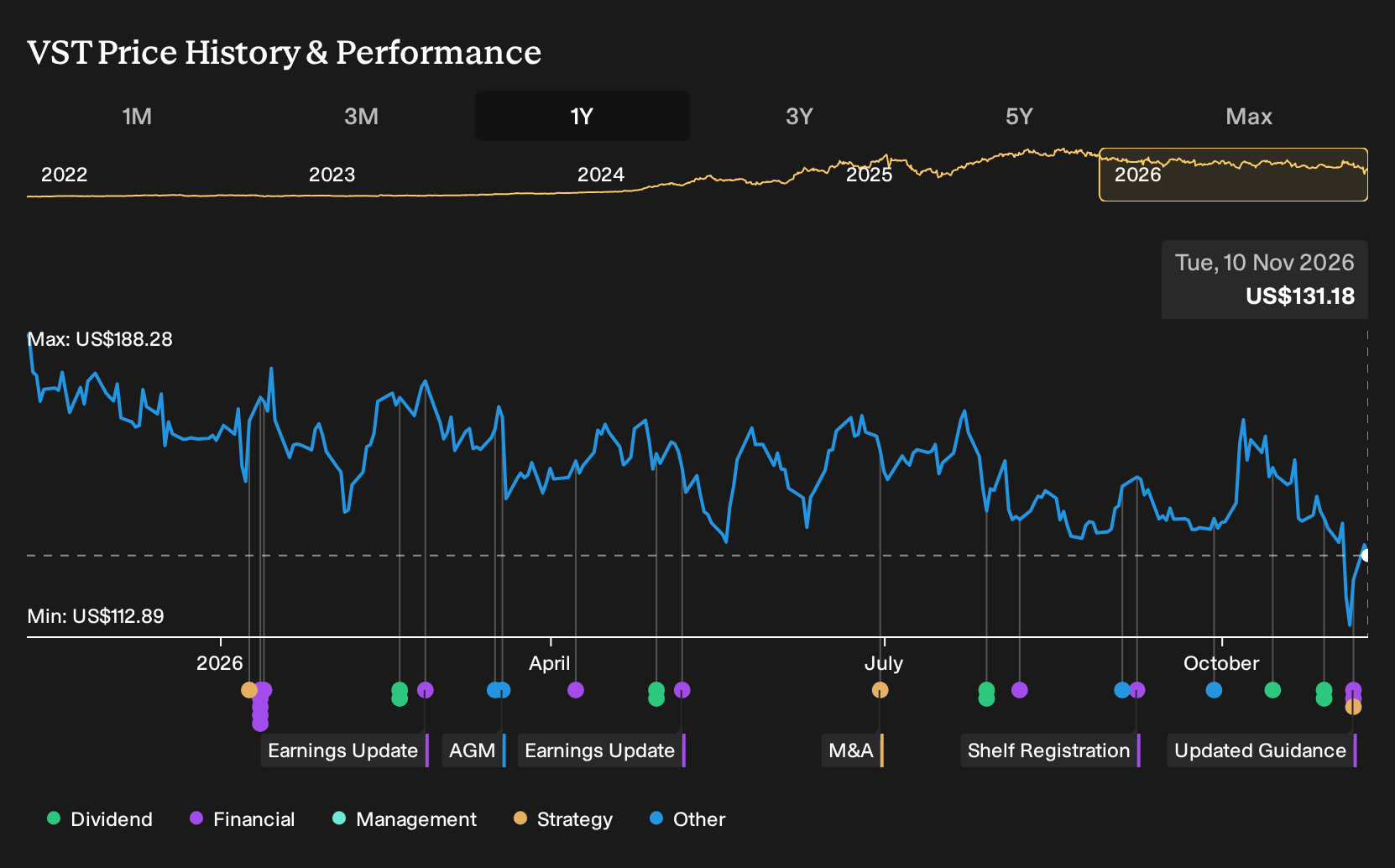
Vistra has spent 2026 in the headlines for record quarterly profits, big-ticket gas acquisitions and a multibillion dollar federal loan commitment to extend its nuclear fleet for AI data centers. For Vistra shareholders, the loss over the past year was 26.4%, including dividends. If you had bought on 10 November 2025, expecting the AI power boom to carry you, how do these headline wins square with that setback, and what should you watch next in its nuclear buildout?
The useful thing about a Narrative is that the reasoning is checkable: the assumptions sit beside the argument, and together they imply an estimated Fair Value you can disagree with.
Vistra has already moved. Pinpoint other ways to investigate the theme among 41 power grid technology and infrastructure stocks.
The Two Stories Vistra Investors Were Balancing
The shares cost US$188 at the start of the period, and Vistra sat between two very different but plausible stories about future power demand and asset growth.
The bullish narrative put fair value at US$222, 18% above the start price, assuming revenue growth of 9.7%, a 14.0% profit margin and a future P/E of 27.1x over three years.
The bearish view set fair value at US$92.69, 51% below the start price, and emphasized risks from tighter emissions rules, renewable buildout, and sizeable capital requirements for solar and battery projects.
What The Results Changed In The Vistra Story
Vistra’s Q3 2026 report showed revenue at US$6.347b and net income at US$1.092b, with net margin rising from 12.2% to 17.2%. That shift in profitability supported the bullish case that assumed higher margins and stronger earnings, even as capital heavy projects in nuclear and gas keep the cautious narrative about funding needs and regulatory risk in play. Overall, the evidence cut both ways.
The clear hinge here was margin quality. For any other utility tied to AI power demand, you would stress test the story against reported net margin over time and the cash flow backing big build outs, rather than focusing solely on headline earnings or contracts.
What Vistra's Price Drop Asks You To Believe Today
Vistra now trades at US$131, after a loss of 26.4% over the past year from US$188. According to John_Eric, an investor in the Simply Wall St Community who wrote the current bullish Narrative, that Narrative's Fair Value sits above the current price.
The distinctive claim is that hedge accounting and sector sentiment explain much of the slide while contracted power and debt upgrades reshape the business story. For this fall to look like an opportunity rather than a warning, a buyer has to believe those long contracts and projects will translate into durable cash generation despite leverage and commodity swings.
"Vistra hedges the electricity it expects to sell years in advance, sensible, disciplined behavior for a power generator, since it locks in revenue and smooths out commodity chaos. But accounting rules require marking those hedges to market today, even though they won’t settle for years."
That disagreement has a full argument behind it. → Uncover the higher Fair Value this Narrative argues for
Which Company Could Surprise You Next?
The next headline does not have to be where your research begins. Go straight to the companies and see whether a contrarian opportunity could be taking shape.
- Company 1 - 38% below our estimate - targets late-stage therapies in kidney disease, gene editing, acute pain and endocrinology.
- Company 2 - 31% below our estimate - builds a bank-funded digital lending model using acquisition integration and automation technology.
- Company 3 - 25% below our estimate - expands digital finance and inclusion while aiming to keep loan growth risks controlled.
Those are three of them. See all 35 potentially undervalued companies →
Have feedback on this article? Concerned about the content? Get in touch with us directly. Alternatively, email editorial-team@simplywallst.com